
Market Report · May 18, 2026

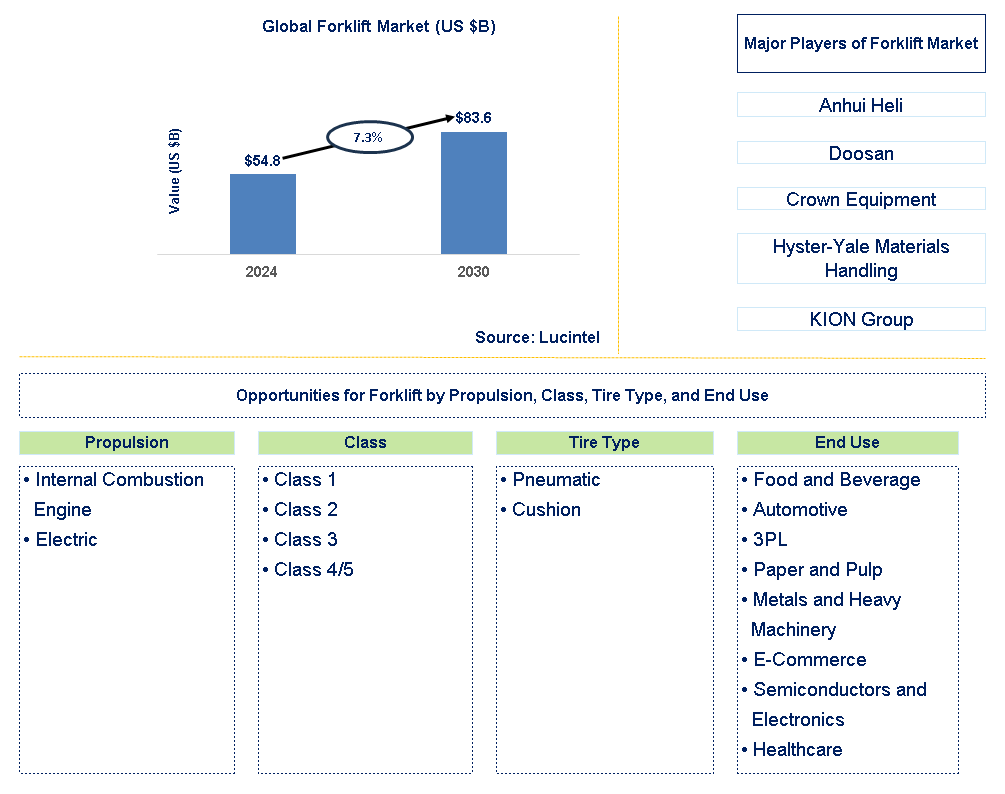
Key data points: The market size in 2030 = $83.6 billion, growth forecast = 7.3% annually for the next 6 years. Scroll below to get more insights. This market report covers trends, opportunities, and forecasts in the global forklift market to 2030 by propulsion (internal combustion engine and electric), class (class 1, class 2, class 3, and class 4/5), tire type (pneumatic and cushion), end use (food and beverage, automotive, 3PL, paper and pulp, metals and heavy machinery, e-commerce, semiconductors and electronics, healthcare, and chemical), and region (North America, Europe, Asia Pacific, and the Rest of the World)
We'll send your sample report shortly.
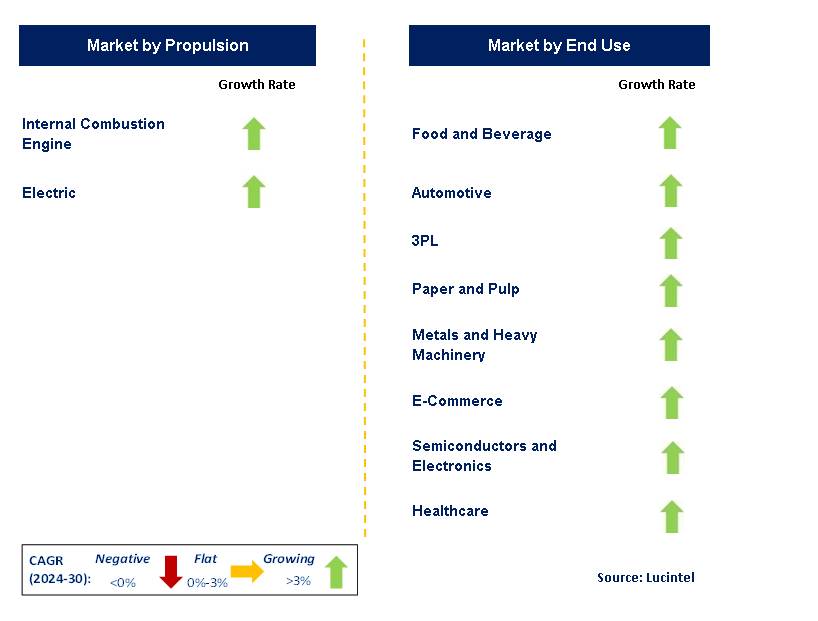
• Lucintel forecasts that, within the propulsion category, electric will remain the larger segment over the forecast period due to the increased need for operational efficiency and stringent carbon-reduction regulations.
• In terms of regions, APAC will remain the largest region over the forecast period due to manufacturers' growing preference for factory automation. Gain valuable insights for your business decisions with our comprehensive 150+ page report.
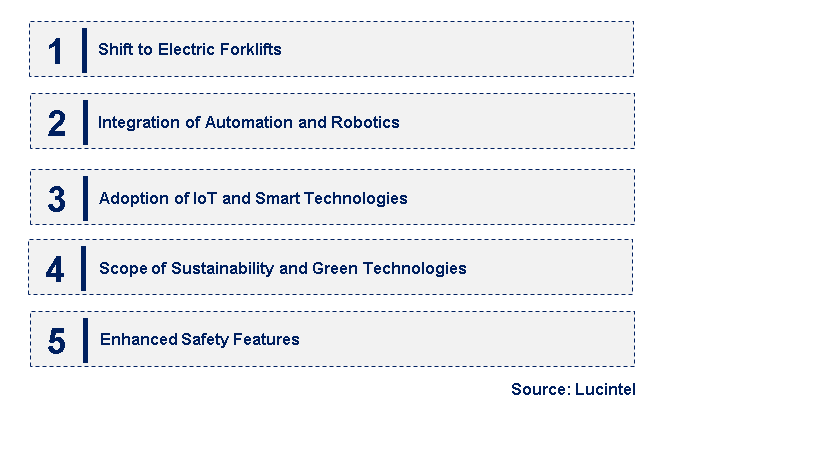
• Shift to Electric Forklifts: The transition from internal combustion engine (ICE) forklifts to electric models is one of the notable changes. Electric forklifts produce fewer emissions, generate less noise, and have lower overhead costs. This trend is driven by regulations and their respective benefits, in addition to further technological advancements in batteries that extend both range and performance.
• Integration of Automation and Robotics: Automation and robotics have become part of most, if not all, forklift operations. For instance, automated guided vehicles (AGVs) and autonomous forklifts have been employed to improve operational efficiency while minimizing labor costs. This trend is driven by significant advancements in AI and sensor technologies, which make tasks more accurate and safer.
• Adoption of IoT and Smart Technologies: The implementation of intelligent systems in forklift operations and management is a radical change in the forklift industry. IoT-based forklifts report performance statistics, location, and maintenance issues through networking. This trend allows companies to manage vehicle fleets more effectively, improve safety, and increase process efficiency by applying precise and smart data.
• Scope of Sustainability and Green Technologies: The forklift market is embracing sustainability, with strong commitments to adopting green technologies. As a result, companies are purchasing more electric forklifts and seeking alternative energy sources like hydrogen fuel cells. This trend complements strategies aimed at reducing climate change by cutting emissions.
• Enhanced Safety Features: There has been a growing trend toward the development of safe, ergonomic structures to withstand the extreme conditions forklift operators face. These include advanced systems for preventing collisions, real-time status control, and better working postures. These features aim to reduce accidents while operating heavy equipment, shaped by rising safety requirements and a desire to decrease injury rates. The growing trends, including the shift to electric forklifts, integrated automation, IoT adoption, sustainability, and enhanced safety, are driving deep transformations in the forklift market. These trends improve forklift operations and internal systems, enhancing safety, efficiency, and environmental responsibility in material handling.
• Advancement in Electric Forklifts: Noticeable improvements in electric forklift models include advanced batteries with extended operational ranges. Such progress is driven by the need for cleaner and more affordable solutions, making electric forklifts applicable in more sectors than before.
• Integration of Automation and Robotics: Automation has become an increasing trend, marked by the emergence of autonomous forklifts and automated guided vehicles (AGVs). These technologies have boosted efficiency and reduced labor costs by shifting material handling processes from human workers to machines.
• Implementation of IoT and Smart Technologies: Japan recognizes the role of IoT in optimizing operations in smart factories, which has transformed the way forklifts operate. Fleet operations are being optimized through the real-time collection of data, performance monitoring, and predictions regarding maintenance tasks, leading to better performance and reduced idle time.
• Focus on Sustainability: Sustainability is gaining attention in the forklift market. Organizations are seeking greener alternatives, such as electric forklifts and hydrogen fuel cells, in line with policies aimed at reducing environmental pollution.
• Improved Safety Features: Another key development is the enhancement of forklifts through new technologies, such as collision prevention systems and health surveillance systems. These innovations aim to increase operator safety, reduce accidents, and comply with stringent safety standards. The trends observed in the forklift market, such as electric forklifts, automation, IoT adoption, environmental awareness, and safety improvements, are driving changes in effectiveness and eco-efficiency. These transformations are reshaping the market landscape and improving standard practices in material handling.
• Use of Emerging Markets as a New Revenue-Generating Area: Rapid industrialization and commercialization of logistics in emerging markets offer significant growth opportunities, even compared to developed markets. These regions present opportunities to enter new markets and provide solutions for the growing demand for effective material handling.
• Development of Advanced Electric Forklifts: Advanced electric forklifts with enhanced battery technology and extended operating ranges have room for development. Such innovations meet international trends in sustainability and regulatory requirements, offering a strategic advantage in the green technology market.
• Integration of Automation and Robotics: Investing in automation and robotics is a path to maximized growth. Introducing and implementing self-operating lifting devices and self-guided vehicles will streamline work processes, reduce labor costs, and meet the growing demand for sophisticated movement and storage systems.
• Enhancement of IoT and Smart Technologies: Increasing the implementation of IoT and smart technologies in forklifts presents growth opportunities due to improved fleet management and real-time monitoring capabilities. This opportunity aligns with the growing demand for actionable and analytical data.
• Focus on Safety and Compliance Solutions: Developing safety systems and compliance solutions for high-risk operations is essential. Advanced safety systems and technologies that meet quality control standards can improve worker health and attract markets seeking safe material handling solutions. Focusing on qualification and policy management will secure growth in the competitive landscape. Significant strategic avenues exist within the forklift market for expanding into new territories, creating advanced electric forklifts, incorporating automation, further developing IoT applications, and enhancing safety measures. Exploiting these factors will result in increased market activity and growth.
• Technological Advancements: Improvements in forklift operational equipment, such as battery technology, automation, and IoT, have stimulated market growth. These advancements offer businesses enhanced functionality, lower costs, and improved operational efficiency, making modern forklifts more appealing.
• Regulatory Pressures: Stringent emissions and safety regulations are driving the adoption of electric forklifts with advanced safety features. Compliance with these regulations is crucial for market growth, providing an avenue for the development of environmentally friendly and safe forklifts.
• Industrial Growth and Urbanization: The rapid industrialization and urbanization trends have increased the demand for efficient material handling systems. Innovative forklifts capable of handling heavier loads and boosting efficiency are emerging to meet the needs of modern logistics and warehouse operations.
• Focus on Sustainability: Green business practices and reducing carbon footprints have led to the increased use of electric and hybrid forklifts. Companies are increasingly adopting environmental technologies to meet regulatory requirements and gain competitive advantages.
• Cost Reduction and Efficiency: Businesses are increasingly turning to advanced forklifts with lower operating costs and high reliability to shrink operational structures and improve cost management. Challenges in the Forklift Market:
• High Initial Costs: The initial cost of electric and technologically advanced forklifts can be a significant drawback to adoption. Price-sensitive sectors may find the high costs prohibitive.
• Charging Infrastructure Limitations: A lack of charging facilities can hinder the performance of electric forklifts. Limited availability and slow charging speeds reduce the broader adoption of electric forklifts and efficient fleet management.
• Technological Complexity: The growing complexity of forklifts, particularly those incorporating automation and IoT, presents challenges in integration and maintenance. Advanced systems may be difficult to manage and service within an organization. The key factors driving progress in the forklift market include technological advancements, regulatory pressures, industrial growth, sustainability, and cost-effectiveness. However, challenges such as high initial costs, infrastructure limitations, and technological complexity need to be addressed to fully capitalize on market growth opportunities.
• Anhui Heli
• Doosan
• Crown Equipment
• Hyster-Yale Materials Handling
• KION Group
• Hangcha
• Komatsu
• Toyota Material Handling
• Mitsubishi Logisnext
• Jungheinrich
• Internal Combustion Engine
• Electric
• Class 1
• Class 2
• Class 3
• Class 4/5
• Pneumatic
• Cushion
• Food and Beverage
• Automotive
• 3PL
• Paper and Pulp
• Metals and Heavy Machinery
• E-Commerce
• Semiconductors and Electronics
• Healthcare
• Chemical
• North America
• Europe
• Asia Pacific
• The Rest of the World
• United States: In the United States, the forklift market is shifting toward electric forklifts due to emission regulations and subsidies. Companies are focusing on capitalizing on autonomous systems and advanced operational management systems. There is also a growing trend toward integrating IoT for real-time monitoring and maintenance.
• China: With impressive industrial growth and increasing demand for enhanced handling equipment, China’s forklift market is expanding rapidly. Attention is now on developing electric and hybrid forklifts that meet both local and international standards. Significant investments are being made in researching structural and functional improvements, including the design of autonomous forklifts.
• Germany: Germany is making significant strides in sustainable and efficient material handling through energy-efficient electric forklifts. There is growing interest among German companies in innovative battery technologies and smart management systems that improve productivity and minimize downtime.
• India: In India, the growth of the forklift market is driven by industrial development and improvements in logistics processes. The shift to electric forklifts is driven by new environmental policies, along with increased investments in safety features and digital technologies.
• Japan: Japan focuses on the functionality, skills, and responsiveness of lifting machines. The country has been at the forefront of developing high-tech lifting machines with automation and robotic features. Emphasis is placed on fleet management and data analytics using AI and IoT technologies.


• Anhui Heli
• Doosan
• Crown Equipment
• Hyster-Yale Materials Handling
• KION Group
• Hangcha
• Komatsu
• Toyota Material Handling
• Mitsubishi Logisnext
• Jungheinrich Q6. Which forklift market segment will be the largest in future? Answer: Lucintel forecasts that electric will remain the larger segment over the forecast period due to the increased need for operational efficiency and stringent carbon-reduction regulations. Q7. In forklift market, which region is expected to be the largest in next 5 years? Answer: In terms of regions, APAC will remain the largest region over the forecast period due to manufacturers' growing preference for factory automation. Q.8 Do we receive customization in this report? Answer: Yes, Lucintel provides 10% customization without any additional cost.


Choose a license that fits your team. Instant PDF delivery.
Prices exclude taxes. Instant delivery. Custom licensing available on request.
Market Report · May 18, 2026
Market Report · May 18, 2026
Market Report · May 18, 2026
Trusted partner for strategic intelligence and business growth


Receive a complimentary market analysis tailored to your industry. Our analysts will identify key growth opportunities and competitive dynamics specific to your business.

Market size, growth rate, and key trend analysis for your specific sector.

Top competitor positioning and market share analysis.

Strategic recommendations backed by data-driven insights.
Get curated market intelligence and competitive moves straight to your inbox.
By subscribing, you agree to receive our monthly insights. Unsubscribe anytime.
Receive a complimentary market analysis tailored to your industry. Our analysts will identify key growth opportunities and competitive dynamics specific to your business.
Market size, growth rate, and key trend analysis for your specific sector.
Top competitor positioning and market share analysis.
Strategic recommendations backed by data-driven insights.
Get curated market intelligence, emerging trends, and competitive moves straight to your inbox each month.
By subscribing, you agree to receive our monthly insights. Unsubscribe anytime.
We'll send your sample report shortly.