
Report Feature
Food Security Technology Market Trends and Forecast
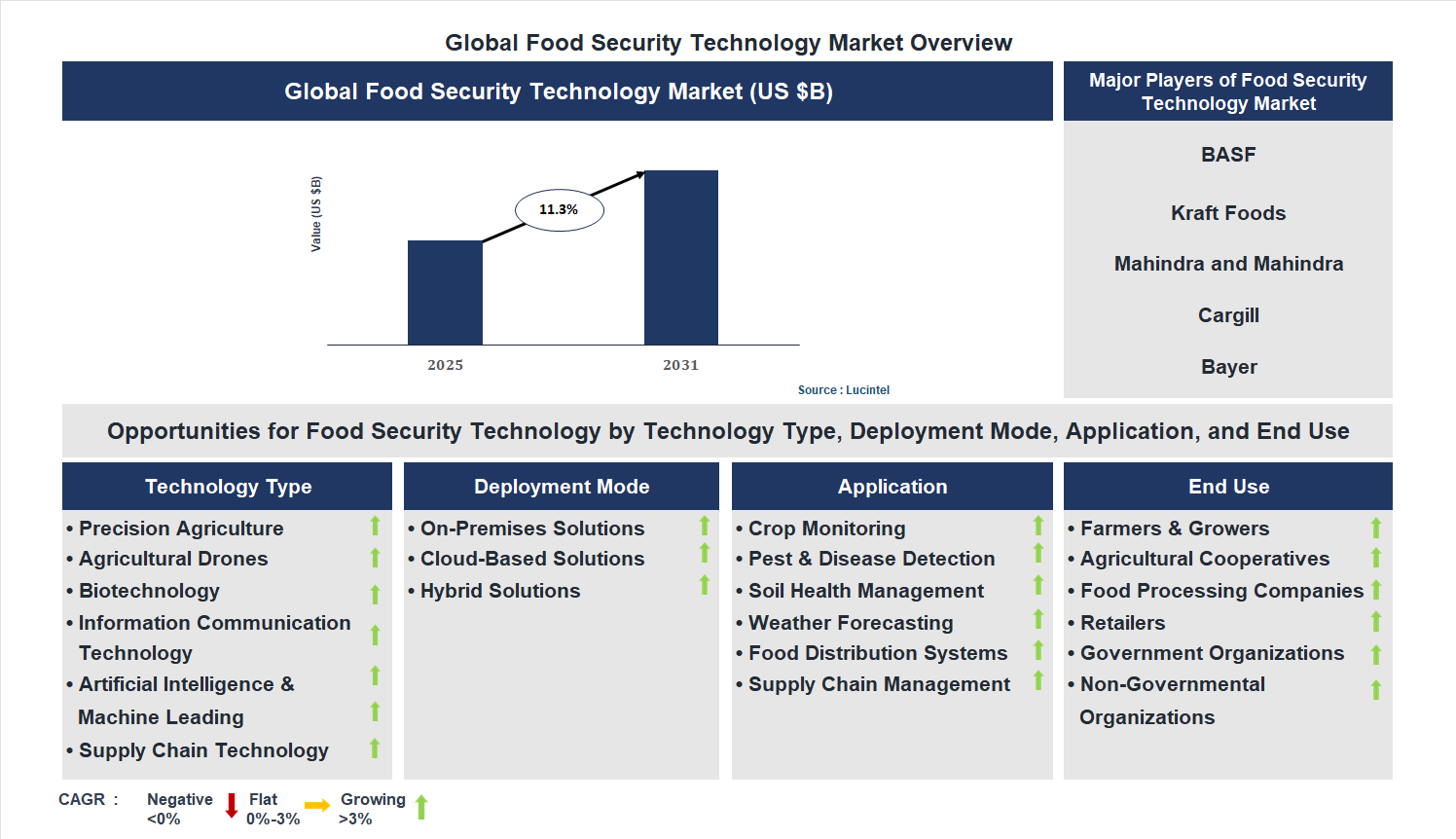
The future of the global food security technology market looks promising with opportunities in the farmer & grower, agricultural cooperative, food processing company, retailer, government organization, and non-governmental organization markets. The global food security technology market is expected to grow with a CAGR of 11.3% from 2025 to 2031. The major drivers for this market are the increasing focus on preventing food contamination, the rising demand for advanced quality monitoring, and the growing adoption of smart agricultural technologies.• Lucintel forecasts that, within the technology type category, precision agriculture is expected to witness the highest growth over the forecast period.
• Within the end use category, agricultural cooperative is expected to witness the highest growth.
• In terms of region, APAC is expected to witness the highest growth over the forecast period. Gain valuable insights for your business decisions with our comprehensive 150+ page report. Sample figures with some insights are shown below.
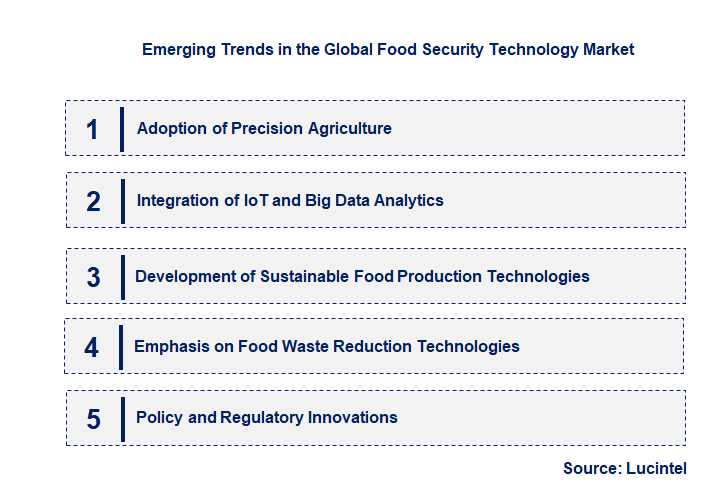
Emerging Trends in the Food Security Technology Market
The food security technology market is experiencing rapid evolution driven by technological advancements, increasing global food demand, and the need to address food scarcity and safety concerns. Innovations in data analytics, IoT, and sustainable practices are transforming how food security is managed across the supply chain. Governments, private sectors, and research institutions are investing heavily to develop solutions that enhance food production, reduce waste, and improve distribution efficiency. These developments are crucial in ensuring a resilient food system capable of meeting the needs of a growing population amid climate change and resource constraints. The following key trends highlight the markets dynamic landscape.• Adoption of Precision Agriculture: Precision agriculture utilizes GPS, IoT sensors, and data analytics to optimize crop yields and resource use. This trend enhances efficiency by enabling farmers to apply water, fertilizers, and pesticides precisely where needed, reducing waste and environmental impact. It also improves crop monitoring and disease detection, leading to higher productivity and food security. As technology becomes more affordable, adoption is expanding globally, especially in developing regions, transforming traditional farming practices into data-driven operations.
• Integration of IoT and Big Data Analytics: IoT devices and big data analytics are revolutionizing food security management by providing real-time insights into crop health, weather patterns, and supply chain logistics. These technologies enable proactive decision-making, reduce losses, and improve forecasting accuracy. Enhanced data collection helps identify vulnerabilities in the food supply chain, allowing stakeholders to respond swiftly to disruptions. This integration fosters transparency, traceability, and efficiency, ultimately strengthening food security systems and reducing hunger worldwide.
• Development of Sustainable Food Production Technologies: Sustainability is a core focus, with innovations like vertical farming, hydroponics, and aquaponics gaining prominence. These methods require less land, water, and energy, making food production more resilient to climate change. Additionally, advancements in alternative proteins and plant-based foods are reducing reliance on traditional livestock farming, lowering greenhouse gas emissions. These technologies support local food systems, decrease transportation needs, and promote environmentally friendly practices, contributing significantly to global food security and resource conservation.
• Emphasis on Food Waste Reduction Technologies: Food waste accounts for a significant portion of global food insecurity. Emerging solutions include smart packaging, supply chain monitoring, and AI-powered inventory management to minimize spoilage and overproduction. Technologies such as blockchain enhance traceability, ensuring better inventory control and reducing losses. Consumer awareness campaigns and apps also promote responsible consumption. These efforts help conserve resources, lower costs, and ensure more food reaches those in need, directly impacting food security by making the food system more efficient and sustainable.
• Policy and Regulatory Innovations: Governments and international bodies are implementing policies to support food security technology adoption. This includes funding for research, incentives for sustainable practices, and regulations that promote data sharing and innovation. Public-private partnerships are fostering collaborative efforts to develop scalable solutions. Regulatory frameworks are also evolving to address emerging issues like data privacy and biosafety. These policy developments create an enabling environment for technological growth, ensuring that innovations are effectively integrated into food security strategies and reach underserved populations. In summary, these trends are collectively reshaping the food security technology market by fostering more efficient, sustainable, and resilient food systems. They enable stakeholders to better predict, prevent, and respond to food security challenges, ultimately contributing to a more secure and sustainable global food supply.
Recent Development in the Food Security Technology Market
The food security technology market is experiencing rapid growth driven by increasing global concerns over food security, technological advancements, and the need for sustainable agricultural practices. Governments, private sectors, and research institutions are investing heavily in innovative solutions to address food shortages, reduce waste, and improve supply chain efficiency. These developments are transforming traditional farming and food distribution methods, making them more resilient and efficient. As climate change and population growth continue to challenge food systems worldwide, these technological innovations are crucial for ensuring long-term food security. The following are five key recent developments shaping this market.• Adoption of Precision Agriculture Technologies: Precision agriculture uses GPS, IoT sensors, and data analytics to optimize crop yields and resource use. This technology reduces waste, enhances productivity, and minimizes environmental impact, leading to more sustainable farming practices and improved food security.
• Development of Blockchain for Supply Chain Transparency: Blockchain technology is being integrated into food supply chains to improve traceability, reduce fraud, and ensure food safety. This transparency builds consumer trust and helps prevent foodborne illnesses, thereby strengthening food security.
• Implementation of Drones and Satellite Imaging: Drones and satellite imaging provide real-time monitoring of crop health, soil conditions, and weather patterns. These tools enable early detection of issues, allowing farmers to take timely action, which increases crop yields and stabilizes food supplies.
• Advances in Biotechnology and Genetically Modified Crops: Biotechnology enables the development of crops resistant to pests, diseases, and climate stress. These genetically modified organisms (GMOs) enhance food production efficiency and resilience, contributing significantly to global food security.
• Integration of Artificial Intelligence and Big Data Analytics: AI and big data analyze vast amounts of agricultural data to forecast trends, optimize resource allocation, and improve decision-making. This technological integration enhances productivity and helps address food security challenges more effectively. In summary, these recent developments are significantly transforming the food security technology market by making agricultural practices more efficient, transparent, and resilient. They are helping to address the pressing challenges of food scarcity, climate change, and supply chain disruptions, ultimately contributing to a more secure and sustainable global food system.
Strategic Growth Opportunities in the Food Security Technology Market
The food security technology market is experiencing rapid evolution driven by increasing global population, climate change, and the need for sustainable food production. Innovations in technology are transforming how food is produced, stored, and distributed, creating new opportunities for growth across various applications. These developments aim to enhance food security by improving efficiency, reducing waste, and ensuring safety. As governments, organizations, and industries prioritize sustainable solutions, key growth opportunities are emerging in different application sectors. Understanding these opportunities is essential for stakeholders to capitalize on market potential and address pressing food security challenges effectively.• Precision Agriculture: Enhanced crop management through IoT and AI tools improves yield and resource efficiency, reducing waste and increasing productivity.
• Food Storage & Preservation: Advanced refrigeration and packaging technologies extend shelf life, minimize spoilage, and ensure food safety across supply chains.
• Supply Chain Optimization: Blockchain and data analytics streamline logistics, improve traceability, and reduce losses from farm to table.
• Food Safety Monitoring: Real-time testing and sensor technologies enable rapid detection of contaminants, ensuring consumer safety and compliance.
• Sustainable Farming Practices: Adoption of renewable energy, water conservation, and eco-friendly inputs promotes environmentally sustainable food production systems. These growth opportunities are significantly impacting the food security technology market by fostering innovation, improving efficiency, and addressing global food security challenges. They enable stakeholders to develop resilient, sustainable, and scalable solutions, ultimately ensuring a stable food supply for growing populations worldwide.
Food Security Technology Market Driver and Challenges
The food security technology market is influenced by a complex interplay of technological advancements, economic conditions, and regulatory frameworks. As global populations grow and climate change impacts agricultural productivity, innovative solutions are essential to ensure reliable food supplies. Governments, private sectors, and research institutions are investing heavily in technologies that enhance crop yields, improve supply chain efficiency, and promote sustainable practices. However, the market also faces challenges such as regulatory hurdles, high implementation costs, and technological disparities across regions. Understanding these drivers and challenges is crucial for stakeholders aiming to develop resilient food security strategies in an increasingly uncertain environment. The factors responsible for driving the food security technology market include:-• Technological Innovation: The rapid development of precision agriculture, IoT, and AI-driven solutions enhances crop monitoring, resource management, and yield prediction, leading to increased efficiency and productivity.
• Growing Population and Food Demand: The global population is expected to reach 9.8 billion by 2050, intensifying the need for advanced food security technologies to meet rising food demands sustainably.
• Climate Change and Environmental Challenges: Increasing climate variability and environmental degradation threaten traditional farming, prompting the adoption of resilient and adaptive technologies to mitigate risks.
• Government Initiatives and Funding: Governments worldwide are implementing policies and providing funding to promote sustainable agriculture practices and technological adoption, fostering market growth. The challenges in the food security technology market are:
• Regulatory and Policy Barriers: Complex and varying regulations across regions can delay technology deployment, increase compliance costs, and hinder innovation in food security solutions.
• High Implementation Costs: The significant capital investment required for advanced technologies can be prohibitive for small-scale farmers and developing regions, limiting widespread adoption.
• Technological Disparities: Unequal access to cutting-edge technologies creates a digital divide, leaving vulnerable populations behind and impeding global food security efforts. In summary, the food security technology market is driven by technological advancements, demographic pressures, and environmental challenges, which collectively push for innovative solutions. However, regulatory complexities, high costs, and disparities in technology access pose significant hurdles. These factors shape a dynamic landscape where strategic investments and policy reforms are essential to harness the full potential of food security technologies. Addressing these challenges while leveraging key drivers will be critical for ensuring sustainable and resilient food systems worldwide.
List of Food Security Technology Companies
Companies in the market compete on the basis of product quality offered. Major players in this market focus on expanding their manufacturing facilities, R&D investments, infrastructural development, and leverage integration opportunities across the value chain. With these strategies food security technology companies cater increasing demand, ensure competitive effectiveness, develop innovative products & technologies, reduce production costs, and expand their customer base. Some of the food security technology companies profiled in this report include-• BASF
• Kraft Foods
• Mahindra and Mahindra
• Cargill
• Bayer
• Novozymes
• Nestle
Food Security Technology Market by Segment
The study includes a forecast for the global food security technology market by technology type, deployment mode, application, end use, and region.Food Security Technology Market by Technology Type [Value from 2019 to 2031]:
• Precision Agriculture
• Agricultural Drones
• Biotechnology
• Information Communication Technology
• Artificial Intelligence & Machine Leading
• Supply Chain Technology
Food Security Technology Market by Deployment Mode [Value from 2019 to 2031]:
• On-Premises Solutions
• Cloud-Based Solutions
• Hybrid Solutions
Food Security Technology Market by Application [Value from 2019 to 2031]:
• Crop Monitoring
• Pest & Disease Detection
• Soil Health Management
• Weather Forecasting
• Food Distribution Systems
• Supply Chain Management
Food Security Technology Market by End Use [Value from 2019 to 2031]:
• Farmers & Growers
• Agricultural Cooperatives
• Food Processing Companies
• Retailers
• Government Organizations
• Non-Governmental Organizations
Food Security Technology Market by Region [Value from 2019 to 2031]:
• North America
• Europe
• Asia Pacific
• The Rest of the World
Country Wise Outlook for the Food Security Technology Market
The food security technology market is rapidly evolving as nations seek innovative solutions to address global food challenges. Advances in technology are enhancing agricultural productivity, supply chain management, and food safety, driven by increasing population demands and climate change impacts. Governments and private sectors are investing heavily in research and development to ensure sustainable food systems. These developments vary across regions, reflecting differing priorities, resources, and technological capabilities. Understanding these regional trends is crucial for stakeholders aiming to improve food security through technological innovation and policy support.• United States: The US has seen significant growth in precision agriculture technologies, including drone monitoring, AI-driven crop management, and IoT sensors, improving yield efficiency. Investments in food traceability and safety systems have increased, alongside advancements in vertical farming and sustainable practices. The government promotes innovation through grants and partnerships, fostering a resilient food supply chain amid climate challenges.
• China: China is rapidly adopting smart farming solutions, integrating AI, big data, and IoT to optimize resource use and boost productivity. The government emphasizes food security through policies supporting technological innovation, including large-scale urban agriculture projects. E-commerce platforms for food distribution have expanded, enhancing supply chain efficiency and reducing waste.
• Germany: Germany focuses on sustainable agriculture and food safety, investing in organic farming technologies and eco-friendly practices. Innovations in biotechnology and digital tools improve crop resilience and reduce environmental impact. The country promotes research collaborations and digitalization of food supply chains to enhance transparency and efficiency.
• India: India is leveraging mobile technology and low-cost sensors to improve smallholder farmers access to real-time data, enhancing productivity and income. Initiatives like digital land records and supply chain digitization aim to reduce food loss and improve distribution. Government programs support the adoption of climate-resilient crops and sustainable farming practices.
• Japan: Japan emphasizes robotics and automation in agriculture to address labor shortages and aging farmers. Advanced sensor technologies and AI are used for precision farming and crop monitoring. The country invests in food safety technologies and sustainable aquaculture, ensuring high standards and resilience against environmental stresses.

Features of the Global Food Security Technology Market
Market Size Estimates: Food security technology market size estimation in terms of value ($B). Trend and Forecast Analysis: Market trends (2019 to 2024) and forecast (2025 to 2031) by various segments and regions. Segmentation Analysis: Food security technology market size by various segments, such as by technology type, deployment mode, application, end use, and region in terms of value ($B). Regional Analysis: Food security technology market breakdown by North America, Europe, Asia Pacific, and Rest of the World. Growth Opportunities: Analysis of growth opportunities in different technology types, deployment modes, applications, end uses, and regions for the food security technology market. Strategic Analysis: This includes M&A, new product development, and competitive landscape of the food security technology market. Analysis of competitive intensity of the industry based on Porter’s Five Forces model.
FAQ
Q1. What is the growth forecast for food security technology market? Answer: The global food security technology market is expected to grow with a CAGR of 11.3% from 2025 to 2031. Q2. What are the major drivers influencing the growth of the food security technology market? Answer: The major drivers for this market are the increasing focus on preventing food contamination, the rising demand for advanced quality monitoring, and the growing adoption of smart agricultural technologies. Q3. What are the major segments for food security technology market? Answer: The future of the food security technology market looks promising with opportunities in the farmer & grower, agricultural cooperative, food processing company, retailer, government organization, and non-governmental organization markets. Q4. Who are the key food security technology market companies? Answer: Some of the key food security technology companies are as follows:• BASF
• Kraft Foods
• Mahindra and Mahindra
• Cargill
• Bayer
• Novozymes
• Nestle Q5. Which food security technology market segment will be the largest in future? Answer: Lucintel forecasts that, within the technology type category, precision agriculture is expected to witness the highest growth over the forecast period. Q6. In food security technology market, which region is expected to be the largest in next 5 years? Answer: In terms of region, APAC is expected to witness the highest growth over the forecast period. Q7. Do we receive customization in this report? Answer: Yes, Lucintel provides 10% customization without any additional cost.
Table of Contents
List of Figures
List of Tables
Methodology
- In-depth interviews of the major players in this market
- Detailed secondary research from competitors’ financial statements and published data
- Extensive searches of published works, market, and database information pertaining to industry news, company press releases, and customer intentions
- A compilation of the experiences, judgments, and insights of Lucintel’s professionals, who have analyzed and tracked this market over the years.


Buy Now
Choose a license that fits your team. Instant PDF delivery.
Prices exclude taxes. Instant delivery. Custom licensing available on request.
Key Questions
- • What are some of the most promising, high-growth opportunities for the food security technology market by technology type (precision agriculture, agricultural drones, biotechnology, information communication technology, artificial intelligence & machine leading, and supply chain technology), deployment mode (on-premises solutions, cloud-based solutions, and hybrid solutions), application (crop monitoring, pest & disease detection, soil health management, weather forecasting, food distribution systems, and supply chain management), end use (farmers & growers, agricultural cooperatives, food processing companies, retailers, government organizations, and non-governmental organizations), and region (North America, Europe, Asia Pacific, and the Rest of the World)?
- • Which segments will grow at a faster pace and why?
- • Which region will grow at a faster pace and why?
- • What are the key factors affecting market dynamics? What are the key challenges and business risks in this market?
- • What are the business risks and competitive threats in this market?
- • What are the emerging trends in this market and the reasons behind them?
- • What are some of the changing demands of customers in the market?
- • What are the new developments in the market? Which companies are leading these developments?
- • Who are the major players in this market? What strategic initiatives are key players pursuing for business growth?
- • What are some of the competing products in this market and how big of a threat do they pose for loss of market share by material or product substitution?
- • What M&A activity has occurred in the last 5 years and what has its impact been on the industry? For any questions related to Food Security Technology Market, Food Security Technology Market Size, Food Security Technology Market Growth, Food Security Technology Market Analysis, Food Security Technology Market Report, Food Security Technology Market Share, Food Security Technology Market Trends, Food Security Technology Market Forecast, Food Security Technology Companies, write Lucintel analyst at email: helpdesk@lucintel.com. We will be glad to get back to you soon.


