
Market Report · July 31, 2026

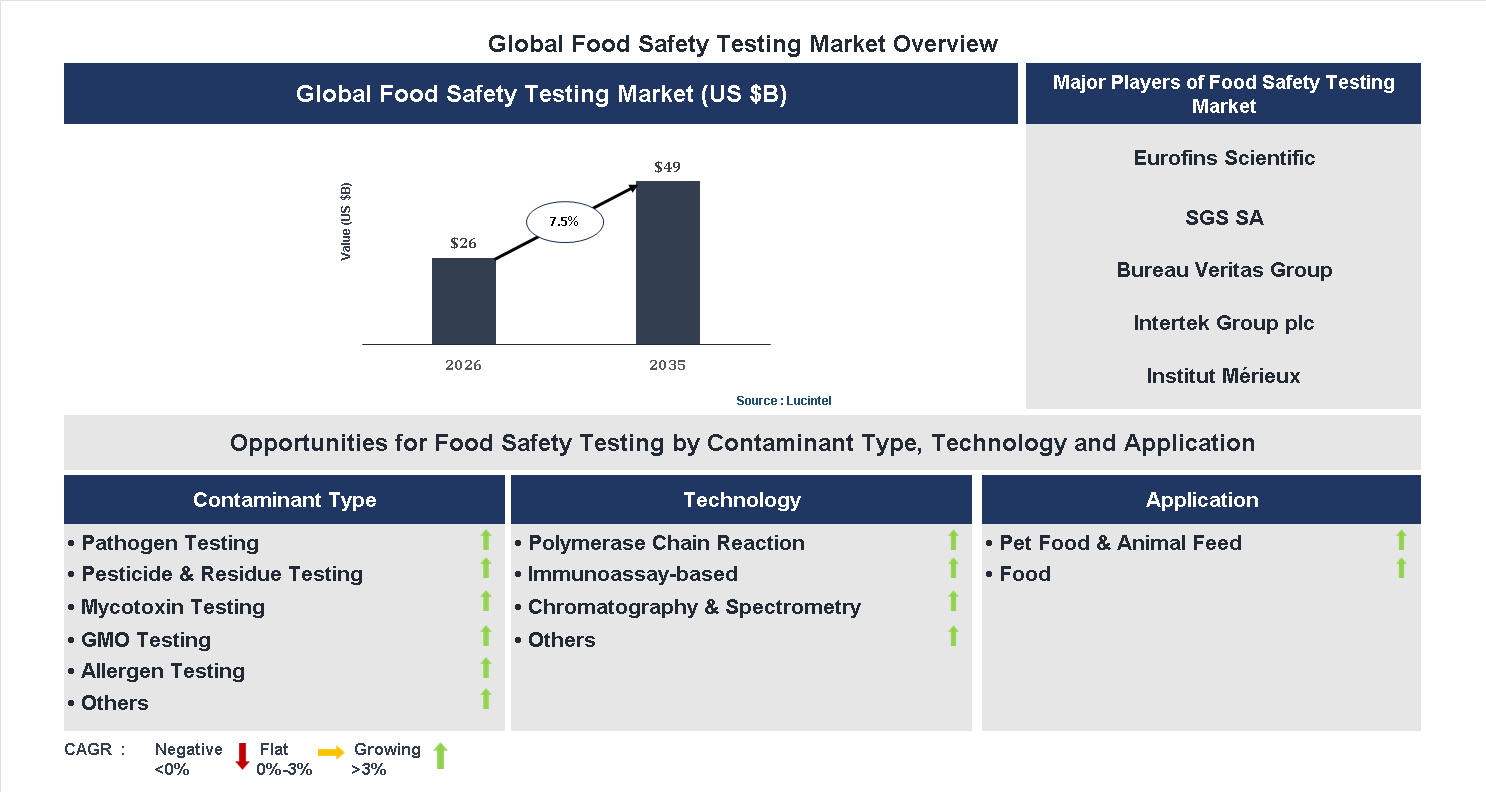
Key data points: The market size in 2035 = $49 billion, growth forecast = 7.5% annually for the next 8 years. Scroll below to get more insights. This market report covers trends, opportunities and forecasts in food safety testing market to 2035 by contaminant type (pathogen testing, pesticide & residue testing, mycotoxin testing, GMO testing, allergen testing, and others), technology (polymerase chain reaction, immunoassay-based, chromatography & spectrometry, and others), application (pet food & animal feed and food), and region (North America, Europe, Asia Pacific, and the Rest of the World)
We'll send your sample report shortly.
• Lucintel forecasts that, within the contaminant type category, GMO testing is expected to witness the highest growth over the forecast period.
• Within the application category, food is expected to witness the highest growth.
• In terms of region, APAC is expected to witness the highest growth over the forecast period. Gain valuable insights for your business decisions with our comprehensive 150+ page report. Sample figures with some insights are shown below.
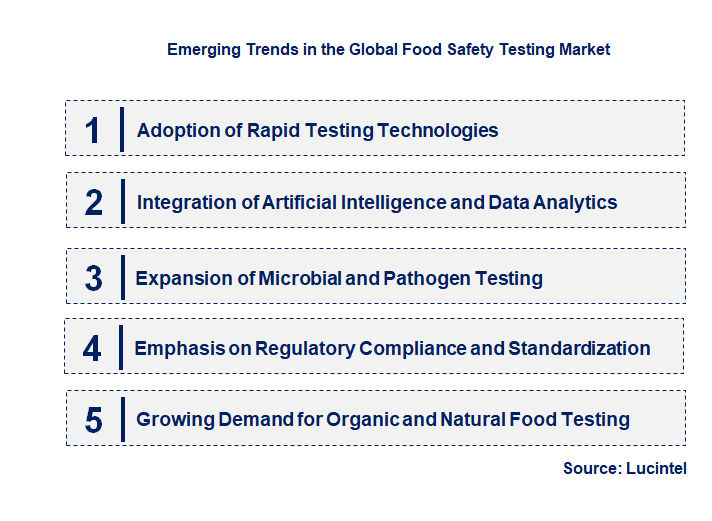
• Adoption of Rapid Testing Technologies: The market is witnessing a shift towards rapid testing methods such as biosensors, immunoassays, and molecular diagnostics. These technologies enable quick detection of contaminants like pathogens, toxins, and residues, reducing testing time from days to hours. This accelerates decision-making processes for manufacturers and regulators, minimizes food recalls, and enhances supply chain efficiency. The demand for portable, easy-to-use testing kits is also rising, facilitating on-site testing at various points in the supply chain. Overall, rapid testing improves responsiveness and helps prevent foodborne illnesses more effectively.
• Integration of Artificial Intelligence and Data Analytics: AI and data analytics are increasingly being integrated into food safety testing processes. These technologies enable predictive analytics, trend analysis, and real-time monitoring of food safety data. AI algorithms can identify patterns and potential risks before they escalate, allowing proactive measures. This integration enhances accuracy, reduces false positives, and streamlines data management. Companies are investing in AI-driven platforms to improve testing precision and compliance tracking. The impact is a more intelligent, efficient, and predictive food safety system that minimizes risks and enhances consumer trust.
• Expansion of Microbial and Pathogen Testing: There is a growing focus on microbial testing, especially for pathogens like Salmonella, Listeria, and E. coli. Advances in molecular biology techniques, such as PCR and next-generation sequencing, have improved detection sensitivity and specificity. This trend is driven by increasing incidences of foodborne outbreaks and stringent regulatory requirements. Enhanced microbial testing helps identify contamination sources quickly, reducing the scope of outbreaks and recalls. It also supports the development of safer food products and better risk management strategies, making microbial testing a critical component of comprehensive food safety programs.
• Emphasis on Regulatory Compliance and Standardization: Governments and international bodies are tightening food safety regulations, prompting companies to adopt standardized testing protocols. Harmonization of standards across regions facilitates global trade and ensures consistent safety levels. Companies are investing in certification and accreditation to meet these standards, which often require comprehensive testing and documentation. This trend encourages the adoption of validated testing methods and quality management systems, reducing non-compliance risks. Overall, regulatory compliance is driving innovation, quality assurance, and transparency within the food safety testing market.
• Growing Demand for Organic and Natural Food Testing: As consumer preferences shift towards organic and natural foods, there is increased demand for testing these products for pesticides, heavy metals, and other contaminants. The market is witnessing the development of specialized testing methods tailored for organic products, which often have different safety standards. This trend supports transparency and builds consumer confidence in organic labels. Additionally, testing for allergens and additives in natural foods is gaining importance. The focus on organic and natural food testing is expanding market opportunities and encouraging manufacturers to adopt higher safety standards to meet consumer expectations. These emerging trends are transforming the food safety testing market by making testing faster, smarter, and more comprehensive. They are fostering innovation, improving regulatory compliance, and enhancing consumer confidence. As these developments continue, the market is poised for sustained growth, driven by technological advancements and increasing global food safety standards.
• Growing Demand for Rapid Testing Methods: The market is witnessing a surge in demand for quick, reliable testing solutions to meet stringent safety standards. Rapid testing methods, such as biosensors and portable devices, enable real-time detection of contaminants, reducing turnaround times. This development enhances food safety management, minimizes product recalls, and boosts consumer confidence. Companies investing in innovative rapid testing technologies are gaining competitive advantages, leading to increased market penetration and expanding the scope of food safety assurance across various sectors.
• Increasing Adoption of Molecular Techniques: Molecular testing methods like PCR and DNA-based assays are gaining popularity due to their high sensitivity and specificity. These techniques allow for precise detection of pathogens, allergens, and contaminants at early stages, preventing outbreaks and ensuring compliance with regulations. The adoption of molecular techniques is driven by technological advancements and decreasing costs, making them accessible to small and large-scale producers. This shift significantly improves the accuracy and efficiency of food safety testing, reducing false negatives and enhancing overall food quality.
• Rising Focus on Organic and Natural Food Products: The growing consumer preference for organic and natural foods is influencing the food safety testing market. These products often require specialized testing to verify purity and absence of harmful residues or contaminants. Manufacturers are investing in advanced testing protocols to meet organic certification standards and consumer expectations. This trend expands the testing market, encouraging innovation in testing methods tailored for organic products, and fostering trust among health-conscious consumers, ultimately driving market growth and diversification.
• Implementation of Stringent Regulatory Frameworks: Governments worldwide are enforcing stricter food safety regulations, necessitating comprehensive testing protocols. Regulations such as FSMA in the U.S. and EFSA standards in Europe compel food producers to adopt rigorous testing procedures. This regulatory environment boosts demand for advanced testing solutions, including automation and data management systems, to ensure compliance. The increased regulatory oversight enhances food safety standards globally, fostering innovation in testing technologies and creating new opportunities for market players to develop compliant solutions.
• Technological Innovations and Digitalization: The integration of digital technologies, such as AI, IoT, and data analytics, is transforming food safety testing. These innovations enable predictive analytics, real-time monitoring, and improved traceability throughout the supply chain. Digitalization reduces manual errors, enhances data accuracy, and accelerates decision-making processes. As a result, companies can respond swiftly to safety issues, minimize risks, and improve overall efficiency. This technological shift is expected to continue driving market expansion, fostering smarter, more resilient food safety systems. The recent developments in rapid testing, molecular techniques, organic product testing, regulatory frameworks, and digital innovations are collectively transforming the food safety testing market. These advancements improve detection accuracy, speed, and compliance, leading to safer food supplies globally. As a result, the market is experiencing accelerated growth, increased investment, and heightened competition, ultimately benefiting consumers through enhanced food safety standards and trust.
• Increasing Demand for Rapid Testing Solutions: The need for quick, accurate food safety testing methods is rising due to the fast-paced nature of food production and distribution. Technologies like PCR, immunoassays, and biosensors enable real-time detection of pathogens and contaminants, reducing product recalls and ensuring consumer safety. This demand is driven by regulatory agencies focus on food safety standards and consumer expectations for transparency and quality assurance.
• Growing Adoption of Automated Testing Technologies: Automation in food safety testing enhances efficiency, accuracy, and throughput. Automated systems reduce human error and labor costs while providing consistent results. The integration of robotics and AI-driven data analysis allows for high-volume testing in manufacturing plants and laboratories. This trend is particularly prominent in developed regions, where regulatory compliance and quality control are prioritized, creating opportunities for equipment manufacturers and service providers.
• Expansion of Organic and Natural Food Markets: The rising popularity of organic and natural foods necessitates specialized testing to verify product authenticity and safety. Organic certification requires rigorous testing for pesticides, heavy metals, and microbial contamination. As consumer preference shifts towards clean-label products, manufacturers invest in advanced testing to meet regulatory standards and build consumer trust. This segment offers growth potential for niche testing services and innovative testing methods tailored to organic products.
• Implementation of Stringent Regulatory Standards: Governments and international bodies are enforcing stricter food safety regulations, prompting manufacturers to adopt comprehensive testing protocols. Compliance with standards such as FSMA, EU regulations, and Codex Alimentarius drives demand for advanced testing solutions. Companies offering consultancy, validation, and certification services are experiencing increased demand, fostering growth in testing laboratories and technology providers that can meet evolving regulatory requirements.
• Rising Use of Food Safety Testing in Emerging Markets: Developing regions are witnessing increased food production and imports, necessitating robust safety testing infrastructure. Investments in testing laboratories, capacity building, and regulatory frameworks are expanding market opportunities. Local manufacturers and importers seek affordable, reliable testing solutions to access global markets and ensure consumer safety. This growth is supported by international aid, government initiatives, and partnerships aimed at improving food safety standards in emerging economies. These growth opportunities collectively drive the expansion of the food safety testing market by fostering innovation, enhancing regulatory compliance, and addressing evolving consumer demands. The integration of advanced technologies and increased focus on quality assurance across regions will lead to a more resilient and efficient food safety ecosystem. As the market evolves, stakeholders that adapt to these opportunities will be well-positioned for sustained growth and competitive advantage.
• Technological Innovations: The development of advanced testing methods such as PCR, ELISA, and rapid testing kits has significantly improved detection accuracy and speed. These innovations enable quicker response times, reduce contamination risks, and enhance overall food safety standards. As technology continues to evolve, testing becomes more cost-effective and accessible, encouraging wider adoption across food production and processing sectors. This technological progression supports compliance with international safety standards and boosts consumer confidence, ultimately expanding market opportunities globally.
• Increasing Food Consumption and Global Trade: Rising global food demand driven by population growth and urbanization has led to increased food production and trade. This expansion necessitates rigorous safety testing to prevent foodborne illnesses and meet international safety standards. Countries engaging in global trade are adopting stricter testing protocols to ensure product safety, which in turn fuels market growth. The need for comprehensive testing across supply chains to maintain quality and safety standards is a major driver, especially in emerging markets where food safety infrastructure is developing rapidly.
• Stringent Regulatory Frameworks: Governments worldwide are implementing strict food safety regulations to protect consumers from contaminated or unsafe food products. Agencies such as the FDA, EFSA, and FSMA enforce rigorous testing requirements, compelling food producers to adopt advanced testing methods. These regulations drive demand for reliable testing services and equipment, fostering market growth. Compliance with regulatory standards not only ensures consumer safety but also helps companies avoid legal penalties and recalls, reinforcing the importance of robust testing solutions in the industry.
• Growing Consumer Awareness and Demand for Safe Food: Consumers are increasingly aware of food safety issues and demand transparency regarding product origins and safety standards. This heightened awareness influences food manufacturers to adopt comprehensive testing protocols to meet consumer expectations. Brands that prioritize safety and quality gain competitive advantages, encouraging investment in advanced testing technologies. The demand for organic, non-GMO, and allergen-free products further amplifies the need for precise testing, thereby expanding the market for food safety testing services and solutions. The challenges facing the food safety testing market include:-
• High Testing Costs: Implementing advanced testing technologies and maintaining compliance with stringent regulations involve significant expenses. Small and medium-sized enterprises often find these costs prohibitive, limiting their ability to adopt comprehensive testing protocols. High costs can slow down market growth and restrict access to the latest testing methods, especially in developing regions. Additionally, ongoing expenses for equipment maintenance, skilled personnel, and quality assurance further strain budgets, posing a barrier to widespread adoption and innovation within the industry.
• Regulatory Complexities and Variability: The diverse and evolving regulatory landscape across different countries creates challenges for global food companies. Navigating varying standards, documentation requirements, and approval processes can be complex and time-consuming. This variability hampers the ability to standardize testing procedures and can delay product launches. Companies must invest in specialized compliance teams and adapt testing protocols for different markets, increasing operational costs and complicating international trade and market expansion efforts.
• Technological Limitations and Standardization Issues: Despite advancements, some testing methods still face limitations in sensitivity, specificity, and speed. Variability in testing accuracy can lead to false positives or negatives, impacting consumer safety and brand reputation. Additionally, lack of standardized testing protocols across regions can result in inconsistent results, complicating compliance and data comparison. Overcoming these technological and standardization challenges requires ongoing research, investment, and collaboration among industry stakeholders to develop universally accepted, reliable testing solutions. The food safety testing market is driven by technological advancements, increasing food trade, regulatory pressures, and consumer demand for safety. However, high costs, regulatory complexities, and technological limitations pose significant challenges. These factors collectively influence the market’s growth trajectory, requiring stakeholders to innovate and adapt continuously. The overall impact is a dynamic landscape that offers substantial opportunities for growth, provided that challenges are effectively managed through strategic investments and regulatory harmonization.
• Eurofins Scientific
• SGS SA
• Bureau Veritas Group
• Intertek Group plc
• Institut Mérieux
• ALS Global
• TÜV SÜD
• NSF International
• AsureQuality Limited
• UL LLC
• Pathogen Testing
• Pesticide & Residue Testing
• Mycotoxin Testing
• GMO Testing
• Allergen Testing
• Others
• Polymerase Chain Reaction
• Immunoassay-based
• Chromatography & Spectrometry
• Others
• Pet Food & Animal Feed
• Food
• North America
• Europe
• Asia Pacific
• The Rest of the World
• United States: The U.S. market has seen substantial growth with the adoption of rapid testing technologies like PCR and immunoassays. Regulatory agencies such as the FDA and USDA have increased testing requirements, promoting innovation in pathogen detection and allergen testing. The focus is on automation and real-time testing to enhance efficiency and accuracy, driven by rising food recalls and safety concerns.
• China: China is rapidly expanding its food safety testing infrastructure to meet domestic and export demands. The government has implemented stricter regulations and increased investments in advanced testing laboratories. Innovations include the integration of molecular diagnostics and blockchain for traceability, aiming to improve transparency and reduce food fraud.
• Germany: Germanys market emphasizes high-quality standards and stringent regulations under the European Union framework. There is a growing adoption of advanced analytical techniques like chromatography and mass spectrometry to detect contaminants and residues. The country also promotes sustainable and eco-friendly testing practices, aligning with EU directives.
• India: India is witnessing a surge in food safety testing due to rising foodborne illnesses and export growth. The market is characterized by increased adoption of rapid testing kits and portable devices, making testing more accessible in rural areas. Government initiatives aim to strengthen infrastructure and capacity building for better compliance with safety standards.
• Japan: Japans market is driven by technological innovation and strict regulatory standards. The country invests heavily in automated and high-throughput testing systems to ensure food safety, especially for imported and processed foods. Emphasis is also placed on research and development to develop new testing methods for contaminants and pathogens.


• Eurofins Scientific
• SGS SA
• Bureau Veritas Group
• Intertek Group plc
• Institut Mérieux
• ALS Global
• TÜV SÜD
• NSF International
• AsureQuality Limited
• UL LLC Q6. Which food safety testing market segment will be the largest in future? Answer: Lucintel forecasts that, within the contaminant type category, GMO testing is expected to witness the highest growth over the forecast period. Q7. In food safety testing market, which region is expected to be the largest in next 5 years? Answer: In terms of region, APAC is expected to witness the highest growth over the forecast period. Q8. Do we receive customization in this report? Answer: Yes, Lucintel provides 10% customization without any additional cost.


Choose a license that fits your team. Instant PDF delivery.
Prices exclude taxes. Instant delivery. Custom licensing available on request.
Market Report · July 31, 2026
Market Report · July 31, 2026
Market Report · July 31, 2026
Trusted partner for strategic intelligence and business growth


Receive a complimentary market analysis tailored to your industry. Our analysts will identify key growth opportunities and competitive dynamics specific to your business.

Market size, growth rate, and key trend analysis for your specific sector.

Top competitor positioning and market share analysis.

Strategic recommendations backed by data-driven insights.
Get curated market intelligence and competitive moves straight to your inbox.
By subscribing, you agree to receive our monthly insights. Unsubscribe anytime.
Receive a complimentary market analysis tailored to your industry. Our analysts will identify key growth opportunities and competitive dynamics specific to your business.
Market size, growth rate, and key trend analysis for your specific sector.
Top competitor positioning and market share analysis.
Strategic recommendations backed by data-driven insights.
Get curated market intelligence, emerging trends, and competitive moves straight to your inbox each month.
By subscribing, you agree to receive our monthly insights. Unsubscribe anytime.
We'll send your sample report shortly.