
Market Report · July 22, 2026

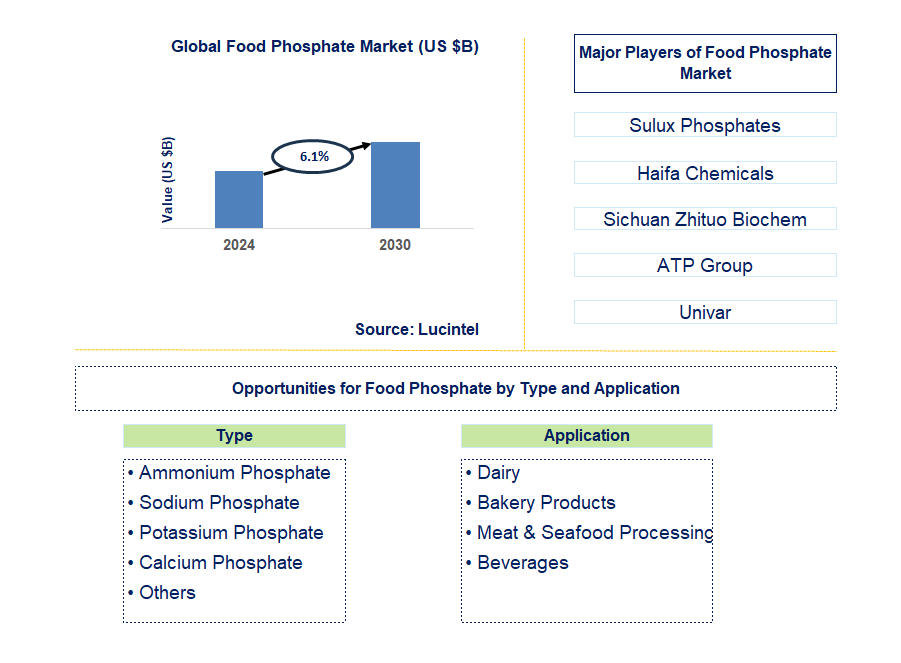
Key data points: The growth forecast = 6.1% annually next 6 years. Scroll below to get more insights. This market report covers trends, opportunities, and forecast in the global food phosphate market to 2030 by type (ammonium phosphate, sodium phosphate, potassium phosphate, calcium phosphate, and others), application (dairy, bakery products, meat & seafood processing, and beverages), and region (North America, Europe, Asia Pacific, and the Rest of the World)
We'll send your sample report shortly.
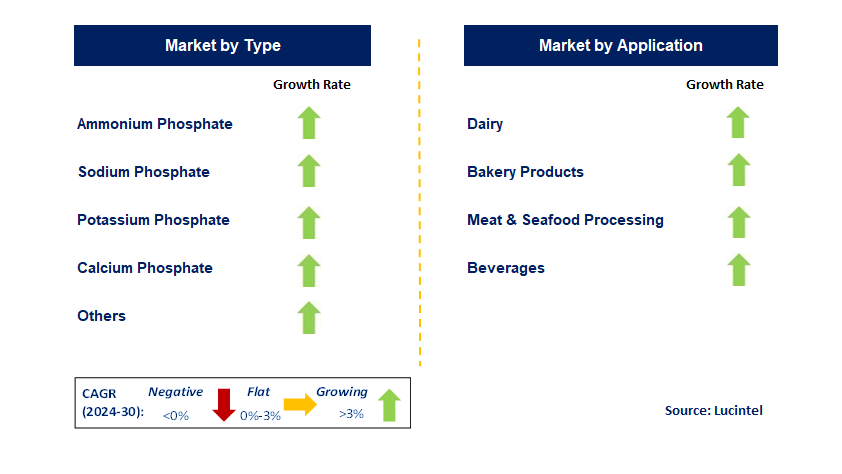
• Lucintel forecasts that potassium phosphate is expected to witness highest growth over the forecast period due to rising popularity in health-conscious food segments and clean-label formulations.
• Within this market, bakery product is expected to witness highest growth over the forecast period due to rising demand and innovation in healthier alternatives.
• APAC is expected to witness highest growth over the forecast period. A more than 150-page report is developed to help in your business decisions.
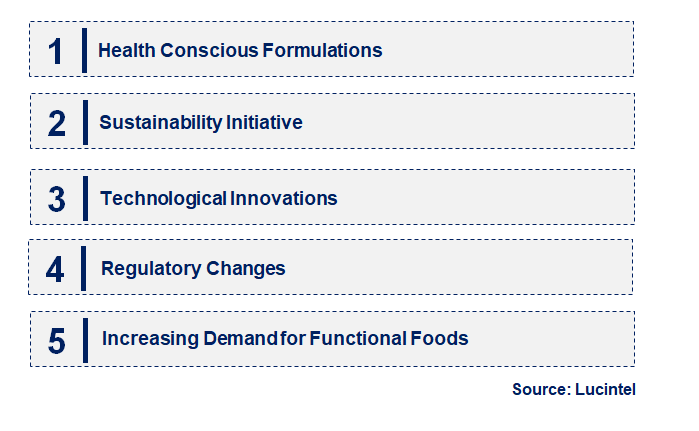
• Health-Conscious Formulations: There is an increasing demand for health-conscious formulations, as consumers seek the right foods for better nutrition. Manufacturers are reformulating products to decrease sodium levels while enhancing nutritional value, satisfying the growing health-aware market. This shift also encourages companies to continually innovate to stay ahead in terms of customer health outcomes.
• Sustainability Initiatives: Sustainable developments are gradually being implemented through various environmental activities that revolve around the extraction of phosphate. These include the use of renewable sources and ensuring zero waste or leftover materials, while consumers develop a sense of duty to the environment regarding their chosen products. As sustainability plays a significant role in consumers' decision-making, companies that embrace such practices will have a greater probability of success amid competition.
• Technological Innovations: The functionality of food phosphates is increasingly linked with technological advances in processing. Recent microencapsulation techniques improve the stability and delivery of phosphates, and there are many ways to preserve food while ensuring quality and flavor. This differentiation is crucial in a competitive landscape, where manufacturers can distinguish themselves by producing high-quality products that consumers prefer for taste and safety.
• Regulatory Changes: Regulatory pressure on manufacturers emphasizes greater transparency and safety. Stricter regulations on food additives push the industry to implement cleaner labeling practices, which further increases consumer confidence and trust in phosphate products. As governments introduce such regulations, companies must remain agile to avoid losing market share due to non-compliance.
• Increasing Demand for Functional Foods: The demand for functional foods is fueling the addition of phosphates for nutritional profiling. Consumers are increasingly seeking healthier products with added health benefits and have become accustomed to the presence of phosphates in these functional foods. The immense pressure to produce innovative products has created significant opportunities for differentiation as wellness becomes a leading indicator of preventive health measures. The trends collectively reveal a shift toward healthier, sustainable, and innovative food phosphate products, which are likely to significantly reshape the industry landscape. Manufacturers will respond to these trends, making growth and adaptation in the food phosphate market inevitable.
• Clean Label Products: Manufacturers are being compelled by the emergence of clean label products to reformulate food phosphates with a focus on more natural ingredients. This is crucial from a consumer value perspective and also provides brands a way to build trust and loyalty in a highly competitive marketplace. Consumers have increasingly scrutinized ingredient lists, and companies are striving to present formulations in clearer and more understandable terms.
• Sustainable Sourcing: As environmental concerns and regulatory pressures increase, many companies are in the spotlight for sourcing their phosphates sustainably. Businesses are seeking methods to reduce their ecological footprints, such as using renewable materials and enhancing waste management processes. Sustainability not only minimizes environmental impacts but also enhances companies' reputations among eco-conscious consumers.
• New Applications: Phosphate applications are soaring with increased innovation in the nutraceutical sector. The usage of food phosphates in dietary supplements and fortified foods is on the rise, offering brands better opportunities to formulate products that cater to the burgeoning health-conscious consumer base. The segment is becoming increasingly competitive as manufacturers innovate to create unique phosphate formulations that stand out in the market.
• Technological Applications: Advances in processing technology are improving the efficiency of food phosphates. Advanced methods of encapsulation enhance the stability and delivery of phosphates, enabling manufacturers to produce products that meet consumer expectations for taste and safety. The various applications of phosphates and their benefits continue to evolve with technological advancements.
• Compliance with Stricter Regulations: Stricter regulatory compliance requires companies to invest in quality assurance and transparency. This focus on new requirements protects consumers and maintains brand reputation and competitiveness in a market that emphasizes accountability and safety. With new regulations becoming stricter, manufacturers must remain flexible to meet these requirements and maintain consumer trust. The growth of the food phosphate market stimulates innovation, sustainability, and customer trust, leading to better responsiveness from the industry to consumer demands. Companies that prioritize these aspects will likely excel in capturing customer interest and achieving future growth.
• Processed Food Sector: The manufacturing of phosphates for food presents some of the highest growth opportunities in the processed food industry. Consumers are searching for more convenient cooking options while maximizing flavor intensity and shelf life, which boosts demand for phosphates, making it an innovation target sector for phosphate producers. This trend is further amplified by the popularity of pre-cooked meals.
• Nutraceuticals and Supplements: The nutraceutical and supplements sector is in growth mode, supported by rising health consciousness. Phosphates play a significant role in enriching these products, with opportunities for the development of phosphate-enriched supplements emerging from consumer demand for functional health benefits. As consumers become increasingly wellness-conscious, phosphates have significant potential in this space.
• Dairy Industry: The dairy industry utilizes food phosphates to enhance the quality and texture of its products. With the increasing demand for both dairy and plant-based products, there is ample opportunity for phosphates to enhance product acceptability, thereby opening new markets for growth in this specific segment. The high demand for diverse and superior-quality dairy products will encourage deeper incorporation of phosphates into formulations.
• Beverage Industry: Phosphates are used as stabilizers and flavoring agents in foods and beverages. Their use in this category offers brands a prospective route for differentiation in a highly competitive market, given the rising demand for unique and healthier beverage options.
• Snacks Industry: The snack industry is experiencing tremendous growth, driven by a higher demand for nutritious and convenient snack options. Improved food products and extended shelf life are closely related to phosphates, which provide significant growth opportunities in this dynamic market. In the quest for healthier snacking options, phosphates can enhance the nutritional profile of snack products. These growth opportunities highlight the diverse applications of food phosphates, as many companies innovate to meet consumers' varied demands, thus challenging the market further. As manufacturers capitalize on these prospects, the food phosphate market is likely to continue growing through multifaceted approaches.
• Health and Wellness Trends: Consumer awareness about health and wellness is driving the demand for food phosphates as the nutritional profiles of intended products improve. Consumers are more conscious about their bodies, prompting manufacturers to reformulate products to reduce sodium and enhance overall nutritional value. This trend incentivizes innovation and supports differentiation among companies in a crowded market.
• Growing Demand for Processed Foods: Increased urbanization and busier schedules have led to a rise in the consumption of packaged and convenience foods. This has consequently enhanced the demand for food phosphates, which act as vital preservatives and flavoring agents. Additionally, due to the increasing consumer demand for convenient meals, companies are focusing on phosphate-based products that meet these needs, thus propelling market growth.
• Technological Advancements: Advances in food processing technology enhance the functionality of food phosphates. New methods, such as microencapsulation, improve the stability and delivery of phosphates in food products, consequently enhancing preservation and flavoring. These developments enable manufacturers to produce high-quality offerings that meet consumer expectations for taste and safety.
• Regulatory Compliance: Increasing regulations on food safety and transparency of ingredients are affecting the food phosphate market. Companies face challenges in complying with new standards, which forces them to invest in quality assurance and cleaner label practices. This not only builds consumer trust but also provides a competitive advantage in dynamic market environments. Challenges in the food phosphate market are:
• Supply Chain Challenges: Supply chain disruptions and associated challenges, including sourcing raw materials for the food phosphate market, pose significant issues. Geopolitical factors such as climate change and trade restrictions could increase volatility regarding the availability and prices of phosphate sources. Such scenarios affect production schedules and cost structures, compelling companies to develop more resilient supply chain strategies.
• Competition and Saturation: Heightened rivalry in the food phosphate market makes it difficult for enterprises to differentiate their products. The increased entry and expansion of existing companies into the market sometimes result in price competition, particularly from new entrants who aggressively compete. Businesses must continuously innovate and adopt effective branding and marketing strategies to maintain their established market position and consumer loyalty.
• Sustainability Initiatives: Growing consumer awareness of environmental issues is pushing companies toward more environmentally responsive phosphate production. Companies are increasingly focusing on resource efficiency and waste reduction to address concerns from consumers worried about their environmental impact. This aligns with consumer preferences and serves as a major differentiator in the market. In conclusion, growth in the food phosphate market is influenced by various drivers and challenges. Major drivers include health trends, demand for processed food, advancements in technology, regulatory compliance, and sustainability initiatives. Challenges include supply chain issues and market competition. Navigating these factors will be critical for companies to succeed in this dynamic landscape.
• Sulux Phosphates
• Haifa Chemicals
• Sichuan Zhituo Biochem Technology
• ATP Group
• Univar
• Natural Enrichment Industries
• Hawkins
• Ammonium Phosphate
• Sodium Phosphate
• Potassium Phosphate
• Calcium Phosphate
• Others
• Dairy
• Bakery Products
• Meat & Seafood Processing
• Beverages
• North America
• Europe
• Asia Pacific
• The Rest of the World
• United States: The food phosphate market in the United States is rising due to increased demand for processed and convenience foods. Innovations include cleaner and greener alternatives as firms reformulate their products for better taste and shelf life. Regulatory pressures encourage manufacturers to use safer ingredients, shifting focus toward transparency and consumer health. With growing consumer education on food additives, manufacturers must ensure their offerings align with health trends to enhance product appeal.
• China: China's food phosphate market is experiencing tremendous growth due to high consumption of packaged foods. This has led to significant investments in food safety initiatives, compelling companies to adopt advanced production technologies. There is a growing demand for lower sodium products, leading to innovations in phosphate formulations that meet the needs of health-conscious consumers. As improvements in dietary habits and continuous urbanization persist, there is an increasing need for quality food additives, such as phosphates, to meet diverse consumer expectations.
• Germany: Germany is emphasizing sustainability in its food phosphate market. Recent trends reflect increased government regulation regarding the use of phosphates in foods. Companies are opting for alternatives in response to these regulations. As consumer demand for eco-friendly food options rises, research and development efforts are increasingly focused on environmentally friendly substitutes. The German market is becoming more competitive, with companies recognizing sustainability as a necessity rather than a regulatory obligation. This competitive advantage targets environmentally conscious consumers.
• India: India's food phosphate market can be differentiated by the consumption of white and yellow phosphates, with the current dominance of white phosphates. Increased urbanization and changing lifestyles have led to higher usage of processed and packaged foods, resulting in greater phosphate use as preservatives and flavor enhancers. Companies are also pursuing local sourcing strategies in this burgeoning market to gain efficiencies and reduce costs. With a growing middle class and rising disposable incomes, safe food additives like phosphates are in high demand to ensure food quality and safety.
• Japan: Advancements in food technology significantly influence Japan's food phosphate market. There is a strong focus on developing functional foods aimed at nutritional enhancement through phosphates. With increasing recognition of the need for healthier, low-calorie food options, consumer preferences drive innovation, prompting manufacturers to produce phosphate-rich products that align with traditional Japanese dietary preferences. Overall, health and wellness awareness correlates with increased production of high-quality, health-oriented food products in Japan.


• Sulux Phosphates
• Haifa Chemicals
• Sichuan Zhituo Biochem Technology
• ATP Group
• Univar
• Natural Enrichment Industries
• Hawkins Q5. Which food phosphate market segment will be the largest in future? Answer: Lucintel forecasts that potassium phosphate is expected to witness highest growth over the forecast period due to rising popularity in health-conscious food segments and clean-label formulations. Q6. In food phosphate market, which region is expected to be the largest in next 5 years? Answer: APAC is expected to witness highest growth over the forecast period. Q.7 Do we receive customization in this report? Answer: Yes, Lucintel provides 10% customization without any additional cost.


Choose a license that fits your team. Instant PDF delivery.
Prices exclude taxes. Instant delivery. Custom licensing available on request.
Market Report · July 22, 2026
Market Report · July 22, 2026
Market Report · July 22, 2026
Trusted partner for strategic intelligence and business growth


Receive a complimentary market analysis tailored to your industry. Our analysts will identify key growth opportunities and competitive dynamics specific to your business.

Market size, growth rate, and key trend analysis for your specific sector.

Top competitor positioning and market share analysis.

Strategic recommendations backed by data-driven insights.
Get curated market intelligence and competitive moves straight to your inbox.
By subscribing, you agree to receive our monthly insights. Unsubscribe anytime.
Receive a complimentary market analysis tailored to your industry. Our analysts will identify key growth opportunities and competitive dynamics specific to your business.
Market size, growth rate, and key trend analysis for your specific sector.
Top competitor positioning and market share analysis.
Strategic recommendations backed by data-driven insights.
Get curated market intelligence, emerging trends, and competitive moves straight to your inbox each month.
By subscribing, you agree to receive our monthly insights. Unsubscribe anytime.
We'll send your sample report shortly.