
Market Report · July 22, 2026

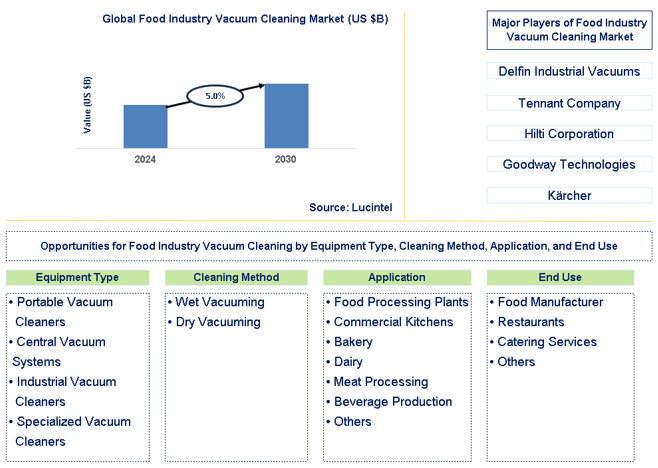
Key data points: The growth forecast = 5.0% annually for the next 6 years. Scroll below to get more insights. This market report covers trends, opportunities, and forecasts in the global food industry vacuum cleaning market to 2030 by equipment type (portable vacuum cleaners, central vacuum systems, industrial vacuum cleaners, and specialized vacuum cleaners), cleaning method (wet vacuuming and dry vacuuming), application (food processing plants, commercial kitchens, bakery, dairy, meat processing, and beverage production), end use (food manufacturers, restaurants, catering services, and others), and region (North America, Europe, Asia Pacific, and the Rest of the World)
We'll send your sample report shortly.
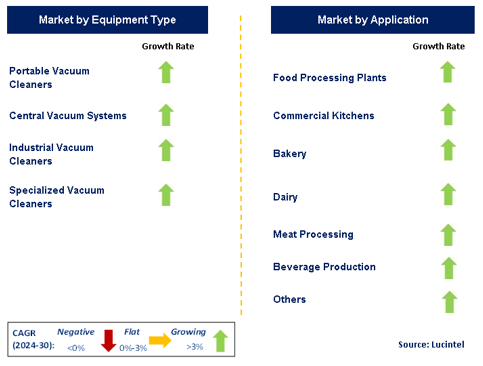
• Lucintel forecasts that, within the equipment type category, portable vacuum cleaners is expected to witness highest growth over the forecast period.
• In terms of regions, APAC is expected to witness highest growth over the forecast period due to growing population, urbanization, changing consumer lifestyles, along with the investments in advanced cleaning technologies to ensure food safety and meet international cleanliness standards in the region. Gain valuable insight for your business decisions with our comprehensive 150+ page report
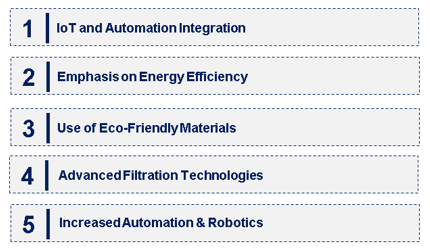
• IoT and Automation Integration: There has been an increased use of vacuum cleaning systems enabled by IoT, which facilitates real-time monitoring and predictive maintenance. This trend enhances operational efficiency by enabling remote diagnostics and minimizing downtime through proactive maintenance.
• Emphasis on Energy Efficiency: Energy-efficient vacuum cleaning systems are being developed with a focus on reducing energy consumption while maintaining high performance levels, as well as ensuring compliance with environmental regulations.
• Use of Eco-Friendly Materials: Sustainable and recyclable materials are being utilized in vacuum cleaning systems more than ever before. This aligns with the broader movement toward environmentally sustainable practices in the food industry and facilitates green certification standards for businesses.
• Advanced Filtration Technologies: New advanced filtration technologies are being incorporated into vacuum systems to improve air quality and surface hygiene. They help meet strict food safety regulations by preventing cross-contamination and maintaining hygienic conditions.
• Increased Automation & Robotics: There is an increased application of automation and robotics in vacuum cleaners. These technologies provide precise cleaning, minimizing manual intervention and improving consistency across different food processing areas. Recent trends, like integration with IoT, energy-efficient designs, green materials, enhanced filtration technologies, and automation, drive innovation in the food industry vacuum cleaning market. These trends enhance effectiveness, eco-friendliness, and conformity within food production activities.
• IoT Integration: The inclusion of the Internet of Things (IoT) in vacuum cleaning systems facilitates real-time monitoring and predictive maintenance. This boosts system efficiency, reduces downtime, and improves overall operation management in food processing plants.
• Energy-Efficient Designs: New vacuum cleaners are designed with energy-efficient solutions. This involves the development of advanced engines as well as energy conservation methods that help reduce power consumption and operating costs, which are part of sustainable goals to be met.
• Eco-Friendly Materials: The use of green materials—those that can be recycled—in vacuum systems has increased. Such materials reduce the environmental impact while helping the food industry achieve green certification and comply with eco-friendly regulations.
• Enhanced Filtration Systems: Some recent improvements include integration with high-performance filters for improved air and surface quality, which assist in maintaining high cleanliness standards required in food processing areas to avoid contamination.
• Automation and Robotics: Automated systems are increasingly being used in vacuum cleaning. They provide precision during cleaning operations, minimize manual labor, and enhance consistency in maintaining hygiene levels. IoT integration, energy-efficient designs, eco-friendly materials, enhanced filtration systems, and automation have been key drivers of operational effectiveness, greening processes within the industry, and adherence to hygiene standards within the food processing sector.
• Use of IoT-Enabled Systems: Linking vacuum cleaning systems to the Internet of Things (IoT) provides opportunities for better monitoring and maintenance. This will allow companies to become more efficient, reduce downtime, and conform to best practices set by the industry.
• Energy-Efficient Solutions: There is a lot of potential for growth in making energy-saving vacuum systems. These innovations will lower operational costs while meeting sustainable objectives, which will also attract customers who value environmental conservation.
• Expansion into Eco-Friendly Materials: Another opportunity lies in the adoption of eco-friendly materials within such devices, which helps meet the demand for sustainable products as well as assist businesses with their green certifications and regulatory mandates.
• Better Filtration Technologies: The advancement of hygiene and filtration technologies presents an opportunity to meet high standards set by global health bodies. Good filters can address contamination concerns while improving product quality, especially in food processing industries.
• Growth in Automated Cleaning Solutions: As automation and robotics take over the vacuum cleaner industry, there is potential for growth. These technologies provide precise cleaning services, reduce manual labor, and deliver consistent results, adapting to changing food industry requirements. Strategic growth opportunities within the food industry vacuum cleaning market include the use of IoTs, energy efficiency, eco-friendly materials, advanced filtration systems, and automation trends discussed above. These changes are improving sanitation techniques applied during food production processes, influencing the market's future as a whole.
• Technological Advancements: IoT and automation are some of the innovations driving the demand for vacuum cleaning systems in the food industry. These advancements help make cleaning more efficient, reduce downtime, and support operational excellence in food processing.
• Increasing Regulatory Standards: There has been a rise in stringent requirements for food safety that have necessitated the adoption of improved vacuum cleaning systems. These systems must meet high-performance standards to satisfy hygiene and safety prerequisites.
• Focus on Energy Efficiency: Innovation in vacuum cleaning systems is driven by the demand for energy-saving solutions. Companies are developing models with lower energy consumption and operational costs while maintaining high performance levels.
• Rising Demand for Sustainability: The shift toward eco-friendly materials and processes linked to environmental sustainability has influenced the use of such items in vacuum systems. Companies are engaging in various measures to make their vacuum systems more sustainable.
• Expanding Food Processing Industry: As production scales, there is a greater demand for efficient vacuums for industrial applications, among other factors affecting this sector's growth. Efficient cleaning systems are increasingly vital as production scales up. Challenges in the food industry vacuum cleaning market are:
• High Initial Costs: Smaller-scale food processors may find it challenging to meet the cost of advanced vacuum cleaning systems, especially their initial installation price. Balancing cost with performance is essential for market adoption.
• Complex Regulatory Compliance: Different regions have varying rules on safe food handling, making compliance challenging when exporting or selling across borders. Compliance with these regional regulations requires investment in regulatory expertise and product testing.
• Maintenance and Operational Costs: Although advanced systems provide higher efficiency, continuous maintenance expenses can pose a problem. Firms must manage these costs to stay profitable and operate at optimal levels. Various factors shape the food industry vacuum cleaning market, including technological advancements, regulatory standards, and sustainability. However, high initial costs, regulatory compliance, and maintenance are challenges that need to be addressed. It is crucial for a company to understand these factors to navigate the market effectively and capitalize on growth opportunities.
• Delfin Industrial Vacuums
• Tennant Company
• Hilti Corporation
• Goodway Technologies
• Kärcher
• Nederman
• VAC-U-MAX
• Portable Vacuum Cleaners
• Central Vacuum Systems
• Industrial Vacuum Cleaners
• Specialized Vacuum Cleaners
• Wet Vacuuming
• Dry Vacuuming
• Food Processing Plants
• Commercial Kitchens
• Bakery
• Dairy
• Meat Processing
• Beverage Production
• Food Manufacturer
• Restaurants
• Catering Services
• Others
• North America
• Europe
• Asia Pacific
• The Rest of the World
• United States: In the United States, efforts are being made to automate vacuum cleaning systems. Recent developments have seen the integration of IoT for real-time monitoring and predictive maintenance. These technologies enhance performance within food processing plants, reducing downtime.
• China: Energy efficiency and safety are key focuses in China’s vacuum cleaner technology advancements. To meet rising local and global food safety standards, better filtration mechanisms and improved hygiene standards are being built into new systems.
• Germany: Development of highly efficient vacuum cleaners that are eco-friendly is a specialty in Germany. The use of sustainable materials alongside energy-saving technologies forms part of these innovations. It is not surprising that these developments align with Germany’s environmentally oriented society, targeting regulatory compliance within the food industry.
• India: The growth of food processing activity is driving the demand for food industry vacuum cleaning products in India. There has been a supply-side response with affordable solutions catering to small- and medium-sized businesses that need high-quality products at competitive prices.
• Japan: Precision engineering and automation characterize Japan’s efforts concerning vacuum cleaning systems. In addition, innovations involving advanced robotics or AI enhance precision during cleaning operations, improving efficiency and ensuring compliance with Japan’s strict safety standards in food production.


• Delfin Industrial Vacuums
• Tennant Company
• Hilti Corporation
• Goodway Technologies
• Kärcher
• Nederman
• VAC-U-MAX Q5. Which food industry vacuum cleaning market segment will be the largest in future? Answer: Lucintel forecasts that portable vacuum cleaners is expected to witness highest growth over the forecast period. Q6. In food industry vacuum cleaning market, which region is expected to be the largest in next 5 years? Answer: APAC is expected to witness highest growth over the forecast period due to growing population, urbanization, changing consumer lifestyles, along with the investments in advanced cleaning technologies to ensure food safety and meet international cleanliness standards in the region. Q7. Do we receive customization in this report? Answer: Yes, Lucintel provides 10% customization without any additional cost.


Choose a license that fits your team. Instant PDF delivery.
Prices exclude taxes. Instant delivery. Custom licensing available on request.
Market Report · July 22, 2026
Market Report · July 22, 2026
Market Report · July 22, 2026
Trusted partner for strategic intelligence and business growth


Receive a complimentary market analysis tailored to your industry. Our analysts will identify key growth opportunities and competitive dynamics specific to your business.

Market size, growth rate, and key trend analysis for your specific sector.

Top competitor positioning and market share analysis.

Strategic recommendations backed by data-driven insights.
Get curated market intelligence and competitive moves straight to your inbox.
By subscribing, you agree to receive our monthly insights. Unsubscribe anytime.
Receive a complimentary market analysis tailored to your industry. Our analysts will identify key growth opportunities and competitive dynamics specific to your business.
Market size, growth rate, and key trend analysis for your specific sector.
Top competitor positioning and market share analysis.
Strategic recommendations backed by data-driven insights.
Get curated market intelligence, emerging trends, and competitive moves straight to your inbox each month.
By subscribing, you agree to receive our monthly insights. Unsubscribe anytime.
We'll send your sample report shortly.