
Market Report · July 22, 2026

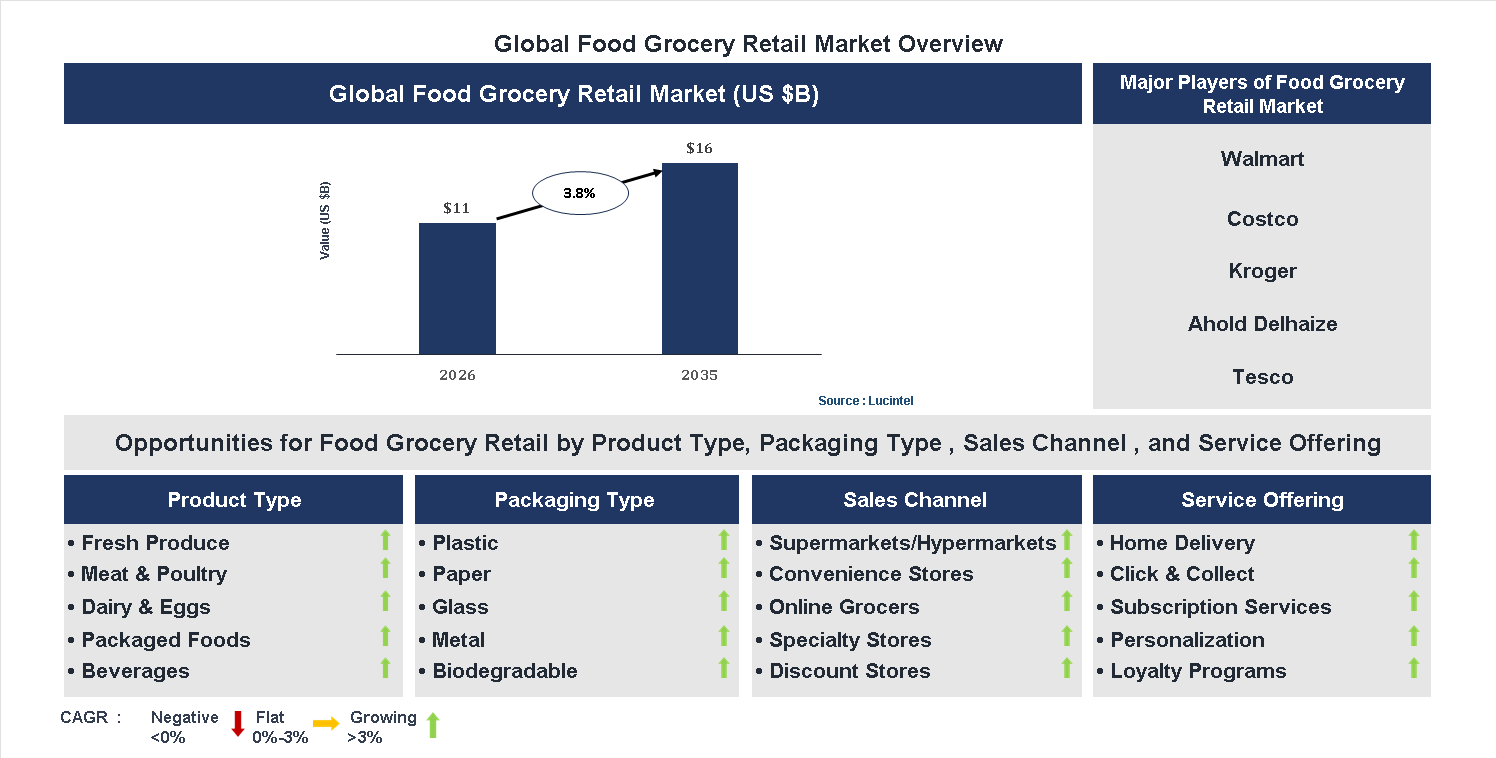
Key data points: The market size in 2035 = $15.3 billion, growth forecast = 3.4% annually for the next 8 years. Scroll below to get more insights. This market report covers trends, opportunities and forecasts in food grocery retail market to 2035 by product type (fresh produce, meat & poultry, dairy & eggs, packaged foods, and beverages), packaging type (plastic, paper, glass, metal, and biodegradable), sales channel (supermarkets/hypermarkets, convenience stores, online grocers, specialty stores, and discount stores), service offering (home delivery, click & collect, subscription services, personalization, and loyalty programs), and region (North America, Europe, Asia Pacific, and the Rest of the World)
We'll send your sample report shortly.
• Lucintel forecasts that, within the product type category, fresh produce is expected to witness the highest growth over the forecast period.
• Within the service offering category, home delivery is expected to witness the highest growth.
• In terms of region, APAC is expected to witness the highest growth over the forecast period. Gain valuable insights for your business decisions with our comprehensive 150+ page report. Sample figures with some insights are shown below.
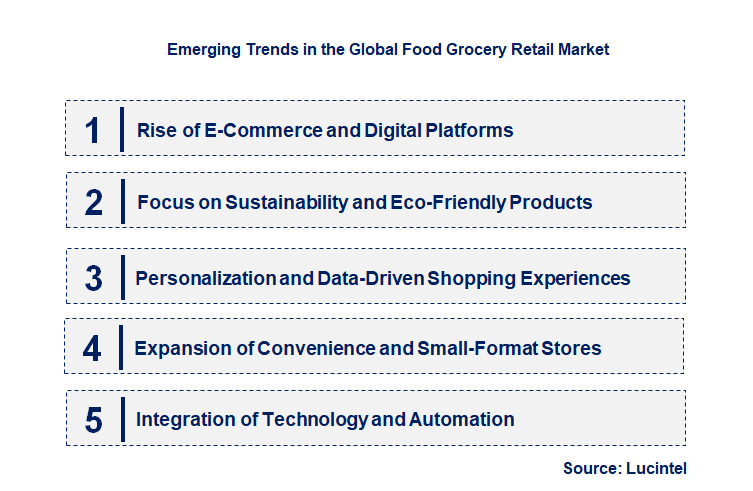
• Rise of E-commerce and Digital Platforms: The increasing adoption of online shopping platforms is revolutionizing grocery retail. Consumers now prefer the convenience of ordering groceries from home, supported by advancements in mobile apps and delivery services. Retailers are investing heavily in digital infrastructure, offering seamless online experiences, personalized recommendations, and contactless payments. This trend expands market reach, reduces physical store dependency, and caters to busy lifestyles. It also enables data collection for targeted marketing, enhancing customer loyalty and operational efficiency.
• Focus on Sustainability and Eco-friendly Products: Consumers are increasingly prioritizing sustainability, demanding eco-friendly packaging, organic options, and ethically sourced products. Retailers are responding by expanding their range of sustainable goods, reducing plastic use, and implementing environmentally conscious practices. This shift not only appeals to environmentally aware customers but also aligns with global efforts to combat climate change. Companies adopting sustainable practices can differentiate themselves, build brand loyalty, and meet regulatory requirements, ultimately influencing supply chain and product development strategies.
• Personalization and Data-driven Shopping Experiences: The integration of data analytics and AI is enabling retailers to offer highly personalized shopping experiences. By analyzing purchase history, preferences, and browsing behavior, stores can recommend products tailored to individual needs. This enhances customer satisfaction, increases basket size, and fosters loyalty. Personalized marketing campaigns, targeted discounts, and customized product assortments are becoming standard, transforming the traditional one-size-fits-all approach into a more customer-centric model. This trend is reshaping how retailers engage with consumers and optimize inventory.
• Expansion of Convenience and Small-format Stores: The demand for quick, accessible shopping options is fueling the growth of convenience stores and small-format outlets. These stores cater to urban populations seeking fast, easy access to essentials. Retailers are opening more neighborhood outlets, often integrated with online ordering and delivery services, to meet this need. This trend supports a shift from large hypermarkets to more localized, efficient formats that provide a seamless omnichannel experience. It also allows retailers to capture a broader customer base and adapt to changing shopping behaviors driven by urbanization and busy lifestyles.
• Integration of Technology and Automation: Automation technologies such as cashier-less checkouts, robotics, and inventory management systems are transforming store operations. These innovations reduce labor costs, improve accuracy, and speed up the shopping process. Automated warehouses and supply chain systems enhance efficiency and reduce waste. Retailers investing in these technologies can offer smoother customer experiences, better stock management, and cost savings. As automation becomes more affordable and sophisticated, it is set to redefine operational standards and competitive dynamics within the grocery retail market. These emerging trends are collectively reshaping the food grocery retail market by emphasizing digital transformation, sustainability, personalization, convenience, and technological innovation. Retailers who adapt to these shifts will be better positioned to meet evolving consumer expectations, improve operational efficiency, and sustain growth in a highly competitive environment.
• Growth in E-commerce Platforms: Expanding online grocery shopping options has revolutionized consumer access and convenience. Retailers investing in digital infrastructure are capturing a broader customer base, especially among tech-savvy and urban populations. This shift reduces physical store dependency, lowers operational costs, and offers personalized shopping experiences. The rise of delivery and click-and-collect services enhances customer satisfaction and loyalty, positioning e-commerce as a critical growth driver in the grocery retail sector.
• Adoption of Sustainable Practices: Sustainability initiatives are becoming central to retail strategies, driven by consumer demand for eco-friendly products and responsible sourcing. Retailers implementing sustainable supply chains, reducing plastic use, and promoting organic products are gaining competitive advantage. These practices not only improve brand reputation but also meet regulatory requirements and reduce costs over time. Emphasizing sustainability attracts environmentally conscious consumers, fostering long-term loyalty and market differentiation.
• Integration of Artificial Intelligence (AI): AI technologies are transforming inventory management, personalized marketing, and customer service. Retailers utilizing AI can optimize stock levels, forecast demand accurately, and reduce waste. Personalized recommendations enhance shopping experiences, increasing sales and customer retention. AI-powered chatbots and virtual assistants improve engagement and operational efficiency. This technological integration enables retailers to adapt swiftly to market changes and consumer preferences, maintaining a competitive edge in a dynamic environment.
• Focus on Health and Wellness Products: The rising consumer focus on health, wellness, and organic foods is reshaping product offerings. Retailers expanding health-centric product lines cater to this demand, boosting sales and customer loyalty. Incorporating functional foods, plant-based options, and dietary-specific products aligns with evolving lifestyles. This trend encourages innovation in product development and marketing strategies, positioning retailers as health-conscious brands and capturing a growing segment of health-aware consumers.
• Enhancement of Supply Chain Resilience: Recent disruptions have highlighted the importance of resilient supply chains. Retailers investing in diversified sourcing, local suppliers, and advanced logistics technologies are better equipped to handle shocks. Improved supply chain transparency and agility reduce stockouts and delays, ensuring consistent product availability. Strengthening supply chain resilience enhances operational stability, customer trust, and competitive positioning amid global uncertainties, making it a vital focus for future growth. These developments are collectively transforming the food grocery retail market by increasing efficiency, sustainability, and customer-centricity. They enable retailers to meet evolving consumer expectations, adapt to technological changes, and navigate supply chain challenges. As a result, the market is becoming more competitive, innovative, and resilient, fostering sustainable growth and expanding opportunities for stakeholders.
• Expansion of Online Grocery Shopping Platforms: The shift towards digital shopping is accelerating, driven by convenience and safety concerns. Retailers investing in robust e-commerce platforms, seamless delivery, and user-friendly interfaces can capture a larger customer base. Integration of AI and data analytics enables personalized recommendations, inventory management, and targeted marketing, enhancing customer experience and operational efficiency. This growth opportunity allows retailers to reach new demographics and adapt to changing shopping behaviors.
• Adoption of Sustainable Sourcing and Eco-Friendly Practices: Consumers increasingly prioritize sustainability, prompting retailers to source products responsibly and reduce environmental impact. Implementing eco-friendly packaging, reducing food waste, and supporting local suppliers can differentiate brands. Sustainable sourcing not only appeals to environmentally conscious consumers but also aligns with regulatory trends and cost savings. Retailers embracing these practices can build brand loyalty, meet compliance standards, and contribute positively to environmental goals.
• Integration of Advanced Data Analytics for Personalized Shopping Experiences: Leveraging big data enables retailers to understand customer preferences, purchase patterns, and behavior. This insight facilitates tailored marketing, customized promotions, and optimized inventory management. Personalization enhances customer satisfaction and retention, leading to increased sales. Investing in analytics tools and AI-driven solutions allows retailers to anticipate demand, reduce waste, and improve overall operational agility in a competitive market.
• Development of Private Label Brands to Increase Margins and Customer Loyalty: Private labels offer retailers higher profit margins and control over product quality and branding. Developing exclusive, high-quality private label products can attract price-sensitive consumers and foster brand loyalty. Strategic positioning of private labels across categories can differentiate retailers from competitors and reduce dependency on external suppliers. This growth opportunity supports margin expansion and strengthens customer relationships through unique offerings.
• Expansion into Emerging Markets with Tailored Product Assortments: Growing middle-class populations and urbanization in emerging markets present significant opportunities. Customizing product assortments to local tastes, preferences, and cultural nuances can drive market penetration. Establishing supply chains and distribution networks tailored to these regions enhances accessibility and affordability. This expansion enables retailers to diversify revenue streams, capitalize on untapped demand, and establish a strong foothold in high-growth economies. The overall impact of these growth opportunities will likely reshape the food grocery retail landscape, fostering innovation, sustainability, and customer-centric strategies. Retailers that effectively leverage these trends can achieve competitive advantage, increase market share, and ensure long-term profitability in an evolving industry.
• Technological Innovation: The adoption of digital platforms, mobile apps, and automation tools enhances shopping convenience, inventory management, and personalized marketing. E-commerce growth allows retailers to reach wider audiences, especially during the COVID-19 pandemic, which accelerated online grocery shopping. Advanced data analytics enable better demand forecasting and inventory optimization, reducing waste and increasing profitability. These technological shifts improve customer engagement and operational efficiency, fostering competitive advantage in a rapidly evolving landscape.
• Changing Consumer Preferences: Consumers are increasingly prioritizing health, wellness, and sustainability. Demand for organic, natural, and locally sourced products is rising, prompting retailers to diversify their offerings. Convenience factors such as ready-to-eat meals and online ordering are also influencing shopping behaviors. Retailers adapting to these preferences can attract new customer segments and retain loyalty. This shift encourages innovation in product assortment, packaging, and marketing strategies aligned with consumer values, driving market growth.
• Economic Factors: Fluctuations in disposable income, inflation rates, and employment levels directly impact consumer spending on groceries. During economic downturns, consumers tend to seek value-for-money options, discounts, and private labels, influencing retailer strategies. Conversely, economic stability fosters increased spending on premium and specialty products. Currency fluctuations and supply chain costs also affect pricing and profitability. Retailers must navigate these economic variables to maintain competitive pricing while ensuring profitability, making economic resilience vital for sustained growth.
• Supply Chain Optimization: Efficient supply chain management is critical for maintaining product freshness, reducing costs, and ensuring product availability. Advances in logistics, inventory management, and supplier relationships enable retailers to respond swiftly to demand fluctuations. Technologies like IoT and blockchain improve transparency and traceability, enhancing food safety and consumer trust. A resilient supply chain minimizes disruptions caused by geopolitical issues, natural disasters, or pandemics, ensuring consistent market supply and customer satisfaction, which are essential for market stability and expansion.
• Regulatory Environment: Food safety standards, labeling requirements, and sustainability regulations influence operational practices and product offerings. Compliance with these regulations ensures consumer trust and avoids legal penalties. Increasing emphasis on environmental sustainability drives retailers to adopt eco-friendly packaging and reduce waste. Regulatory changes can also create barriers to entry or require significant adjustments in sourcing and logistics. Staying ahead of evolving legal frameworks is crucial for market players to maintain legitimacy, avoid penalties, and capitalize on emerging opportunities aligned with regulatory trends. The challenges facing this Market include:
• Supply Chain Disruptions: Global events such as pandemics, geopolitical tensions, and natural disasters can severely disrupt supply chains, leading to product shortages and increased costs. These disruptions affect inventory levels, pricing, and customer satisfaction. Retailers must develop resilient supply networks and diversify sourcing strategies to mitigate risks. The unpredictability of such disruptions complicates planning and can erode profit margins, making supply chain resilience a critical challenge for sustained market stability.
• Intense Competition: The market is highly competitive, with traditional brick-and-mortar stores competing against online giants and discount chains. Price wars, promotional battles, and loyalty programs intensify rivalry, squeezing profit margins. Smaller players struggle to keep pace with technological investments and scale advantages of larger firms. Differentiation through product quality, customer experience, and sustainability initiatives becomes essential but challenging. Maintaining market share amid fierce competition requires continuous innovation and strategic agility.
• Regulatory Compliance Costs: Increasing regulatory requirements related to food safety, labeling, and environmental standards impose significant compliance costs on retailers. These costs include upgrading facilities, training staff, and implementing new processes, which can strain financial resources, especially for smaller players. Non-compliance risks legal penalties and damage to brand reputation. Navigating complex and evolving regulations demands substantial investment in legal expertise and operational adjustments, posing ongoing challenges to market participants. The food grocery retail market is shaped by rapid technological advancements, shifting consumer preferences, economic fluctuations, supply chain efficiencies, and regulatory frameworks. While these drivers foster growth and innovation, challenges such as supply chain disruptions, intense competition, and compliance costs threaten stability. Market players must strategically adapt to these dynamics, leveraging opportunities while mitigating risks. Success hinges on technological adoption, consumer-centric strategies, resilient supply chains, and proactive regulatory compliance, ensuring sustainable growth in a competitive environment.
• Walmart
• Costco
• Kroger
• Ahold Delhaize
• Tesco
• Aldi
• Lidl
• Fresh Produce
• Meat & Poultry
• Dairy & Eggs
• Packaged Foods
• Beverages
• Plastic
• Paper
• Glass
• Metal
• Biodegradable
• Supermarkets/Hypermarkets
• Convenience Stores
• Online Grocers
• Specialty Stores
• Discount Stores
• Home Delivery
• Click & Collect
• Subscription Services
• Personalization
• Loyalty Programs
• North America
• Europe
• Asia Pacific
• The Rest of the World
• United States: The US grocery retail market has seen rapid growth in online shopping, with major players investing heavily in e-commerce platforms and delivery services. Automation in stores, such as cashier-less checkout systems, is expanding, improving efficiency. Organic and health-focused products are gaining popularity, prompting retailers to expand their organic offerings. Sustainability initiatives, including reducing plastic waste and sourcing locally, are becoming central to brand strategies. Additionally, mergers and acquisitions are consolidating market power, creating more comprehensive shopping ecosystems for consumers.
• China: China’s grocery retail market is characterized by a surge in digital and mobile commerce, with platforms like Alibaba and JD.com leading the way. Supermarkets are integrating online and offline channels through omnichannel strategies, enhancing customer convenience. Fresh food delivery and contactless payment methods are widely adopted, especially post-pandemic. Retailers are investing in smart store technologies, including AI and IoT, to optimize inventory and personalize shopping experiences. E-commerce giants are expanding into rural areas, increasing market penetration. Sustainability efforts are emerging but remain secondary to rapid growth and technological innovation.
• Germany: The German grocery retail market is marked by a strong focus on sustainability and organic products, driven by consumer demand for eco-friendly options. Discount chains like Aldi and Lidl continue to expand their private label offerings, emphasizing affordability and quality. E-commerce sales are growing steadily, with retailers investing in online platforms and home delivery services. Digital innovations such as self-checkout and mobile payment solutions are becoming standard. Regulatory pressures around food labeling and sustainability are influencing product offerings. The market remains competitive, with a focus on efficiency, quality, and environmental responsibility.
• India: India’s grocery retail sector is experiencing rapid expansion, fueled by rising incomes, urbanization, and digital adoption. Modern retail formats like supermarkets and hypermarkets are increasing their footprint, especially in Tier 2 and Tier 3 cities. E-commerce platforms such as Big Basket and Amazon are gaining market share through online grocery delivery, driven by convenience and affordability. Small kirana stores are integrating digital payment solutions to stay competitive. The government’s push for reforms and FDI in retail is facilitating growth. Sustainability and local sourcing are gaining attention, but price sensitivity remains a key factor influencing consumer choices.
• Japan: The Japanese grocery retail market is characterized by high consumer demand for quality, freshness, and convenience. Retailers are adopting automation and robotics to improve store operations and reduce labor costs. E-commerce sales are rising, with a focus on premium and specialty products. Sustainability initiatives, including reducing food waste and eco-friendly packaging, are gaining importance. Convenience stores continue to innovate with expanded product ranges and services like online ordering and delivery. Demographic shifts, such as an aging population, are prompting retailers to develop tailored offerings and health-focused products to meet diverse consumer needs.


• Walmart
• Costco
• Kroger
• Ahold Delhaize
• Tesco
• Aldi
• Lidl Q6. Which food grocery retail market segment will be the largest in future? Answer: Lucintel forecasts that, within the product type category, fresh produce is expected to witness the highest growth over the forecast period. Q7. In food grocery retail market, which region is expected to be the largest in next 5 years? Answer: In terms of region, APAC is expected to witness the highest growth over the forecast period. Q8. Do we receive customization in this report? Answer: Yes, Lucintel provides 10% customization without any additional cost.


Choose a license that fits your team. Instant PDF delivery.
Prices exclude taxes. Instant delivery. Custom licensing available on request.
Market Report · July 22, 2026
Market Report · July 22, 2026
Market Report · July 22, 2026
Trusted partner for strategic intelligence and business growth


Receive a complimentary market analysis tailored to your industry. Our analysts will identify key growth opportunities and competitive dynamics specific to your business.

Market size, growth rate, and key trend analysis for your specific sector.

Top competitor positioning and market share analysis.

Strategic recommendations backed by data-driven insights.
Get curated market intelligence and competitive moves straight to your inbox.
By subscribing, you agree to receive our monthly insights. Unsubscribe anytime.
Receive a complimentary market analysis tailored to your industry. Our analysts will identify key growth opportunities and competitive dynamics specific to your business.
Market size, growth rate, and key trend analysis for your specific sector.
Top competitor positioning and market share analysis.
Strategic recommendations backed by data-driven insights.
Get curated market intelligence, emerging trends, and competitive moves straight to your inbox each month.
By subscribing, you agree to receive our monthly insights. Unsubscribe anytime.
We'll send your sample report shortly.