
Market Report · July 22, 2026

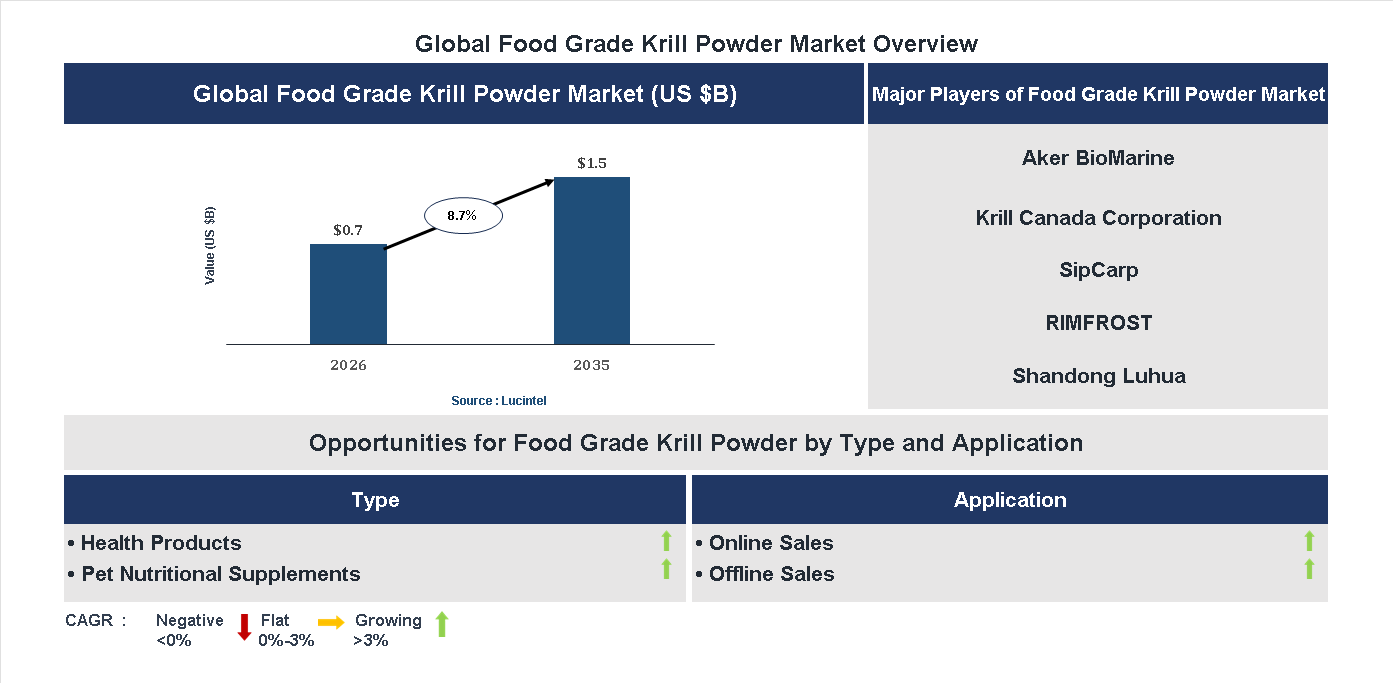
Key data points: The market size in 2035 = $1.5 billion, growth forecast = 8.7% annually for the next 8 years. Scroll below to get more insights. This market report covers trends, opportunities and forecasts in food grade krill powder market to 2035 by type (health products and pet nutritional supplements), application (online sales and offline sales), and region (North America, Europe, Asia Pacific, and the Rest of the World)
We'll send your sample report shortly.
• Lucintel forecasts that, within the type category, health product is expected to witness higher growth over the forecast period.
• Within the application category, online sale is expected to witness higher growth.
• In terms of region, APAC is expected to witness the highest growth over the forecast period. Gain valuable insights for your business decisions with our comprehensive 150+ page report. Sample figures with some insights are shown below.
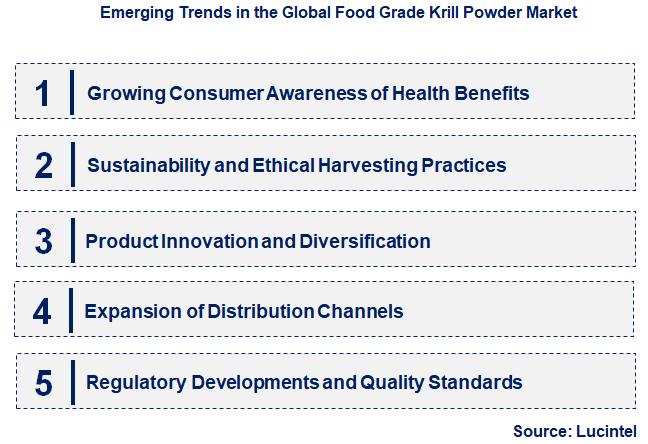
• Growing Consumer Awareness of Health Benefits: Consumers are increasingly recognizing the nutritional value of krill powder, particularly its high omega-3 fatty acids, antioxidants, and anti-inflammatory properties. This awareness is driving demand for natural supplements and functional foods containing krill powder. As health consciousness rises, more consumers prefer products that support cardiovascular health, joint mobility, and overall wellness, boosting market growth. Companies are leveraging marketing strategies to educate consumers about krill powders benefits, thereby expanding its application in health-focused food and supplement sectors.
• Sustainability and Ethical Harvesting Practices: Environmental concerns about overfishing and ecosystem impact are prompting the industry to adopt sustainable harvesting methods. Certification standards and eco-labels are gaining importance, reassuring consumers about responsible sourcing. Companies investing in sustainable practices are gaining a competitive advantage and consumer trust. This trend encourages innovation in harvesting technology and supply chain transparency, ensuring long-term resource availability. As sustainability becomes a key purchasing criterion, market players are aligning their operations with environmental standards to meet regulatory and consumer expectations.
• Product Innovation and Diversification: The market is witnessing a surge in innovative products incorporating krill powder, such as energy bars, beverages, dietary supplements, and pet foods. Manufacturers are exploring new formulations to enhance taste, texture, and bioavailability. This diversification caters to different consumer segments, from health-conscious adults to pet owners. Advanced processing techniques are improving product stability and nutrient retention. Such innovation not only broadens market reach but also creates opportunities for premium and niche products, fueling overall market expansion and consumer engagement.
• Expansion of Distribution Channels: E-commerce platforms, health stores, and specialty supermarkets are becoming primary channels for krill powder products. Online sales enable wider reach and direct consumer engagement, especially in regions with limited physical retail presence. Strategic partnerships with retailers and online marketplaces are facilitating product accessibility. Additionally, direct-to-consumer marketing and subscription models are increasing brand loyalty. This expansion enhances market penetration, accelerates product adoption, and supports rapid growth, especially among younger, tech-savvy consumers seeking convenient purchasing options.
• Regulatory Developments and Quality Standards: Governments and industry bodies are establishing stricter regulations and quality standards for krill products to ensure safety, purity, and sustainability. Certification processes and labeling requirements are becoming more rigorous, influencing product formulation and marketing. Compliance with these standards is essential for market access and consumer trust. Companies investing in quality assurance and transparent labeling are better positioned to navigate regulatory landscapes and avoid legal issues. These developments promote a safer, more reliable market environment, encouraging responsible industry practices and consumer confidence. In summary, these emerging trends are collectively reshaping the food grade krill powder market by fostering sustainable practices, driving innovation, expanding distribution, and emphasizing consumer health and safety. As these trends continue to evolve, they will create new growth opportunities, enhance product credibility, and meet the increasing demand for natural, functional, and ethically sourced ingredients.
• Growing Consumer Awareness of Health Benefits: The increasing recognition of krill powders nutritional value, including omega-3 fatty acids and antioxidants, is boosting demand. Consumers are seeking natural, sustainable supplements, which positions krill powder as a preferred choice. This trend encourages product innovation and marketing strategies focused on health benefits, expanding market reach. As awareness grows, more health-conscious consumers are adopting krill-based products, leading to increased sales and market expansion.
• Expansion in Functional Food and Dietary Supplement Sectors: The integration of krill powder into functional foods and dietary supplements is creating new revenue streams. Manufacturers are developing innovative products like energy bars, smoothies, and capsules enriched with krill. This diversification caters to health-conscious consumers and athletes, driving market growth. The trend also encourages R&D investments to optimize formulations, improve bioavailability, and meet regulatory standards, further strengthening market presence.
• Advances in Extraction and Processing Technologies: Innovations in eco-friendly extraction methods, such as supercritical fluid extraction, are improving product purity and sustainability. These technological advancements reduce processing costs and enhance nutrient retention. Improved shelf life and product stability are achieved, making krill powder more attractive to manufacturers. This progress supports large-scale production, reduces environmental impact, and aligns with consumer preferences for sustainable and high-quality products.
• Focus on Sustainable Harvesting and Eco-Friendly Practices: Market players are adopting sustainable harvesting techniques to protect krill populations and marine ecosystems. Certification programs and transparent supply chains are gaining importance, boosting consumer trust. These practices ensure long-term resource availability and compliance with environmental regulations. Sustainability initiatives also enhance brand reputation, attract eco-conscious consumers, and open new markets, fostering responsible growth within the industry.
• Increasing Global Distribution and Market Penetration: Companies are expanding distribution channels through e-commerce, retail partnerships, and international markets. This global outreach increases product accessibility and brand visibility. Emerging markets show rising demand due to increasing health awareness and disposable incomes. Strategic collaborations and localized marketing are facilitating market penetration, enabling companies to capitalize on the growing popularity of krill powder worldwide and diversify revenue sources. The recent developments in the food grade krill powder market are significantly enhancing product quality, sustainability, and market reach. These innovations and strategic initiatives are driving consumer adoption, expanding applications, and fostering sustainable practices. As a result, the market is experiencing accelerated growth, increased competitiveness, and broader global presence. These trends collectively position krill powder as a vital, eco-friendly ingredient in the health and nutrition industry, promising sustained market expansion and innovation.
• Growing Demand for Nutritional Supplements: The increasing consumer focus on health and wellness is driving demand for krill powder as a rich source of omega-3 fatty acids, antioxidants, and essential nutrients. The supplement industry is adopting krill powder for its superior bioavailability and sustainability credentials, creating significant growth opportunities. Manufacturers are developing innovative formulations to cater to health-conscious consumers seeking natural, effective dietary supplements, thus expanding the market’s reach.
• Expansion in Food and Beverage Applications: Food manufacturers are incorporating krill powder into various products such as snacks, cereals, and functional foods to enhance nutritional profiles. Its unique flavor and health benefits appeal to consumers seeking clean-label, functional options. The trend toward plant-based and sustainable ingredients further supports its integration into mainstream food products. This diversification into diverse food categories offers substantial growth potential for market players.
• Rising Adoption in Pet Nutrition: The pet food industry is increasingly utilizing krill powder as a natural, nutrient-rich ingredient to improve pet health, coat quality, and immune function. Its high omega-3 content and palatability make it attractive for premium pet food formulations. As pet owners prioritize natural and holistic nutrition, the demand for krill-based pet products is expected to grow, opening new avenues for market expansion.
• Increasing Focus on Sustainable and Eco-Friendly Sourcing: Consumers and regulators are emphasizing sustainability, prompting companies to adopt responsible harvesting practices for krill. Certification standards and traceability initiatives are gaining importance, ensuring environmentally sustainable supply chains. This focus enhances brand reputation and consumer trust, fostering market growth. Sustainable sourcing practices also open opportunities for partnerships and certifications that can differentiate products in a competitive landscape.
• Technological Innovations in Processing and Extraction: Advances in processing techniques improve the quality, purity, and bioavailability of krill powder. Innovations such as cold-pressing and advanced filtration help retain nutrients while reducing contaminants. These technological improvements enable manufacturers to produce higher-quality products, meet regulatory standards, and extend shelf life. Enhanced processing capabilities support product diversification, meet consumer expectations, and drive overall market growth. These growth opportunities collectively position the food grade krill powder market for substantial expansion, driven by consumer health trends, sustainability commitments, and technological advancements. Companies that strategically leverage these opportunities can strengthen their market presence, innovate product offerings, and meet the evolving demands of global consumers, ensuring long-term growth and competitiveness in this dynamic industry.
• Increasing Consumer Awareness and Health Trends: Growing awareness of omega-3 fatty acids and antioxidant benefits from krill powder has significantly boosted demand. Consumers are seeking natural, sustainable supplements to improve overall health, immune function, and cognitive performance. This trend is supported by the proliferation of health and wellness platforms, which educate consumers about the benefits of krill-based products. As a result, manufacturers are expanding their product lines to meet this rising demand, leading to increased sales and market penetration globally.
• Technological Advancements in Extraction and Processing: Innovations in eco-friendly extraction methods, such as supercritical fluid extraction, have enhanced the purity and quality of krill powder. These technological improvements reduce processing costs and environmental impact, making products more affordable and sustainable. Additionally, advancements in freeze-drying and encapsulation techniques have improved product stability and shelf life, enabling wider distribution channels and consumer acceptance. These developments are crucial for scaling production and maintaining high-quality standards in the competitive market.
• Growing Demand for Sustainable and Eco-Friendly Products: Consumers are increasingly prioritizing sustainability and environmental responsibility in their purchasing decisions. Krill harvesting practices that adhere to strict sustainability standards, such as MSC certification, are gaining popularity. Companies investing in sustainable sourcing and transparent supply chains are gaining competitive advantages, attracting environmentally conscious consumers. This shift encourages industry players to adopt responsible harvesting techniques, which not only support ecological balance but also enhance brand reputation and market share.
• Expansion of the Dietary Supplements and Functional Food Sectors: The rising popularity of dietary supplements and functional foods containing krill powder is a major growth driver. Consumers are seeking convenient ways to incorporate health-boosting ingredients into their daily routines. The integration of krill powder into various products like smoothies, energy bars, and beverages has expanded market reach. This diversification caters to different consumer preferences and age groups, fueling market growth and encouraging innovation in product development. The challenges in the food grade krill powder market are:
• Regulatory and Environmental Concerns: Stringent regulations regarding marine resource harvesting and processing standards can hinder market growth. Variations in legal frameworks across regions create compliance complexities for manufacturers. Additionally, environmental concerns about overharvesting krill and its impact on marine ecosystems pose risks to sustainable supply. Regulatory restrictions and environmental activism may lead to supply chain disruptions, increased costs, and reputational risks, requiring companies to invest heavily in sustainable practices and compliance measures.
• Supply Chain and Sustainability Challenges: Ensuring a consistent, sustainable supply of high-quality krill is challenging due to environmental fluctuations and harvesting limitations. Overharvesting can threaten marine ecosystems, leading to stricter regulations and reduced availability. Supply chain disruptions caused by climate change, geopolitical issues, or logistical hurdles can impact product availability and pricing. Maintaining transparency and sustainability in sourcing is essential but complex, requiring significant investment and strategic planning.
• Market Competition and Price Volatility: The market faces intense competition among key players, which can lead to price wars and reduced profit margins. Fluctuations in raw material prices, driven by environmental factors and harvesting quotas, contribute to market volatility. This unpredictability complicates forecasting and investment decisions, potentially deterring new entrants and affecting existing players profitability. Companies must innovate and optimize operations to remain competitive amid these economic pressures. In summary, the food grade krill powder market is driven by technological innovations, increasing health consciousness, and sustainability trends, which collectively foster growth. However, regulatory hurdles, environmental concerns, and market competition pose significant challenges that could limit expansion and profitability. The interplay of these factors will shape the markets future trajectory, requiring stakeholders to adopt sustainable practices, innovate continuously, and navigate regulatory landscapes effectively. Overall, the markets growth potential remains promising, provided these drivers and challenges are managed strategically.
• Aker BioMarine
• Krill Canada Corporation
• SipCarp
• RIMFROST
• Shandong Luhua
• Qingdao Kangjing
• Interrybflot
• Health Products
• Pet Nutritional Supplements
• Online Sales
• Offline Sales
• North America
• Europe
• Asia Pacific
• The Rest of the World
• United States: The US market has seen rapid growth due to rising consumer interest in omega-3 supplements and sustainable seafood options. Major companies are investing in advanced extraction techniques to improve purity and shelf life. Regulatory agencies are establishing clearer standards, boosting consumer confidence. Retailers are expanding product lines, including organic and non-GMO options, to meet diverse preferences. E-commerce platforms are also facilitating wider access, contributing to increased sales. Additionally, collaborations with research institutions are driving innovation in sustainable harvesting practices, ensuring long-term supply stability.
• China: China’s market for Food Grade Krill Powder is expanding swiftly, driven by increasing health consciousness and a growing middle class. Local companies are investing in large-scale processing facilities to meet domestic demand and export needs. Government policies favor sustainable fishing practices, encouraging responsible sourcing. The integration of traditional medicine with modern nutrition is boosting product acceptance. Innovations in flavoring and packaging are making products more appealing to younger consumers. Moreover, China is becoming a key player in global supply chains, with exports rising significantly, supported by improved logistics and trade agreements.
• Germany: Germany’s market is characterized by a focus on high-quality, organic, and sustainably sourced krill powder products. Consumer demand for clean-label and environmentally friendly foods is driving industry standards. Companies are adopting eco-certifications and transparent supply chains to appeal to eco-conscious buyers. Research institutions are collaborating on sustainability initiatives and nutritional studies. The retail sector is witnessing a shift towards premium products, with specialty health stores and online platforms leading sales. Regulatory compliance with EU standards ensures product safety and quality, fostering consumer trust and market stability.
• India: The Indian market for Food Grade Krill Powder is emerging, with increasing awareness of omega-3 benefits and global health trends. Local companies are exploring partnerships with international suppliers to access high-quality raw materials. The focus is on affordable, functional foods that cater to the growing middle class. Government initiatives promoting sustainable fishing practices are influencing sourcing strategies. The market is also witnessing a rise in health-conscious consumers seeking natural supplements. E-commerce and health food stores are expanding their offerings, while startups are innovating with innovative packaging and marketing to capture market share.
• Japan: Japan’s market is mature, with a strong tradition of consuming omega-3 rich foods. Consumer preference for high-quality, sustainably sourced krill powder remains high. Companies are investing in advanced processing technologies to enhance product purity and bioavailability. Regulatory standards are strict, ensuring safety and quality, which sustains consumer confidence. The focus on functional foods and supplements is driving innovation, including fortified products with added health benefits. Retail channels, including specialty stores and online platforms, are expanding their reach. Japan continues to lead in research on nutritional benefits, supporting ongoing market growth and product development.


• Aker BioMarine
• Krill Canada Corporation
• SipCarp
• RIMFROST
• Shandong Luhua
• Qingdao Kangjing
• Interrybflot Q6. Which food grade krill powder market segment will be the largest in future? Answer: Lucintel forecasts that, within the type category, health product is expected to witness higher growth over the forecast period. Q7. In food grade krill powder market, which region is expected to be the largest in next 5 years? Answer: In terms of region, APAC is expected to witness the highest growth over the forecast period. Q8. Do we receive customization in this report? Answer: Yes, Lucintel provides 10% customization without any additional cost.


Choose a license that fits your team. Instant PDF delivery.
Prices exclude taxes. Instant delivery. Custom licensing available on request.
Market Report · July 22, 2026
Market Report · July 22, 2026
Market Report · July 22, 2026
Trusted partner for strategic intelligence and business growth


Receive a complimentary market analysis tailored to your industry. Our analysts will identify key growth opportunities and competitive dynamics specific to your business.

Market size, growth rate, and key trend analysis for your specific sector.

Top competitor positioning and market share analysis.

Strategic recommendations backed by data-driven insights.
Get curated market intelligence and competitive moves straight to your inbox.
By subscribing, you agree to receive our monthly insights. Unsubscribe anytime.
Receive a complimentary market analysis tailored to your industry. Our analysts will identify key growth opportunities and competitive dynamics specific to your business.
Market size, growth rate, and key trend analysis for your specific sector.
Top competitor positioning and market share analysis.
Strategic recommendations backed by data-driven insights.
Get curated market intelligence, emerging trends, and competitive moves straight to your inbox each month.
By subscribing, you agree to receive our monthly insights. Unsubscribe anytime.
We'll send your sample report shortly.