
Market Report · July 22, 2026

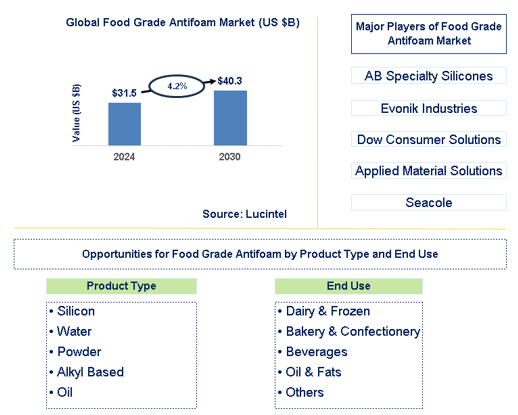
Key data points: The market size in 2030 = $40.3 million, growth forecast = 4.2% annually for the next 6 years. Scroll below to get more insights. This market report covers trends, opportunities, and forecasts in the global food grade antifoam market to 2030 by product type (silicon, water, powder, alkyl based, and oil), end use (dairy & frozen, bakery & confectionery, beverages, oil & fats, and others), and region (North America, Europe, Asia Pacific, and the Rest of the World)
We'll send your sample report shortly.
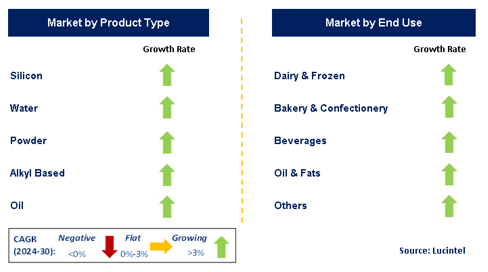
• Lucintel forecasts that, within the product type category, silicon is expected to witness the highest growth over the forecast period.
• In terms of regions, North America is expected to witness highest growth over the forecast period due to the rising awareness about the health risks associated with food foaming among consumers in the region. Gain valuable insight for your business decisions with our comprehensive 150+ page report
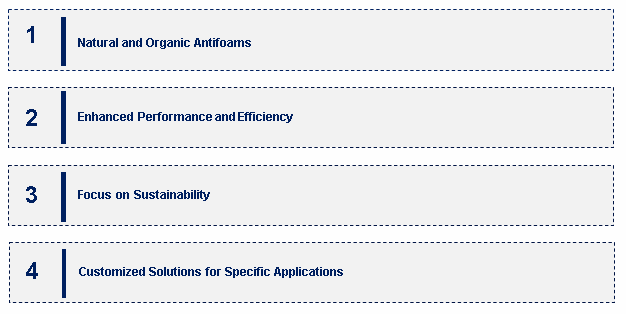
• Natural and Organic Antifoams: The trend towards natural and organic antifoaming agents is growing. Consumers and producers are increasingly looking for antifoams made with fewer synthetic additives from natural ingredients. This change reflects the general drive towards cleaner labels and sustainability in food production.
• Enhanced Performance and Efficiency: The introduction of more efficient foam control formulations, driven by developments in formulation technology, has resulted in new products with better compatibility for different food and beverage applications and long-lasting effects, leading to enhanced production efficiency.
• Focus on Sustainability: There is an increasing need for eco-friendly antifoams due to environmental concerns. As a result, companies have invested heavily in biodegradable materials sourced from renewable resources to reduce their ecological impact, comply with global sustainability objectives, and meet regulations for greener production practices.
• Customized Solutions for Specific Applications: There is also an increase in specialized antifoam solutions targeting specific food and beverage markets. Processors are customizing certain products to overcome challenges associated with processing environments, thereby improving performance.
• Regulatory Compliance and Safety: With stricter regulations on food safety, more emphasis is now being placed on ensuring that antifoaming agents meet international standards. To address regulatory requirements, companies focus on improving the safety of their products while responding to consumer queries regarding food quality. These emerging trends are causing major shifts within the food grade antifoam market, such as going natural, improving performance properties, becoming sustainable, and customizing products to comply with regulations. These trends are redirecting industry growth patterns and reflecting changing needs or tastes among stakeholders, including those involved in processing activities.
• Development of Natural Antifoams: New formulations using natural and organic ingredients are emerging, driven by consumer demand for cleaner labels and safer food processing chemicals. These antifoams offer effective foam control with reduced synthetic additives, aligning with trends towards natural products.
• Introduction of High-Performance Products: The market is seeing the launch of high-performance antifoam agents that provide superior foam control and stability. These products are designed to enhance efficiency in various food and beverage applications, addressing challenges in large-scale production processes.
• Advancements in Sustainable Solutions: Companies are focusing on developing eco-friendly antifoam agents made from biodegradable and renewable materials. Such advances signify an increased commitment to sustainability and environmental responsibility within the food processing industry.
• Enhanced Regulatory Compliance: Recent developments include improved formulations that meet stringent food safety regulations. Companies are investing in product testing and certification to ensure compliance with international standards and address consumer concerns about food safety.
• Expansion of Product Offerings: The market is experiencing an increase in the variety of antifoaming agents available for purchase today. Manufacturers are expanding their product lines to cater to diverse food and beverage applications, offering solutions that address specific needs and improve production efficiency. There have been improvements concerning product performance, regulatory compliance, and sustainability, which have led to growth in the food grade antifoam market segment over time. The industry is shifting towards natural ingredients, high-performing options, and a wider range of products that can address unique requirements, enhancing overall production efficiencies within this sector.
• Expansion in Beverage Industry: The beverage industry presents ample opportunities for food grade antifoams. Foam control agents are vital in production processes by managing foam, which increases efficiency and maintains high-quality products.
• Growth in Dairy Processing: Antifoams are widely used in the dairy industry, where they have significant applications. As dairy production capacity increases, so does the need to combat foam created during milk pasteurization and cheese making through proper application of antifoams, leading to market growth.
• Advancements in Baking Industry: For example, rising levels of interest in minimizing foam during dough baking offer a way forward for manufacturers of food grade antifoams. Innovations have been made in various specializations of antifoam compositions, addressing the specific challenges in this sector.
• Increased Demand in Food Manufacturing: Market growth means that there is more application space for defoaming agents, such as food grade antifoams, as effective antifoaming agents become more necessary with the scale-up in production processes, which becomes more complex with time. This helps keep efficiency at par while still ensuring product quality.
• Focus on Sustainable Solutions: The shift towards sustainability has made eco-friendly antifoam alternatives critical for expansion. Companies manufacturing biodegradable and organic antifoams stand a chance to benefit from the increasing demand for environmentally friendly products within the food sector. Strategic growth opportunities in the food grade antifoam market are mainly found in the beverage, dairy processing, baking, food manufacturing, and sustainability sectors, which underline changing needs over time and provide firms with opportunities to expand their presence while improving their offerings.
• Technological Advancements: The growth of the antifoam market has been contributed mainly by changes in its manufacturing, such as product naturalization and the development of high-performance items. These modifications help in foam control, increase processing efficiencies, and resolve some of the key issues in food production and processing.
• Increased Food Production: A growing global population, coupled with the expansion of the food industry, has led to demand for effective antifoams. Efficient antifoams are necessary for product quality control to manage rising foam levels associated with increased production.
• Regulatory Compliance: Stricter controls regarding food safety and quality have led to the demand for international compliant defoaming agents. Investment in this area helps meet these requirements and consumer expectations.
• Consumer Preference for Natural Products: Rising interest in organic foods has influenced demand for antifoams made from natural sources. Companies are developing safer alternatives that do not compromise hygiene standards.
• Focus on Sustainability: Increased attention on green initiatives and sustainability is causing a rise in the development of eco-friendly defoamers globally. To be sustainable, manufacturers are adopting biodegradable materials, thus reducing pollution caused by plastic waste. Challenges in the food grade antifoam market are:
• High Production Costs: High costs incurred during the development or manufacture of sophisticated antifoam products, especially those that use natural ingredients, require balancing costs against performance to compete effectively within the market.
• Regulatory Hurdles: Dealing with diverse and changing legal guidelines across different regions can be very challenging. Compliance with varied requirements necessitates significant investment in experts to guide the testing process before products are ready for consumption.
• Performance Limitations: Some products may experience limitations with respect to their application, such as in high foam situations or certain types of food. Overcoming these limitations will require constant research and development to make products more effective. The food grade antifoam market has been driven by technological advancements, increased food production, regulatory compliance, consumer preferences, and sustainability. However, challenges such as high production costs, regulatory hurdles, and performance limitations must still be addressed. Understanding these factors is crucial for industry players to navigate the changing environment and capitalize on growth opportunities.
• AB Specialty Silicones
• Evonik Industries
• Dow Consumer Solutions
• Applied Material Solutions
• Seacole
• Penta Manufacturing Company
• Tri-Chem Industries
• Silicon
• Water
• Powder
• Alkyl Based
• Oil
• Dairy & Frozen
• Bakery & Confectionery
• Beverages
• Oil & Fats
• Others
• North America
• Europe
• Asia Pacific
• The Rest of the World
• United States: In the United States, for example, improved formulations of antifoam products adhere to strict food safety standards. Innovations aim at increasing efficiency while using natural and less harmful substances. To meet the clean-labeling trend and customer demand for safer food chemicals, companies are investing in R&D, which will ultimately improve antifoam performance.
• China: There has been a significant rise in the food grade antifoam market due to fast industrialization and increased agricultural activities in China. Several developments, including the adoption of advanced formulas that enhance foam control and stability across different food and beverage applications, have taken place. Local manufacturers are extending their product range to incorporate broad industry requirements and regulatory needs.
• Germany: Germany is leading the way in terms of innovations with environmentally friendly and sustainable antifoaming solutions. They use biodegradable or renewable raw materials with the goal of protecting the environment. German firms are also developing high-efficiency antifoams for better process energy utilization in food and beverage production.
• India: India is witnessing growth in its food grade antifoam sector, fueled by increased food processing operations coupled with strict sanitation guidelines. Advanced antimicrobial agents that address excessive foam formation in large-scale food manufacturing facilities have recently hit the market. Further focus has been placed on complying with international safety requirements for foodstuffs.
• Japan: Japan is making strides with high-performing defoaming agents that are compatible with the country’s sophisticated food processing technologies. Japanese companies are also working on improving the safety and effectiveness of their products to meet strict domestic and international regulations.


• AB Specialty Silicones
• Evonik Industries
• Dow Consumer Solutions
• Applied Material Solutions
• Seacole
• Penta Manufacturing Company
• Tri-Chem Industries Q6. Which food grade antifoam market segment will be the largest in future? Answer: Lucintel forecasts that silicon is expected to witness the highest growth over the forecast period. Q7. In food grade antifoam market, which region is expected to be the largest in next 5 years? Answer: North America is expected to witness highest growth over the forecast period due to the rising awareness about the health risks associated with food foaming among consumers in the region. Q.8 Do we receive customization in this report? Answer: Yes, Lucintel provides 10% customization without any additional cost.


Choose a license that fits your team. Instant PDF delivery.
Prices exclude taxes. Instant delivery. Custom licensing available on request.
Market Report · July 22, 2026
Market Report · July 22, 2026
Market Report · July 22, 2026
Trusted partner for strategic intelligence and business growth


Receive a complimentary market analysis tailored to your industry. Our analysts will identify key growth opportunities and competitive dynamics specific to your business.

Market size, growth rate, and key trend analysis for your specific sector.

Top competitor positioning and market share analysis.

Strategic recommendations backed by data-driven insights.
Get curated market intelligence and competitive moves straight to your inbox.
By subscribing, you agree to receive our monthly insights. Unsubscribe anytime.
Receive a complimentary market analysis tailored to your industry. Our analysts will identify key growth opportunities and competitive dynamics specific to your business.
Market size, growth rate, and key trend analysis for your specific sector.
Top competitor positioning and market share analysis.
Strategic recommendations backed by data-driven insights.
Get curated market intelligence, emerging trends, and competitive moves straight to your inbox each month.
By subscribing, you agree to receive our monthly insights. Unsubscribe anytime.
We'll send your sample report shortly.