
Market Report · July 22, 2026

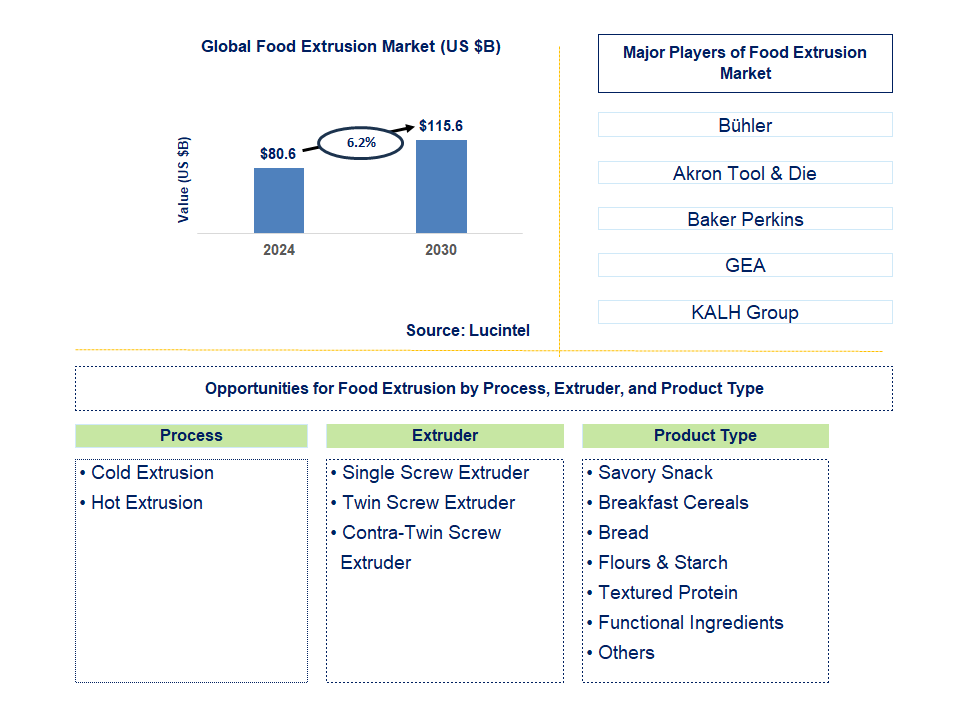
Key data points: The market size in 2030 = $115.6 billion, growth forecast = 6.2% annually for the next 6 years. Scroll below to get more insights. This market report covers trends, opportunities, and forecasts in the global food extrusion market to 2030 by process (cold extrusion and hot extrusion), extruder (single screw extruder, twin screw extruder, and contra-twin screw extruder), product type (savory snack, breakfast cereals, bread, flours & starch, textured protein, functional ingredients, and others), and region (North America, Europe, Asia Pacific, and the Rest of the World)
We'll send your sample report shortly.
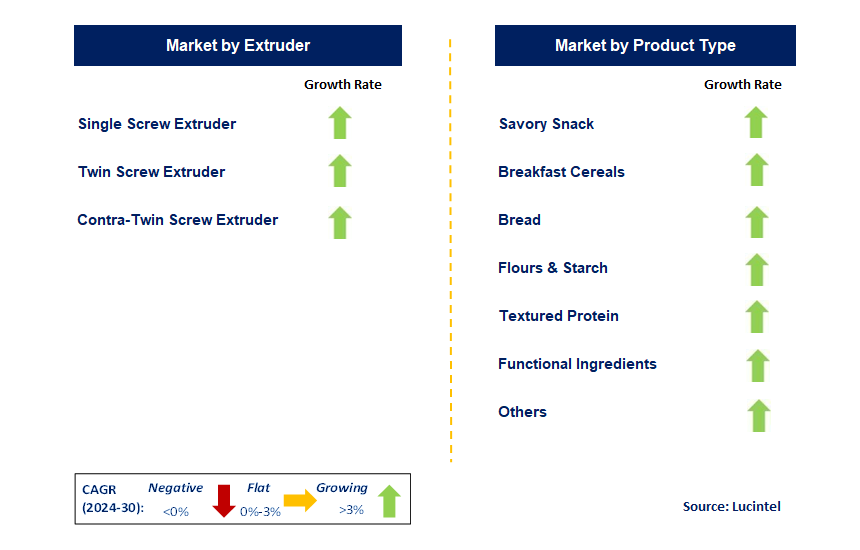
• Lucintel forecasts that, within the type category, within the extruder category, single screw extruder is expected to witness highest growth over the forecast period.
• In terms of regions, Europe is expected to witness the highest growth over the forecast period due to the firmly established food and beverage industry in the area, the growing number of consumers, and strict government rules regarding food safety standards in the region.
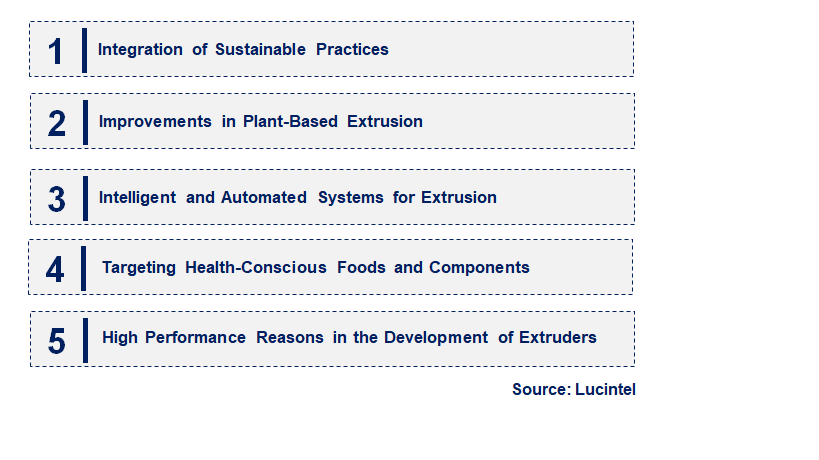
• Integration of Sustainable Practices: The trend towards sustainability and the inclusion of sustainable practices in food extrusion is on the rise. Reducing energy consumption, addressing concerns over waste, and considering materials used in extrusion processes are on the minds of company officials. Energy-saving extruders and recycling systems for by-products are some examples of newer techniques developing in the field. By adopting these practices, businesses align with legislation and appeal to the market of eco-conscious customers. This trend serves the interests of lessening carbon footprints and achieving global targets for sustainability, allowing such companies to position themselves as producers of sustainable food.
• Improvements in Plant-Based Extrusion: The growing inclination towards plant-based diets is significantly affecting food extrusion machinery as well. There is a conscious effort to formulate extrusion processes that improve the foam and nutritional values of plant-based proteins. New extrusion methods are being developed to enhance the bite and flavor of these meat alternatives to attract the increasing number of vegetarians and vegans. This tendency represents a larger movement towards healthier and more environmentally friendly diets, where extrusion technology has been critical in developing processed plant food.
• Intelligent and Automated Systems for Extrusion: There is an increasing adoption of smart and automatic extrusion systems in the food extrusion industry. Such systems take advantage of IoT, artificial intelligence, and machine learning to refine production conditions and ensure better quality and consistency of products. Monitoring and analytical instruments assist in controlling both speed and temperature during extrusion, thereby improving recovery rates and limiting waste generation. This aligns with the more effective quality that consumers expect from producers in their food production. As a result, customers would be satisfied, thus improving business.
• Targeting Health-Conscious Foods and Components: It is increasingly popular to produce functional foods and ingredients using an extruded approach. Such foods are intended to provide efficacy beyond basic nutrients; they include supplements enhancing the digestibility of food or those enriched with vitamins and other minerals. Due to extrusion, it is possible to create new products designed specifically for the health aspects demanded by consumers regarding functional or individual nutrition. This trend is facilitated by the development of extrusion technology, which allows for the inclusion of various bioactive and functional substances in food products.
• High-Performance Reasons in the Development of Extruders: The trend is towards high-performance extruders intended to work with sophisticated mixtures and produce in bulk to meet market demand. These improved extruders allow for better extrapolation of processing conditions, enhanced resistance to wear and failure, and increased productivity. The developments encompass the introduction of various modern extrusion materials and modifications of the extrusion equipment to minimize wear, repairs, and downtime of the blocks. This progression relates to the quest for more efficient and functional equipment capable of preparing a wide range of food products to suit the fast-food market of today.
• Advanced Extruder Technologies: The food extrusion market is witnessing the introduction of advanced extruder technologies, including high-precision twin-screw extruders and co-rotating systems. These innovations offer improved control over processing parameters, resulting in enhanced product texture and consistency. New extruders are designed for better energy efficiency and lower operational costs, contributing to increased productivity and reduced environmental impact. These advancements enable manufacturers to produce a wider range of products with improved quality and reduced waste.
• Growth of Plant-Based Extrusion: There is a significant rise in the development of plant-based extrusion technologies driven by the growing demand for vegetarian and vegan products. Companies are focusing on refining extrusion techniques to improve the texture and flavor of plant-based proteins, creating meat alternatives that closely mimic traditional meat products. This trend is supported by innovations in ingredient formulations and processing methods, allowing for the production of more appealing and nutritious plant-based foods that cater to evolving consumer preferences.
• Smart Extrusion Systems with IoT Integration: The integration of Internet of Things (IoT) technology in extrusion systems is revolutionizing the food extrusion process. Smart extrusion systems utilize sensors and data analytics to monitor and adjust processing conditions in real time, ensuring optimal performance and product quality. This development enhances efficiency by reducing downtime and minimizing waste. IoT-enabled extruders also provide valuable insights into production data, enabling better decision-making and process optimization, which is increasingly important in a competitive market.
• Focus on Sustainability and Energy Efficiency: Sustainability is becoming a central theme in food extrusion, with a growing emphasis on energy-efficient technologies and reducing environmental impact. Innovations such as energy-saving extruders and waste-recycling systems are being implemented to lower energy consumption and minimize by-product waste. Companies are also exploring the use of renewable energy sources and eco-friendly materials. These efforts align with broader environmental goals and regulatory pressures, helping to create more sustainable and responsible food production processes.
• Expansion of Functional Food Extrusion: The market is expanding with a focus on producing functional foods through extrusion, which offers added health benefits beyond basic nutrition. Advances in extrusion technology are enabling the incorporation of various bioactive compounds, such as vitamins, minerals, and probiotics, into food products. This development caters to the growing consumer interest in health and wellness, allowing for the creation of functional snacks and dietary supplements that provide specific health benefits and meet the demands for healthier food options.
• Growing Focus on Plant-Based Products: There is increasing demand for what is now widely accepted as plant-based diets, expanding possibilities for vegetable-extruded meat substitutes and biosynthetic proteins. The novelty in extruder technology lies in the capability of converting vegetable protein into an extra-meaty texture and taste. This application is critical for food producers, as this is where vegetarianism and health consciousness come into play. Investing in new extrusion processes makes it possible to design new and interesting structures with limited stretch ranges that are still appealing to the new food market.
• Development of Functional Foods: Consumers are increasingly health-conscious, and thus functional foods need to be developed through extrusion. More than nutritional attributes, these functional foods incorporate micronutrients, probiotic cultures, and other bioactive ingredients that deliver health benefits. Extrusion technology facilitates the addition of such ingredients to a wide range of food products, including snacks and cereals. Businesses producing products that promote gut health, immune support, and general wellness can capitalize on the increasing popularity of such foods.
• Snack Foods Innovations: The snack food segment is a key focus area for development in food extrusion methods. Extrusion enables the creation of snacks with various shapes, flavors, and textures, resulting in a wide range of products. Examples of new products may include baked healthy snacks based on whole grains, legumes, vegetables, and low-sodium or low-fat snacks. Companies can maximize their position in the expanding snack food market by concentrating on product development and responding to demand changes in design or nutritional aspects, such as lighter or gluten-free foods.
• Improvement of Cereal and Breakfast Products: The extrusion technique is valuable for the cereal and breakfast foods market, where a wide range of textured products, including puffed cereals, granola, breakfast bars, and others can be produced. Developments in extrusion processes also facilitate improvements in the nutritional aspects of cereals, such as increasing fiber content and fortifying with vitamins. This growth opportunity involves creating additional formulations and new types of products that satisfy health-oriented and active consumer needs. Companies can leverage extrusion to create new breakfast products that are convenient and nutritionally valuable.
• Green Design of Packaging: With more consumers and policymakers interested in food packaging and health, there are opportunities to co-develop food extrusion and green packaging. Advancements in the design and development of eco-friendly and recyclable materials for packaging can keep pace with advancements in extrusion. Companies can also create packaging that minimizes the use of plastic materials and promotes the recycling of extrusion waste. This aligns with global sustainability policies and will help organizations build a positive image while reaching green markets, and meeting unique needs in a crowded market.
• Technological Advancements: Innovations in extrusion equipment and processes are major drivers for the food extrusion market. Advancements such as high-precision extruders, advanced control systems, and smart technologies enable more efficient production and the creation of diverse food products. These advancements improve product quality, increase production speed, and enhance flexibility in handling various ingredients. Continuous development of extrusion technologies allows manufacturers to meet changing consumer demands, innovate with new product types, and maintain a competitive edge in the market.
• Growing Demand for Convenience Foods: The rising demand for convenience foods significantly drives the food extrusion market. Consumers' busy lifestyles and preference for ready-to-eat and easy-to-prepare meals have increased the need for processed foods that can be quickly consumed. Extrusion technology is well-suited to produce a wide variety of convenience foods, including snacks, cereals, and meal components. By addressing the demand for convenient and portable food options, companies can capitalize on this trend and expand their market presence.
• Rising Popularity of Plant-Based Products: The growing popularity of plant-based diets is a key driver for food extrusion. As consumers seek healthier and more sustainable food options, there is increased demand for plant-based meat alternatives and protein-rich foods. Extrusion technology is essential for creating plant-based products that replicate the texture and taste of traditional meat products. This trend is driven by health considerations, environmental concerns, and ethical reasons, providing opportunities for manufacturers to innovate and expand their product offerings in the plant-based segment.
• Increased Focus on Health and Wellness: The heightened focus on health and wellness among consumers is driving growth in the food extrusion market. There is a growing demand for functional foods that offer health benefits beyond basic nutrition, such as improved digestive health and added vitamins. Extrusion technology allows for the incorporation of various bioactive compounds and functional ingredients into food products. By aligning with health and wellness trends, companies can develop new products that meet consumer expectations and differentiate themselves in the competitive market.
• Economic Factors and Cost Efficiency: Economic factors, such as the need for cost-efficient production processes, drive innovation in the food extrusion market. Extrusion technology enables high-throughput production with lower operational costs compared to traditional methods. The ability to process a wide range of ingredients efficiently helps manufacturers reduce costs and enhance profitability. As economic pressures increase, the demand for cost-effective and scalable production solutions becomes critical, making extrusion technology an attractive option for optimizing production and achieving economic efficiency.
• Regulatory Compliance: Navigating regulatory compliance is a significant challenge for the food extrusion market. Stringent regulations related to food safety, quality standards, and labeling requirements can impact production processes and product development. Manufacturers must ensure that their extrusion processes and end products meet various national and international standards. Compliance can involve substantial costs and adjustments to operations, making it essential for companies to stay informed about regulatory changes and implement necessary measures to adhere to them.
• Raw Material Costs and Supply Chain Issues: Fluctuating raw material costs and supply chain disruptions present challenges for the food extrusion market. The prices of key ingredients, such as grains and plant proteins, can vary due to market conditions, impacting production costs. Additionally, supply chain issues, including transportation delays and shortages, can affect the availability and cost of raw materials. Companies must develop strategies to manage these challenges, such as diversifying suppliers and optimizing inventory management, to maintain production stability and cost efficiency.
• Technological Integration and Maintenance: Integrating and maintaining advanced extrusion technologies can be challenging for manufacturers. While new technologies offer significant benefits, they also require substantial investment in equipment and training. The complexity of advanced extrusion systems necessitates regular maintenance and technical expertise to ensure optimal performance. Companies must address these challenges by investing in staff training, establishing effective maintenance protocols, and managing technology upgrades to fully leverage the benefits of advanced extrusion technologies while minimizing operational disruptions.
• Bühler
• Akron Tool & Die
• Baker Perkins
• GEA
• KALH Group
• Triott Group
• Flexicon
• The Bonnot Company
• Cold Extrusion
• Hot Extrusion
• Single Screw Extruder
• Twin Screw Extruder
• Contra-Twin Screw Extruder
• Savory Snack
• Breakfast Cereals
• Bread
• Flours & Starch
• Textured Protein
• Functional Ingredients
• North America
• Europe
• Asia Pacific
• The Rest of the World
• United States: In the United States, the food extrusion market is seeing significant innovation with the integration of high-tech extrusion systems that improve efficiency and product quality. Recent developments include advancements in twin-screw extruders, which offer greater versatility in processing a wide range of ingredients and formulations.
• China: China is rapidly advancing in the food extrusion market, with significant investments in modern extrusion technology and equipment. Recent developments include the introduction of high-speed, energy-efficient extruders that enhance production capacity and reduce operational costs. The market is also experiencing a surge in the production of extruded snacks and ready-to-eat foods, driven by the growing urban population and changing consumer preferences.
• Germany: Germany is leading advancements in the food extrusion market through its emphasis on precision and innovation. Recent developments include the adoption of advanced extrusion technologies such as co-rotating twin-screw extruders, which offer improved processing control and product customization. The focus on sustainability is also prominent, with innovations aimed at reducing energy consumption and optimizing raw material use.
• India: In India, the food extrusion market is expanding rapidly, driven by increasing demand for processed and convenience foods. Recent developments include the introduction of cost-effective extrusion equipment that caters to the needs of the growing food processing sector. There is also a focus on developing extruded products that cater to local tastes and preferences, such as traditional snacks and cereal-based products.
• Japan: Japan is seeing notable advancements in the food extrusion market with a focus on high-tech, precision extrusion systems. Recent developments include the use of advanced single and twin-screw extruders that offer enhanced product texture and consistency. The Japanese market is also driven by innovation in producing functional foods and ingredients with specific health benefits, leveraging extrusion technology to create unique product offerings.


• Bühler
• Akron Tool & Die
• Baker Perkins
• GEA
• KAHL Group
• Triott Group
• Flexicon
• The Bonnot Company
Q6. Which food extrusion market segment will be the largest in future?

Choose a license that fits your team. Instant PDF delivery.
Prices exclude taxes. Instant delivery. Custom licensing available on request.
Market Report · July 22, 2026
Market Report · July 22, 2026
Market Report · July 22, 2026
Trusted partner for strategic intelligence and business growth


Receive a complimentary market analysis tailored to your industry. Our analysts will identify key growth opportunities and competitive dynamics specific to your business.

Market size, growth rate, and key trend analysis for your specific sector.

Top competitor positioning and market share analysis.

Strategic recommendations backed by data-driven insights.
Get curated market intelligence and competitive moves straight to your inbox.
By subscribing, you agree to receive our monthly insights. Unsubscribe anytime.
Receive a complimentary market analysis tailored to your industry. Our analysts will identify key growth opportunities and competitive dynamics specific to your business.
Market size, growth rate, and key trend analysis for your specific sector.
Top competitor positioning and market share analysis.
Strategic recommendations backed by data-driven insights.
Get curated market intelligence, emerging trends, and competitive moves straight to your inbox each month.
By subscribing, you agree to receive our monthly insights. Unsubscribe anytime.
We'll send your sample report shortly.