
Market Report · July 31, 2026

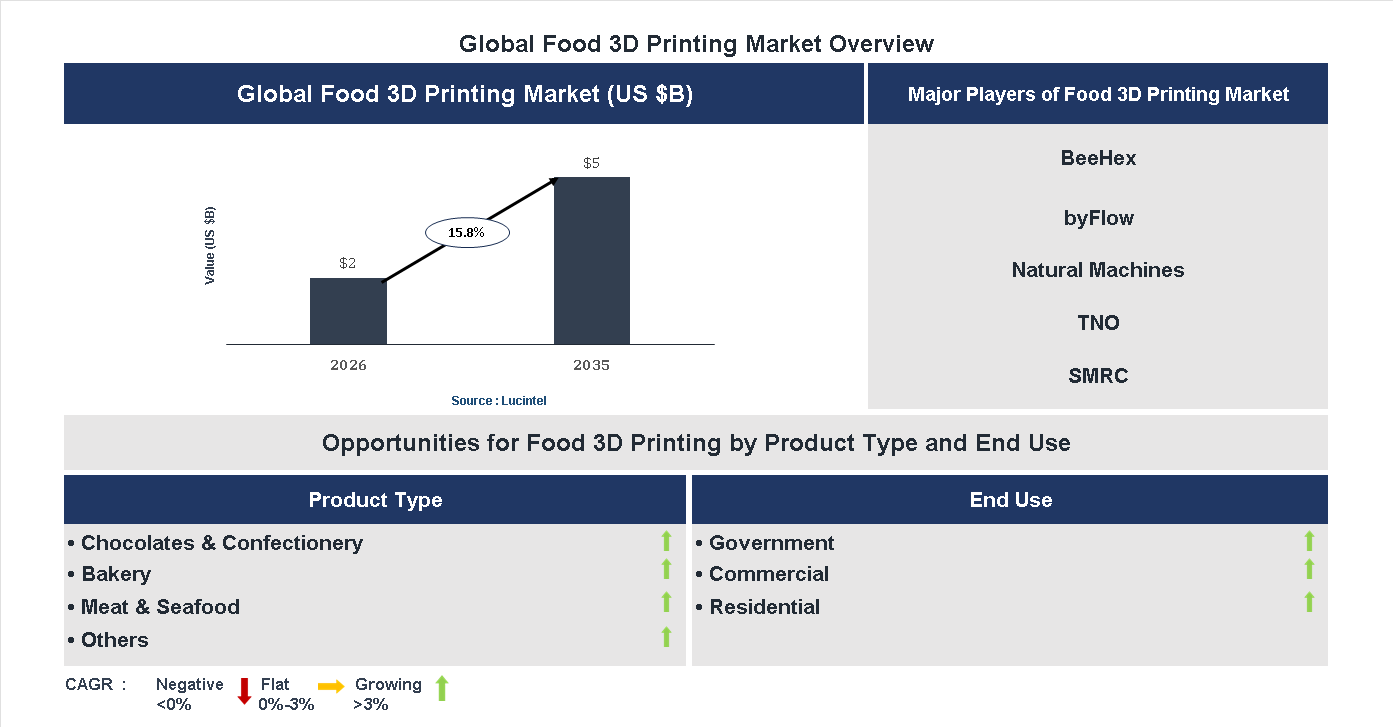
Key data points: The market size in 2035 = $5 billion, growth forecast = 15.8% annually for the next 8 years. Scroll below to get more insights. This market report covers trends, opportunities and forecasts in food 3D printing market to 2035 by product type (chocolates & confectionery, bakery, meat & seafood, and others), end use (government, commercial, and residential), and region (North America, Europe, Asia Pacific, and the Rest of the World)
We'll send your sample report shortly.
• Lucintel forecasts that, within the product type category, chocolate & confectionery is expected to witness the highest growth over the forecast period.
• Within the end use category, commercial is expected to witness the highest growth.
• In terms of region, North America is expected to witness the highest growth over the forecast period. Gain valuable insights for your business decisions with our comprehensive 150+ page report. Sample figures with some insights are shown below.
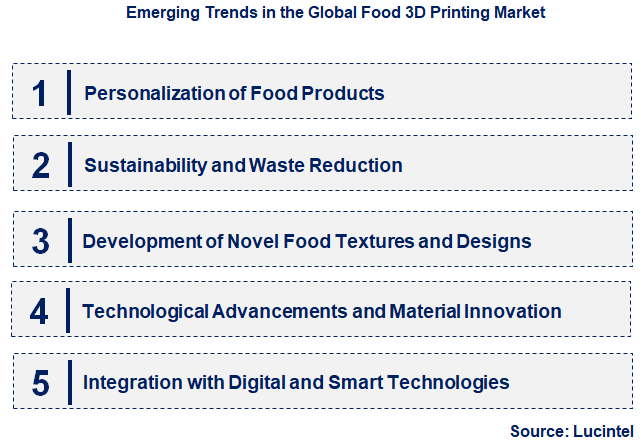
• Personalization of Food Products: The trend towards customized nutrition and personalized food experiences is gaining momentum. Consumers increasingly seek tailored meals that cater to specific dietary needs, preferences, or health goals. 3D printing allows for precise control over ingredients, portion sizes, and presentation, enabling the creation of bespoke food items. This trend enhances consumer engagement, improves dietary adherence, and opens new avenues for niche markets such as medical nutrition and gourmet foods. As technology advances, personalized food printing is expected to become more widespread, transforming how consumers interact with their food.
• Sustainability and Waste Reduction: Food 3D printing is contributing to sustainability efforts by reducing food waste and optimizing resource use. The technology enables the use of alternative ingredients, such as plant-based proteins and food by-products, which can be precisely portioned and printed into appealing forms. This minimizes excess production and waste, aligning with global sustainability goals. Additionally, 3D printing can utilize locally sourced ingredients, reducing transportation emissions. As environmental concerns grow, the market is likely to see increased adoption of sustainable printing practices, making food production more eco-friendly and resource-efficient.
• Development of Novel Food Textures and Designs: 3D printing allows for the creation of complex textures and intricate designs that are difficult to achieve with traditional culinary methods. This capability is opening new creative avenues for chefs and food manufacturers to develop innovative products, such as layered desserts, textured plant-based meats, and artistic food presentations. The ability to customize textures enhances sensory experiences and caters to specific consumer preferences. This trend is particularly influential in the gourmet and luxury food sectors, where visual appeal and unique textures can command premium prices, thereby expanding market opportunities.
• Technological Advancements and Material Innovation: Continuous improvements in 3D printing hardware and software are making food printing faster, more precise, and more accessible. Innovations include multi-material printers capable of handling diverse ingredients and bio-inks, as well as user-friendly interfaces for non-experts. Material innovation is also crucial, with research into new edible inks, including proteins, carbohydrates, and fats, broadening the scope of printable foods. These advancements are reducing costs and barriers to entry, encouraging wider adoption across commercial and home settings, and fostering a more dynamic and versatile market landscape.
• Integration with Digital and Smart Technologies: The convergence of food 3D printing with digital platforms, IoT, and AI is creating smarter, more connected food production systems. Consumers can design and order personalized foods via apps, which are then printed on demand. Smart printers can monitor and adjust printing parameters in real-time, ensuring consistency and quality. This integration enhances supply chain efficiency, reduces lead times, and offers a seamless consumer experience. As digital transformation accelerates, the market is poised to become more responsive, customizable, and efficient, aligning with the broader trend towards Industry 4.0 in food manufacturing. These emerging trends are fundamentally reshaping the food 3D printing market by fostering personalization, sustainability, innovation, technological integration, and creative expression. They are driving the industry towards more sustainable, efficient, and consumer-centric solutions, opening new opportunities for growth and differentiation in a competitive landscape.
• Customization of Food Products: The ability to create personalized food items tailored to individual dietary needs and preferences is revolutionizing consumer experiences. 3D printing allows for precise control over ingredients, textures, and presentation, enabling brands to offer unique, health-conscious, and aesthetically appealing products. This customization enhances customer satisfaction, fosters brand loyalty, and opens new revenue streams, especially in niche markets like healthcare and luxury foods.
• Sustainability and Waste Reduction: 3D food printing promotes sustainability by utilizing alternative ingredients, reducing food waste, and optimizing resource use. It enables the use of upcycled ingredients and minimizes excess production, aligning with eco-conscious consumer demands. This approach not only lowers environmental impact but also offers cost savings for manufacturers. As sustainability becomes a key market driver, companies adopting 3D printing can differentiate themselves and meet regulatory standards more effectively.
• Innovation in Food Design and Presentation: 3D printing enables the creation of complex, intricate, and visually stunning food designs that are impossible with traditional methods. This innovation enhances culinary creativity, attracts consumers seeking novel experiences, and opens opportunities in high-end gastronomy, catering, and event industries. Enhanced presentation and unique textures improve the overall dining experience, positioning brands as leaders in culinary innovation and elevating their market presence.
• Expansion into Healthcare and Special Diets: The technology facilitates the production of specialized foods for medical and dietary needs, such as texture-modified meals for patients or allergen-free products. It supports the development of functional foods with added nutrients tailored to individual health profiles. This expansion addresses growing demand in healthcare, elderly care, and personalized nutrition markets, offering significant growth potential and improving the quality of life for consumers with specific dietary requirements.
• Cost Efficiency and Supply Chain Optimization: 3D food printing can streamline production processes, reduce labor costs, and enable localized manufacturing. It allows for on-demand production, minimizing inventory and transportation costs. This flexibility enhances supply chain resilience, especially during disruptions, and supports small-scale, artisanal, or remote food production. As operational efficiencies improve, companies can respond faster to market trends and consumer demands, boosting competitiveness and profitability. These developments are significantly transforming the food 3D printing market by fostering innovation, sustainability, and customization. They enable brands to meet evolving consumer preferences, reduce environmental impact, and improve operational efficiency. As these opportunities expand, the market is poised for substantial growth, attracting investments and driving technological advancements. Overall, these trends are reshaping food production, creating new business models, and positioning the industry for a more personalized, sustainable, and innovative future.
• Expansion into Personalized Nutrition Markets: Food 3D printing enables precise customization of nutrient content, portion sizes, and flavors, catering to individual dietary needs such as medical conditions, fitness goals, or personal preferences. This personalization enhances consumer engagement and health outcomes, opening new revenue streams for healthcare providers, fitness centers, and retail outlets. As awareness of personalized health grows, the demand for tailored food solutions will significantly boost market growth.
• Adoption in Commercial and Restaurant Sectors: Restaurants and catering services are increasingly integrating 3D food printing to create innovative, visually appealing dishes with complex designs that are difficult to produce manually. This technology allows for rapid prototyping and mass customization, reducing preparation time and waste. It also offers a unique dining experience, attracting customers seeking novel culinary adventures, thereby expanding the market footprint within the hospitality industry.
• Development of Sustainable and Waste-Reducing Food Production: 3D food printing supports sustainability by utilizing alternative ingredients, such as insect protein or plant-based materials, and minimizing food waste through precise portioning. This approach aligns with environmental goals and consumer preferences for eco-friendly products. As sustainability becomes a core focus for food companies, 3D printing offers a strategic advantage in creating eco-conscious, efficient food production systems.
• Integration with Healthcare and Medical Nutrition: The technology is increasingly used to produce specialized foods for patients with dietary restrictions, allergies, or medical conditions. Customized 3D printed foods can deliver precise nutrient profiles, improve palatability, and support recovery or health management. This application opens new avenues in medical nutrition, hospitals, and elder care, addressing the growing need for tailored dietary solutions in healthcare settings.
• Innovation in Food Design and Culinary Creativity: Chefs and food designers are leveraging 3D printing to craft intricate, artistic food presentations that push culinary boundaries. This innovation enhances the aesthetic appeal and sensory experience of dishes, attracting high-end consumers and culinary enthusiasts. The ability to experiment with textures, shapes, and flavors fosters creativity, positioning 3D printing as a transformative tool in modern gastronomy and food art. The overall impact of these growth opportunities will accelerate market expansion, foster innovation, and promote sustainable practices, ultimately transforming the food industry landscape by offering personalized, efficient, and environmentally conscious solutions.
• Technological Advancements: The rapid development of 3D printing technology has enabled precise, customizable food production, opening new avenues for innovation in culinary arts and personalized nutrition. Improvements in printer speed, resolution, and material compatibility have made food 3D printing more viable for commercial applications. This technological progress reduces production costs over time and enhances product quality, attracting food manufacturers, restaurants, and consumers seeking novel dining experiences. As technology continues to evolve, it is expected to further expand the scope and adoption of food 3D printing solutions globally.
• Rising Consumer Demand for Personalization: Consumers increasingly seek personalized food options tailored to their dietary preferences, health needs, and aesthetic desires. Food 3D printing allows for customization of ingredients, portion sizes, and presentation, catering to individual tastes and nutritional requirements. This trend is particularly prominent among health-conscious consumers, athletes, and those with specific dietary restrictions. The ability to create bespoke food items enhances customer engagement and satisfaction, driving demand across hospitality, healthcare, and retail sectors. As personalization becomes a key differentiator, the market is poised for significant growth.
• Focus on Sustainability and Food Waste Reduction: Food 3D printing offers innovative solutions for sustainable food production by utilizing alternative ingredients, reducing waste, and optimizing resource use. It enables the use of surplus ingredients and food by-products, transforming them into appealing, nutritious products. Additionally, precise portion control minimizes food waste, aligning with global sustainability goals. Governments and organizations are increasingly promoting eco-friendly food technologies, which further incentivize adoption. This focus on sustainability not only addresses environmental concerns but also appeals to eco-conscious consumers, thereby fueling market expansion.
• Increasing Investment and R&D Activities: Significant investments from private companies, venture capitalists, and government agencies are accelerating research and development in food 3D printing. These investments facilitate the development of new materials, improved printing techniques, and scalable production methods. R&D efforts are also focused on ensuring food safety, regulatory compliance, and consumer acceptance. The influx of funding accelerates innovation, reduces costs, and broadens application areas, including healthcare, catering, and retail. This dynamic investment environment is crucial for overcoming technical barriers and establishing food 3D printing as a mainstream technology. The challenges facing the food 3D printing market are:-
• High Equipment and Material Costs: The initial investment required for 3D food printers and compatible materials remains substantial, limiting accessibility for small and medium-sized enterprises. The high costs hinder widespread adoption, especially in developing regions where budget constraints are more pronounced. Additionally, the expense of specialized ingredients and proprietary materials adds to operational costs, impacting profitability. Overcoming this challenge requires technological innovations to reduce costs and the development of more affordable, versatile printers and materials to democratize access across various market segments.
• Regulatory and Food Safety Concerns: The lack of comprehensive regulatory frameworks for 3D printed foods poses significant hurdles. Ensuring food safety, quality, and consistency is complex due to the novel nature of 3D printing processes and materials. Regulatory uncertainties can delay product approvals and market entry, discouraging investment and innovation. Moreover, concerns about allergen management, contamination, and long-term health effects need to be addressed through rigorous testing and standards. Establishing clear guidelines is essential for building consumer trust and facilitating market growth.
• Consumer Acceptance and Perception Issues: Despite technological advancements, consumer skepticism regarding the safety, naturalness, and taste of 3D printed foods persists. Many consumers are unfamiliar with the technology and may perceive it as artificial or less wholesome. Cultural preferences and traditional food practices can also hinder acceptance. Overcoming these perceptions requires effective marketing, education, and demonstration of benefits such as customization and sustainability. Gaining consumer trust is vital for mainstream adoption and expanding the market reach. The food 3D printing market is driven by technological innovation, personalization trends, sustainability initiatives, and increased investments. However, high costs, regulatory uncertainties, and consumer acceptance challenges pose significant barriers. The interplay of these factors will shape the market’s evolution, requiring strategic efforts to leverage opportunities while addressing risks. As technology matures and regulatory frameworks develop, the market is expected to experience substantial growth, transforming food production and consumption paradigms worldwide.
• BeeHex
• byFlow
• Natural Machines
• TNO
• SMRC
• Choc Edge
• NuFood
• CandyFab
• Redefine Meat
• SavorEat
• Chocolates & Confectionery
• Bakery
• Meat & Seafood
• Others
• Government
• Commercial
• Residential
• North America
• Europe
• Asia Pacific
• The Rest of the World
• United States: The US market has seen rapid adoption of food 3D printing technology, driven by startups and major food companies exploring personalized nutrition and gourmet applications. Innovations include 3D printed chocolates, snacks, and customized dietary solutions for health-conscious consumers. Regulatory frameworks are evolving to accommodate new food safety standards, encouraging further investment. Universities and research institutions are actively researching new materials and techniques, positioning the US as a leader in this sector.
• China: China is rapidly expanding its food 3D printing capabilities, focusing on mass customization and food safety. The government supports innovation through funding and policy initiatives aimed at sustainable food production. Chinese companies are developing affordable 3D printers for domestic use, targeting the growing middle class interested in novel culinary experiences. The market also emphasizes traditional flavors and ingredients, integrating them into 3D printed foods to appeal to local tastes.
• Germany: Germanys market is characterized by a focus on sustainability and food innovation. Leading food tech companies are developing 3D printed plant-based proteins and functional foods aimed at health-conscious consumers. The country’s strong research infrastructure supports advancements in food safety and material development. Collaborations between academia and industry are fostering new applications, including 3D printed bakery products and personalized nutrition solutions.
• India: India is witnessing increasing interest in food 3D printing, particularly for addressing nutritional deficiencies and catering to diverse dietary preferences. Startups are exploring affordable 3D printing solutions for local ingredients like spices, grains, and traditional sweets. The market is driven by a rising middle class seeking innovative food experiences and government initiatives promoting food technology. Challenges include adapting technology to local ingredients and ensuring affordability.
• Japan: Japan is focusing on integrating food 3D printing into its culinary culture, emphasizing precision and presentation. The market is driven by high-end restaurants and food artisans experimenting with 3D printed sushi, desserts, and intricate food designs. Technological advancements are coupled with a strong emphasis on food aesthetics and quality. The government and private sector are investing in research to develop safe, high-quality 3D printed foods that align with Japan’s culinary traditions.


• BeeHex
• byFlow
• Natural Machines
• TNO
• SMRC
• Choc Edge
• NuFood
• CandyFab
• Redefine Meat
• SavorEat Q6. Which food 3D printing market segment will be the largest in future? Answer: Lucintel forecasts that, within the product type category, chocolate & confectionery is expected to witness the highest growth over the forecast period. Q7. In food 3D printing market, which region is expected to be the largest in next 5 years? Answer: In terms of region, North America is expected to witness the highest growth over the forecast period. Q8. Do we receive customization in this report? Answer: Yes, Lucintel provides 10% customization without any additional cost.


Choose a license that fits your team. Instant PDF delivery.
Prices exclude taxes. Instant delivery. Custom licensing available on request.
Market Report · July 31, 2026
Market Report · July 31, 2026
Market Report · July 31, 2026
Trusted partner for strategic intelligence and business growth


Receive a complimentary market analysis tailored to your industry. Our analysts will identify key growth opportunities and competitive dynamics specific to your business.

Market size, growth rate, and key trend analysis for your specific sector.

Top competitor positioning and market share analysis.

Strategic recommendations backed by data-driven insights.
Get curated market intelligence and competitive moves straight to your inbox.
By subscribing, you agree to receive our monthly insights. Unsubscribe anytime.
Receive a complimentary market analysis tailored to your industry. Our analysts will identify key growth opportunities and competitive dynamics specific to your business.
Market size, growth rate, and key trend analysis for your specific sector.
Top competitor positioning and market share analysis.
Strategic recommendations backed by data-driven insights.
Get curated market intelligence, emerging trends, and competitive moves straight to your inbox each month.
By subscribing, you agree to receive our monthly insights. Unsubscribe anytime.
We'll send your sample report shortly.