
Report Feature
Foldable OLED Display Market Trends and Forecast
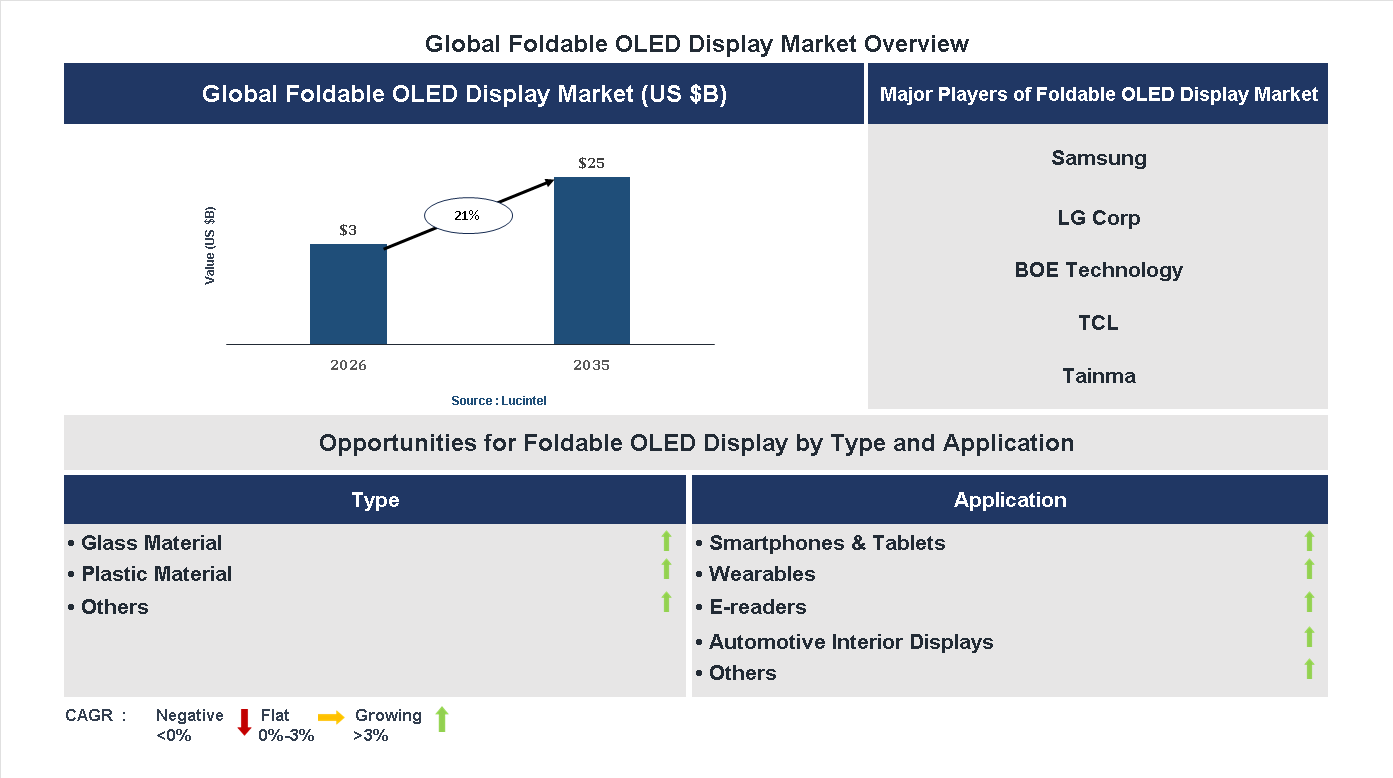
The future of the global foldable OLED display market looks promising with opportunities in the smartphone & tablet, wearable, e-reader, and automotive interior display markets. The global foldable OLED display market is expected to reach an estimated $25 billion by 2035 with a CAGR of 21% from 2026 to 2035. The major drivers for this market are the increasing demand for flexible smartphones, the rising adoption of innovative display technologies, and the growing consumer preference for compact devices.• Lucintel forecasts that, within the type category, plastic material is expected to witness higher growth over the forecast period.
• Within the application category, smartphone & tablet is expected to witness the highest growth.
• In terms of region, APAC is expected to witness the highest growth over the forecast period. Gain valuable insights for your business decisions with our comprehensive 150+ page report. Sample figures with some insights are shown below.
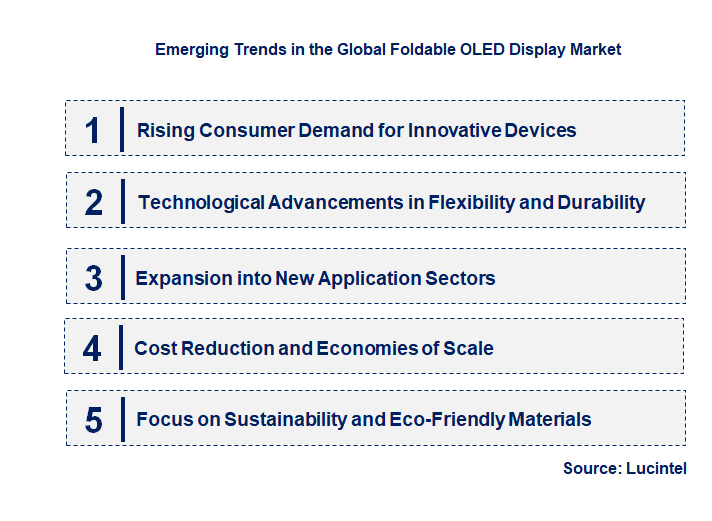
Emerging Trends in the Foldable OLED Display Market
The foldable OLED display market is experiencing rapid growth driven by technological advancements, increasing consumer demand for innovative devices, and the expanding applications across various sectors such as smartphones, tablets, and wearable technology. As manufacturers focus on enhancing display durability, flexibility, and visual quality, the market is witnessing significant shifts in product design and consumer preferences. These developments are not only transforming the way devices are used but also opening new opportunities for innovation and competition. The following key trends highlight the major forces shaping the future of the foldable OLED display market.• Rising Consumer Demand for Innovative Devices: Consumers are increasingly seeking devices that offer enhanced portability, multi-functionality, and unique user experiences. Foldable OLED displays enable smartphones and tablets to combine compactness with large screen real estate, appealing to tech-savvy users. This demand is driving manufacturers to develop more durable, high-quality foldable screens that can withstand daily use. As a result, the market is witnessing a surge in product launches featuring foldable displays, which are becoming a key differentiator in a competitive landscape.
• Technological Advancements in Flexibility and Durability: Innovations in materials and manufacturing processes are significantly improving the flexibility and lifespan of foldable OLED displays. New polymer substrates and advanced encapsulation techniques help prevent damage from bending and folding, addressing previous issues of screen creases and fragility. These advancements are crucial for mainstream adoption, as they ensure devices can endure repeated folding without compromising performance. The ongoing R&D efforts are expected to further enhance the robustness and cost-effectiveness of foldable OLED technology, broadening its application scope.
• Expansion into New Application Sectors: Beyond smartphones, foldable OLED displays are increasingly being integrated into tablets, laptops, wearable devices, and even automotive displays. This diversification is driven by the versatility of foldable screens, which can optimize space and improve user interaction. For instance, foldable displays in automotive dashboards offer innovative interfaces, while wearable tech benefits from flexible, lightweight screens. This expansion into various sectors is creating new revenue streams and encouraging cross-industry collaborations, thereby accelerating market growth and technological innovation.
• Cost Reduction and Economies of Scale: As production volumes increase and manufacturing processes become more refined, the cost of foldable OLED displays is decreasing. Economies of scale and technological improvements are making these displays more affordable for a broader consumer base. Lower costs are enabling OEMs to incorporate foldable screens into mid-range devices, expanding market reach. Additionally, cost reductions are fostering competitive pricing strategies, which further stimulate demand and accelerate adoption across different price segments, ultimately transforming the market landscape.
• Focus on Sustainability and Eco-Friendly Materials: Environmental concerns are prompting manufacturers to explore sustainable materials and eco-friendly manufacturing practices for foldable OLED displays. Innovations include the use of recyclable polymers and energy-efficient production techniques. These efforts aim to reduce the environmental footprint of display manufacturing and disposal. As consumers become more environmentally conscious, market players adopting sustainable practices are gaining a competitive edge. This trend is likely to influence future product development, supply chain management, and regulatory standards within the industry. In summary, these trends are collectively reshaping the foldable OLED display market by driving innovation, expanding application areas, reducing costs, and emphasizing sustainability. As a result, the market is poised for rapid growth, with more durable, affordable, and environmentally friendly foldable display solutions becoming mainstream, ultimately transforming the way consumers interact with electronic devices.
Recent Development in the Foldable OLED Display Market
The foldable OLED display market is experiencing rapid growth driven by technological advancements and increasing consumer demand for innovative devices. As manufacturers develop more durable and flexible screens, the market is expanding across smartphones, tablets, and wearable devices. This evolution is creating new opportunities for brands to differentiate their products and capture market share. The integration of foldable displays is also influencing design trends and user experiences, making devices more versatile and portable. These developments are shaping the future landscape of display technology and consumer electronics.• Growing Consumer Demand for Innovative Devices: The increasing desire for versatile, portable, and stylish gadgets is fueling the adoption of foldable OLED displays. Consumers seek devices that combine functionality with sleek design, prompting manufacturers to innovate. This demand is accelerating the development of foldable screens that can transform smartphones into tablets, offering enhanced user experiences. As a result, brands are investing heavily in R&D to meet these expectations, which is expanding market opportunities and driving sales growth across multiple segments.
• Advancements in Display Durability and Flexibility: Recent technological breakthroughs have significantly improved the durability and flexibility of foldable OLED displays. Innovations such as ultra-thin glass and advanced polymer substrates enable screens to withstand repeated folding without damage. These improvements reduce consumer concerns about device longevity and reliability, encouraging wider adoption. As durability increases, manufacturers can produce more robust foldable devices, expanding their market reach and fostering consumer confidence, ultimately boosting sales and market penetration.
• Expansion into New Consumer Electronics Segments: The application of foldable OLED displays is extending beyond smartphones into tablets, laptops, and wearable devices. This diversification allows brands to create innovative form factors and enhance portability. The versatility of foldable screens enables new product designs that appeal to different consumer needs, such as compactness and multi-functionality. This expansion is opening up new revenue streams for manufacturers and increasing competition, which is driving technological innovation and market growth across various electronic segments.
• Integration of Advanced Technologies for Enhanced User Experience: Incorporating technologies like touch sensitivity, high refresh rates, and foldable hinge mechanisms is improving the overall user experience. These advancements enable smoother interactions, better image quality, and seamless folding actions. Enhanced user interfaces and functionalities are making foldable devices more appealing, encouraging consumer adoption. As technology continues to evolve, the market benefits from increased product differentiation and higher consumer satisfaction, fueling further innovation and sales growth.
• Rising Investment and Strategic Collaborations: Major tech companies and component manufacturers are investing heavily in foldable OLED technology, forming strategic partnerships to accelerate development. These collaborations facilitate the sharing of expertise, reducing costs and speeding up time-to-market for new products. Increased investment also supports scaling manufacturing processes and improving supply chain efficiency. This trend is fostering a competitive environment that drives innovation, lowers prices, and expands market accessibility, ultimately contributing to the rapid growth and maturity of the foldable OLED display industry. The overall impact of these developments is a dynamic and expanding market characterized by technological innovation, increased consumer adoption, and diversified product offerings. As durability, affordability, and functionality improve, the market is poised for sustained growth, attracting new entrants and fostering competitive innovation. These trends are transforming the display industry, making foldable OLED screens a central feature in next-generation electronic devices and shaping the future of consumer electronics.
Strategic Growth Opportunities in the Foldable OLED Display Market
The foldable OLED display market is experiencing rapid growth driven by technological advancements, increasing consumer demand for innovative devices, and expanding applications across various sectors. As manufacturers focus on enhancing display durability, flexibility, and resolution, new opportunities are emerging to capture market share. The integration of foldable displays into smartphones, tablets, wearables, and automotive displays is transforming user experiences and creating competitive advantages. Strategic investments and collaborations are expected to accelerate innovation, making foldable OLEDs a key component in next-generation electronic devices.• Expanding Smartphone Market Adoption: The increasing popularity of foldable smartphones presents significant growth opportunities. Consumers seek devices offering larger screens without sacrificing portability, driving demand for flexible OLED displays. Manufacturers are investing in R&D to improve durability, foldability, and resolution, making foldable smartphones more accessible and appealing. As production costs decrease, more brands are entering the market, further fueling adoption and expanding the consumer base for foldable OLED technology.
• Growth in Wearable Device Integration: Wearable devices such as smartwatches and fitness bands benefit from foldable OLED displays due to their lightweight, flexible, and high-resolution features. These displays enable innovative form factors, enhancing user experience and device aesthetics. The demand for more immersive and versatile wearable screens is increasing, prompting manufacturers to develop durable, energy-efficient foldable OLEDs. This integration opens new avenues for health monitoring, fashion, and multifunctional wearable applications, boosting overall market growth.
• Automotive Display Innovations: The automotive industry is adopting foldable OLED displays for dashboards, infotainment systems, and heads-up displays. These flexible screens allow for seamless integration into curved and complex surfaces, improving vehicle interior aesthetics and functionality. The ability to display more information in a compact, adaptable form factor enhances driver experience and safety. As automotive manufacturers prioritize advanced, customizable displays, the demand for foldable OLEDs is expected to rise, creating substantial growth opportunities in this sector.
• Expansion into Consumer Electronics and Laptops: Consumer electronics such as tablets, laptops, and portable gaming devices are increasingly incorporating foldable OLED screens to offer larger viewing areas in compact designs. This trend caters to remote work, gaming, and multimedia consumption needs, providing immersive experiences. The development of foldable displays with improved durability and foldability is making these devices more practical and appealing. As consumer preferences shift towards versatile, space-saving devices, the market for foldable OLEDs in electronics is poised for significant expansion.
• Advancements in Manufacturing and Material Technologies: Innovations in manufacturing processes and materials are crucial for scaling production and reducing the costs of foldable OLED displays. New flexible substrates, encapsulation techniques, and foldable panel designs enhance durability and performance. These technological advancements enable mass production, improve product reliability, and lower prices, making foldable OLEDs more accessible across various applications. Continuous R&D efforts are expected to further improve display quality, flexibility, and lifespan, driving broader adoption and market growth. The overall impact of these growth opportunities is set to transform the foldable OLED display market, fostering innovation, expanding application areas, and increasing consumer adoption. As technological barriers diminish and manufacturing scales up, the market is positioned for sustained growth, offering competitive advantages to early adopters and new entrants alike. This evolution will shape the future landscape of flexible display technology across multiple industries.
Foldable OLED Display Market Driver and Challenges
The foldable OLED display market is influenced by a variety of technological, economic, and regulatory factors that shape its growth trajectory. Rapid advancements in display technology, increasing consumer demand for innovative devices, and the proliferation of smart gadgets are key drivers. Additionally, economic factors such as rising disposable incomes and decreasing manufacturing costs contribute to market expansion. Regulatory policies around electronic waste and sustainability also impact development strategies. However, the market faces challenges, including high production costs, technological limitations, and regulatory hurdles that could hinder growth. Understanding these drivers and challenges is essential for stakeholders to navigate the evolving landscape effectively. The factors responsible for driving the foldable OLED display market include:• Technological Innovation: The continuous evolution of OLED technology enables the production of flexible, lightweight, and high-resolution displays. Innovations such as foldable screens with enhanced durability and improved foldability are attracting major device manufacturers. These advancements allow for new form factors in smartphones, tablets, and wearable devices, creating a competitive edge and expanding market opportunities. As technology matures, costs decrease, making foldable displays more accessible to consumers and encouraging adoption across various sectors.
• Rising Consumer Demand for Innovative Devices: Consumers increasingly seek devices that offer enhanced portability, multi-functionality, and unique user experiences. Foldable OLED displays facilitate the development of compact yet large-screen devices, appealing to tech-savvy users. The desire for premium smartphones, foldable tablets, and flexible wearables drives manufacturers to invest heavily in this technology. This demand is further fueled by the trend toward personalized and immersive digital experiences, boosting market growth and encouraging innovation.
• Economic Growth and Increasing Disposable Income: As economies expand, consumers have more disposable income to spend on premium electronic devices featuring advanced display technologies. This economic upliftment encourages consumers to upgrade to foldable devices, which are often positioned as luxury or high-end products. Manufacturers benefit from higher profit margins and increased sales volumes, fostering further investment in R&D and production capacity. The economic environment thus plays a crucial role in accelerating market penetration and broadening the consumer base.
• Strategic Partnerships and Investments: Major technology companies and display manufacturers are forming strategic alliances to accelerate the development and commercialization of foldable OLED displays. Investments in R&D, joint ventures, and collaborations with material suppliers help overcome technical challenges and reduce costs. These partnerships facilitate faster innovation cycles, supply chain optimization, and market expansion. Such strategic moves are vital for maintaining competitive advantage and ensuring the market’s sustainable growth. The challenges facing this foldable OLED display market include:
• High Production Costs: Manufacturing foldable OLED displays involves complex processes, expensive materials, and advanced equipment, leading to high production costs. These costs translate into premium pricing for end products, limiting accessibility for a broader consumer base. Additionally, economies of scale are still developing, which hampers cost reduction efforts. Overcoming this challenge requires technological breakthroughs and supply chain efficiencies to make foldable displays more affordable and widely adopted.
• Technological Limitations and Durability Issues: Despite significant advancements, foldable OLED displays face issues related to durability, such as screen creasing, susceptibility to damage, and limited lifespan of flexible components. These technical limitations hinder consumer confidence and restrict the widespread adoption of foldable devices. Continuous R&D is necessary to improve material resilience, foldability, and overall device longevity, which is critical for market acceptance and long-term success.
• Regulatory and Environmental Concerns: Increasing scrutiny over electronic waste, environmental impact, and safety standards poses regulatory challenges for the market. Manufacturers must comply with strict regulations regarding hazardous materials, recycling, and disposal. Additionally, the environmental footprint of producing flexible displays raises sustainability concerns. Navigating these regulatory frameworks requires investments in eco-friendly materials and processes, which can increase costs and slow down product launches. In summary, the foldable OLED display market is driven by technological innovation, consumer demand, economic growth, and strategic collaborations. However, high production costs, technical durability issues, and regulatory hurdles present significant challenges. These factors collectively influence the pace and scope of market development. While growth opportunities are substantial, addressing these challenges is essential for sustainable expansion. The market’s future will depend on technological breakthroughs, cost reductions, and regulatory compliance, shaping a dynamic landscape with promising potential.
List of Foldable OLED Display Companies
Companies in the market compete on the basis of product quality offered. Major players in this market focus on expanding their manufacturing facilities, R&D investments, infrastructural development, and leverage integration opportunities across the value chain. With these strategies foldable OLED display companies cater increasing demand, ensure competitive effectiveness, develop innovative products & technologies, reduce production costs, and expand their customer base. Some of the foldable OLED display companies profiled in this report include-• Samsung
• LG Corp
• BOE Technology
• TCL
• Tainma
• Royole
• AUO Corporation
• JOLED
• EverDisplay
• Skyworth
Foldable OLED Display Market by Segment
The study includes a forecast for the global foldable OLED display market by type, application, and region.Foldable OLED Display Market by Type [Value from 2019 to 2035]:
• Glass Material
• Plastic Material
• Others
Foldable OLED Display Market by Application [Value from 2019 to 2035]:
• Smartphones & Tablets
• Wearables
• E-readers
• Automotive Interior Displays
• Others
Foldable OLED Display Market by Region [Value from 2019 to 2035]:
• North America
• Europe
• Asia Pacific
• The Rest of the World
Country Wise Outlook for the Foldable OLED Display Market
The foldable OLED display market has experienced rapid growth driven by technological innovations, increasing consumer demand for flexible devices, and expanding applications across smartphones, tablets, and wearable technology. As companies compete to develop more durable, high-resolution, and cost-effective foldable screens, regional markets are showing distinct trends influenced by local technological capabilities, consumer preferences, and manufacturing strengths. The United States, China, Germany, India, and Japan are key players in this evolving landscape, each contributing unique advancements and facing specific challenges that shape the global market trajectory.• United States: The US market has seen significant investments from major tech giants like Apple and Samsung, focusing on enhancing foldable display durability and integrating foldable screens into flagship devices. Innovation in materials and flexible display technology is prominent, with a growing ecosystem of startups and research institutions driving advancements. Consumer adoption is increasing, supported by strong demand for innovative, high-end smartphones and tablets. Regulatory standards and patent activities also influence market dynamics, fostering competitive innovation.
• China: China remains a dominant force in the foldable OLED display market, with leading manufacturers such as BOE, Visionox, and China Star Optoelectronics expanding production capacities. The country has made notable progress in reducing manufacturing costs and improving display quality, making foldable devices more accessible to consumers. Chinese companies are also investing heavily in R&D to develop more durable, thinner, and lighter foldable screens, aiming to capture both domestic and international markets. The rapid adoption of foldable smartphones is a key driver of growth.
• Germany: Germanys market focus is primarily on integrating foldable OLED displays into premium industrial and automotive applications, emphasizing durability and high performance. German companies are investing in research collaborations with universities to develop innovative materials and manufacturing processes. The emphasis on quality and reliability is evident, with a growing interest in foldable displays for professional and enterprise solutions. The market is characterized by a cautious but steady adoption, driven by the demand for advanced display technology in industrial sectors.
• India: The Indian market is witnessing increasing adoption of foldable smartphones, driven by local manufacturers like Lava and international brands expanding their presence. Cost-effective foldable display solutions are being developed to cater to price-sensitive consumers, with a focus on affordability and functionality. The growth is supported by rising smartphone penetration, expanding e-commerce, and a young, tech-savvy population eager for innovative devices. Local R&D efforts are also emerging to develop indigenous foldable display technologies, aiming to reduce reliance on imports.
• Japan: Japans industry is focused on high-end applications, including wearable devices, medical equipment, and automotive displays. Japanese firms are pioneering advancements in flexible, high-resolution OLED technology, emphasizing longevity and environmental sustainability. The market is characterized by collaborations between technology firms and automotive manufacturers to incorporate foldable displays into next-generation vehicles. Japans emphasis on quality, innovation, and sustainability is driving the development of durable, eco-friendly foldable OLED solutions for specialized markets.

Features of the Global Foldable OLED Display Market
Market Size Estimates: Foldable OLED display market size estimation in terms of value ($B). Trend and Forecast Analysis: Market trends (2019 to 2025) and forecast (2026 to 2035) by various segments and regions. Segmentation Analysis: Foldable OLED display market size by type, application, and region in terms of value ($B). Regional Analysis: Foldable OLED display market breakdown by North America, Europe, Asia Pacific, and Rest of the World. Growth Opportunities: Analysis of growth opportunities in different types, applications, and regions for the foldable OLED display market. Strategic Analysis: This includes M&A, new product development, and competitive landscape of the foldable OLED display market. Analysis of competitive intensity of the industry based on Porter’s Five Forces model.
FAQ
Q1. What is foldable OLED display market size? Answer: The global foldable OLED display market is expected to reach an estimated $25 billion by 2035. Q2. What is the growth forecast for foldable OLED display market? Answer: The global foldable OLED display market is expected to grow with a CAGR of 21% from 2026 to 2035. Q3. What are the major drivers influencing the growth of the foldable OLED display market? Answer: The major drivers for this market are the increasing demand for flexible smartphones, the rising adoption of innovative display technologies, and the growing consumer preference for compact devices. Q4. What are the major segments for foldable OLED display market? Answer: The future of the foldable OLED display market looks promising with opportunities in the smartphone & tablet, wearable, e-reader, and automotive interior display markets. Q5. Who are the key foldable OLED display market companies? Answer: Some of the key foldable OLED display companies are as follows:• Samsung
• LG Corp
• BOE Technology
• TCL
• Tainma
• Royole
• AUO Corporation
• JOLED
• EverDisplay
• Skyworth Q6. Which foldable OLED display market segment will be the largest in future? Answer: Lucintel forecasts that, within the type category, plastic material is expected to witness higher growth over the forecast period. Q7. In foldable OLED display market, which region is expected to be the largest in next 5 years? Answer: In terms of region, APAC is expected to witness the highest growth over the forecast period. Q8. Do we receive customization in this report? Answer: Yes, Lucintel provides 10% customization without any additional cost.
Table of Contents
List of Figures
List of Tables
Methodology
- In-depth interviews of the major players in this market
- Detailed secondary research from competitors’ financial statements and published data
- Extensive searches of published works, market, and database information pertaining to industry news, company press releases, and customer intentions
- A compilation of the experiences, judgments, and insights of Lucintel’s professionals, who have analyzed and tracked this market over the years.


Buy Now
Choose a license that fits your team. Instant PDF delivery.
Prices exclude taxes. Instant delivery. Custom licensing available on request.
Key Questions
- • What are some of the most promising, high-growth opportunities for the foldable OLED display market by type (glass material, plastic material, and others), application (smartphones & tablets, wearables, e-readers, automotive interior displays, and others), and region (North America, Europe, Asia Pacific, and the Rest of the World)?
- • Which segments will grow at a faster pace and why?
- • Which region will grow at a faster pace and why?
- • What are the key factors affecting market dynamics? What are the key challenges and business risks in this market?
- • What are the business risks and competitive threats in this market?
- • What are the emerging trends in this market and the reasons behind them?
- • What are some of the changing demands of customers in the market?
- • What are the new developments in the market? Which companies are leading these developments?
- • Who are the major players in this market? What strategic initiatives are key players pursuing for business growth?
- • What are some of the competing products in this market and how big of a threat do they pose for loss of market share by material or product substitution?
- • What M&A activity has occurred in the last 7 years and what has its impact been on the industry? For any questions related to Foldable OLED Display Market, Foldable OLED Display Market Size, Foldable OLED Display Market Growth, Foldable OLED Display Market Analysis, Foldable OLED Display Market Report, Foldable OLED Display Market Share, Foldable OLED Display Market Trends, Foldable OLED Display Market Forecast, Foldable OLED Display Companies, write Lucintel analyst at email: helpdesk@lucintel.com. We will be glad to get back to you soon.


