
Market Report · July 31, 2026

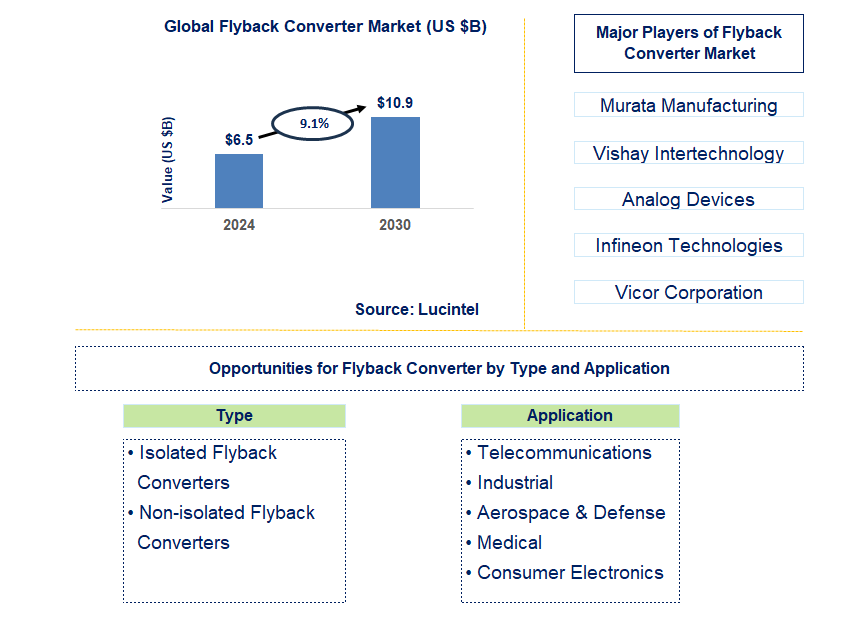
Key data points: The market size in 2030 = $10.9 billion, growth forecast = 9.1% annually for the next 6 years. Scroll below to get more insights. This market report covers trends, opportunities, and forecasts in the global flyback converter market to 2030 by type (isolated flyback converters and non-isolated flyback converters), application (telecommunications, industrial, aerospace & defense, medical, consumer electronics, automotive, and others), and region (North America, Europe, Asia Pacific, and the Rest of the World)
We'll send your sample report shortly.
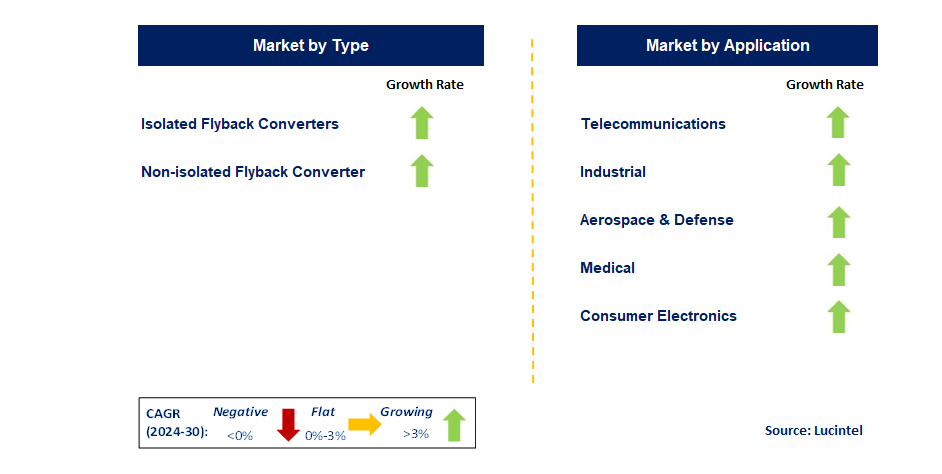
• Lucintel forecasts that, within the type category, isolated flyback converter will remain a higher growing segment over the forecast period.
• Within the application category, telecommunications will remain the largest segment over the forecast period due to rapid expansion of mobile networks, rising deployment of wireless communication technologies, and increasing demand for data services.
• In terms of regions, APAC will remain the largest region over the forecast period due to growing telecommunication sector and presence of strong electronics and electrical equipment manufacturing base in countriesllike China and India. Gain valuable insights for your business decisions with our comprehensive 150+ page report.
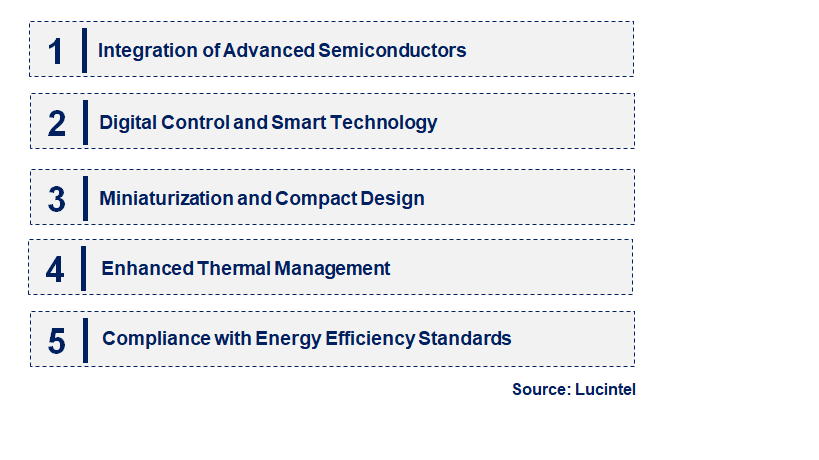
• Integration of Advanced Semiconductors: The incorporation of advanced semiconductors, such as silicon carbide (SiC) and gallium nitride (GaN), is enhancing the performance and efficiency of flyback converters. These materials allow for higher switching frequencies and improved thermal management, leading to more compact and efficient designs. This trend is crucial for applications requiring high power density and efficiency, such as electric vehicles and renewable energy systems. It supports the push towards more sustainable and cost-effective power solutions, enabling manufacturers to meet stringent performance and environmental standards.
• Digital Control and Smart Technology: The use of digital control and smart technology in flyback converters is improving their flexibility and functionality. Digital controllers enable precise regulation and adaptation to varying load conditions, enhancing overall system performance and reliability. This trend allows for more sophisticated and adaptive power management solutions, making flyback converters suitable for a broader range of applications. It also facilitates the integration of features like fault detection and remote monitoring, which are increasingly important in modern power systems.
• Miniaturization and Compact Design: There is a growing focus on miniaturizing flyback converters to meet the demands of space-constrained applications. Advances in design and materials are enabling smaller, lighter, and more efficient converters. Miniaturization is critical for applications in consumer electronics, medical devices, and portable power supplies. It helps reduce the overall size and weight of electronic systems while maintaining high performance and reliability.
• Enhanced Thermal Management: Improvements in thermal management technologies are addressing the challenges of heat dissipation in flyback converters. Innovations include better heat sinks, advanced cooling techniques, and improved materials. Enhanced thermal management extends the lifespan and reliability of flyback converters, making them more suitable for high-power and high-temperature environments. This trend is particularly relevant for industrial applications and high-performance electronics.
• Compliance with Energy Efficiency Standards: Adhering to stringent energy efficiency standards is becoming increasingly important for flyback converters. Compliance with regulations such as the EU's ErP Directive and various national standards drives the development of more efficient and environmentally friendly products. Meeting these standards is crucial for manufacturers to access global markets and align with sustainability goals. It also spurs innovation in design and materials to improve efficiency and reduce the environmental impact of power conversion systems. These emerging trends are reshaping the flyback converter market by driving advancements in technology, improving efficiency, and expanding application areas. The integration of advanced materials and digital controls enhances performance, while miniaturization and improved thermal management address specific application needs. Compliance with energy efficiency standards ensures that flyback converters meet global regulatory requirements and sustainability goals, positioning them as a critical component in modern power systems.
• Integration of Digital Control Technology: Manufacturers are increasingly adopting digital control techniques to enhance the performance and flexibility of flyback converters, allowing for precise voltage regulation and improved efficiency across varying loads.
• Advancements in GaN and SiC Technologies: The use of Gallium Nitride (GaN) and Silicon Carbide (SiC) semiconductors is rising, offering higher efficiency and thermal performance compared to traditional silicon devices, thus enabling smaller and lighter converter designs.
• Focus on Energy Efficiency Standards: Regulatory bodies are implementing stricter energy efficiency standards, prompting manufacturers to develop flyback converters that meet or exceed these requirements, particularly for applications in consumer electronics and industrial equipment.
• Emergence of Power Over Ethernet (PoE) Solutions: There is a growing demand for flyback converters in Power over Ethernet (PoE) applications, allowing for the simultaneous transmission of power and data over standard Ethernet cables, particularly in smart lighting and IoT devices.
• Expansion into Renewable Energy Systems: Flyback converters are being increasingly integrated into renewable energy applications, such as solar inverters, to improve energy conversion efficiency and support grid stability in distributed energy systems. In conclusion, the flyback converter market is evolving rapidly, driven by technological innovations, regulatory changes, and increasing demand for efficient power management solutions. These developments are positioning flyback converters as vital components in a wide range of modern applications, reinforcing their importance in the transition to sustainable energy systems.
• Consumer Electronics: The rapid proliferation of smart devices and wearable technology is fueling demand for flyback converters in consumer electronics. Their compact size and efficiency make them ideal for powering increasingly sophisticated gadgets. This trend is set to continue as consumer preferences shift towards more advanced and energy-efficient electronics, expanding the market for flyback converters in this sector.
• Renewable Energy Systems: The push towards renewable energy sources, such as solar panels and wind turbines, is driving the need for efficient power conversion. Flyback converters are essential in these systems for their ability to handle high-voltage and high-frequency conversions efficiently. As renewable energy adoption grows globally, the demand for flyback converters in these applications is expected to rise substantially.
• Automotive Industry: With the automotive industry's shift towards electric vehicles (EVs) and advanced driver-assistance systems (ADAS), there is an increasing need for reliable power management solutions. Flyback converters are critical in these applications for their ability to provide stable and efficient power to various components. This growing trend towards electrification in vehicles presents a significant growth opportunity for flyback converters.
• Industrial Automation: The expansion of industrial automation and smart manufacturing systems requires efficient power management solutions. Flyback Converters offer the reliability and efficiency needed to power sensors, controllers, and other critical components in automated systems. As industries continue to automate and modernize, the demand for flyback converters in this sector is likely to grow.
• Healthcare Equipment: Advances in medical technology are driving demand for reliable and efficient power solutions in healthcare equipment. Flyback Converters are used in various medical devices due to their ability to provide stable and precise power. The increasing complexity and sophistication of medical devices create opportunities for flyback converters to enhance performance and reliability in healthcare applications. These strategic growth opportunities highlight the increasing relevance of flyback converters across diverse applications. As technology advances and industries evolve, the demand for efficient and reliable power management solutions like flyback converters is set to grow, driving market expansion and innovation
• Technological Advancements: Continuous innovation in power electronics technology is a significant driver for the flyback converter market. Advances in semiconductor materials and circuit design have improved the efficiency, size, and performance of flyback converter. These technological enhancements enable the converters to meet the growing demands of various applications, including consumer electronics and renewable energy systems, driving market growth.
• Growing Consumer Electronics Market: The increasing adoption of smart devices, wearables, and portable electronics drives the demand for efficient power converters. Flyback converters, with their compact design and high efficiency, are well-suited for these applications. As consumer electronics continue to evolve and expand, the need for advanced power management solutions like flyback converter is expected to grow.
• Expansion of Renewable Energy Sources: The global shift towards renewable energy sources, such as solar and wind power, is boosting the demand for efficient power conversion systems. Flyback converters play a crucial role in these systems by converting high-voltage inputs to usable power efficiently. The growing emphasis on sustainable energy solutions is a key driver for the flyback converter market.
• Rise in Electric Vehicles (EVs): The automotive industry's transition to electric vehicles and advanced driver-assistance systems (ADAS) is increasing the demand for reliable power management solutions. Flyback converters are essential for providing stable power to various components in EVs and ADAS systems. This trend is expected to drive substantial growth in the flyback converter market.
• Advancements in Industrial Automation: The surge in industrial automation and smart manufacturing technologies requires efficient and reliable power solutions. Flyback converters are integral to powering automation equipment and control systems. As industries invest in automation and smart technologies, the demand for flyback converter in this sector is likely to rise. Challenges in the flyback converter market are:
• Regulatory Compliance: Compliance with stringent regulations and standards for electronic components can be challenging for flyback converter manufacturers. These regulations often pertain to safety, electromagnetic compatibility (EMC), and environmental impact. Navigating these requirements can increase costs and complexity for manufacturers, potentially impacting market growth.
• Market Competition: The flyback converter market is highly competitive, with numerous players offering similar products. Intense competition can lead to price wars and reduced profit margins. Manufacturers need to continuously innovate and differentiate their products to maintain a competitive edge and secure market share.
• Supply Chain Disruptions: The global electronics supply chain is susceptible to disruptions due to factors such as geopolitical tensions, natural disasters, and component shortages. Such disruptions can affect the availability of raw materials and components needed for flyback converter, leading to production delays and increased costs. The flyback converter market is driven by technological advancements, growing consumer electronics, renewable energy adoption, electric vehicles, and industrial automation. However, challenges such as regulatory compliance, market competition, and supply chain disruptions pose risks to market stability. Balancing these drivers and challenges is essential for stakeholders to capitalize on opportunities and navigate the evolving market landscape.
• Murata Manufacturing
• Vishay Intertechnology
• Analog Devices
• Infineon Technologies
• Vicor Corporation
• NXP Semiconductors
• Isolated Flyback Converters
• Non-isolated Flyback Converters
• Telecommunications
• Industrial
• Aerospace & Defense
• Medical
• Consumer Electronics
• North America
• Europe
• Asia Pacific
• The Rest of the World
• United States: In the U.S., recent developments in the flyback converter market focus on enhancing energy efficiency and meeting stricter regulatory standards. Innovations include the integration of advanced semiconductors and digital control techniques to improve performance and reduce power losses. Additionally, there is a growing emphasis on adapting flyback converters for applications in renewable energy systems and electric vehicles. The market is also seeing increased investments in research and development to support the next generation of high-efficiency converters, reflecting the country's commitment to energy sustainability and technological leadership.
• China: China flyback converter market is rapidly expanding, driven by the country's robust manufacturing sector and the growing demand for consumer electronics and appliances. Recent advancements include the development of high-efficiency converters that comply with China stringent energy-saving regulations. There is a strong focus on reducing costs and enhancing the performance of flyback converters for applications such as LED lighting and telecommunications. Additionally, Chinese manufacturers are investing in automation and smart technology to streamline production processes and boost competitiveness in the global market.
• Germany: Germany flyback converter market is characterized by a strong emphasis on precision and reliability, reflecting the country's focus on high-quality engineering. Recent developments include the adoption of advanced materials and design techniques to improve efficiency and thermal management. German companies are also exploring innovative approaches to integrate flyback converters into complex industrial systems and renewable energy solutions. The market is shaped by stringent European Union regulations on energy efficiency, driving German manufacturers to push the boundaries of technology and maintain their competitive edge in the global arena.
• India: In India, the flyback converter market is evolving to support the country's rapid industrialization and increasing adoption of electronic devices. Recent advancements include the development of cost-effective and compact flyback converters tailored for applications in consumer electronics, automotive systems, and industrial automation. Indian manufacturers are focusing on enhancing reliability and efficiency while meeting local regulatory standards. Additionally, there is a growing interest in integrating flyback converters with solar power systems to support India's renewable energy goals, reflecting the country's commitment to sustainable development and energy independence.
• Japan: Japan flyback converter market is marked by its emphasis on miniaturization and high performance. Recent developments include advancements in semiconductor technology and digital control systems, enabling smaller and more efficient converters. Japanese manufacturers are also investing in research to enhance the reliability and lifespan of flyback converters for use in critical applications such as medical devices and aerospace systems. The market is influenced by Japan stringent environmental regulations and its drive towards technological innovation, leading to the development of cutting-edge solutions that align with the country's high standards for quality and performance.


• Murata Manufacturing
• STMicroelectronics
• Texas Instruments
• Vishay Intertechnology
• Analog Devices
• Infineon Technologies
• Vicor Corporation
• NXP SemiconductorsQ6. Which flyback converter market segment will be the largest in future?Answer: Lucintel forecasts that isolat Q4. What are the major segments for flyback converter market? Answer: The future of the flyback converter market looks promising with opportunities in the telecommunication, industrial, aerospace & defense, medical, consumer electronic, and automotive markets. Q5. Who are the key flyback converter market companies? Answer: Some of the key flyback converter companies are as follows:
• Murata Manufacturing
• Vishay Intertechnology
• Analog Devices
• Infineon Technologies
• Vicor Corporation
• NXP Semiconductors Q6. Which flyback converter market segment will be the largest in future? Answer: Lucintel forecasts that isolated flyback converter will remain the higher growing segment over the forecast period. Q7. In flyback converter market, which region is expected to be the largest in next 5 years? Answer: APAC will remain the largest region over the forecast period due to growing telecommunication sector and presence of strong electronics and electrical equipment manufacturing base in countriesllike China and India. Q.8 Do we receive customization in this report? Answer: Yes, Lucintel provides 10% customization without any additional cost.


Choose a license that fits your team. Instant PDF delivery.
Prices exclude taxes. Instant delivery. Custom licensing available on request.
Market Report · July 31, 2026
Market Report · July 31, 2026
Market Report · July 31, 2026
Trusted partner for strategic intelligence and business growth


Receive a complimentary market analysis tailored to your industry. Our analysts will identify key growth opportunities and competitive dynamics specific to your business.

Market size, growth rate, and key trend analysis for your specific sector.

Top competitor positioning and market share analysis.

Strategic recommendations backed by data-driven insights.
Get curated market intelligence and competitive moves straight to your inbox.
By subscribing, you agree to receive our monthly insights. Unsubscribe anytime.
Receive a complimentary market analysis tailored to your industry. Our analysts will identify key growth opportunities and competitive dynamics specific to your business.
Market size, growth rate, and key trend analysis for your specific sector.
Top competitor positioning and market share analysis.
Strategic recommendations backed by data-driven insights.
Get curated market intelligence, emerging trends, and competitive moves straight to your inbox each month.
By subscribing, you agree to receive our monthly insights. Unsubscribe anytime.
We'll send your sample report shortly.