
Market Report · July 31, 2026

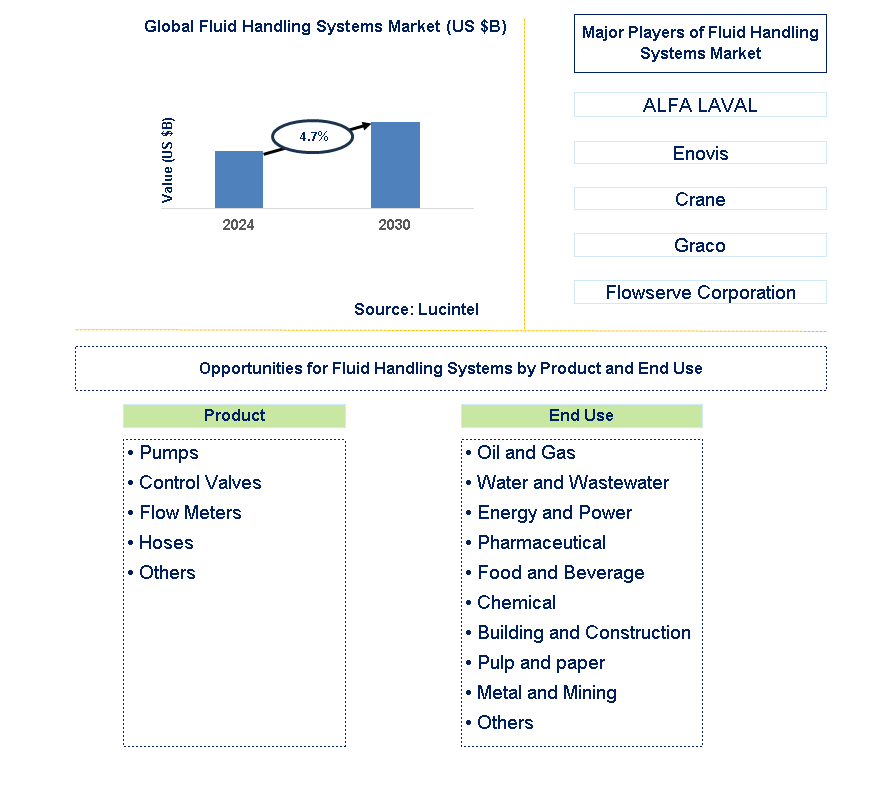
Key data points: The growth forecast = 4.7% annually for the next 6 years. Scroll below to get more insights. This market report covers trends, opportunities, and forecasts in the global fluid handling systems market to 2030 by product (pumps, control valves, flow meters, hoses, and others), end use (oil and gas, water and wastewater, energy and power, pharmaceutical, food and beverage, chemical, building and construction, pulp and paper, metal and mining, and others), and region (North America, Europe, Asia Pacific, and the Rest of the World)
We'll send your sample report shortly.
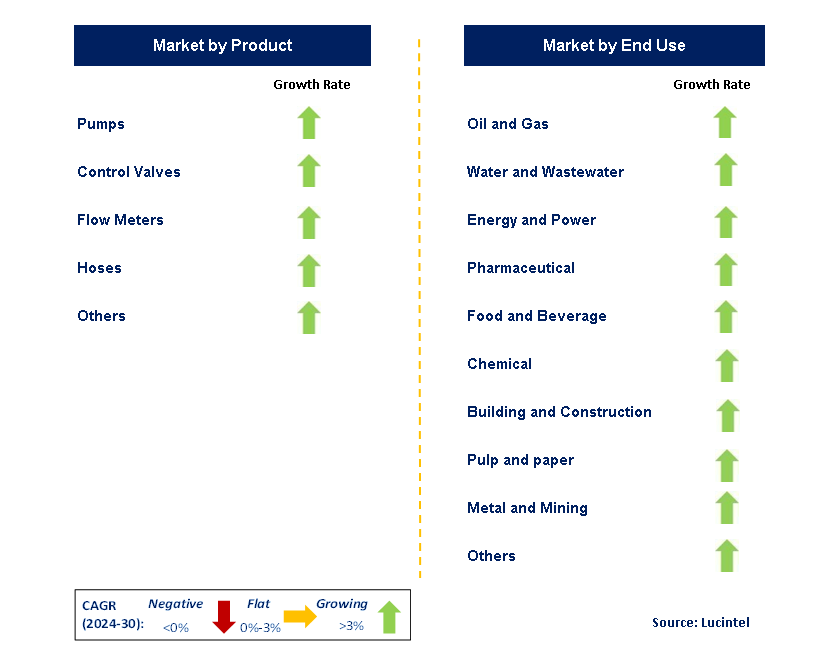
• Lucintel forecasts that, within the product category, the pumps will remain the largest segment over the forecast period.
• Within the end use category, oil and gas will remain the largest segment.
• In terms of regions, North America will remain the largest region over the forecast period due to the existence of significant biopharmaceutical companies and the region's accessibility to cutting-edge products. Gain valuable insights for your business decisions with our comprehensive 150+ page report.
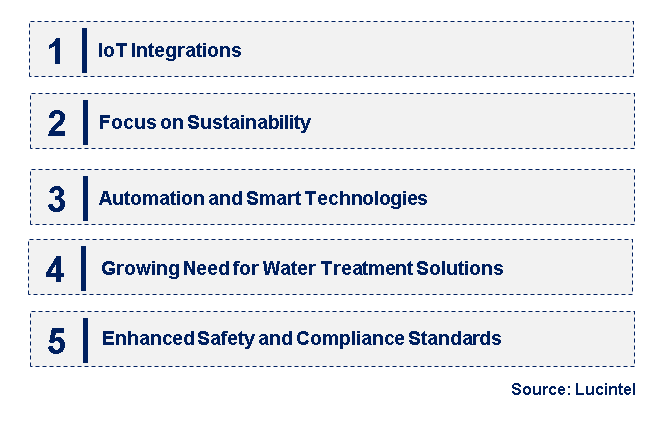
• IoT Integrations: IoT integrations with fluid handling systems help in real-time monitoring and analysis of data. The system is therefore prepared for efficient operation and predictive maintenance by reducing downtime and optimizing processes involved with fluid management in various industries.
• Focus on Sustainability: Given the increasing environmental concerns, there is a growing thrust for developing sustainable fluid handling solutions. Manufacturers are innovating to create sustainable products while reducing waste and energy consumption, keeping pace with global sustainability goals and regulatory compliance.
• Automation and Smart Technologies: Today, the increasing drive for automation is changing the fluid handling landscape. Greater precision and reliability in fluid management are assured due to smart systems featuring advanced sensors and controls, which contribute to minimal human intervention and improve operational efficiency.
• Growing Need for Water Treatment Solutions: As concerns about water scarcity and quality rise, high-performance fluid handling systems are in great demand for water treatment applications. For example, improving safety and adhering to standards makes it crucial that water management is safe and efficient.
• Enhanced Safety and Compliance Standards: Regulatory changes are compelling manufacturers to make fluid handling systems safe and compliant. Companies strive to produce solutions that achieve higher standards of safety while ensuring reliability in the system and reducing risks associated with fluid management processes. These trends are transforming the fluid handling systems market as they foster innovation, sustainability, and better operational efficiency. Stakeholders must capitalize on novel opportunities to compete in a rapidly changing scenario.
• Integration of Advanced Pump Technologies: Manufacturers are working toward integrating the latest smart pumps that include IoT features. These pumps offer real-time monitoring, predictive maintenance, and energy efficiency, thereby amplifying performance in various applications while reducing operational costs.
• Eco-friendly Solutions on the Rise: There are significant shifts toward environmentally friendly fluid handling solutions, driven by regulatory imperatives and market demand. Companies are innovating in areas that minimize their ecological footprint, such as biodegradable fluids and energy-efficient systems that align with sustainability initiatives.
• AI and Machine Learning: The increasing integration of AI and machine learning capabilities in fluid handling systems enhances data analysis capabilities. Predictive maintenance, fluid flow optimization, and improved decision-making factors ensure high system reliability and efficiency.
• Entering New Markets: Companies are expanding their operations into emerging markets in Asia and Africa, where infrastructure development is the focus. These expansions offer new opportunities for fluid handling solutions, driven by the need to modernize systems for industrial and municipal applications.
• Focus on Customization and Flexibility: As industries demand fluid handling systems to be custom-designed for specific operating requirements, the trend toward customization will encourage manufacturers to invest in flexible designs that accommodate diverse applications and create more opportunities for improving competitiveness within various market segments. The fluid handling systems market is greatly impacted by these new developments, fostering innovation and efficiency while opening doors to new growth. Companies that adapt to these trends will position themselves well to stay ahead.
• Water and Wastewater Management: There is vast potential in the high demand for efficient solutions in water and wastewater management worldwide. Companies could focus on innovations in developing advanced systems for treatment, recycling, and distribution aimed at specific water scarcity and quality issues.
• Use in the Oil and Gas Industry: The oil and gas market remains an important application area for fluid handling systems. Opportunities exist for developing strong, efficient systems capable of enhancing safety and efficiency in processes for the extraction, transportation, and refining of oil and natural gas.
• Food and Beverage Industry: As food safety standards become increasingly stringent, demand for reliable fluid handling systems within the food and beverage industries continues to grow. Companies can benefit by offering hygienic transport and processing of fluids.
• Pharmaceutical Manufacturing: The pharmaceutical industry has strict requirements for the accuracy of fluid handling in production operations. Manufacturers can take the opportunity to create compliant, high-quality systems that meet stringent regulatory requirements and improve the efficiency and safety of their operations.
• Industrial Automation: Trends in industrial automation open opportunities for fluid handling systems to better integrate with automated systems. Companies can develop smart solutions to improve operational efficiency and minimize manual intervention in fluid management. All the strategic growth opportunities stated above are critical for expansion in the fluid handling systems market. If manufacturers focus on these application segments, they can boost innovation, capture new market segments, and secure a competitive advantage.
• Infrastructure Building: Global infrastructure development is increasing the demand for fluid handling systems, with water treatment facilities, industrial plants, and energy projects all requiring efficient fluid management solutions, thus propelling market growth.
• Increasing Sustainability Focus: Environmental sustainability initiatives mandate manufacturers to develop eco-friendly fluid handling systems. Reducing environmental impact and ensuring regulatory compliance will create opportunities for innovation and access to new markets.
• Technological Upgrades: The rapid pace of technological advancement, including automation and IoT, is one of the most significant factors influencing the market. Fluid handling systems are advancing through these technological improvements, focusing on efficiency, reliability, and data analytics. Challenges in the fluid handling systems market include:
• High Competition: The fluid handling systems market is highly competitive, with many players. The competition for market share is intense, requiring companies to constantly innovate and differentiate their products to survive in a saturated market.
• Supply Chain Disruptions: Global supply chain disruptions can impact the availability of raw materials and components, leading to delayed production and increased costs that may affect manufacturers' ability to meet market demand.
• Speed of Technological Changes: Rapid advancements in technology leave little room for companies to adapt. Continuous investment in R&D is essential to maintain a competitive edge and foster new innovations. These are some of the driving forces and challenges facing the fluid handling systems market that influence growth prospects and the competitive nature of the field. Understanding these influences is essential for stakeholders seeking success in this evolving landscape.
• ALFA LAVAL
• Enovis
• Crane
• Graco
• Flowserve Corporation
• Ingersoll Rand
• SPX FLOW
• Dover Corporation
• Bürkert
• Tecan Trading AG
• Pumps
• Control Valves
• Flow Meters
• Hoses
• Others
• Oil and Gas
• Water and Wastewater
• Energy and Power
• Pharmaceutical
• Food and Beverage
• Chemical
• Building and Construction
• Pulp and paper
• Metal and Mining
• Others
• North America
• Europe
• Asia Pacific
• The Rest of the World
• United States: The fluid handling systems market is gaining momentum in the U.S., boosted by the shale gas boom and infrastructure investment. Companies are now focusing on automation and digitalization, introducing IoT technologies in fluid management processes. Pressure to become environmentally friendly has spurred innovation and improvements in leak detection and control technology, increasing its importance. The market is also witnessing a surge in demand for sustainable fluid handling solutions across all sectors.
• India: The fluid handling systems industry in India is growing rapidly due to urbanization and increasing infrastructure investment. Government initiatives under the banner of "Make in India" encourage local manufacturing of fluid handling systems. With rising water scarcity incidents, there is an increasing focus on water management and treatment solutions. Indian companies are poised to use innovative technologies to enhance efficiency and sustainability to meet domestic needs and capitalize on export opportunities, transforming the market scenario.
• Germany: Germany remains a leader in the fluid handling systems market, especially in engineering and manufacturing. The country is underpinned by the Industry 4.0 initiative, where innovations in automation and intelligent fluid handling systems are prioritized. Companies continue to invest in R&D to develop efficient and sustainable technologies, such as high-performance pumps and valves. Strict regulations in Germany also compel manufacturers to enhance quality and compliance, ensuring their solutions meet international standards and strengthen their position in the global market.
• Japan: Japan's fluid handling systems market is technologically advanced and known for high quality. Companies are incorporating newer technologies, such as robotics and AI, to improve efficiency. Aging infrastructure necessitates substantial investments in modernizing and maintaining fluid systems. The Japanese government is promoting sustainability by encouraging manufacturers to develop environmentally friendly products. Innovation drives Japan to be a leading player in the global fluid handling market.


• ALFA LAVAL
• Enovis
• Crane
• Graco
• Flowserve Corporation
• Ingersoll Rand
• SPX FLOW
• Dover Corporation
• Bürkert
• Tecan Trading AG Q5. Which fluid handling systems market segment will be the largest in future? Answer: Lucintel forecasts that, within the product category, the pumps will remain the largest segment over the forecast period. Q6. In fluid handling systems market, which region is expected to be the largest in next 5 years? Answer: In terms of regions, North America will remain the largest region over the forecast period due to the existence of significant biopharmaceutical companies and the region's accessibility to cutting-edge products. Q.7 Do we receive customization in this report? Answer: Yes, Lucintel provides 10% customization without any additional cost.


Choose a license that fits your team. Instant PDF delivery.
Prices exclude taxes. Instant delivery. Custom licensing available on request.
Market Report · July 31, 2026
Market Report · July 22, 2026
Market Report · July 20, 2026
Trusted partner for strategic intelligence and business growth


Receive a complimentary market analysis tailored to your industry. Our analysts will identify key growth opportunities and competitive dynamics specific to your business.

Market size, growth rate, and key trend analysis for your specific sector.

Top competitor positioning and market share analysis.

Strategic recommendations backed by data-driven insights.
Get curated market intelligence and competitive moves straight to your inbox.
By subscribing, you agree to receive our monthly insights. Unsubscribe anytime.
Receive a complimentary market analysis tailored to your industry. Our analysts will identify key growth opportunities and competitive dynamics specific to your business.
Market size, growth rate, and key trend analysis for your specific sector.
Top competitor positioning and market share analysis.
Strategic recommendations backed by data-driven insights.
Get curated market intelligence, emerging trends, and competitive moves straight to your inbox each month.
By subscribing, you agree to receive our monthly insights. Unsubscribe anytime.
We'll send your sample report shortly.