
Market Report · May 18, 2026

This market report covers trends, opportunities, and forecasts in the global fluid dispensing equipment for semiconductor & electronic market to 2031 by technology (manual, semi-automatic, and automatic), application (led-automobile, semiconductor flux dispensing, mems sensor, and camera/sensor module assembly), and region (North America, Europe, Asia Pacific, and the Rest of the World)
We'll send your sample report shortly.
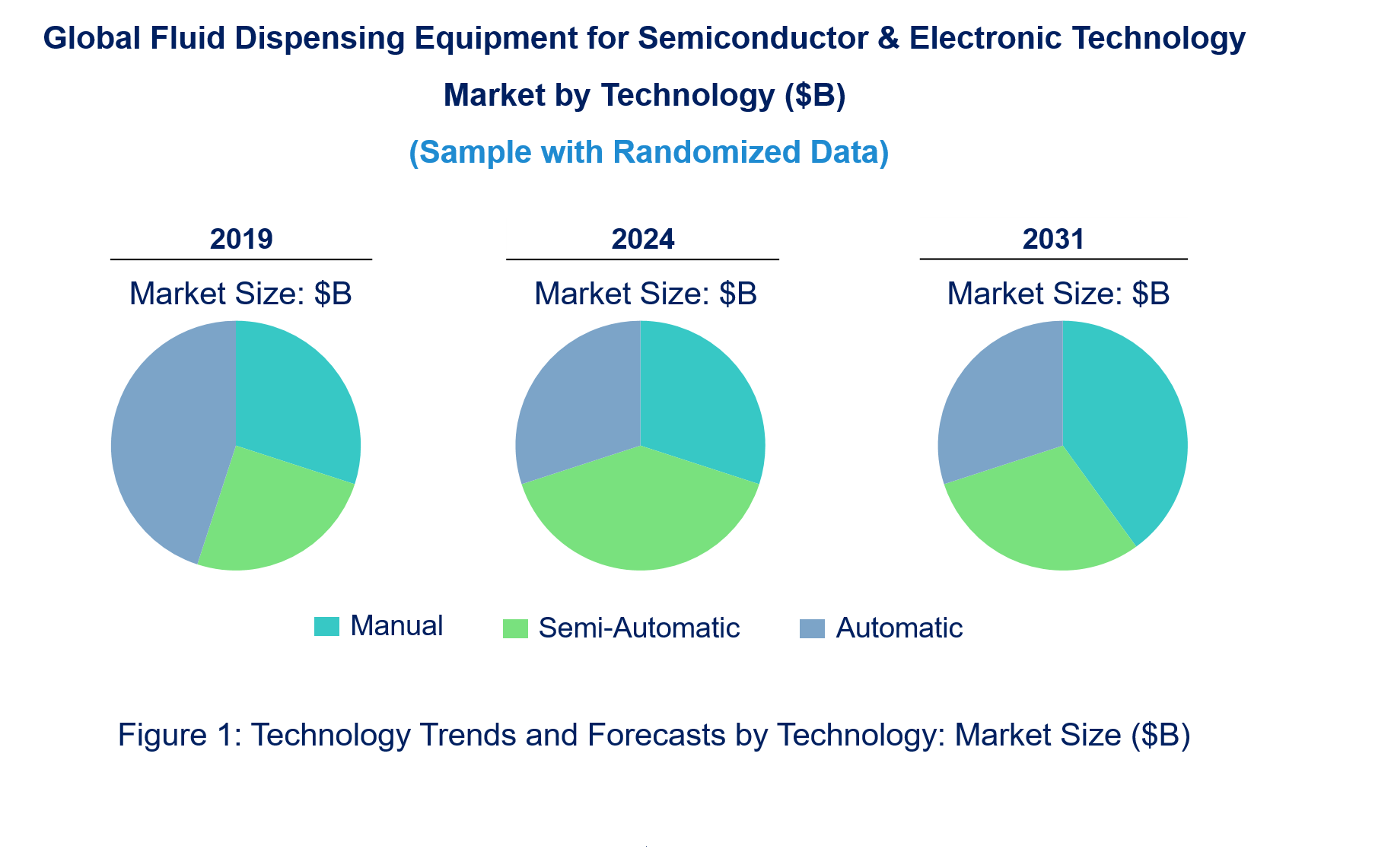
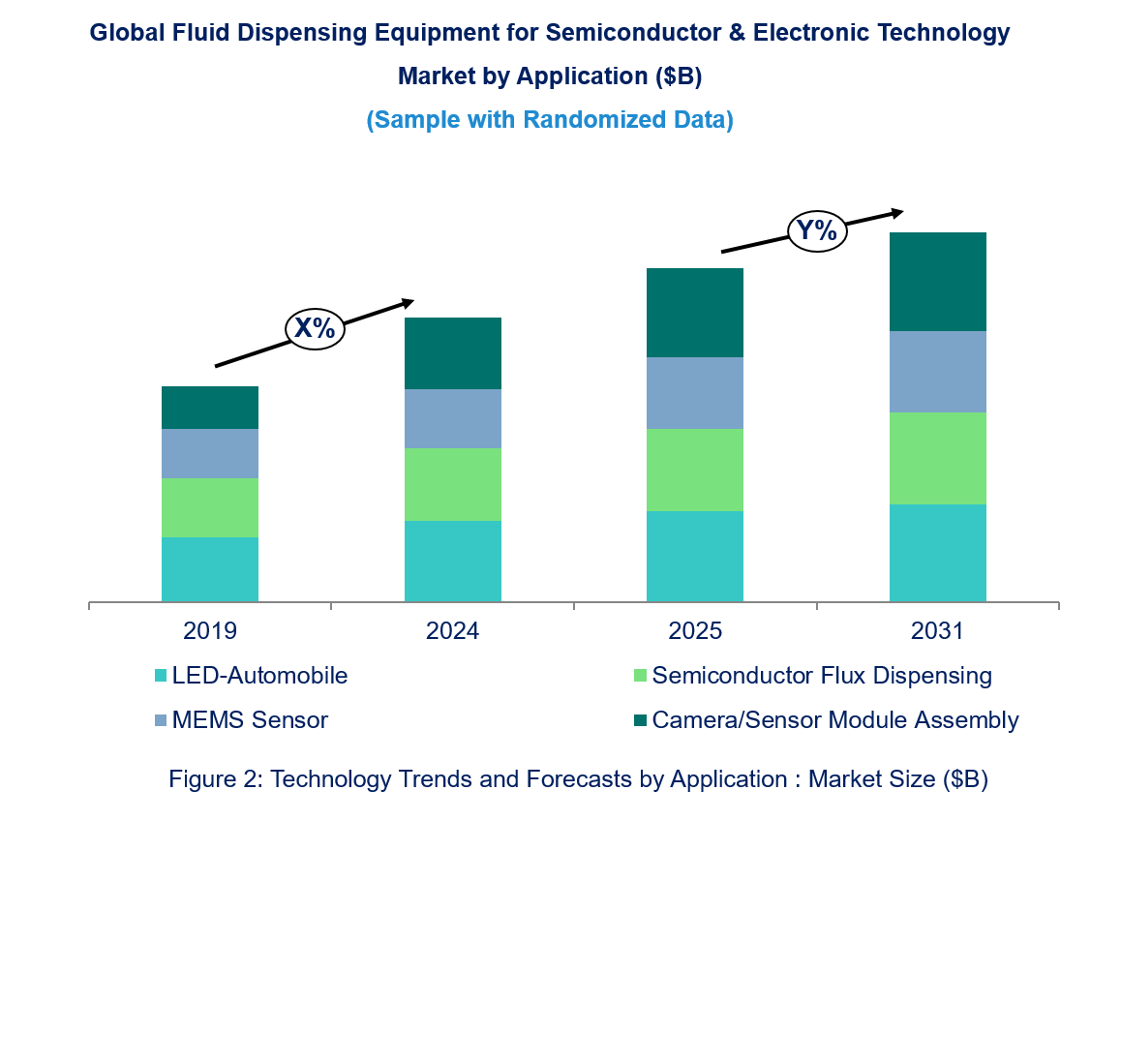
• Integration of Automation & Robotics: Automation and robotics in fluid dispensing systems improve precision, speed, and the performance of tasks. Automating fluid dispensing allows semiconductor and electronics makers to maintain consistent quality while keeping human error to a minimum and improving productivity in high-volume production environments.
• Miniaturization of Components: As semiconductors and electronic components go smaller, the demand to dispense fluids with greater accuracy and control increases. Equipment is therefore designed to handle smaller, delicate components with greater accuracy to provide for the need of very high-precision applications in advanced semiconductor and electronics manufacturing.
• Use of Advanced Fluid Technologies: The market is shifting towards more advanced fluid technologies, including UV-cured adhesives, conductive pastes, and specialty inks. These fluids necessitate specific dispensing equipment to apply the fluid accurately without contamination, and with new materials coming into existence, dispensing systems are designed for optimal handling of such materials.
• Process Control and Quality Assurance: Fluid dispensing systems are highly emphasized in process control and real-time monitoring and quality assurance, where manufacturers integrate the use of sensors, cameras, and other monitoring technologies to achieve the tracking of fluid flow and achieve consistent dispensing quality thus reducing the chances of flaws and enhancing the overall quality of the product.
• Migration to Eco-Friendly as well as Sustainable Solutions: With increasing environmental awareness and regulatory pressures, there has been a trend towards 'green' and sustainable fluid dispensing solutions, such as low-VOC fluids, energy-efficient dispensing systems, and waste-minimizing technologies key to the industry's goals for sustainability. The fluid dispensing equipment for the semiconductor & electronic market is being reshaped through the advancement of automation, miniaturization, fluid technologies, process control, and sustainability. It is not only improving the efficiency of operation and quality of the product but also addressing some challenges presented by the evolving needs in manufacturing. As it goes along, these shifts will further fuel innovation and greater efficiency in semiconductor and electronics manufacturing.
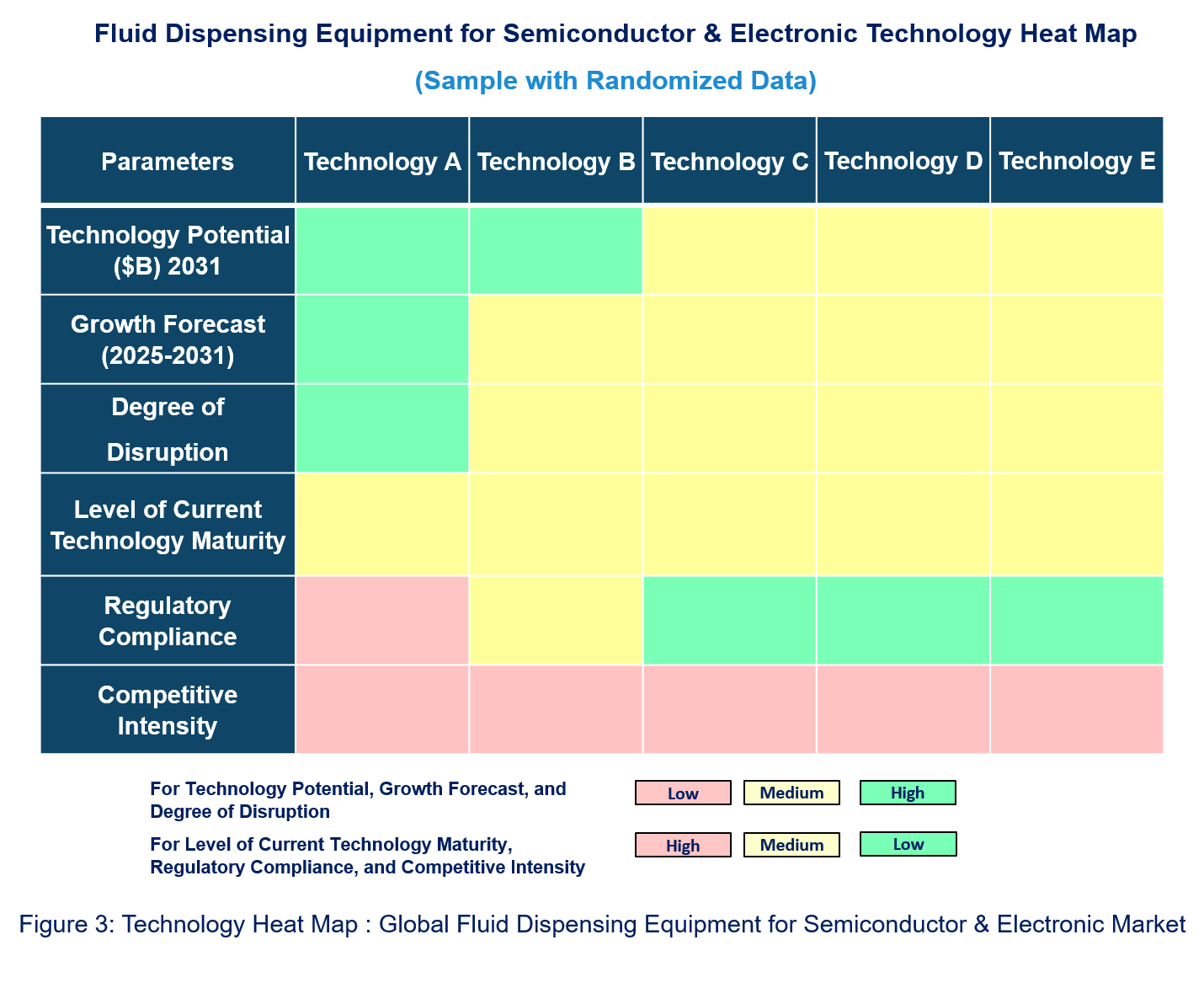
• Potential in Technology: The potential of fluid dispensing technology is enormous, driven by the growing need for precision and automation in semiconductor manufacturing. As miniaturization and complexity in devices increase, the demand for accurate fluid application methods grows. Innovations such as micro-dispensing, real-time process monitoring, and automated quality control can significantly improve manufacturing efficiency and reduce errors.
• Degree of Disruption: Although the current technology has matured over time and is still largely in use, the degree of disruption in the sector is relatively moderate. New materials and applications are still coming up to improve fluid dispensing capabilities little by little. However, the overall process is not that stable because companies still refine and optimize the existing technologies rather than replacing them with new ones.
• Current Technology Maturity Level: Fluid dispensing technology is relatively mature, with a strong presence of established systems in semiconductor manufacturing. However, as the industry moves toward more complex and compact devices, there is a continuous push for improving the accuracy, speed, and flexibility of these systems.
• Regulatory Compliance: Regulatory compliance is critical in fluid dispensing equipment for the semiconductor and electronics market. Manufacturers must adhere to international standards, including ISO 9001 for quality management systems and various environmental regulations concerning chemical use and waste disposal. This ensures that production processes are safe and sustainable.
• Nordson Corporation: Nordson has developed advanced automated fluid dispensing systems that can interface with robotics for high-speed assembly lines in semiconductor packaging. Their systems improve production efficiency because they minimize manual handling, promote uniform fluid dispensing, and ensure repeatability; this is critical for high-precision applications in semiconductor assembly.
• PROTEC CO.: PROTEC CO. has developed new semi-automatic fluid dispensing machines for high-precision applications in LED manufacturing. The systems allow for fine control of dispensing quantities, which improves the quality and consistency of soldering and coating processes that are crucial for the reliable performance of LED components.
• NSW Automation: NSW Automation features MEMS sensor application advanced fluid dispensing technology using high-accuracy control systems. This ensures accurate dispensing of adhesive and solder materials to minimize the chances of contamination and enhance the overall reliability and performance of MEMS sensors in consumer electronics.
• ITW: ITW has introduced a cutting-edge fluid dispensing solution that uses AI-driven controls to make live adjustments in the dispensing process. This allows for increased precision in the application of fluids, a significant factor for the assembly of cameras and sensors with miniature parts, where there must be consistent accuracy in dispensing.
• Musashi Engineering, Inc.: Musashi Engineering has extended its product offerings to include fully automated fluid dispensing systems, suitable for high-volume semiconductor flux dispensing applications. Its systems feature high throughput and reduced cycle times, which are critical to the industry's increasing demands with the required precision.
• GPD Global: The company GPD Global just launched a next-generation fluid dispensing platform that has sophisticated software for real-time monitoring and diagnostics. This results in better process control in semiconductor assembly. Its technology provides highly accurate volume control, which would reduce material waste and consequently improve the quality of the semiconductor flux dispensing process.
• FISNAR: FISNAR has launched fluid dispensing equipment models that boast improved flow rate control and reduced pulse widths to achieve enhanced fluid management in sensor and camera module assembly. Such improvements ensure better adhesion application, thereby bettering the integrity of the components in the electronics industry.
• Henkel Corporation: Henkel has introduced an advanced fluid dispensing technology that seamlessly integrates with automated production lines for semiconductor packaging. Its systems are optimized for the precise dispensing of underfills and encapsulants, which contribute to faster production cycles and improved product reliability in semiconductor applications.
• TECHNON (Dover Corporation): TECHNON now launched its fluid dispensing innovation solution that uses advanced mixing technology. Fluid dispensing can help the electronics manufacturing industry make the mixture consistent. Its new technologies also enable accurate adhesives and pastes applied during the production of MEMS sensors, hence increasing the output with a minimum consumption of the materials used.
• INTERTRONICS: INTERTRONICS has developed the flexibility of fluid dispensing equipment for many applications, including camera and sensor module assembly. Their systems allow for high precision and versatility in dispensing various types of fluids, including adhesives, flux, and coatings, which will apply evenly in complex electronic assemblies. These latest trends show the trend in fluid dispensing equipment to have higher automation, precision, and integration with digital technologies. The leading companies are challenging the frontiers of fluid dispensing technology as demands grow in the semiconductor and electronics industries to produce better productivity, minimize waste, and deliver higher-quality outputs.
• Technological Advancements in Semiconductor Manufacturing: The increasing complexity and miniaturization of semiconductor components have driven the demand for precise fluid dispensing systems. Advanced materials such as adhesives, solders, and pastes require high-precision equipment for accurate application, promoting market growth and technological innovation in fluid dispensing systems to meet the evolving needs of the industry.
• Demand for High-Precision Manufacturing in Electronics: As the demand for more compact, efficient, and reliable electronic devices grows, fluid dispensing equipment is critical in ensuring high precision in assembly processes. This trend is driving the need for advanced fluid dispensing technologies that cater to applications like PCB assembly, semiconductor packaging, and microelectronics, enhancing overall product quality.
• Increasing Automation and Industry 4.0 Integration: The push towards automation and Industry 4.0 in manufacturing processes is enabling the integration of intelligent systems, improving fluid dispensing equipment's efficiency and accuracy. Automated fluid dispensing systems, equipped with sensors and real-time monitoring, help reduce errors, improve production efficiency, and enhance traceability, contributing to market expansion.
• Focus on Sustainability and Eco-Friendly Solutions: With rising environmental concerns and stricter regulations, the demand for sustainable fluid dispensing solutions is growing. The development of low-VOC and non-toxic materials, coupled with energy-efficient dispensing systems, is driving the adoption of eco-friendly practices in fluid dispensing, meeting both market and environmental expectations.
• Growing Electronics Manufacturing in Emerging Markets: Emerging markets, particularly in Asia-Pacific and Latin America, are witnessing rapid growth in electronics manufacturing. This surge in production capacity has increased the demand for fluid dispensing equipment, leading to market expansion as manufacturers seek reliable and efficient systems for high-volume production, further driving growth. Challenges in the fluid dispensing equipment for the semiconductor & electronic market are:
• Rising Complexity in Fluid Dispensing Requirements: As semiconductor devices and electronic components become more intricate, fluid dispensing equipment must adapt to increasingly complex requirements. Handling advanced materials, precise application needs, and multiple component types poses challenges for manufacturers in designing adaptable systems, affecting their ability to maintain operational efficiency and accuracy.
• High Costs of Advanced Fluid Dispensing Systems: The integration of automation, sensors, and real-time monitoring technologies significantly raises the cost of advanced fluid dispensing equipment. High initial investment costs and maintenance expenses can be a barrier for small and medium-sized enterprises (SMEs), limiting the widespread adoption of high-tech systems in the fluid dispensing market.
• Fluctuating Raw Material Prices: Variability in the price of raw materials used in the manufacture of fluid dispensing systems—such as precision components and high-quality pumps—can lead to increased production costs. Price volatility may create challenges in managing costs and pricing strategies, impacting manufacturers' ability to stay competitive in the market.
• Need for Skilled Labor and Training: The adoption of sophisticated fluid dispensing technologies requires skilled technicians capable of operating, maintaining, and troubleshooting advanced systems. The need for specialized training to handle these systems effectively is a challenge, as it may result in additional costs and a potential shortage of qualified personnel in certain regions.
• Regulatory and Environmental Compliance: Stricter environmental regulations around the use of chemicals and waste disposal pose challenges for fluid dispensing equipment manufacturers. Compliance with evolving standards, such as low-VOC formulations and energy-efficient solutions, requires ongoing research and development, creating operational challenges and increasing the cost of manufacturing. The fluid dispensing equipment for the semiconductor & electronic market is driven by technological advancements, automation, precision manufacturing demands, and the push for sustainability. However, challenges such as increasing complexity in fluid dispensing, high costs, and regulatory requirements continue to impact the market's dynamics. Addressing these drivers and challenges will shape the future trajectory of the market, with companies needing to innovate and adapt to stay competitive.
• Nordson Corporation
• Protec Co.
• NSW Automation
• ITW
• Musashi Engineering
• GPD Global
• Technology Readiness by Technology Type: Manual systems are less advanced and often used in low-volume or less complex applications. Semi-automatic systems are more mature, providing a balance between efficiency and control. Automatic fluid dispensing systems are the most advanced, offering high precision and automation for large-scale, high-precision applications in semiconductor production. Competitive levels are highest in automatic systems.
• Competitive Intensity and Regulatory Compliance: The fluid dispensing equipment for semiconductor & electronic market competitive intensity varies across manual, semi-automatic, and automatic fluid dispensing systems. Manual systems face lower competition due to limited capabilities. Semi-automatic technologies experience moderate competition, while automatic systems face high competition due to continuous innovation. Regulatory compliance is crucial across all technologies, ensuring manufacturers adhere to global standards such as ISO and environmental regulations.
• Disruption Potential by Technology Type: Manual, semi-automatic, and automatic fluid dispensing technologies each offer varying degrees of disruption. While manual systems have limited potential for change, semi-automatic systems introduce moderate innovation with more consistent output. Automatic systems are highly disruptive, offering advanced precision and automation capabilities that significantly improve efficiency and scalability in semiconductor manufacturing.
• Manual
• Semi-Automatic
• Automatic
• LED-Automobile
• Semiconductor Flux Dispensing
• MEMS Sensor
• Camera/Sensor Module Assembly
• North America
• Europe
• Asia Pacific
• The Rest of the World
• Latest Developments and Innovations in the Fluid Dispensing Equipment for Semiconductor & Electronic Technologies
• Companies / Ecosystems
• Strategic Opportunities by Technology Type




Choose a license that fits your team. Instant PDF delivery.
Prices exclude taxes. Instant delivery. Custom licensing available on request.
Market Report · May 18, 2026
Market Report · May 18, 2026
Market Report · May 18, 2026
Trusted partner for strategic intelligence and business growth


Receive a complimentary market analysis tailored to your industry. Our analysts will identify key growth opportunities and competitive dynamics specific to your business.

Market size, growth rate, and key trend analysis for your specific sector.

Top competitor positioning and market share analysis.

Strategic recommendations backed by data-driven insights.
Get curated market intelligence and competitive moves straight to your inbox.
By subscribing, you agree to receive our monthly insights. Unsubscribe anytime.
Receive a complimentary market analysis tailored to your industry. Our analysts will identify key growth opportunities and competitive dynamics specific to your business.
Market size, growth rate, and key trend analysis for your specific sector.
Top competitor positioning and market share analysis.
Strategic recommendations backed by data-driven insights.
Get curated market intelligence, emerging trends, and competitive moves straight to your inbox each month.
By subscribing, you agree to receive our monthly insights. Unsubscribe anytime.
We'll send your sample report shortly.