
Market Report · July 16, 2026

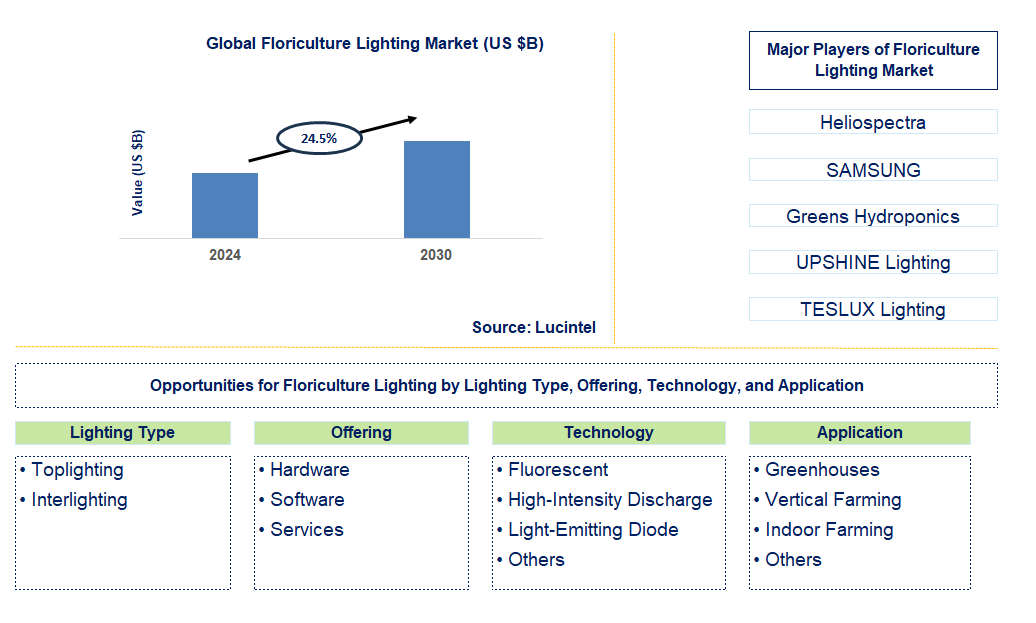
Key data points: The market growth forecast = 24.5% annually next 6 years. Scroll below to get more insights. This market report covers trends, opportunities, and forecasts in the global floriculture lighting market to 2030 by lighting type (toplighting and interlighting), offering (hardware, software, and services), technology (fluorescent, high-intensity discharge, light-emitting diode, and others), application (greenhouses, vertical farming, indoor farming, and others), and region (North America, Europe, Asia Pacific, and the Rest of the World)
We'll send your sample report shortly.
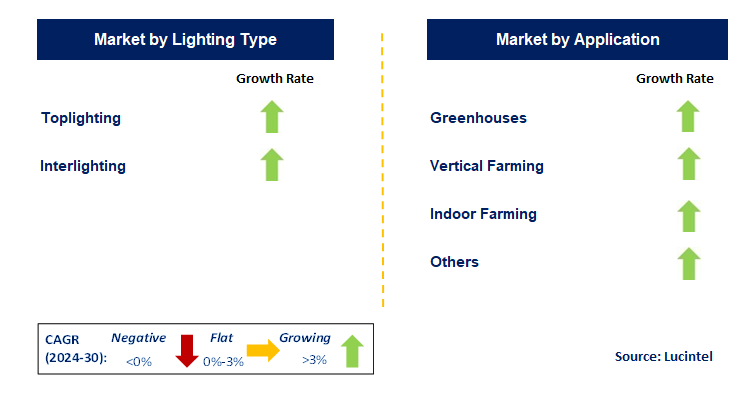
• Lucintel forecasts that, within the lighting type category, toplighting is expected to witness higher growth over the forecast period.
• Within the application category, Greenhouse is expected to witness highest growth over the forecast period due to its growing preference for cultivating regular crops with controlled temperatures and predictable climatic condition environment.
• In terms of regions, North America is expected to witness highest growth over the forecast period due to rising demand for indoor farms and greenhouses vertical in the region. Gain valuable insights for your business decisions with our comprehensive 150+ page report.
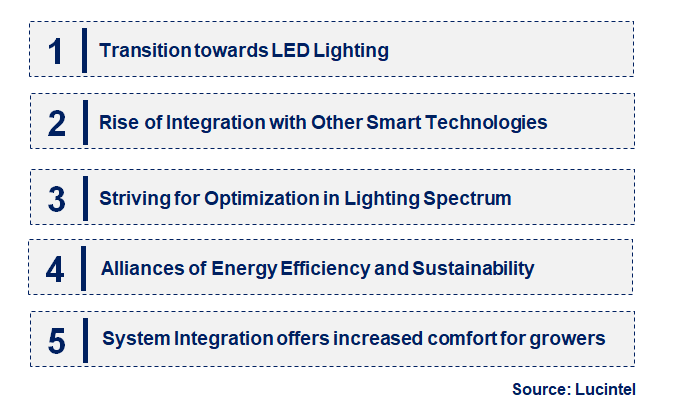
• Transition towards LED Lighting: One of the accelerating trends in this market is the movement towards LED lighting due to its efficiency, long life, and flexibility of light spectra. Flower growers are leaning towards the use of LEDs due to the specific wavelengths emitted for enhanced vegetative growth and flowering of the plants. Growers will benefit from this trend in terms of energy cost savings since less energy will be consumed.
• Rise of Integration with Other Smart Technologies: There is an emergence of interest concerning the use of smart features, such as automatic control devices and IoT. Operating components incorporate the ability to control the lighting with respect to illumination power, duration, and spectrum. Integration of smart features in the workplace enhances productivity and makes it possible to monitor and make adjustments based on the plant’s real-time status.
• Striving for Optimization in Lighting Spectrum: It is becoming a new trend to optimize the light spectra for different stages of plant growth. There is a development of light sources that enable modification of the light’s wavelengths to match the various stages of growth from the seed to the flowering phases. Spectrum optimization is beneficial to the plants regarding quality and yields, making it one of the critical considerations in contemporary flower production lighting.
• Alliances of Energy Efficiency and Sustainability: New technologies are increasingly integrating energy and lighting items, especially in floriculture lighting. Lighting systems possessing energy-conserving features like LEDs lead to low energy consumption and a decrease in greenhouse gases. This trend aligns with emerging environmental objectives and obligations driving the uptake of green technologies.
• System Integration Offers More Comfort for Growers: The trend of creating integrated lighting systems, whereby lights work with other features such as climate and nutrient delivery, is another upward trend. These systems provide more than the basic needs of the plants, ensuring that resources used in the growth of the plants are optimized in an economically viable manner. Integrated solutions facilitate more efficient and sustainable methods of floriculture. Major trends such as the emergence of LED lamps, convergence with other technologies, spectrum optimization, emphasis on green technologies and solutions, and the creation of integrated systems are altering this industry. All these trends suggest that the industry is evolving positively by embracing more effective, accurate, and greener lighting technologies.
• Advanced LED Technology: The development of advanced LED technology has introduced significant change in the floriculture lighting market. Current LEDs can improve lighting effects, achieving longer practice runs and saving more energy than other forms of lighting. In response to the growing range of crops raised, the light system incorporates full bead LEDs in its design to provide light to plants in varying stages of growth, thereby maximizing the health and productivity of the crops.
• Smart Lighting Systems: As lighting technologies catch up, smart lighting systems are poised to push the limits by adding sensing and automated systems. Control over light intensity, duration, and coverage is determined by real-time data obtained from the plant system. The combination with IoT and cloud systems enables operational adjustments to be conducted remotely to optimize plant growth and productivity.
• Tailoring Light Intensity for Specific Needs: The method of providing multiple spectra targeted at distinct plants is being revolutionized. By understanding the positive and negative effects of light of different colors on plant growth, manufacturers have developed light systems that promote photosynthesis, flowering, and fruiting. Spectrum tailoring has become a central process for increasing agricultural output and quality in plants.
• Vertical Farming Growing in Acceptance: Adoption of vertical farming has created opportunities for the development of sophisticated lighting solutions for floriculture. Vertical farms are characterized by the use of multi-tier growing systems and extensive use of supplementary light. Advances in lighting technology are important for creating enabling environments in such structures, thereby enhancing urban farming and sustainable agriculture.
• Increasing Energy Efficiency: The increased energy efficiency and longevity of lighting systems are expected to address issues related to continual usage in trade. The materials and configurations work well together, enhancing the water and energy efficiency of the lighting systems, leading to lower costs to sustain plants and better plant growth. Recent developments, including advanced LED technology, smart lighting, spectrum tuning, vertical farming, and robustness of light fittings, have influenced the floriculture lighting market. The technology makes it increasingly efficient and sustainable in optimized conditions for plant growth.
• Greenhouse Cultivation: Greenhouse cultivation offers favorable growth for floriculture lighting. Better growing light will increase plant growth, improve dull weather conditions, provide longer growing seasons, and enhance plant yields. Providers can offer focused lighting systems tailored to the needs of greenhouse cultivation.
• Vertical Farming: The rapidly growing segment of vertical farming practices relies heavily on artificial lights. There is a significant opportunity for growth in vertical farms for supplying productive and effective lighting systems. Further developments encouraging vertical farming techniques by optimizing space through stacking plants can enhance their growth.
• Urban Agriculture: Positive urban agriculture projects are increasing the demand for small and lightweight lighting for indoor and outdoor home and commercial gardens. Providers can find opportunities in vertical farming light systems for urban gardening, thereby increasing the availability of fresh vegetables.
• Research and Development Facilities: Plant science and horticultural technology have research and development facilities that demand significant focused lighting. There is potential for enhancing existing innovations in the floriculture sector by developing modeling systems based on light, enabling the study of plant growth, breeding, and disease control.
• Flower Production and Commercial Growers: Flower production and commercial growers represent a substantial market for floriculture lighting. Addressing the needs of large-scale commercial operations in flower production by providing high-growth flowering light solutions that improve flowering and yield quality is vital for market expansion and profitability. There are strategic growth opportunities in greenhouse farming, vertical farming, urban farming, research, and commercial flower farming, opening wide applications for floriculture lighting. Market expansion and innovation are achieved through the utilization of these opportunities to meet the changing demands in the floriculture market.
• Trend of Smart Technology: Technological advancements, for instance, the development of energy saving LEDs and smart lighting systems are also accelerating the growth of the market. Such innovations in spectrum, light quality, and energy efficiency encourage plant growth and shorter operational budgets, which is why they get adopted for various applications.
• Rising Energy Efficiency Trends: There is a great demand for energy-efficient lighting solutions, and this is one of the factors that is increasing the market. The benefit of using LED technology is that it consumes less power compared to the older lighting technologies which have been developed to meet targets of energy preservation and the law. This trend is advancing the use of energy conservation measures across the floriculture industry.
• Proliferation of controlled Environment Agriculture Proliferation of controlled environment agriculture including but not limited to vertical farming as well as greenhouse growing is expanding the floriculture lighting market. Such environments are mainly indoor, and optimal growing conditions must be cultivated through the provision of appropriate lighting systems.
• Growing Trend toward Urban Farming: The increasing popularity of urban farming and indoor gardening is one of the major markets for floriculture lighting. Such urban agricultural schemes are in need of small, efficient and easy to use lighting products which can be used for active growing within urban as well as commercial environments.
• Enhancing the Emphasis on Plant Health and Yield: There is a tendency to enhance the yield by promoting the plant health with the help of efficient lighting. Such investigations that seek to understand the impact of diverse light spectra on plant development are leading to, the designing of sophisticated lighting systems, which improve the quantity and quality of plants. Challenges in the floriculture lighting market are:
• Incur Initial High Purchase Prices: Owing to the realities associated with advanced lighting systems, the initial purchase prices tend to be prohibitive. Indeed, while these lighting installations are energy efficient, therefore, offering long-term savings, the cost of buying and installing these units is usually quite high, especially for small holders.
• Technical Complexity & Integration: Difficulties relating to the design of advanced lighting systems alongside other climatic control devices exist. Some users, however, face barriers such as the need to ensure integration into climate control, irrigation and nutrient systems.
• Market Competition and Price Pressure: The possibility of squeezing profit margins due to ferocious competition and price assessment in the market. Obstacles revolve around market competition as well as technology development however, price competition has come under immense pressure as more players entered stability is now an issue and more for the suppliers and manufacturers as every player seeks for volume sales. The floriculture lighting market is influenced by trends such as technology, the need for energy savings, interest in controlled environments and urban farming, and attention to plant health. Issues that need to be addressed include high purchase costs, technological implementation challenges, and competitive pressures.
• Heliospectra
• SAMSUNG
• Greens Hydroponics
• UPSHINE Lighting
• TESLUX Lighting
• Hortisystems
• ProGrowTech
• Ronfell
• General Electric
• Agrolux
• Toplighting
• Interlighting
• Hardware
• Software
• Services
• Fluorescent
• High-Intensity Discharge
• Light-Emitting Diode
• Others
• Greenhouses
• Vertical Farming
• Indoor Farming
• Others
• North America
• Europe
• Asia Pacific
• The Rest of the World
• United States: In the United States, floriculture is thriving due to the use of LED greenhouse lighting systems. The development of optimized light spectra and the use of smart technologies have improved the management of the internal climate of growth sites for plant cultivation. The trend towards energy conservation and the need for sustainable growing methods are driving the industry forward, supported by government initiatives and research investments.
• China: China is rapidly emerging in the floriculture lighting market, especially in LED technology and smart lighting systems. There is a growing demand for modernized agriculture and domesticated flower production, encouraging the use of efficient light technologies. Government policies promoting technological advancement in energy-efficient equipment, coupled with urban farming programs, are contributing to market developments.
• Germany: Germany has seen significant growth in the use of high-efficiency LED grow lights and control systems in floriculture. Sustainability and energy efficiency are consistent with the flourishing trend of new lighting market solutions. Most research institutions and industries focus on optimizing light spectra and efficiently integrating lighting with climate control systems to promote plant growth in an energy-efficient manner.
• India: In India, the floriculture lighting market is gaining traction due to the growing penetration of LED technology in greenhouse and indoor farming. Increasing commercial interest in floriculture and urban farming is creating a demand for efficient lighting systems. Government support for new agricultural systems and growing attention to the yields and quality of flower production positively impact the market.
• Japan: Japan’s floriculture lighting market is dominated by the adoption of sophisticated LED systems and automation technologies. There is a notable shift towards more efficient horticultural practices in Japan, emphasizing precision agriculture. The growth of the market through the integration of lighting systems with plant sciences and technology is rapidly facilitated by research and development.


• Heliospectra
• SAMSUNG
• Greens Hydroponics
• UPSHINE Lighting
• TESLUX Lighting
• Hortisystems
• ProGrowTech
• Ronfell
• General Electric
• Agrolux Q6. Which floriculture lighting market segment will be the largest in future? Answer: Lucintel forecasts that toplighting is expected to witness higher growth over the forecast period due to . Q7. In floriculture lighting market, which region is expected to be the largest in next 5 years? Answer: North America is expected to witness highest growth over the forecast period due to rising demand for indoor farms and greenhouses vertical in the region. Q.8 Do we receive customization in this report? Answer: Yes, Lucintel provides 10% customization without any additional cost.


Choose a license that fits your team. Instant PDF delivery.
Prices exclude taxes. Instant delivery. Custom licensing available on request.
Market Report · July 16, 2026
Market Report · May 18, 2026
Market Report · May 18, 2026
Trusted partner for strategic intelligence and business growth


Receive a complimentary market analysis tailored to your industry. Our analysts will identify key growth opportunities and competitive dynamics specific to your business.

Market size, growth rate, and key trend analysis for your specific sector.

Top competitor positioning and market share analysis.

Strategic recommendations backed by data-driven insights.
Get curated market intelligence and competitive moves straight to your inbox.
By subscribing, you agree to receive our monthly insights. Unsubscribe anytime.
Receive a complimentary market analysis tailored to your industry. Our analysts will identify key growth opportunities and competitive dynamics specific to your business.
Market size, growth rate, and key trend analysis for your specific sector.
Top competitor positioning and market share analysis.
Strategic recommendations backed by data-driven insights.
Get curated market intelligence, emerging trends, and competitive moves straight to your inbox each month.
By subscribing, you agree to receive our monthly insights. Unsubscribe anytime.
We'll send your sample report shortly.