
Market Report · July 31, 2026

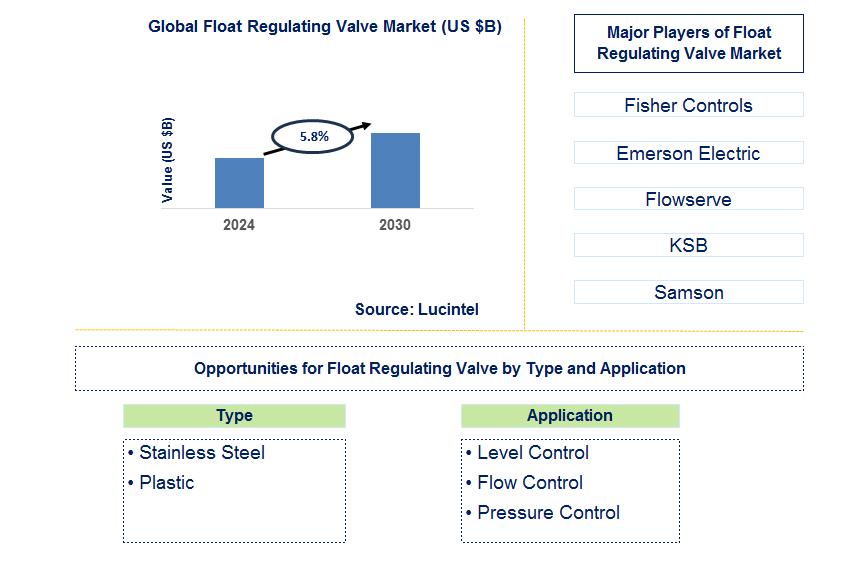
Key data points: The growth forecast = 5.8% annually for the next 6 years. Scroll below to get more insights. This market report covers trends, opportunities, and forecasts in the global float regulating valve market to 2030 by type (stainless steel and plastic), application (level control, flow control, and pressure control), and region (North America, Europe, Asia Pacific, and the Rest of the World)
We'll send your sample report shortly.
• United States: The US market features advanced float regulating valves equipped with smart technology for real-time monitoring, improving energy efficiency in industrial applications. Companies are adopting eco-friendly materials and designs that comply with environmental regulations, promoting sustainable practices.
• China: The Chinese float regulating valves market has grown rapidly due to increased manufacturing investments. Automated valve systems enhance operational efficiency in water management, reflecting the country's focus on modernizing infrastructure and addressing water resource challenges.
• Germany: In Germany, precision engineering and IoT integration are key in float regulating valves. These advancements enable predictive maintenance and improve valve longevity, especially in energy and chemical sectors, enhancing operational reliability.
• India: The Indian market is evolving with rising demand for float regulating valves in agricultural and water management sectors. New designs focusing on affordability and durability help address water scarcity challenges.
• Japan: Japan leads in technological innovations with float regulating valves that emphasize energy efficiency and automation. Recent developments include AI algorithms for optimizing flow control, enhancing precision and reliability in water supply systems, particularly in urban environments.
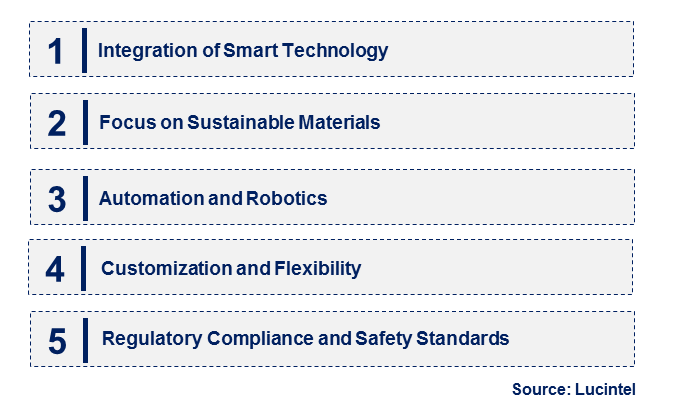
• Integration of Smart Technology: The adoption of IoT-enabled float regulating valves facilitates real-time monitoring and control, improving efficiency and reducing downtime. This trend enables industries to optimize operations and enhance maintenance schedules, leading to significant cost savings.
• Focus on Sustainable Materials: There is a growing preference for eco-friendly materials in valve manufacturing. Companies are prioritizing sustainable sourcing and production methods, aligning with global environmental initiatives and regulations to appeal to environmentally conscious consumers.
• Automation and Robotics: The incorporation of automation in valve production processes increases operational efficiency and precision. Robotics streamline manufacturing workflows, reduce labor costs, and improve product quality, driving a competitive advantage in the market.
• Customization and Flexibility: Demand for customized float regulating valves is rising due to specific industry requirements. Manufacturers leverage advanced technologies to create tailored solutions, enhancing customer satisfaction and fostering stronger business relationships.
• Regulatory Compliance and Safety Standards: As industries face stricter regulations, ensuring compliance with safety standards is crucial. Innovations in float regulating valves focus on meeting these requirements, enhancing product reliability and safety across applications. These trends collectively reshape the float regulating valve market by enhancing efficiency, promoting sustainability, and addressing regulatory challenges.
• Smart Valve Technologies: The introduction of smart float regulating valves equipped with sensors and IoT capabilities enhances monitoring and control. This innovation enables real-time data analysis, improving operational efficiency and facilitating predictive maintenance, reducing downtime.
• Advanced Manufacturing Techniques: The adoption of advanced manufacturing techniques, including 3D printing and automation, has optimized production processes. These technologies improve accuracy, reduce production costs, allow for greater customization, and provide faster turnaround times.
• Sustainable Practices: An increased focus on sustainability has led to the development of float regulating valves made from eco-friendly materials. This shift meets regulatory demands and appeals to environmentally conscious consumers, strengthening companies' market positions.
• Application in Renewable Energy: The renewable energy sector's growth has increased demand for float regulating valves in wind and solar power applications. These valves play a critical role in fluid control systems, enhancing efficiency and safety in energy generation processes.
• Regulatory Compliance Enhancements: Manufacturers focus on compliance with international safety standards and regulations. Recent developments in design and materials reflect this commitment, increasing the reliability and performance of float regulating valves in critical applications. These developments positively impact the float regulating valve market by driving growth and innovation.
• Water Management Systems: The increasing need for efficient water management systems presents a significant growth opportunity. Float regulating valves can optimize water flow, contributing to improved resource management and sustainability, especially in urban infrastructure projects.
• Agricultural Applications: The agricultural sector is increasingly adopting float regulating valves for irrigation systems. These valves improve water distribution efficiency, addressing water scarcity issues and promoting sustainable farming practices, opening avenues for growth.
• Industrial Automation: The rise of Industry 4.0 has led to growing demand for automated float regulating valves in industrial applications. These valves enhance process efficiency and reduce operational costs, making them attractive to manufacturers focused on automation.
• Renewable Energy Sector: The transition to renewable energy sources presents opportunities for float regulating valves in energy generation systems. Their role in managing fluid dynamics in solar and wind energy installations supports efficiency and aligns with global energy trends.
• HVAC Systems: The HVAC industry offers significant growth opportunities for float regulating valves. As energy efficiency becomes a priority in building design, these valves improve climate control systems, creating a healthier indoor environment while reducing energy consumption. These growth opportunities shape the float regulating valve market by driving demand and innovation across various sectors.
• Technological Advancements: Continuous innovations in valve technology enhance performance and functionality. The integration of smart features and automation improves operational efficiency, driving demand across industries.
• Increasing Infrastructure Investments: Global investments in infrastructure development stimulate demand for float regulating valves in water supply and management systems, reflecting a trend toward modernization and sustainability.
• Focus on Water Conservation: Awareness of water scarcity issues drives demand for efficient water management solutions, including float regulating valves, which are essential for optimizing resource use and ensuring sustainability.
• Rising Industrial Automation: The shift toward automation in industries propels the adoption of advanced float regulating valves, which enhance process efficiency and reduce operational costs in line with Industry 4.0 initiatives.
• Regulatory Compliance Needs: Stricter safety and environmental standards push manufacturers to innovate, creating demand for advanced float regulating valves that meet regulatory requirements. Challenges in the float regulating valve market are:
• Market Competition: Intense competition among manufacturers can lead to price wars, affecting profitability and market share. Companies must innovate continually to differentiate products and maintain competitiveness.
• Supply Chain Disruptions: Global supply chain challenges can impact the availability of raw materials and components, affecting production timelines and overall market supply.
• Technological Integration Issues: While advancements provide opportunities, integrating new technologies into existing systems can be challenging, slowing adoption rates of innovative float regulating valves.
• Economic Fluctuations: Economic uncertainties can influence investments in infrastructure and industrial projects, affecting demand for float regulating valves and complicating market forecasting.
• Regulatory Compliance Costs: Adapting to changing regulations can be costly, particularly for smaller companies. Compliance requirements necessitate investments that may strain resources. In summary, these drivers and challenges significantly shape the float regulating valve market, influencing strategic decisions and operational approaches.
• Fisher Controls
• Emerson Electric
• Flowserve
• KSB
• Samson
• Spirax Sarco
• Honeywell
• Tyco
• Cameron
• Velan
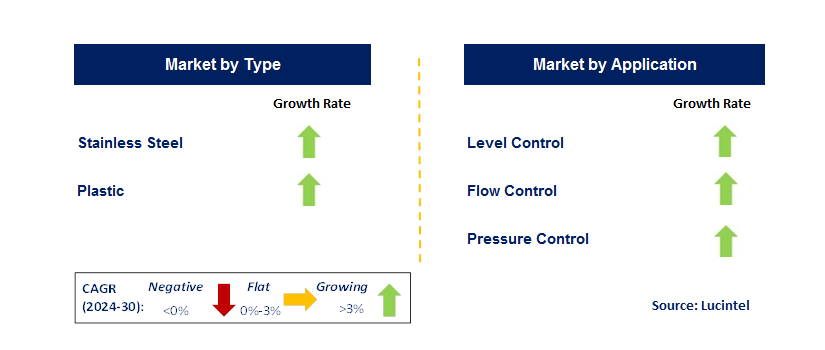
• Stainless Steel
• Plastic
• Level Control
• Flow Control
• Pressure Control
• North America
• Europe
• Asia Pacific
• The Rest of the World
• Lucintel forecasts that, within the type category, stainless steel is expected to witness a higher growth over the forecast period.
• Within the application category, level control is expected to witness the highest growth.
• In terms of regions, APAC is expected to witness the highest growth over the forecast period.

• Fisher Controls
• Emerson Electric
• Flowserve
• KSB
• Samson
• Spirax Sarco
• Honeywell
• Tyco
• Cameron
• Velan Q5. Which float regulating valve market segment will be the largest in future? Answer: Lucintel forecasts that, within the type category, stainless steel is expected to witness a higher growth over the forecast period. Q6. In float regulating valve market, which region is expected to be the largest in next 5 years? Answer: In terms of regions, APAC is expected to witness the highest growth over the forecast period. Q.7 Do we receive customization in this report? Answer: Yes, Lucintel provides 10% customization without any additional cost.


Choose a license that fits your team. Instant PDF delivery.
Prices exclude taxes. Instant delivery. Custom licensing available on request.
Market Report · July 31, 2026
Market Report · July 31, 2026
Market Report · July 31, 2026
Trusted partner for strategic intelligence and business growth


Receive a complimentary market analysis tailored to your industry. Our analysts will identify key growth opportunities and competitive dynamics specific to your business.

Market size, growth rate, and key trend analysis for your specific sector.

Top competitor positioning and market share analysis.

Strategic recommendations backed by data-driven insights.
Get curated market intelligence and competitive moves straight to your inbox.
By subscribing, you agree to receive our monthly insights. Unsubscribe anytime.
Receive a complimentary market analysis tailored to your industry. Our analysts will identify key growth opportunities and competitive dynamics specific to your business.
Market size, growth rate, and key trend analysis for your specific sector.
Top competitor positioning and market share analysis.
Strategic recommendations backed by data-driven insights.
Get curated market intelligence, emerging trends, and competitive moves straight to your inbox each month.
By subscribing, you agree to receive our monthly insights. Unsubscribe anytime.
We'll send your sample report shortly.