
Market Report · July 15, 2026

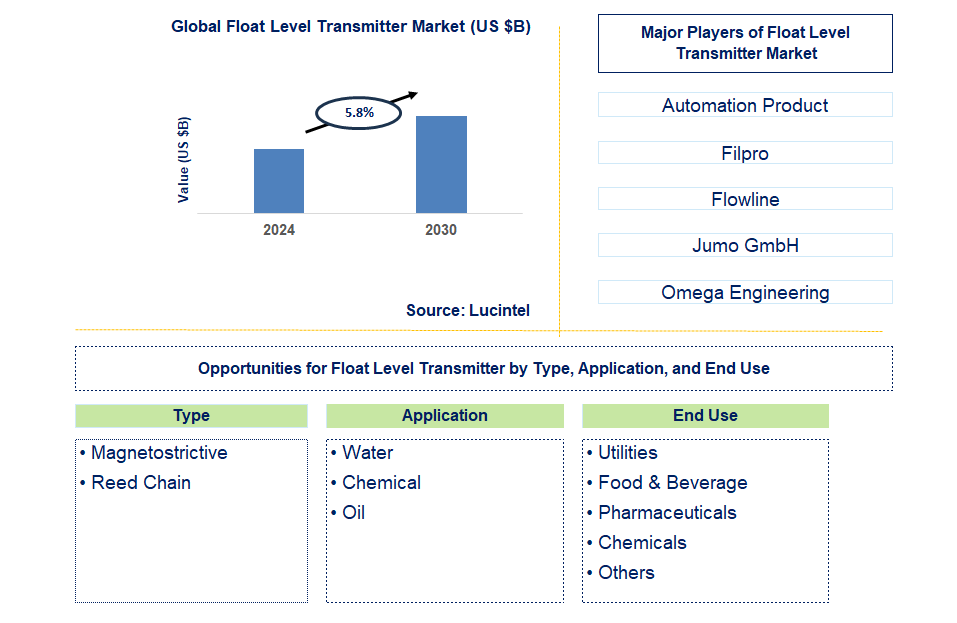
Key data points: The growth forecast = 5.8% annually next 6 years. Scroll below to get more insights. This market report covers trends, opportunities, and forecast in the global float level transmitter market to 2030 by type (magnetostrictive and reed chain), application (water, chemical, and oil), end use (utilities, food & beverage, pharmaceuticals, chemicals, and others), and region (North America, Europe, Asia Pacific, and the Rest of the World)
We'll send your sample report shortly.
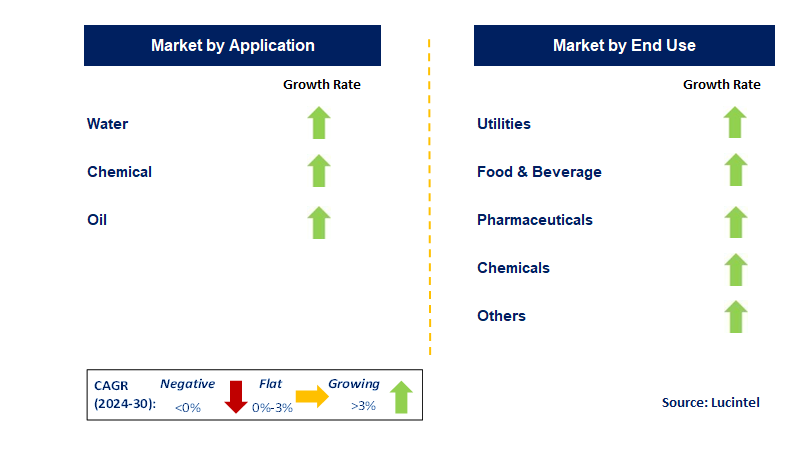
• Lucintel forecasts that, within the application category, chemical is expected to witness the highest growth over the forecast period as this transmitter helps in monitoring liquids in tanks, pipelines, and reactors for safety.
• within the end use category, pharmaceuticals will remain the largest segment as this transmitter helps in measuring the liquid level in storage tanks, reaction vessels, and other process equipments.
• In terms of regions, APAC will remain the largest region over the forecast period due to rapid industrialization, significantly growing chemical production, and increasing adoption of pharmaceutical products. Gain valuable insights for your business decisions with our comprehensive 150+ page report.
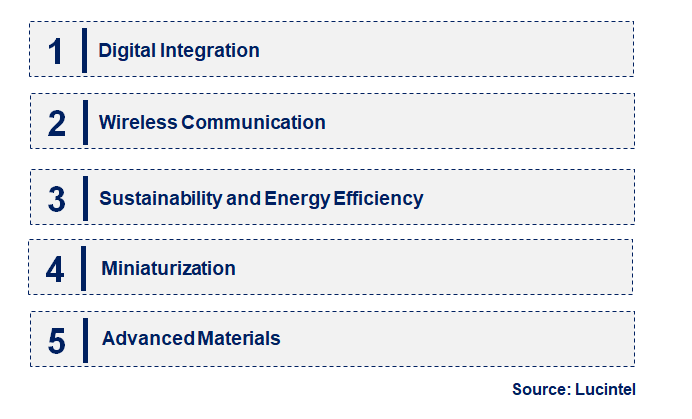
• Digital Integration: The integration of digital technology in float level transmitters allows for enhanced data collection and real-time monitoring. This trend improves operational efficiency and enables predictive maintenance, reducing downtime and operational costs in industries such as oil and gas.
• Wireless Communication: Wireless float level transmitters are becoming increasingly popular due to their ease of installation and reduced wiring costs. This trend is particularly beneficial for remote or hazardous environments, where traditional wiring may be impractical or unsafe.
• Sustainability and Energy Efficiency: There is a growing emphasis on developing energy-efficient float level transmitters. Innovations include low-power designs and the use of sustainable materials, aligning with global sustainability goals and reducing the environmental impact of industrial processes.
• Miniaturization: The miniaturization of float level transmitters allows for their integration into smaller and more complex systems. This trend is particularly relevant in industries like pharmaceuticals and electronics, where space and precision are critical.
• Advanced Materials: The use of advanced materials in float level transmitters enhances durability and resistance to harsh chemicals and environments. This trend is crucial for industries such as chemical processing and wastewater management, where devices must withstand extreme conditions. These emerging trends—digital integration, wireless communication, sustainability, miniaturization, and advanced materials—are transforming the float level transmitter market. They are driving innovation and expanding the application range of these devices, making them more adaptable to modern industrial demands.
• Enhanced Sensor Accuracy: Recent advancements have led to significant improvements in sensor accuracy, allowing float level transmitters to provide more precise measurements. This development is particularly important for industries requiring exact liquid level monitoring, such as pharmaceuticals and food processing.
• Digital and Wireless Integration: The integration of digital interfaces and wireless communication capabilities into float level transmitters has revolutionized their operation. This development facilitates real-time monitoring and data analysis, improving operational efficiency and enabling remote management of liquid levels.
• Corrosion-Resistant Materials: The introduction of advanced, corrosion-resistant materials has enhanced the durability of float level transmitters. This development is critical for applications in harsh environments, such as chemical processing and wastewater treatment, where exposure to corrosive substances is common.
• Miniaturization and Compact Design: Advances in miniaturization have led to the development of more compact float level transmitters. These devices are now easier to integrate into smaller systems, expanding their applicability in industries where space is limited, such as electronics manufacturing.
• Automated Calibration Features: Recent developments include automated calibration features in float level transmitters. This advancement simplifies setup and maintenance, reducing the need for manual adjustments and ensuring consistent accuracy in liquid level measurements. Key developments in enhanced sensor accuracy, digital and wireless integration, corrosion-resistant materials, miniaturization, and automated calibration are significantly impacting the float level transmitter market. These advancements are enhancing performance and expanding the applications of these devices in various industries.
• Water and Wastewater Treatment: The demand for accurate and reliable liquid level monitoring in water and wastewater treatment plants presents significant growth opportunities for float level transmitters. These devices are crucial for maintaining proper water levels and ensuring efficient operation in these facilities.
• Chemical Processing: In the chemical industry, float level transmitters are vital for monitoring corrosive and hazardous liquids. Growth opportunities exist in developing advanced transmitters that can withstand extreme conditions and provide accurate measurements in complex chemical processes.
• Oil and Gas Industry: The oil and gas industry requires precise liquid level measurement for various applications, including storage tank monitoring and pipeline management. Strategic opportunities lie in creating robust, explosion-proof float level transmitters that meet the safety standards of this industry.
• Food and Beverage Processing: Float level transmitters are increasingly used in the food and beverage industry to monitor liquid levels in processing and storage equipment. Growth opportunities include developing sanitary, easy-to-clean transmitters that comply with food safety regulations.
• Pharmaceutical Manufacturing: In the pharmaceutical industry, precise liquid level measurement is critical for maintaining product quality and consistency. Strategic opportunities exist in designing highly accurate, compact float level transmitters that can be integrated into small-scale pharmaceutical production systems. Strategic growth opportunities in water treatment, chemical processing, oil and gas, food and beverage, and pharmaceutical manufacturing are driving innovation in the float level transmitter market. These opportunities are enhancing the performance and expanding the application scope of these devices.
• Technological Advancements: Innovations in sensor technology and digital integration are driving the adoption of float level transmitters. These advancements enhance accuracy, reliability, and ease of use, making the devices more attractive for various industrial applications.
• Growing Industrial Automation: The increasing trend toward industrial automation is boosting the demand for precise and reliable float level transmitters. Automated systems require accurate liquid level monitoring to optimize processes and reduce operational costs.
• Environmental Regulations: Stricter environmental regulations are driving the need for accurate liquid level monitoring in industries like water treatment and chemical processing. Compliance with these regulations necessitates the use of reliable float level transmitters to prevent spills and leaks.
• Expansion in Key Industries: The growth of key industries such as oil and gas, pharmaceuticals, and food and beverage processing is driving demand for float level transmitters. These industries rely on precise liquid level measurement for efficient and safe operations.
• Increased Focus on Sustainability: The push for sustainable practices is encouraging the development of energy-efficient and environmentally friendly float level transmitters. This focus on sustainability is driving innovation and expanding the market for these devices. Challenges in the float level transmitter market are:
• High Initial Costs: The high initial cost of advanced float level transmitters can be a barrier to adoption, especially for small and medium-sized enterprises. These costs may limit the market growth in price-sensitive regions.
• Complex Installation and Integration: The installation and integration of float level transmitters into existing systems can be complex and time-consuming. This challenge may deter some industries from adopting new technologies, particularly in older facilities.
• Maintenance and Calibration Requirements: Regular maintenance and calibration are necessary to ensure the accuracy and reliability of float level transmitters. These ongoing requirements can increase operational costs and may pose a challenge for resource-constrained industries. The float level transmitter market is shaped by drivers such as technological advancements, industrial automation, environmental regulations, industry expansion, and sustainability. However, challenges like high costs, complex installation, maintenance needs, rapid technological changes, and regulatory compliance must be addressed to ensure continued market growth. Balancing these factors is essential for success in this evolving market.
• Automation Product
• Filpro
• Flowline
• Jumo GmbH
• Omega Engineering
• PCI Instruments
• Tokyo Keiso
• Magnetostrictive
• Reed Chain
• Water
• Chemical
• Oil
• Utilities
• Food & Beverage
• Pharmaceuticals
• Chemicals
• Others
• North America
• Europe
• Asia Pacific
• The Rest of the World
• United States: In the U.S., float level transmitters are benefiting from advancements in digital integration and wireless communication. These developments improve real-time monitoring and data analysis, making the devices more adaptable to modern industrial environments, particularly in the oil and gas and water treatment sectors.
• China: China has focused on increasing the durability and cost-effectiveness of float level transmitters. New materials and manufacturing techniques have been introduced to enhance corrosion resistance and reduce production costs, making the devices more accessible for widespread industrial use in sectors like petrochemicals and manufacturing.
• Germany: Germany's recent developments in float level transmitters emphasize precision and automation. Innovations include enhanced sensor accuracy and integration with automated control systems, which are crucial for high-precision industries like pharmaceuticals and food processing.
• India: In India, developments in float level transmitters are driven by the need for affordability and robustness. The focus is on creating durable, low-maintenance transmitters suitable for harsh industrial environments, particularly in sectors like wastewater management and chemical processing.
• Japan: Japan is leading in miniaturization and high-precision applications of float level transmitters. Recent advancements include the development of compact, highly accurate devices that can be integrated into small-scale systems, which are essential for advanced manufacturing and electronics industries.


• Automation Product
• Filpro
• Flowline
• Jumo GmbH
• Omega Engineering
• PCI Instruments
• Tokyo Keiso Q5. Which float level transmitter market segment will be the largest in future? Answer: Lucintel forecasts that, within the application category chemical is expected to witness the highest growth over the forecast period as this transmitter helps in monitoring liquids in tanks, pipelines, and reactors for safety. Q6. In float level transmitter market, which region is expected to be the largest in next 5 years? Answer: In terms of regions, APAC will remain the largest region over the forecast period due to rapid industrialization, significantly growing chemical production, and increasing adoption of pharmaceutical products. Q.7 Do we receive customization in this report? Answer: Yes, Lucintel provides 10% customization without any additional cost.


Choose a license that fits your team. Instant PDF delivery.
Prices exclude taxes. Instant delivery. Custom licensing available on request.
Market Report · July 15, 2026
Market Report · July 13, 2026
Market Report · July 13, 2026
Trusted partner for strategic intelligence and business growth


Receive a complimentary market analysis tailored to your industry. Our analysts will identify key growth opportunities and competitive dynamics specific to your business.

Market size, growth rate, and key trend analysis for your specific sector.

Top competitor positioning and market share analysis.

Strategic recommendations backed by data-driven insights.
Get curated market intelligence and competitive moves straight to your inbox.
By subscribing, you agree to receive our monthly insights. Unsubscribe anytime.
Receive a complimentary market analysis tailored to your industry. Our analysts will identify key growth opportunities and competitive dynamics specific to your business.
Market size, growth rate, and key trend analysis for your specific sector.
Top competitor positioning and market share analysis.
Strategic recommendations backed by data-driven insights.
Get curated market intelligence, emerging trends, and competitive moves straight to your inbox each month.
By subscribing, you agree to receive our monthly insights. Unsubscribe anytime.
We'll send your sample report shortly.