
Market Report · July 22, 2026

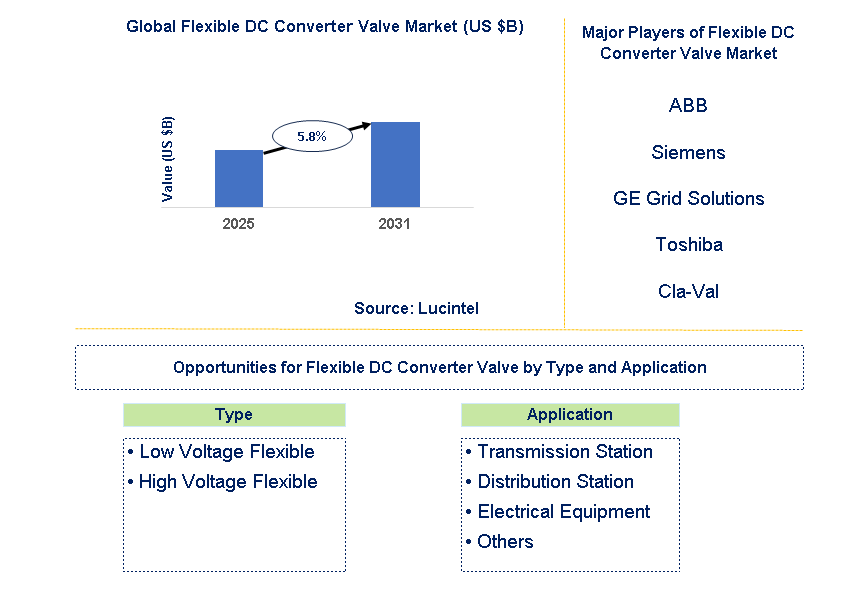
Key data points: The growth forecast = 5.8% annually for the next 7 years. Scroll below to get more insights. This market report covers Trends, opportunities and forecasts in flexible DC converter valve market to 2031 by type (low voltage and high voltage), application (transmission station, distribution station, electrical equipment, and others), and region (North America, Europe, Asia Pacific, and the Rest of the World)
We'll send your sample report shortly.
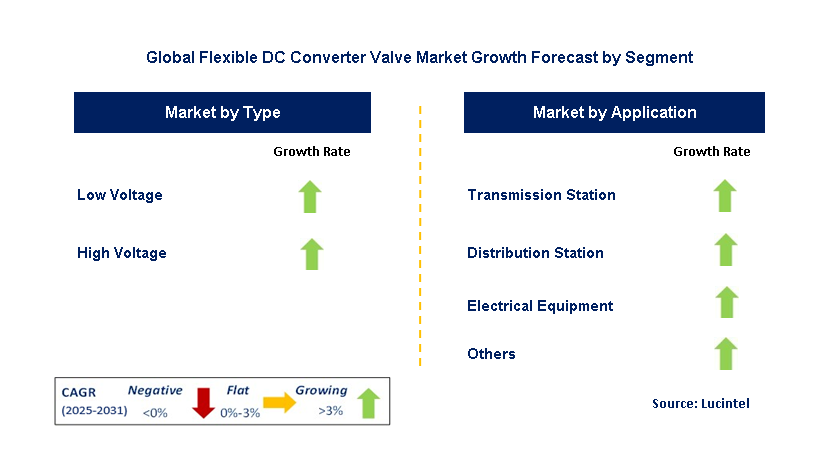
• Lucintel forecasts that, within the type category, high voltage is expected to witness higher growth over the forecast period due to increasing use in transmitting large amounts of power efficiently.
• Within the application category, transmission station is expected to witness the highest growth.
• In terms of region, APAC is expected to witness the highest growth over the forecast period due to large-scale infrastructure projects in this region.
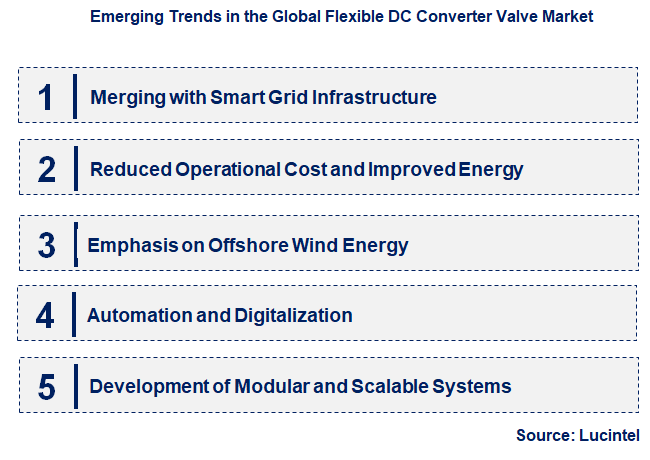
• Merging with Smart Grid Infrastructure: The adoption of flexible DC converter valve is now being done with smart grid technology, which is becoming more critical. Smart grids facilitate constant monitoring and data collection, improving the management of electricity flow, optimization, and fault handling. This integration enables higher efficiency and flexibility of HVDC systems, improving electricity grid stability and reliability. The integration of Smart grids is essential for the proper use of renewable energy resources, which makes these valves important for modernized grids.
• Reduced Operational Cost and Improved Energy Efficiency: In recent years, the energy efficiency and transmission loss aspects have been further developed with the most recent technology of converter valves. Research is being done to ensure that manufacturers optimize materials and designs to increase efficiency by minimizing power loss during transmission over long distances. Improvement enables better energy efficiency, decreases operational costs, enhances performance on renewable energy integration, and thus supports sustainability objectives.
• Emphasis on Offshore Wind Energy: The expansion of offshore wind energy efforts has increased the need for flexible DC converter valve. These efforts typically require distant transmission of power from offshore wind turbines to onshore electrical grids where HVDC systems with converter valves are needed to ensure stability and functionality of the system. As more nations spend on offshore wind farms, the need for sophisticated valve converters will continue to grow.
• Automation and Digitalization: As digitalization sweeps through the offshore energy industry, flexible DC converter valve are getting additional functionality with automation subdivision. Automation enables the digital control functions such as monitoring, diagnostic, and operation that improve the efficiency and reliability of the HVDC system. These technologies also enhance the ability to forecast issues and conduct predictive maintenance, decreasing both outage time and expenditures related to maintenance.
• Development of Modular and Scalable Systems: There is market growth for modular and scalable HVDC systems that allow upgrades and expansion of the energy transmission system easier. flexible DC converter valve are becoming more flexible in design to provide more adaptability for different configurations and sizes of grids. This flexibility is necessary especially in areas with high rates of increase in energy demand in order to expand the systems economically and efficiently. New developments in the market for flexible DC converter valve are associated with greater convenience, responsiveness, and efficiency of energy systems. The integration of smart grid efficiency, the growth of offshore wind projects, and renew energy solutions are contributing to the modernization of power transmission systems, making these valves increasingly important.
• Enhanced Effectiveness and Reduced Transmission Losses: A major improvement that emerged lately is in the efficiency of the flexible DC converter valve. It has been noted that appropriately designed materials worked towards reducing energy losses during long distance transmission. This initiated loss reduction techniques which led to an improved over all performance of HVDC systems while sustainably contributing to energy transmission.
• Merging Modular and Scalable Designs: Another innovation flexible DC converter valve brought is in modular and scalable system designs. These systems are more versatile and can be upgraded and expanded to meet increasing energy requirements. Such adaptability is important for nations that have to develop and install new energy infrastructure because it helps avoid expensive system replacements.
• Enhanced Focus on Integration of Offshore Wind Energy: The growth of offshore wind energy projects has equally worked toward the development of optimization for the integration of offshore wind farms by flexible DC converter valve. Connecting wind turbines to the power grid within wind farms can involve long distance transmissions so these farms have a particular need for HVDC systems with advanced converter valves. This focus is pushing the innovation of the valve and also the ability of offshore energy converter valves to be transitioned to offshore power usage.
• Progress Made on Smart Grid Integration: A noteworthy innovation is the addition of flexible DC converter valve to smart grid systems. This allows for more efficient system and grid monitoring, as well as improved stability. Utilities can improve reliability and responsiveness of the energy system by enabling communication between the grid and the converter valves. This integration meets the increasing need for advanced grids with bidirectional energy flow and system management.
• Increased Resilience to Disasters and Improved Grid Stability: Work is now being done on flexible DC converter valve aiming towards better disaster resilience and grid stability. In disaster-prone areas such as Japan, these valves are expected to help ensure energy systems function by protecting them from harsh weather. This is also important to aid in efficiently supplying power during emergencies while increasing power grid resilience. The improvements described in this document at the flexible DC converter valve market fundamentally change the value proposition of these devices in relation to HVDC systems. These innovations increase the reliability and efficiency of power transmission by increasing the efficiency of power delivery, supporting integration of offshore wind energy, smart grid energy systems, and modernizing power transmission systems around the world, especially in the context of supporting renewable energy integration and stabilizing the grid.
• Offshore Wind Integration: The shifting trend towards offshore wind energy is likely to boost the demand for flexible DC converter valve. HVDC systems are fundamental in great distance energy transmission and advanced converter valves are prestige\genus. As nations grow its overseas wind energy capabilities, an elevated demand for these valves will open opportunities for suppliers.
• Smart Grid Development: Advanced networks also call for deeper market penetration for flexible DC converter valve that can interface with digital grid systems. Smart grids will require advanced level of control systems to monitor energy flow in real time, hence there is a need for modular valve interfaces. The rise of smart grids proposes a great possibility of market expansion.
• Grid Modernization In Emerging Markets: Investments in grid modernization as a part of an infrastructure development initiative was recently seen in Asia and Africa. The use of flexible DC converter valve during the modernization of energy transmission systems, primarily for the integration of renewable energy, is essential. These regions offer business prospects due to the improvements in grid reliability, efficiency, and the ease in accommodating renewable energy sources.
• Energy Storage Systems: flexible DC converter valve will be needed to manage the transmission of energy between storage units and grids as Energy Storage Systems gain importance. ESS are instrumental in stabilizing grids with high penetration of renewable energy, and success greatly depend on the use of converter valves to control power flow. Growing demand for these systems boost opportunities in the market.
• Disaster Resilient Infrastructure: Enhanced focus on disaster resilience with regions susceptible to natural calamities creates significant opportunities for robust and reliable flexible DC converter valve. These valves are critical during the stability of power transmission systems during emergencies. Violence like earthquakes and war call for durable systems, particularly in places with focusing on grid resilience. Incomes from key industries such as offshore wind, smart grids, and modernization of the grid in developing nations provide strategic growth opportunities in the flexible DC converter valve market. These opportunities are vital for the continued growth of power transmission systems as they facilitate the integration of renewable energy and the construction of a stronger and more efficient energy infrastructure.
• ABB
• Siemens
• GE Grid Solutions
• Toshiba
• Cla-Val
• TBEA
• China Southern Power Grid
• Guangzhou Goaland Energy Conservation Tech
• NR Electric
• Rongxin Huiko Electric
• Low Voltage
• High Voltage
• Transmission Station
• Distribution Station
• Electrical Equipment
• Others
• North America
• Europe
• Asia Pacific
• The Rest of the World
• United States: The U.S. is working on expanding the energy infrastructure of the country by incorporating renewable sources of energy, and flexible DC converter valve integration has been pivotal in this transition. Recent efforts have focused on improving HVDC system efficiency, especially in offshore wind power integration and long distance transmission. The U.S. companies are adopting state-of-the-art technologies to improve valve performance to achieve higher efficiency and reliability in extreme operating conditions. In addition, the U.S. is providing federal grants for renewable energy projects, which in turn, enhances the growth of the flexible DC converter valve industry.
• China: China has been a pioneer in the adoption and development of HVDC technology with flexible DC converter valve being no exception. The country has invested extensively in large scale HVDC transmission systems, especially with regard to utilizing renewable energy from its solar and wind farms. Recent complex innovations have focused on additional enhancements to the power transmission capacity and efficiency of these systems. The investment by China in the smart grid infrastructure along with the continuous funding of green energy solutions have driven the need for flexible DC converter valve, which have become a central feature in the country’s energy transformation plan.
• Germany: In Germany, the flexible DC converter valve (FDC C CV) is experiencing increased adoption because of the country's efforts to implement “Evergreened” or energy transition. Greater reliability and scalability of high voltage direct current (HVDC) systems have been made to offshore wind farms in the North Sea. Germany has also been leading the digitalization of HVDC systems which has enhanced the functionality of converter valves. The implementation of the valves has further increased due to Germany's evergreened strategy and the rampant need for clean energy solutions and transmission infrastructure.
• India: The escalating need for electricity and renewable energy in India has made FDC C CVs extremely useful in enhancing power transmission systems. The focus of India on integrating renewable energy such as wind and solar into the grid has shifted the attention to HVDC systems. The geographic expanse of India has increased the necessity of using the valves to enhance reliable power delivery. With growing capital expenditure on energy systems, the FDC C CV market in India is booming because of government investments in green energy and modernization of the grid.
• Japan: Japan makes use of an increasing number of renewable energy sources, and to provides their stable transmission to the national grid, the use of flexible DC converter valve is essential. Japan has recently improved its HVDC technology by developing the converter valve systems for offshore and onshore energy projects, which is an innovation aimed at improving system efficiency, minimizing energy loss, and providing enhanced flexibility in energy transmission. The country's shift towards Automatic Disaster Control Energy Systems and Smart Grids is another driver for the adoption of flexible DC converter valve as part of Japan’s modernization of energy infrastructure.


• ABB
• Siemens
• GE Grid Solutions
• Toshiba
• Cla-Val
• TBEA
• China Southern Power Grid
• Guangzhou Goaland Energy Conservation Tech
• NR Electric
• Rongxin Huiko Electric Q5. Which flexible DC converter valve market segment will be the largest in future? Answer: Lucintel forecasts that, within the type category, high voltage is expected to witness higher growth over the forecast period due to increasing use in transmitting large amounts of power efficiently. Q6. In flexible DC converter valve market, which region is expected to be the largest in next 5 years? Answer: In terms of region, APAC is expected to witness the highest growth over the forecast period due to large-scale infrastructure projects in this region. Q7. Do we receive customization in this report? Answer: Yes, Lucintel provides 10% customization without any additional cost.


Choose a license that fits your team. Instant PDF delivery.
Prices exclude taxes. Instant delivery. Custom licensing available on request.
Market Report · July 22, 2026
Market Report · July 22, 2026
Market Report · July 17, 2026
Trusted partner for strategic intelligence and business growth


Receive a complimentary market analysis tailored to your industry. Our analysts will identify key growth opportunities and competitive dynamics specific to your business.

Market size, growth rate, and key trend analysis for your specific sector.

Top competitor positioning and market share analysis.

Strategic recommendations backed by data-driven insights.
Get curated market intelligence and competitive moves straight to your inbox.
By subscribing, you agree to receive our monthly insights. Unsubscribe anytime.
Receive a complimentary market analysis tailored to your industry. Our analysts will identify key growth opportunities and competitive dynamics specific to your business.
Market size, growth rate, and key trend analysis for your specific sector.
Top competitor positioning and market share analysis.
Strategic recommendations backed by data-driven insights.
Get curated market intelligence, emerging trends, and competitive moves straight to your inbox each month.
By subscribing, you agree to receive our monthly insights. Unsubscribe anytime.
We'll send your sample report shortly.