
Market Report · July 20, 2026

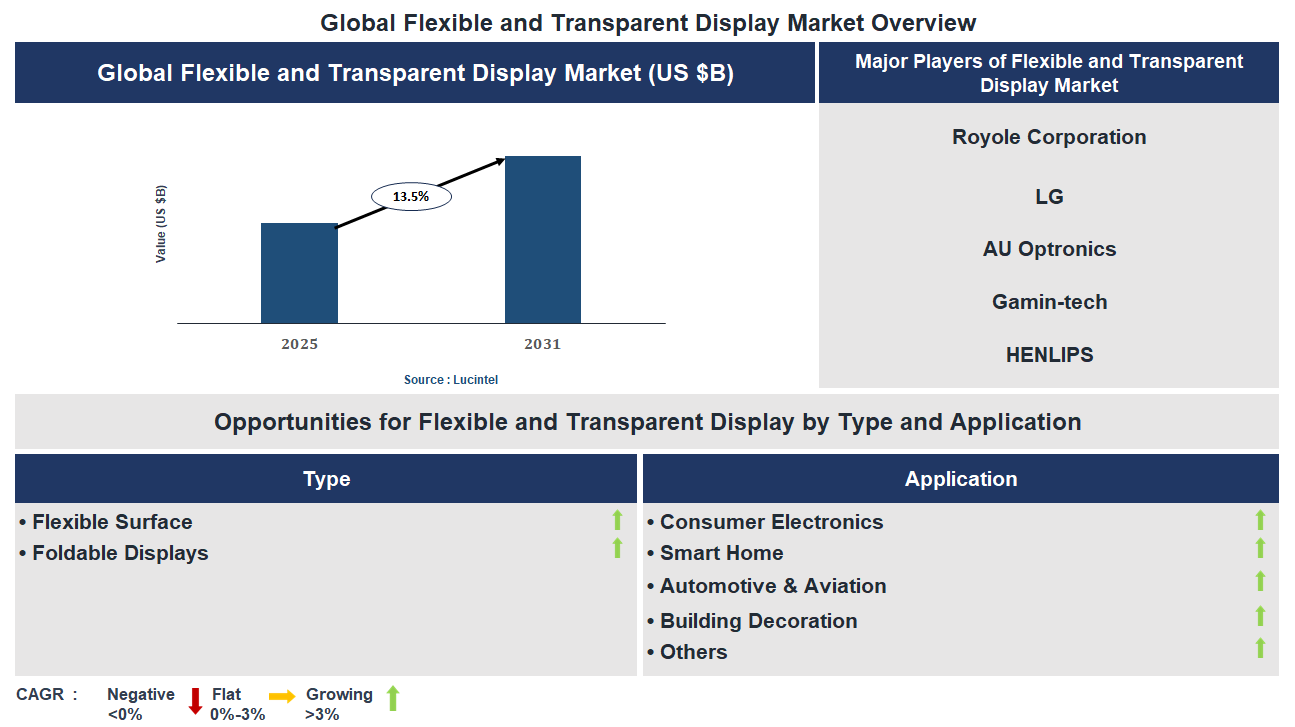
Key data points: The growth forecast = 13.5% annually for the next 7 years. Scroll below to get more insights. This market report covers trends, opportunities and forecasts in flexible and transparent display market to 2031 by type (flexible surface and foldable displays), application (consumer electronics, smart home, automotive & aviation, building decoration, and others), and region (North America, Europe, Asia Pacific, and the Rest of the World)
We'll send your sample report shortly.
• Lucintel forecasts that, within the type category, foldable display is expected to witness higher growth over the forecast period.
• Within the application category, consumer electronics is expected to witness the highest growth.
• In terms of region, APAC is expected to witness the highest growth over the forecast period. Gain valuable insights for your business decisions with our comprehensive 150+ page report. Sample figures with some insights are shown below.
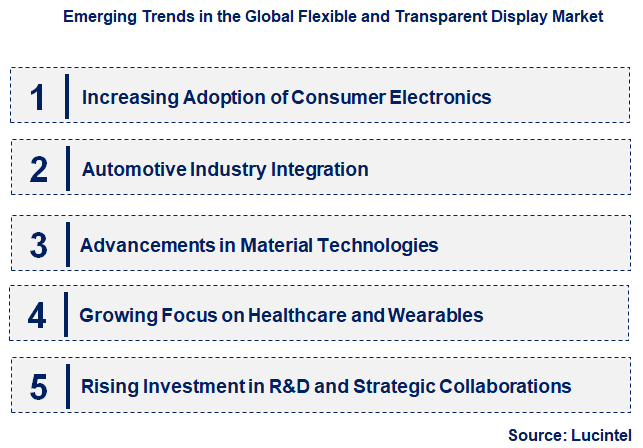
• Increasing Adoption of Consumer Electronics: The demand for flexible and transparent displays in smartphones, tablets, and wearable devices is rising. Consumers seek devices with innovative form factors, such as foldable screens and transparent interfaces, enhancing portability and user engagement. Manufacturers are integrating these displays to differentiate their products, leading to a surge in product launches and technological innovations. This trend boosts market growth by expanding the application base and encouraging consumer interest in cutting-edge display solutions.
• Automotive Industry Integration: The automotive sector is increasingly adopting flexible and transparent displays for dashboards, heads-up displays, and infotainment systems. These displays offer enhanced safety, better aesthetics, and more intuitive interfaces, improving driver experience. Automakers are investing in lightweight, durable, and high-resolution flexible displays to meet evolving design and safety standards. This integration is expected to open new revenue streams and accelerate the market’s expansion, especially as autonomous and electric vehicles become more prevalent.
• Advancements in Material Technologies: Innovations in flexible substrates, such as organic light-emitting diodes (OLEDs) and thin-film transistors, are driving the development of more durable, lightweight, and cost-effective displays. These materials enable better bending, folding, and transparency without compromising performance. As research progresses, the market will see increased adoption of eco-friendly and scalable materials, reducing manufacturing costs and expanding application possibilities across various industries, including healthcare and retail.
• Growing Focus on Healthcare and Wearables: The healthcare sector is leveraging flexible and transparent displays for medical devices, wearable health monitors, and augmented reality applications. These displays facilitate real-time data visualization, improve patient engagement, and enable more comfortable, ergonomic device designs. The trend is fostering innovation in telemedicine, diagnostics, and personalized healthcare, thereby broadening the market scope and encouraging cross-industry collaborations to develop specialized display solutions.
• Rising Investment in R&D and Strategic Collaborations: Companies are investing heavily in research and development to enhance display flexibility, transparency, and durability. Strategic partnerships between display manufacturers, technology firms, and end-user industries are accelerating innovation cycles. These collaborations facilitate the sharing of expertise, reduce time-to-market, and foster the development of next-generation display technologies. Increased R&D activity is crucial for overcoming technical challenges and maintaining competitive advantage in this rapidly evolving market. In summary, these trends are collectively reshaping the flexible and transparent display market by fostering innovation, expanding application areas, and driving consumer and industrial adoption. The market is moving towards more versatile, efficient, and aesthetically appealing display solutions, which are set to revolutionize various sectors and redefine user experiences globally.
• Advancements in Material Technology: New flexible substrates and transparent materials have been developed, increasing display durability and flexibility. These materials enable screens to bend, fold, and withstand daily wear, expanding their usability in wearable devices and foldable smartphones. The improved material properties also enhance display clarity and lifespan, making products more reliable and appealing to consumers.
• Integration of OLED and MicroLED Technologies: The adoption of OLED and MicroLED technologies in flexible displays has significantly improved image quality, brightness, and energy efficiency. These technologies allow for thinner, lighter, and more vibrant screens, which are crucial for high-end smartphones, tablets, and wearable devices. Their integration is driving innovation and setting new standards for display performance.
• Expansion into Automotive and Healthcare Sectors: Flexible and transparent displays are increasingly being incorporated into automotive dashboards, heads-up displays, and medical devices. Their ability to conform to curved surfaces and provide real-time information enhances user experience and safety. This sector-specific adoption is opening new revenue streams and broadening market applications.
• Manufacturing Process Innovations: New manufacturing techniques, such as roll-to-roll processing and advanced printing methods, have reduced production costs and increased scalability. These innovations facilitate mass production of flexible displays, making them more affordable and accessible to a broader consumer base. They also enable rapid customization and faster time-to-market for new products.
• Growing Consumer Demand and Market Penetration: The rising popularity of foldable smartphones, wearable tech, and transparent displays in retail signage has boosted market growth. Consumer preferences for sleek, portable, and multifunctional devices are driving manufacturers to innovate continuously. This demand is accelerating market penetration and fostering competitive advancements across the industry. In summary, these developments are significantly impacting the flexible and transparent display market by enhancing product performance, expanding application areas, reducing manufacturing costs, and increasing consumer adoption. The market is poised for sustained growth, driven by technological innovation and evolving consumer needs, shaping a future where flexible and transparent displays become integral to everyday life.
• Consumer Electronics: Innovation in foldable smartphones and wearable devices is expanding market reach. Flexible displays enable sleek, lightweight, and durable gadgets, attracting tech-savvy consumers and boosting sales. This growth enhances user engagement and creates new product categories, driving overall market expansion.
• Automotive: Integration of transparent displays in dashboards and heads-up displays improves driver experience and safety. Flexibility allows for innovative interior designs and augmented reality applications, transforming vehicle interfaces and increasing demand for advanced automotive displays.
• Healthcare: Flexible displays facilitate portable, wearable medical devices and flexible diagnostic tools. Their adaptability enhances patient monitoring and telemedicine solutions, leading to improved healthcare delivery and expanding the market for medical display applications.
• Retail: Transparent displays are revolutionizing in-store advertising and digital signage. They enable immersive shopping experiences and dynamic product displays, attracting consumers and increasing retail engagement, which fuels market growth in retail environments.
• Advertising and Signage: The use of flexible, transparent displays in outdoor and indoor advertising creates eye-catching, customizable content. Their durability and versatility allow for innovative advertising formats, expanding opportunities for brands and increasing market penetration. In summary, these growth opportunities across key applications are significantly impacting the flexible and transparent display market by fostering innovation, enhancing user experiences, and opening new revenue streams. The increasing adoption of flexible display technology is expected to drive sustained market growth, transforming various industries and creating a competitive landscape focused on innovation and customization.
• Technological Innovation: The continuous development of flexible and transparent display technologies, such as OLED and AMOLED, has significantly enhanced product performance. These innovations enable displays to be more durable, lightweight, and energy-efficient, making them suitable for a wide range of applications from smartphones to automotive displays. As technology advances, costs are expected to decrease, further boosting adoption. The ability to create ultra-thin, bendable screens opens new avenues for product design and user experience, fueling market growth.
• Rising Consumer Demand: Consumers increasingly seek innovative, aesthetically appealing, and multifunctional display solutions. The demand for foldable smartphones, transparent advertising screens, and wearable devices is rising globally. This trend is driven by a desire for enhanced user experiences and the integration of displays into everyday objects. As consumer preferences shift towards more immersive and customizable visual interfaces, manufacturers are motivated to develop flexible and transparent displays to meet these needs, thereby expanding market opportunities.
• Automotive and Healthcare Applications: The integration of flexible and transparent displays into automotive dashboards, heads-up displays, and healthcare devices is a major growth driver. These applications benefit from the displays ability to conform to various surfaces and provide real-time information without obstructing visibility. The automotive industry’s push towards smart, connected vehicles and the healthcare sector’s need for innovative medical devices are accelerating demand. This diversification into new sectors is expected to significantly expand the market’s scope and revenue potential.
• Supportive Regulatory Environment: Governments and industry bodies are implementing policies and standards that promote the development and adoption of advanced display technologies. Incentives for research and development, along with regulations encouraging energy efficiency and sustainability, are fostering innovation. Additionally, intellectual property protections and standards for safety and quality are creating a conducive environment for market players to invest confidently in new product development, thus driving market expansion. The challenges in the flexible and transparent display market are:-
• High Production Costs: Manufacturing flexible and transparent displays involves complex processes, specialized materials, and advanced equipment, leading to high production costs. These costs can hinder mass adoption, especially in price-sensitive markets. Additionally, scaling up production to meet increasing demand remains a challenge, which can limit the availability and affordability of these displays. Overcoming cost barriers is crucial for widespread market penetration and competitive pricing.
• Technological Limitations: Despite significant progress, issues such as limited lifespan, lower brightness, and susceptibility to damage still affect flexible and transparent displays. These technical challenges impact product reliability and user experience. Developing durable, high-performance displays that can withstand everyday use while maintaining flexibility and transparency remains a key hurdle. Overcoming these limitations is essential for gaining consumer trust and expanding application areas.
• Regulatory and Standardization Challenges: The lack of comprehensive standards and regulatory frameworks for flexible and transparent displays can impede market growth. Variations in safety, environmental impact, and quality standards across regions create barriers for international trade and product acceptance. Additionally, concerns related to electromagnetic interference and recyclability need to be addressed through regulations. Establishing clear standards and regulations is vital for ensuring product safety, fostering innovation, and facilitating global market expansion. In summary, the flexible and transparent display market is driven by technological advancements, increasing consumer demand, and expanding applications across automotive and healthcare sectors. However, high production costs, technological limitations, and regulatory challenges pose significant hurdles. These factors collectively influence the market’s growth trajectory, requiring strategic innovation and regulatory alignment. Overcoming these challenges will be crucial for unlocking the full potential of flexible and transparent displays, enabling widespread adoption and fostering sustainable industry growth.
• Royole Corporation
• LG
• AU Optronics
• Gamin-tech
• HENLIPS
• Lianman
• Samsung Electronics
• BOE Technology Group
• Cambrios Technologies
• Japan Display Inc.
• Flexible Surface
• Foldable Displays
• Consumer Electronics
• Smart Home
• Automotive & Aviation
• Building Decoration
• Others
• North America
• Europe
• Asia Pacific
• The Rest of the World
• United States: The U.S. market has seen significant innovation with major tech companies investing in flexible display technology for smartphones, tablets, and wearable devices. Advances in OLED and microLED displays have improved durability and brightness. The adoption of transparent displays in automotive and retail sectors is increasing, driven by consumer demand for immersive experiences. U.S. startups are pioneering new materials and manufacturing processes, while government initiatives support research and development. The market is also witnessing a rise in collaborations between tech giants and display manufacturers to accelerate commercialization.
• China: China remains a dominant player in the flexible and transparent display market, with extensive manufacturing capabilities and a focus on mass production. Leading companies like BOE and Tianma are expanding their product portfolios, integrating flexible displays into smartphones, TVs, and smart signage. The government’s support through policies and funding has accelerated innovation and production capacity. Chinese firms are also investing in new display technologies such as foldable screens and transparent OLEDs, aiming to capture global market share. The rapid adoption of these displays in consumer electronics and advertising sectors is a key trend.
• Germany: Germany’s market is characterized by a focus on high-quality, industrial-grade flexible displays, especially for automotive and industrial applications. German companies are leveraging their expertise in engineering to develop durable, high-performance displays suitable for harsh environments. Innovations in transparent displays are being integrated into automotive dashboards and augmented reality systems. The emphasis on sustainability and eco-friendly manufacturing processes is prominent. Collaborations between research institutions and industry players are fostering advancements in flexible display materials and production techniques, positioning Germany as a leader in premium display solutions.
• India: The Indian market is witnessing growing demand for flexible displays in affordable smartphones, wearable devices, and consumer electronics. Local manufacturers are adopting cost-effective production methods to cater to the price-sensitive market. There is increasing interest in transparent displays for retail and advertising applications, supported by government initiatives promoting digital infrastructure. Startups are exploring innovative applications such as flexible e-paper and foldable devices. The market is also benefiting from global supply chain shifts, with foreign companies establishing manufacturing bases in India to serve regional and export markets.
• Japan: Japan continues to focus on advanced display technologies, emphasizing research and development in flexible and transparent displays. Japanese firms are pioneering innovations in OLED and microLED displays, aiming for higher resolution and energy efficiency. The automotive sector is adopting transparent displays for heads-up displays and infotainment systems. Japan’s emphasis on quality and reliability is driving the development of durable, high-performance flexible displays. Collaborations between academia and industry are fostering breakthroughs in materials and manufacturing processes. The market remains competitive, with a strong focus on integrating displays into next-generation consumer electronics and automotive applications.


• Royole Corporation
• LG
• AU Optronics
• Gamin-tech
• HENLIPS
• Lianman
• Samsung Electronics
• BOE Technology Group
• Cambrios Technologies
• Japan Display Inc. Q5. Which flexible and transparent display market segment will be the largest in future? Answer: Lucintel forecasts that, within the type category, foldable display is expected to witness higher growth over the forecast period. Q6. In flexible and transparent display market, which region is expected to be the largest in next 5 years? Answer: In terms of region, APAC is expected to witness the highest growth over the forecast period. Q7. Do we receive customization in this report? Answer: Yes, Lucintel provides 10% customization without any additional cost.


Choose a license that fits your team. Instant PDF delivery.
Prices exclude taxes. Instant delivery. Custom licensing available on request.
Market Report · July 20, 2026
Market Report · July 16, 2026
Market Report · July 15, 2026
Trusted partner for strategic intelligence and business growth


Receive a complimentary market analysis tailored to your industry. Our analysts will identify key growth opportunities and competitive dynamics specific to your business.

Market size, growth rate, and key trend analysis for your specific sector.

Top competitor positioning and market share analysis.

Strategic recommendations backed by data-driven insights.
Get curated market intelligence and competitive moves straight to your inbox.
By subscribing, you agree to receive our monthly insights. Unsubscribe anytime.
Receive a complimentary market analysis tailored to your industry. Our analysts will identify key growth opportunities and competitive dynamics specific to your business.
Market size, growth rate, and key trend analysis for your specific sector.
Top competitor positioning and market share analysis.
Strategic recommendations backed by data-driven insights.
Get curated market intelligence, emerging trends, and competitive moves straight to your inbox each month.
By subscribing, you agree to receive our monthly insights. Unsubscribe anytime.
We'll send your sample report shortly.