
Market Report · July 22, 2026

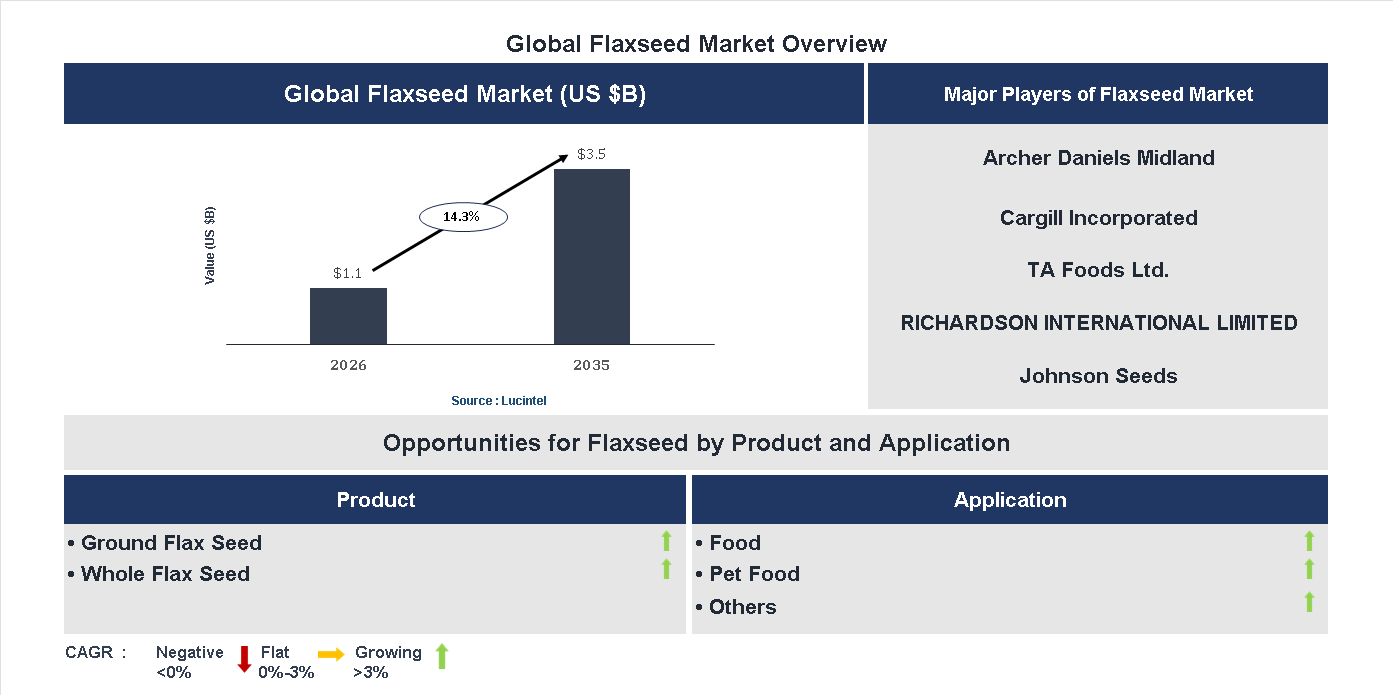
Key data points: The market size in 2035 = $3.5 billion, growth forecast = 14.3% annually for the next 8 years. Scroll below to get more insights. This market report covers trends, opportunities and forecasts in flaxseed market to 2035 by product (ground flax seed and whole flax seed), application (food, pet food, and others), and region (North America, Europe, Asia Pacific, and the Rest of the World)
We'll send your sample report shortly.
• Lucintel forecasts that, within the product category, ground flax seed is expected to witness higher growth over the forecast period.
• Within the application category, food is expected to witness higher growth.
• In terms of region, North America is expected to witness the highest growth over the forecast period. Gain valuable insights for your business decisions with our comprehensive 150+ page report. Sample figures with some insights are shown below.
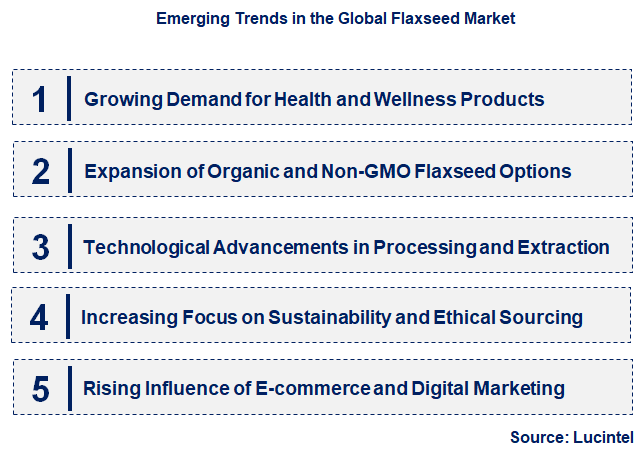
• Growing Demand for Health and Wellness Products: Consumers are increasingly prioritizing health, leading to higher demand for flaxseed due to its rich omega-3 fatty acids, fiber, and lignans. This trend is driven by rising awareness of the benefits of plant-based diets and preventive health measures. As a result, flaxseed is being incorporated into a variety of products such as smoothies, cereals, and snacks, expanding its market reach. This shift encourages producers to focus on product innovation and marketing strategies that emphasize health benefits, thereby boosting sales and market penetration.
• Expansion of Organic and Non-GMO Flaxseed Options: There is a rising consumer preference for organic and non-GMO products, which is significantly impacting the flaxseed market. Organic flaxseed is perceived as safer and more environmentally friendly, leading to increased cultivation and sales. Farmers are adopting sustainable farming practices to meet this demand, and companies are investing in certification processes. This trend not only enhances product value but also allows brands to target premium segments, fostering market growth while promoting environmentally responsible agriculture.
• Technological Advancements in Processing and Extraction: Innovations in processing techniques, such as cold-pressing and advanced milling, are improving the quality and functionality of flaxseed products. These technologies enable better preservation of nutrients and facilitate the development of value-added products like flaxseed oil, protein powders, and supplements. Enhanced processing methods also reduce waste and energy consumption, making production more sustainable. This trend is driving product diversification and improving supply chain efficiency, ultimately benefiting consumers with higher-quality offerings.
• Increasing Focus on Sustainability and Ethical Sourcing: Sustainability concerns are influencing consumer choices and industry practices. Companies are adopting eco-friendly cultivation methods, reducing carbon footprints, and ensuring ethical sourcing of flaxseed. Transparent supply chains and certifications are becoming standard, appealing to environmentally conscious consumers. This focus on sustainability not only enhances brand reputation but also aligns with global efforts to promote responsible agriculture, ensuring long-term market stability and growth.
• Rising Influence of E-commerce and Digital Marketing: The proliferation of online retail platforms and digital marketing strategies is transforming how flaxseed products are marketed and sold. E-commerce provides access to a broader consumer base, especially in emerging markets, and allows for targeted advertising and personalized shopping experiences. Digital platforms also facilitate direct engagement with consumers, fostering brand loyalty and feedback. This trend accelerates market penetration, reduces distribution costs, and enables rapid response to consumer preferences, making the flaxseed market more dynamic and accessible. In summary, these emerging trends are collectively reshaping the flaxseed market by fostering innovation, emphasizing sustainability, and leveraging digital channels. They are expanding consumer choices, improving product quality, and promoting responsible practices, which together drive sustainable growth and competitiveness in the industry.
• Growing Consumer Awareness of Health Benefits: Flaxseeds rich omega-3 fatty acids, fiber, and lignans are attracting health-conscious consumers, boosting demand. This awareness is driven by increased education and marketing efforts highlighting flaxseeds role in heart health, weight management, and hormonal balance. As consumers prioritize wellness, the market is expanding rapidly, encouraging producers to innovate and develop new flaxseed-based products. This trend is expected to sustain long-term growth and diversify product offerings across regions.
• Expansion of Product Applications: The versatility of flaxseed is leading to its integration into various food and beverage products, including bakery items, smoothies, cereals, and snacks. Food manufacturers are leveraging flaxseeds functional properties to enhance nutritional profiles and meet consumer preferences for clean-label, plant-based ingredients. This diversification is opening new revenue streams and increasing market penetration. The trend also encourages R&D for novel formulations, further broadening flaxseeds application scope in the food industry.
• Innovations in Processing Technologies: Advances in extraction and processing methods are improving flaxseeds quality, shelf life, and bioavailability of nutrients. Techniques such as cold-pressing and solvent-free extraction are gaining popularity, aligning with clean-label and organic trends. These innovations reduce costs and environmental impact while enhancing product purity. Improved processing also enables the development of specialized flaxseed ingredients, such as flaxseed oil and lignan extracts, expanding market options and attracting health-focused consumers.
• Rising Demand for Plant-Based and Sustainable Products: Consumers are increasingly seeking plant-based, organic, and sustainably sourced foods, driving flaxseed market growth. Producers are adopting eco-friendly cultivation practices and transparent supply chains to meet these expectations. The shift towards plant-based diets and sustainable sourcing is fostering partnerships and certifications that add value and credibility. This trend not only boosts sales but also positions flaxseed as a key ingredient in the global shift towards environmentally conscious consumption.
• Strategic Collaborations and Market Expansion: Companies are forming alliances with health food brands, research institutions, and distributors to expand reach and innovate product lines. Market expansion into emerging economies is facilitated by localized marketing and distribution strategies. These collaborations enhance product visibility, improve supply chain efficiency, and foster innovation. As a result, the market is witnessing accelerated growth, increased competition, and a broader consumer base, reinforcing flaxseeds position as a vital health food ingredient. These recent developments are significantly impacting the flaxseed market by driving innovation, expanding applications, and aligning with consumer preferences for health and sustainability. Increased awareness, technological advancements, and strategic collaborations are fueling growth and market penetration globally. As these trends continue, the market is poised for sustained expansion, offering opportunities for stakeholders to capitalize on the rising demand for nutritious, plant-based foods. This evolution is shaping a resilient, innovative, and consumer-centric industry landscape.
• Expanding Use of Flaxseed in Functional Foods and Nutraceuticals: The rising consumer focus on health and wellness is boosting demand for flaxseed-based functional foods and nutraceuticals. Its rich omega-3 fatty acids, fiber, and lignans make it an attractive ingredient for smoothies, cereals, and dietary supplements. Companies are innovating with flaxseed formulations to meet clean-label and organic trends, creating new product lines that cater to health-conscious consumers. This expansion enhances market penetration and opens new revenue streams.
• Growing Adoption of Flaxseed in Animal Feed Industry: The increasing emphasis on sustainable and nutritious animal feed is driving flaxseeds adoption in livestock and poultry diets. Its high protein and omega-3 content improve animal health and product quality, such as eggs and meat. Feed manufacturers are incorporating flaxseed to meet consumer demand for ethically sourced and omega-3-enriched animal products. This trend supports market growth by diversifying application areas and increasing demand for flaxseed as a functional feed ingredient.
• Rising Demand for Organic and Non-GMO Flaxseed Products: Consumers are increasingly prioritizing organic, non-GMO, and sustainably sourced foods, prompting suppliers to expand organic flaxseed offerings. Certification and transparent supply chains are becoming essential for market players to gain consumer trust. This demand encourages farmers to adopt organic cultivation practices, boosting supply and market value. The focus on quality and sustainability enhances brand differentiation and drives premium pricing, fostering overall market expansion.
• Innovation in Flaxseed-Based Food and Beverage Products: Food and beverage companies are developing innovative products incorporating flaxseed, such as snacks, bakery items, and beverages, to meet evolving consumer preferences. These products leverage flaxseed’s health benefits and functional properties, appealing to a broad demographic. R&D efforts focus on improving taste, texture, and shelf life, expanding product portfolios. This innovation accelerates market growth by attracting new customer segments and increasing consumption frequency.
• Increasing Focus on Sustainable Sourcing and Supply Chain Transparency: Sustainability initiatives and supply chain transparency are becoming critical in the flaxseed market. Companies are adopting eco-friendly farming practices and blockchain technology to ensure traceability. This focus appeals to environmentally conscious consumers and enhances brand reputation. Sustainable sourcing reduces environmental impact and supports long-term supply stability, encouraging market players to invest in responsible practices. Such initiatives are vital for maintaining competitiveness and fostering market growth. The overall impact of these opportunities is a robust expansion of the flaxseed market, driven by health trends, sustainability, and innovation. Companies that capitalize on these growth avenues will strengthen their market position, meet consumer demands, and contribute to a sustainable, health-oriented industry landscape. This dynamic environment promises continued growth and diversification across applications.
• Increasing Health Consciousness: Growing awareness of flaxseeds health benefits, such as high omega-3 fatty acids, dietary fiber, and lignans, has led consumers to incorporate it into their diets. This trend is supported by the rising prevalence of lifestyle-related diseases and a shift towards plant-based nutrition. Food manufacturers are also leveraging flaxseed as a functional ingredient in various products, boosting demand. The expanding vegan and vegetarian populations further contribute to this growth, making flaxseed a popular superfood. As consumers seek natural and nutritious options, the market benefits from sustained interest in health-oriented foods.
• Technological Advancements in Processing: Innovations in extraction, milling, and packaging technologies have enhanced the quality, shelf life, and ease of use of flaxseed products. Improved processing methods allow for the production of flaxseed oil, meal, and flour with higher purity and nutritional value. These advancements reduce production costs and enable the development of new product formats, such as ready-to-eat snacks and fortified foods. Enhanced packaging techniques also extend shelf life and preserve nutritional content, making flaxseed products more attractive to retailers and consumers. Such technological progress supports market expansion and diversification.
• Growing Demand for Plant-Based and Organic Products: The rising consumer preference for plant-based diets and organic foods is a significant driver. Flaxseed, being a natural and organic source of essential nutrients, aligns well with these trends. Organic certification and sustainable farming practices appeal to environmentally conscious consumers, further boosting demand. Food and beverage companies are increasingly incorporating flaxseed into their organic product lines, including cereals, smoothies, and bakery items. This shift towards clean-label and minimally processed foods enhances market growth, especially in developed regions where organic consumption is higher.
• Expansion of End-Use Applications: The versatility of flaxseed in various sectors such as food, beverages, cosmetics, and animal feed is fueling market growth. In the food industry, flaxseed is used in bakery products, dairy alternatives, and nutritional supplements. Its application in cosmetics for skin and hair care products is also rising due to its nourishing properties. Additionally, flaxseed is gaining popularity as a functional ingredient in animal feed to improve health and productivity. This broad spectrum of applications opens new revenue streams and encourages innovation, thereby expanding the market reach.
• Favorable Government Policies and Support: Governments across regions are promoting the cultivation and consumption of flaxseed through subsidies, research funding, and awareness campaigns. Policies encouraging organic farming and sustainable agriculture practices further support market growth. Regulatory frameworks that ensure product safety and quality standards build consumer confidence and facilitate international trade. Additionally, initiatives aimed at reducing reliance on synthetic ingredients and promoting natural foods align with market trends. Such supportive policies create a conducive environment for market players to invest, innovate, and expand their operations. The challenges facing the flaxseed market include:-
• Supply Chain Disruptions: Flaxseed production is susceptible to climatic conditions, pests, and disease outbreaks, which can lead to supply shortages and price volatility. Disruptions in transportation and logistics further exacerbate supply chain issues, affecting timely delivery and increasing costs. The seasonal nature of cultivation also limits supply consistency, impacting manufacturers and retailers. These disruptions hinder market stability and can lead to increased prices for consumers, potentially dampening demand. Addressing supply chain vulnerabilities requires strategic sourcing, diversification, and investment in resilient logistics infrastructure.
• Regulatory Complexities and Standards: Navigating diverse regulatory environments across countries poses challenges for market players. Variations in organic certification, labeling requirements, and food safety standards can complicate export and import processes. Compliance costs increase, especially for small and medium enterprises, potentially limiting market entry or expansion. Additionally, evolving regulations related to health claims and ingredient disclosures require continuous monitoring and adaptation. These complexities can delay product launches and increase operational risks, hindering overall market growth and international competitiveness.
• Fluctuating Raw Material Prices: The price of flaxseed is influenced by factors such as weather conditions, global demand, and competition with other oilseeds. Volatility in raw material costs impacts profit margins for producers and manufacturers. Price fluctuations can also affect consumer pricing strategies, potentially making flaxseed products less competitive compared to alternatives. Managing raw material costs requires effective procurement strategies and inventory management. Persistent price instability may discourage investment and innovation, thereby constraining market expansion and product development. In summary, the flaxseed market is driven by increasing health awareness, technological innovations, and consumer preferences for natural and organic products. Expansion into diverse applications and supportive government policies further bolster growth prospects. However, supply chain vulnerabilities, regulatory hurdles, and raw material price fluctuations pose significant challenges. These factors collectively influence market stability and growth potential. Stakeholders must navigate these dynamics carefully, leveraging opportunities while mitigating risks to sustain long-term development in the competitive landscape.
• Archer Daniels Midland
• Cargill Incorporated
• TA Foods Ltd.
• RICHARDSON INTERNATIONAL LIMITED
• Johnson Seeds
• AgMotion, Inc.
• CanMar Foods Ltd.
• Simosis
• Stokes Seeds
• Bioriginal Food & Science Corp
• Ground Flax Seed
• Whole Flax Seed
• Food
• Pet Food
• Others
• North America
• Europe
• Asia Pacific
• The Rest of the World
• United States: The U.S. flaxseed market has seen increased demand for organic and non-GMO products, driven by health-conscious consumers. Innovations in processing techniques have improved product quality and shelf life. Major players are expanding distribution channels, including online platforms, to reach a broader audience. The market also benefits from rising interest in plant-based diets and functional foods, boosting flaxseeds popularity as a superfood.
• China: China has become a significant importer and consumer of flaxseed, with domestic cultivation expanding to meet local demand. The government promotes sustainable farming practices, leading to higher yields and better quality. The market is witnessing a surge in flaxseed-based products such as oils, snacks, and health supplements. Consumer awareness about flaxseeds health benefits is growing, supported by increasing health and wellness trends.
• Germany: Germanys flaxseed market is characterized by a strong preference for organic and sustainably sourced products. The country is a key exporter of flaxseed within Europe, with advanced processing facilities ensuring high-quality standards. Consumer demand for gluten-free and vegan products has further boosted flaxseeds popularity. Market players are investing in innovative packaging and marketing strategies to differentiate their offerings.
• India: India is witnessing rapid growth in flaxseed cultivation, driven by government initiatives promoting oilseed production. The increasing popularity of flaxseed in traditional and modern diets has expanded the market. Local manufacturers are introducing fortified and flavored flaxseed products to cater to diverse consumer preferences. The market is also benefiting from rising awareness about flaxseeds nutritional benefits, especially among health-conscious urban populations.
• Japan: Japans flaxseed market is expanding due to rising interest in plant-based and functional foods. The country imports significant quantities of flaxseed, primarily from Canada and Australia. Japanese consumers favor organic and high-quality products, prompting suppliers to focus on premium offerings. The market is also seeing innovation in flaxseed-based beverages and snacks, aligning with the countrys health and wellness trends.


• Archer Daniels Midland
• Cargill Incorporated
• TA Foods Ltd.
• RICHARDSON INTERNATIONAL LIMITED
• Johnson Seeds
• AgMotion, Inc.
• CanMar Foods Ltd.
• Simosis
• Stokes Seeds
• Bioriginal Food & Science Corp Q6. Which flaxseed market segment will be the largest in future? Answer: Lucintel forecasts that, within the product category, ground flax seed is expected to witness higher growth over the forecast period. Q7. In flaxseed market, which region is expected to be the largest in next 5 years? Answer: In terms of region, North America is expected to witness the highest growth over the forecast period. Q8. Do we receive customization in this report? Answer: Yes, Lucintel provides 10% customization without any additional cost.


Choose a license that fits your team. Instant PDF delivery.
Prices exclude taxes. Instant delivery. Custom licensing available on request.
Market Report · July 22, 2026
Market Report · July 22, 2026
Market Report · July 22, 2026
Trusted partner for strategic intelligence and business growth


Receive a complimentary market analysis tailored to your industry. Our analysts will identify key growth opportunities and competitive dynamics specific to your business.

Market size, growth rate, and key trend analysis for your specific sector.

Top competitor positioning and market share analysis.

Strategic recommendations backed by data-driven insights.
Get curated market intelligence and competitive moves straight to your inbox.
By subscribing, you agree to receive our monthly insights. Unsubscribe anytime.
Receive a complimentary market analysis tailored to your industry. Our analysts will identify key growth opportunities and competitive dynamics specific to your business.
Market size, growth rate, and key trend analysis for your specific sector.
Top competitor positioning and market share analysis.
Strategic recommendations backed by data-driven insights.
Get curated market intelligence, emerging trends, and competitive moves straight to your inbox each month.
By subscribing, you agree to receive our monthly insights. Unsubscribe anytime.
We'll send your sample report shortly.