
Market Report · May 18, 2026

This market report covers trends, opportunities, and forecasts in the global fixed digital inclinometer market to 2031 by technology (mems (micro-electro-mechanical systems), electrolytic sensor, capacitive sensor, optical sensor, and fluid-filled sensor), application (construction, automotive, and others), and region (North America, Europe, Asia Pacific, and the Rest of the World)
We'll send your sample report shortly.
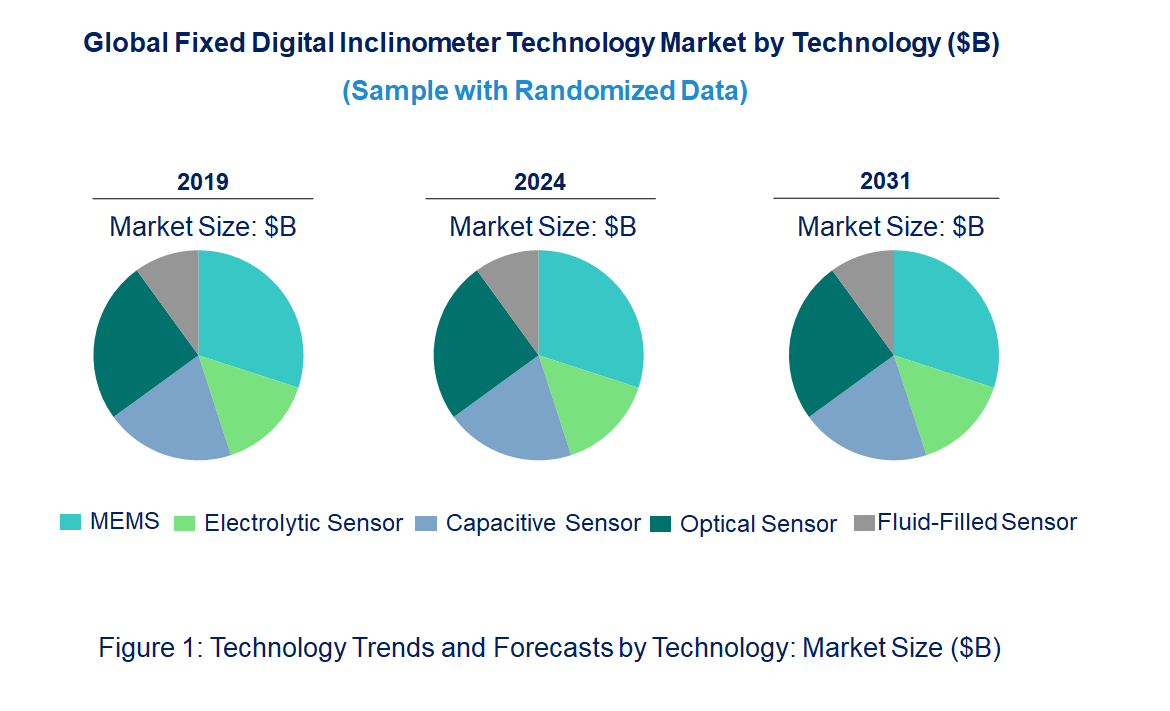
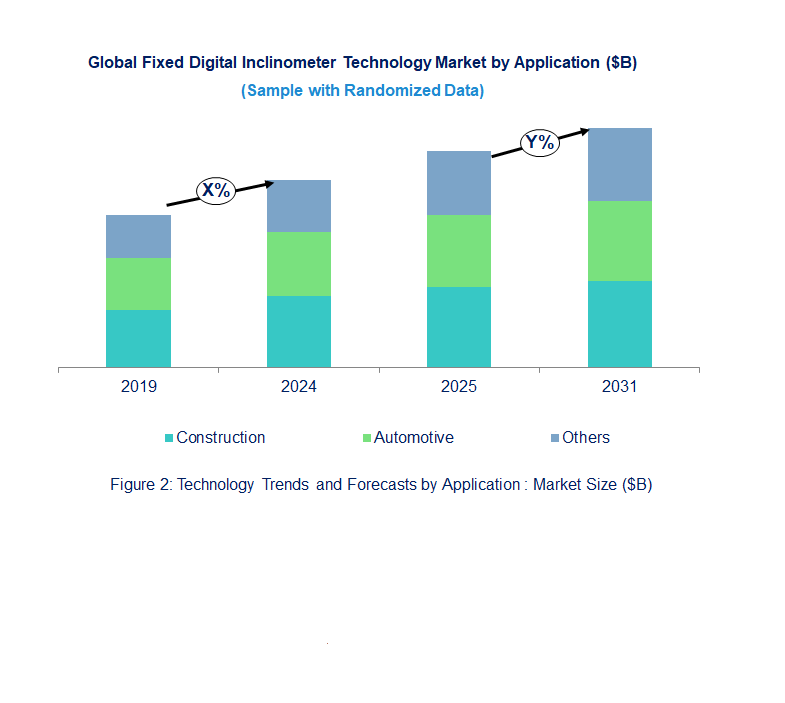
• Miniaturization and Integration of MEMS Sensors: MEMS technology enables compact designs with enhanced functionality. These sensors offer high reliability and cost-effectiveness, making them suitable for embedded systems and smart monitoring devices. Their small footprint and digital compatibility are revolutionizing deployment in tight and complex environments.
• Adoption of Wireless and IoT Connectivity: Modern inclinometers are increasingly integrated with wireless communication and IoT platforms. This allows for remote data transmission, real-time monitoring, and reduced human intervention, which enhances efficiency in structural health monitoring and civil engineering.
• Improvement in Sensor Accuracy and Resolution: New generations of sensors, especially optical and capacitive types, provide superior resolution and precision. This is crucial for applications requiring micro-level angular measurements, such as tunnel deformation or bridge monitoring.
• Enhanced Environmental Robustness: There is a rising demand for sensors that withstand extreme environments. Advanced sealing, thermal compensation, and materials like rugged polymers and stainless steel are being integrated to ensure long-term reliability in challenging conditions.
• Data Analytics and Predictive Maintenance Capabilities: Modern inclinometer systems are evolving into smart units capable of self-diagnosis and integration with analytics software. This facilitates predictive maintenance, reduces downtime, and helps in forecasting structural health trends over time. These emerging trends are collectively enhancing the performance, durability, and intelligence of fixed digital inclinometers. The shift towards smart, connected, and high-precision systems is transforming how industries monitor and manage structural integrity and safety.
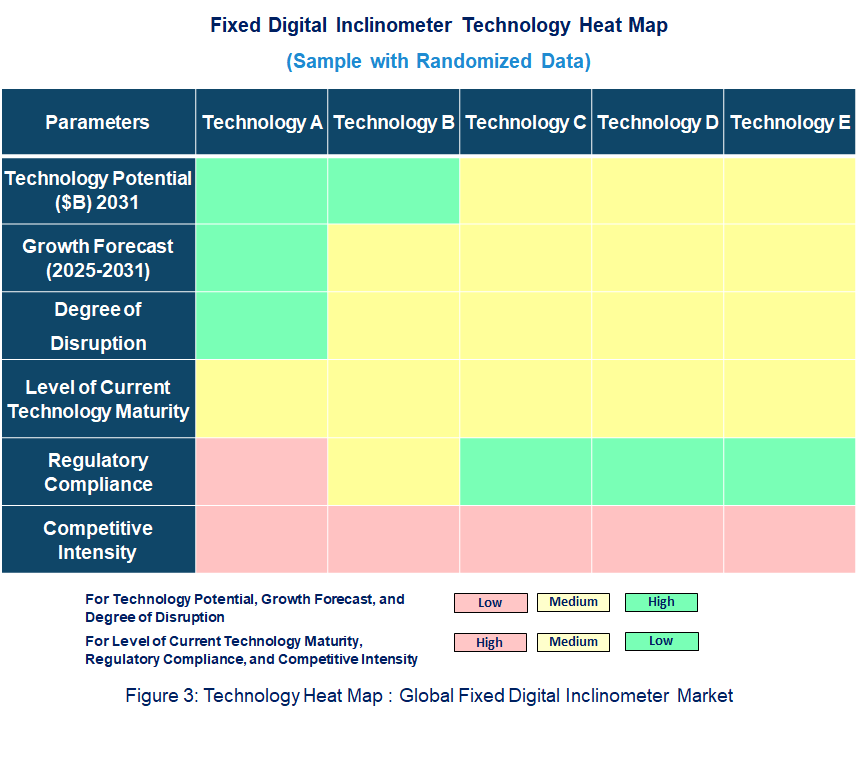
• Technology Potential: MEMS and optical sensors bring strong potential for scalability and integration with AI and IoT platforms. Their adaptability across diverse sectors from construction to aerospace offers room for extensive application growth and product diversification.
• Degree of Disruption: The replacement of older technologies such as fluid-filled and electrolytic sensors by MEMS and optical solutions signifies high disruption. These new technologies offer better performance at lower costs and are compatible with digital ecosystems, pushing legacy systems into obsolescence.
• Level of Current Technology Maturity: MEMS and capacitive sensors are relatively mature and widely adopted, particularly in consumer and industrial sectors. Optical sensors, though newer in inclinometers, are gaining ground rapidly due to their high precision and reliability.
• Regulatory Compliance: Fixed digital inclinometers must comply with industry standards such as ISO 9001 and IEC for accuracy and environmental durability. Increasing integration into safety-critical systems also requires adherence to rigorous calibration and certification protocols to ensure measurement reliability.
• RST Instruments: RST has focused on enhancing wireless connectivity and automated data acquisition in their inclinometer systems. Their newer models support real-time data transmission, significantly reducing manual monitoring time and improving operational efficiency, especially in remote or hazardous areas.
• Slope Indicator (a division of Durham Geo): Slope Indicator has introduced updated digital sensors with enhanced resolution and temperature compensation. These developments ensure stable readings in environments with fluctuating temperatures, improving long-term reliability in landslide or embankment monitoring.
• Sherborne Sensors: Sherborne has developed ultra-precision inclinometers with low-noise MEMS technology, aimed at aerospace and defense applications. Their focus is on high-resolution and compact designs that enable deployment in tight spaces without sacrificing performance.
• TE Connectivity: TE Connectivity has expanded its inclinometer offerings with ruggedized MEMS-based units designed for harsh environments. Their emphasis on customizable form factors and digital interfaces is helping customers integrate sensors into diverse industrial systems.
• Geokon: Geokon has advanced its digital inclinometer systems by integrating seamless logging software and Bluetooth-enabled readouts. This user-centric innovation enhances field operability, reduces human error, and ensures faster data interpretation for construction site managers.
• Tokyo Sokki Kenkyujo: Tokyo Sokki has been working on hybrid optical-electronic inclinometer systems that combine the accuracy of optical sensors with the responsiveness of digital electronics, providing high-resolution outputs ideal for seismic and geotechnical analysis.
• Rieker Inc.: Rieker has leveraged advancements in digital signal processing to launch inclinometers with onboard filtering algorithms, enabling more accurate data in dynamic conditions such as vibration or movement—ideal for transportation and vehicle-mounted applications. Each player is pushing the envelope in different aspects—from wireless integration and software compatibility to environmental resilience and precision engineering. These innovations are not only making fixed inclinometers more efficient and versatile but also extending their application across industries previously limited by analog or less robust technologies.
• Growing Infrastructure and Geotechnical Projects: The rise in construction of bridges, tunnels, and urban infrastructure requires advanced monitoring solutions. Inclinometers provide early warning for ground movement, preventing structural failure and saving costs.
• Advancement in MEMS and Sensor Technologies: Modern MEMS sensors offer compact size, higher accuracy, and cost-efficiency. These improvements enable widespread adoption across new applications such as smart cities and industrial IoT platforms.
• Demand for Automation and Remote Monitoring: The need for real-time, remote monitoring is pushing adoption of digital inclinometers with wireless and IoT capabilities, reducing labor costs and increasing safety in hazardous environments.
• Stringent Safety Regulations and Compliance Needs: Governments and regulators are enforcing stricter monitoring requirements for critical infrastructure. Digital inclinometers ensure compliance with safety standards through precise, reliable measurements.
• Integration with Predictive Maintenance Systems: Inclinometers are increasingly used in smart maintenance frameworks, where real-time data feeds into predictive analytics models to prevent failures before they happen. Challenges in the fixed digital inclinometer market are:
• High Initial Cost of Advanced Systems: Advanced digital systems, especially those with IoT integration, remain expensive. This limits adoption among smaller operators or in price-sensitive regions.
• Sensor Drift and Calibration Requirements: Despite advancements, inclinometers can suffer from sensor drift over time. Regular calibration and maintenance remain essential, increasing operational overhead.
• Limited Wireless Connectivity in Remote Areas: In remote or underground locations, wireless signal loss and data transmission issues persist, limiting the effectiveness of real-time monitoring systems.
• Data Integration and Compatibility Issues: Integration with legacy systems or diverse data platforms can be complex, requiring custom interfaces or software, which adds cost and implementation time.
• Harsh Environmental Conditions: Fixed inclinometers are often deployed in extreme climates, where factors like temperature, moisture, or vibrations can affect performance despite robust designs. The fixed digital inclinometer market is being shaped by robust growth drivers, particularly in infrastructure, automation, and safety. However, challenges such as high cost, environmental stresses, and integration complexity need to be addressed. Together, these factors will determine how quickly and widely the technology continues to evolve and penetrate new sectors.
• RST
• Slope Indicator
• Sherborne Sensors
• TE Connectivity
• Geokon
• Tokyo Sokki Kenkyujo
• Technology Readiness by Technology Type: MEMS sensors exhibit high technology readiness with broad deployment in smart infrastructure and industrial IoT due to strong compliance and widespread integration. Optical sensors are also highly ready, especially in critical applications needing precise, non-contact measurement, though slightly limited by cost and complexity. Capacitive sensors are mature and used in stable, lower-precision environments, maintaining moderate readiness. Electrolytic sensors are less ready for current demands due to their analog nature and sensitivity, making them unsuitable for modern digital applications. Fluid-filled sensors are the least ready for broad digital deployment, retained only in legacy systems with limited upgrade paths and minimal modern regulatory alignment.
• Competitive Intensity and Regulatory Compliance: MEMS sensors experience high competitive intensity as many players offer similar compact, cost-effective designs, though they meet most global compliance standards. Optical sensors face moderate competition but must meet stringent calibration and safety certifications, especially in high-risk environments. Capacitive sensors compete in niche industrial segments and typically comply with broad industrial standards. Electrolytic sensors, facing declining demand, have low competitive activity and are slowly phasing out under modern regulatory regimes. Fluid-filled sensors remain in limited use with low competition and moderate compliance needs, generally reserved for legacy or specialized geological applications.
• Disruption Potential by Technology Type: MEMS (Micro-Electro-Mechanical Systems) have the highest disruption potential due to their miniaturization, cost-efficiency, and compatibility with digital and IoT platforms in the fixed digital inclinometer market. Optical sensors also present strong disruption capabilities with their high precision and immunity to electromagnetic interference, ideal for critical infrastructure monitoring. Capacitive sensors offer moderate disruption, primarily in applications requiring stable medium-accuracy readings with low power consumption. Electrolytic sensors, once dominant, now face obsolescence due to bulkiness and sensitivity to environmental conditions. Fluid-filled sensors, though reliable in static settings, have low disruption potential due to their mechanical nature, slow response, and declining use in modern digital systems.
• MEMS (Micro-Electro-Mechanical Systems)
• Electrolytic Sensor
• Capacitive Sensor
• Optical Sensor
• Fluid-Filled Sensor
• Construction
• Automotive
• Others
• North America
• Europe
• Asia Pacific
• The Rest of the World
• Latest Developments and Innovations in the Fixed Digital Inclinometer Technologies
• Companies / Ecosystems
• Strategic Opportunities by Technology Type


Choose a license that fits your team. Instant PDF delivery.
Prices exclude taxes. Instant delivery. Custom licensing available on request.
Market Report · May 18, 2026
Market Report · May 18, 2026
Market Report · May 18, 2026
Trusted partner for strategic intelligence and business growth


Receive a complimentary market analysis tailored to your industry. Our analysts will identify key growth opportunities and competitive dynamics specific to your business.

Market size, growth rate, and key trend analysis for your specific sector.

Top competitor positioning and market share analysis.

Strategic recommendations backed by data-driven insights.
Get curated market intelligence and competitive moves straight to your inbox.
By subscribing, you agree to receive our monthly insights. Unsubscribe anytime.
Receive a complimentary market analysis tailored to your industry. Our analysts will identify key growth opportunities and competitive dynamics specific to your business.
Market size, growth rate, and key trend analysis for your specific sector.
Top competitor positioning and market share analysis.
Strategic recommendations backed by data-driven insights.
Get curated market intelligence, emerging trends, and competitive moves straight to your inbox each month.
By subscribing, you agree to receive our monthly insights. Unsubscribe anytime.
We'll send your sample report shortly.