
Market Report · July 22, 2026

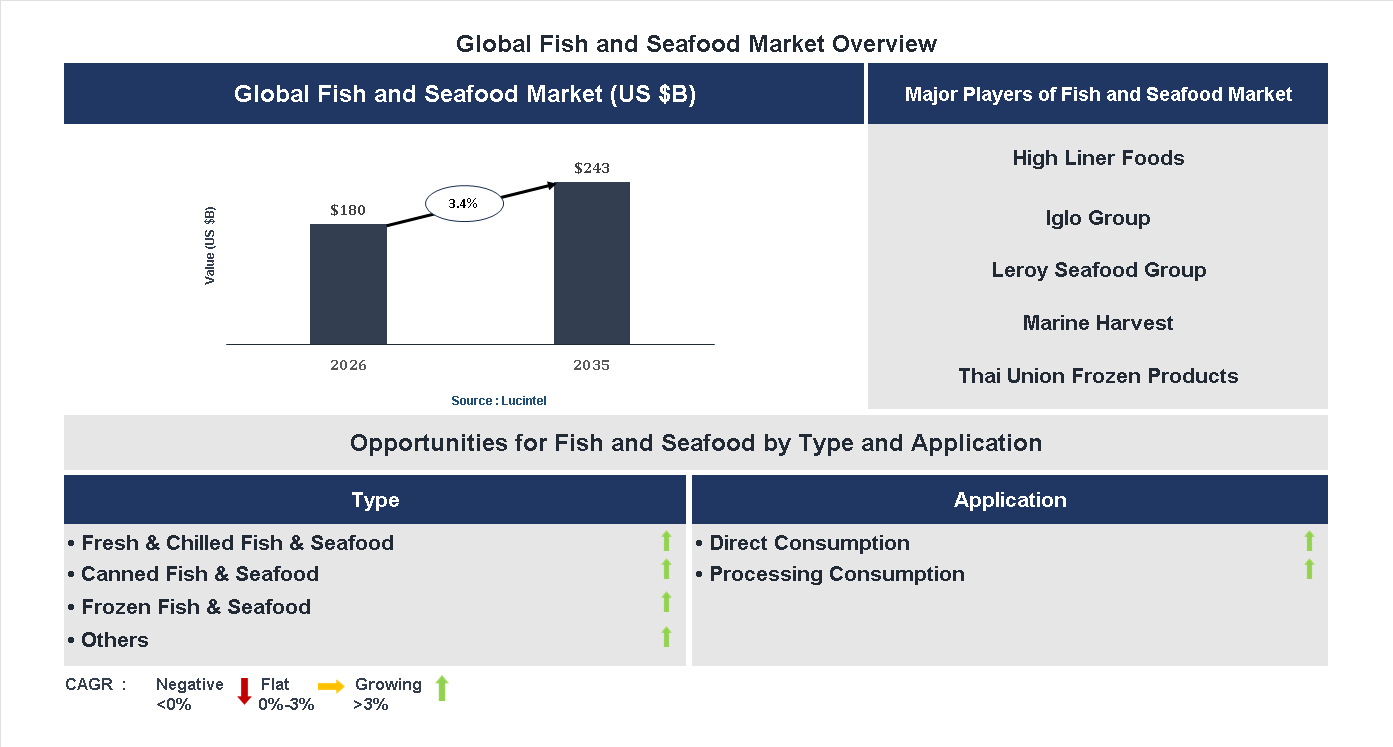
Key data points: The market size in 2035 = $243 billion, growth forecast = 3.4% annually for the next 8 years. Scroll below to get more insights. This market report covers trends, opportunities and forecasts in fish and seafood market to 2035 by type (fresh & chilled fish & seafood, canned fish & seafood, frozen fish & seafood, and others), application (direct consumption and processing consumption), and region (North America, Europe, Asia Pacific, and the Rest of the World)
We'll send your sample report shortly.
• Lucintel forecasts that, within the type category, fresh & chilled fish & seafood is expected to witness the highest growth over the forecast period.
• Within the application category, direct consumption is expected to witness higher growth.
• In terms of region, APAC is expected to witness the highest growth over the forecast period. Gain valuable insights for your business decisions with our comprehensive 150+ page report. Sample figures with some insights are shown below.
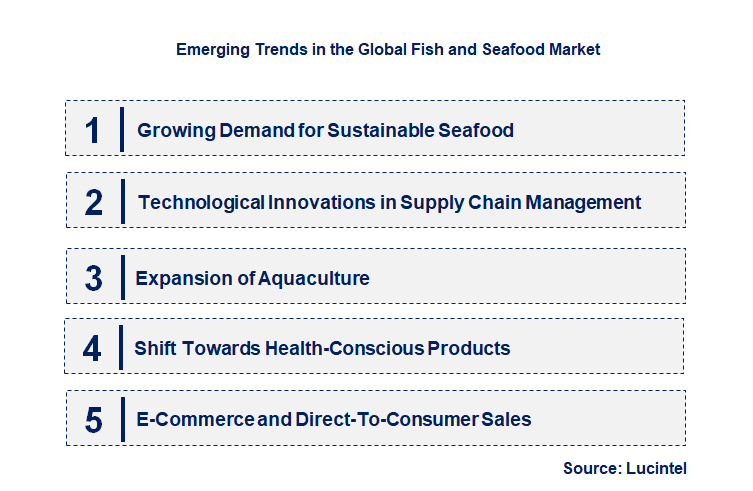
• Growing Demand for Sustainable Seafood: Consumers are increasingly prioritizing environmentally responsible products, prompting suppliers to adopt sustainable fishing practices and certifications. This trend encourages fishery management reforms, reduces overfishing, and promotes eco-friendly aquaculture, ultimately leading to a more resilient and ethically sourced seafood supply chain.
• Technological Innovations in Supply Chain Management: Advanced tracking, IoT devices, and blockchain technology are enhancing transparency and traceability from catch to consumer. These innovations improve food safety, reduce fraud, and increase consumer confidence, while also streamlining logistics and reducing waste throughout the supply chain.
• Expansion of Aquaculture: As wild fish stocks face pressure from overfishing, aquaculture is rapidly expanding to meet global demand. Innovations in breeding, feed efficiency, and disease management are making fish farming more sustainable and cost-effective, thus playing a crucial role in ensuring a steady seafood supply.
• Shift Towards Health-conscious products: Consumers are seeking healthier options, leading to increased demand for organic, low-mercury, and omega-rich seafood. This trend influences product development, marketing strategies, and regulatory standards, encouraging the industry to focus on quality, safety, and nutritional value.
• E-commerce and Direct-to-Consumer Sales: The rise of online platforms and direct sales channels is transforming seafood distribution. Consumers benefit from greater convenience, wider product selection, and transparency, while producers gain access to new markets and better margins, fostering a more dynamic and consumer-centric market environment. These trends are collectively reshaping the fish and seafood market by emphasizing sustainability, technological integration, health focus, and innovative distribution channels. They are fostering a more transparent, responsible, and consumer-oriented industry, ensuring long-term growth and resilience amid environmental and economic challenges.
• Growth in Sustainable Sourcing: Increasing consumer awareness about environmental impact is driving demand for sustainably sourced fish and seafood. Companies are adopting eco-friendly fishing practices and certifications, which enhance brand reputation and meet regulatory standards. This shift encourages responsible harvesting, reduces overfishing, and promotes marine conservation. As a result, sustainable sourcing is becoming a key differentiator, fostering long-term industry growth and consumer trust.
• Expansion of Plant-Based Seafood Alternatives: The rise of plant-based diets and veganism is fueling innovation in seafood alternatives. Companies are developing products that mimic the taste and texture of traditional seafood, appealing to health-conscious and environmentally aware consumers. This diversification broadens market reach, reduces pressure on wild fish populations, and aligns with sustainability goals. The growth of plant-based options is expected to significantly impact market dynamics and consumer choices.
• Adoption of Digital and E-commerce Platforms: Digital transformation is revolutionizing how consumers access fish and seafood products. Online platforms and e-commerce channels enable direct-to-consumer sales, expanding market reach and providing convenience. Advanced logistics and supply chain management improve freshness and reduce waste. This shift enhances transparency, allows for personalized marketing, and caters to the growing demand for online shopping, ultimately boosting sales and market penetration.
• Focus on Product Innovation and Value-Added Offerings: Innovation in product development is driving market growth through new formats, flavors, and packaging. Value-added products such as ready-to-eat, pre-marinated, and portion-controlled items cater to busy lifestyles. These offerings increase consumer engagement and loyalty while enabling premium pricing. Continuous innovation helps companies differentiate themselves, meet diverse consumer preferences, and expand their market share in a competitive landscape.
• Emphasis on Traceability and Quality Assurance: Consumers are demanding greater transparency regarding product origin and safety. Implementing blockchain technology and rigorous quality control measures enhances traceability from catch to plate. This focus reduces fraud, ensures compliance with safety standards, and builds consumer confidence. Improved traceability supports premium pricing and market access, especially in regions with strict regulatory requirements, fostering trust and sustainability in the industry. The recent developments in sustainable sourcing, plant-based alternatives, digital platforms, product innovation, and traceability are collectively transforming the fish and seafood market. These trends are driving growth, enhancing consumer engagement, and promoting sustainability. As a result, the industry is becoming more resilient, competitive, and aligned with global environmental and health priorities, ensuring long-term market expansion and positive ecological impact.
• Expansion into Plant-Based Seafood Alternatives: The rising demand for vegetarian and vegan options has prompted companies to develop plant-based seafood products. These alternatives cater to health-conscious consumers and those concerned about overfishing, offering sustainable and ethical choices. Innovations in texture and flavor are making plant-based seafood more appealing, opening new revenue streams and expanding market reach. This growth opportunity aligns with global sustainability goals and changing dietary preferences.
• Adoption of Advanced Aquaculture Technologies: Implementing innovative aquaculture methods such as recirculating systems, automation, and biosecurity measures can improve yield, reduce environmental impact, and ensure product quality. These technologies enable sustainable fish farming, minimize resource use, and address concerns over wild stock depletion. As consumer demand for responsibly sourced seafood increases, adopting advanced aquaculture practices offers a competitive advantage and supports long-term market stability.
• Development of Value-Added Seafood Products: Creating ready-to-eat, pre-packaged, and processed seafood items caters to busy consumers seeking convenience. Innovations like flavored fillets, seafood snacks, and meal kits enhance product appeal and expand market segments. This approach allows companies to differentiate their offerings, increase profit margins, and tap into emerging trends such as health and wellness. Value-added products also facilitate easier distribution and shelf presence across retail channels.
• Expansion into Emerging Markets: Growing middle-class populations and increasing disposable incomes in regions like Asia-Pacific and Latin America present significant growth opportunities. Introducing affordable, locally adapted seafood products and establishing distribution networks can capture new customer bases. Market entry strategies such as partnerships and localized branding can accelerate growth, while addressing regional preferences and sustainability concerns enhances acceptance and loyalty.
• Emphasis on Sustainable and Eco-Friendly Sourcing: Consumers are increasingly prioritizing sustainably sourced seafood, prompting companies to adopt eco-labeling and transparent supply chains. Investing in sustainable fishing practices and certification programs enhances brand reputation and meets regulatory requirements. This focus not only attracts environmentally conscious buyers but also mitigates risks associated with overfishing and environmental degradation, ensuring long-term resource availability and market credibility. These growth opportunities are poised to significantly influence the fish and seafood market by fostering innovation, sustainability, and market expansion. Companies that strategically capitalize on these trends can strengthen their competitive position, meet evolving consumer demands, and contribute to sustainable industry practices, ensuring resilient growth in a dynamic global marketplace.
• Technological Innovations: The adoption of advanced aquaculture techniques, such as recirculating systems and biotechnology, has increased production efficiency and product quality. Automation in processing and packaging reduces labor costs and enhances safety standards. These innovations enable suppliers to meet growing demand while maintaining sustainability, thus expanding market reach and consumer trust.
• Rising Consumer Awareness and Health Trends: Increasing awareness about the health benefits of fish and seafood, such as high protein content and omega-3 fatty acids, has shifted consumer preferences. This trend is driven by a global focus on healthy lifestyles and preventive healthcare, leading to higher consumption rates. As a result, the market experiences sustained growth, especially in developed regions.
• Economic Growth and Urbanization: Economic development in emerging markets has increased disposable incomes, enabling consumers to afford higher-quality seafood products. Urbanization also boosts demand for convenient, ready-to-eat seafood options. These factors contribute to expanding retail channels and increasing overall market size.
• Trade Liberalization and Global Supply Chains: Reduced tariffs and trade barriers facilitate international trade of fish and seafood products. This global connectivity allows access to diverse markets and raw materials, supporting economies of scale. It also encourages innovation and diversification of product offerings, further stimulating market growth. The challenges in the fish and seafood market are:
• Environmental Sustainability and Overfishing: Overexploitation of marine resources threatens fish stocks and disrupts ecosystems. Regulatory measures to prevent overfishing can restrict supply, increase costs, and impact profitability. Balancing economic growth with environmental conservation remains a critical challenge for industry stakeholders.
• Climate Change and Ocean Pollution: Rising sea temperatures, acidification, and pollution adversely affect marine biodiversity and fish populations. These environmental changes can lead to unpredictable supply fluctuations and increased operational costs for sustainable practices. Adapting to these impacts requires significant investment and innovation.
• Regulatory and Food Safety Standards: Stringent safety and quality regulations vary across regions, complicating compliance for international traders. Non-compliance can result in product recalls, bans, and reputational damage. Navigating complex regulatory landscapes demands continuous monitoring and adaptation, increasing operational complexity and costs. The fish and seafood market is driven by technological progress, health-conscious consumer behavior, economic growth, and global trade facilitation. However, environmental concerns, climate impacts, and regulatory complexities pose significant challenges. These factors collectively influence market dynamics, requiring stakeholders to innovate, adapt, and prioritize sustainability to sustain growth and competitiveness in this evolving industry.
• High Liner Foods
• Iglo Group
• Leroy Seafood Group
• Marine Harvest
• Thai Union Frozen Products
• Beijing Princess Seafood International
• Dong Won Fisheries
• Empresas AquaChile
• Faroe Seafood
• Findus Group
• Fresh & Chilled Fish & Seafood
• Canned Fish & Seafood
• Frozen Fish & Seafood
• Others
• Direct Consumption
• Processing Consumption
• North America
• Europe
• Asia Pacific
• The Rest of the World
• United States: The U.S. market has seen a rise in sustainable fishing practices and eco-labeling initiatives, driven by consumer demand for responsibly sourced seafood. Technological innovations such as blockchain are improving traceability and supply chain transparency. Additionally, aquaculture is expanding to reduce pressure on wild stocks, with investments in sustainable fish farming methods increasing. The growth of online seafood sales and direct-to-consumer models has also gained momentum, providing consumers with fresher options and greater transparency.
• China: China remains the worlds largest producer and consumer of fish and seafood, with a focus on aquaculture expansion and modernization. The country has invested heavily in sustainable aquaculture practices and technology to improve yield and reduce environmental impact. E-commerce platforms have significantly boosted seafood sales, making seafood more accessible nationwide. China is also increasing its exports of processed seafood products, leveraging advanced processing technologies and quality standards to meet international demand.
• Germany: Germanys seafood market emphasizes sustainability and quality, with consumers favoring eco-friendly and organic options. The country has adopted strict regulations on fishing practices and seafood imports to ensure sustainability. Innovation in packaging and preservation techniques has improved product shelf life and quality. Germany is also investing in aquaculture research and development, aiming to reduce reliance on wild-caught fish and promote sustainable domestic production.
• India: India is experiencing rapid growth in fish and seafood production, driven by aquaculture expansion and government initiatives promoting fisheries. The country is focusing on sustainable practices and improving infrastructure to boost exports. Traditional fishing communities are adopting modern techniques, and there is increased investment in cold storage and processing facilities. India is also exploring value-added seafood products to enhance competitiveness in international markets, with a growing domestic consumption trend.
• Japan: Japan continues to be a major player in the global seafood industry, emphasizing sustainable fishing and conservation efforts. The country invests in advanced fishing technology and aquaculture to ensure high-quality products. Japan is also a leader in seafood innovation, including new species cultivation and processing methods. The domestic market remains highly sophisticated, with consumers prioritizing freshness and quality, while exports of premium seafood products continue to grow, especially to Asian markets.


• High Liner Foods
• Iglo Group
• Leroy Seafood Group
• Marine Harvest
• Thai Union Frozen Products
• Beijing Princess Seafood International
• Dong Won Fisheries
• Empresas AquaChile
• Faroe Seafood
• Findus Group Q6. Which fish and seafood market segment will be the largest in future? Answer: Lucintel forecasts that, within the type category, fresh & chilled fish & seafood is expected to witness the highest growth over the forecast period. Q7. In fish and seafood market, which region is expected to be the largest in next 5 years? Answer: In terms of region, APAC is expected to witness the highest growth over the forecast period. Q8. Do we receive customization in this report? Answer: Yes, Lucintel provides 10% customization without any additional cost.


Choose a license that fits your team. Instant PDF delivery.
Prices exclude taxes. Instant delivery. Custom licensing available on request.
Market Report · July 22, 2026
Market Report · July 22, 2026
Market Report · July 22, 2026
Trusted partner for strategic intelligence and business growth


Receive a complimentary market analysis tailored to your industry. Our analysts will identify key growth opportunities and competitive dynamics specific to your business.

Market size, growth rate, and key trend analysis for your specific sector.

Top competitor positioning and market share analysis.

Strategic recommendations backed by data-driven insights.
Get curated market intelligence and competitive moves straight to your inbox.
By subscribing, you agree to receive our monthly insights. Unsubscribe anytime.
Receive a complimentary market analysis tailored to your industry. Our analysts will identify key growth opportunities and competitive dynamics specific to your business.
Market size, growth rate, and key trend analysis for your specific sector.
Top competitor positioning and market share analysis.
Strategic recommendations backed by data-driven insights.
Get curated market intelligence, emerging trends, and competitive moves straight to your inbox each month.
By subscribing, you agree to receive our monthly insights. Unsubscribe anytime.
We'll send your sample report shortly.