
Market Report · July 31, 2026

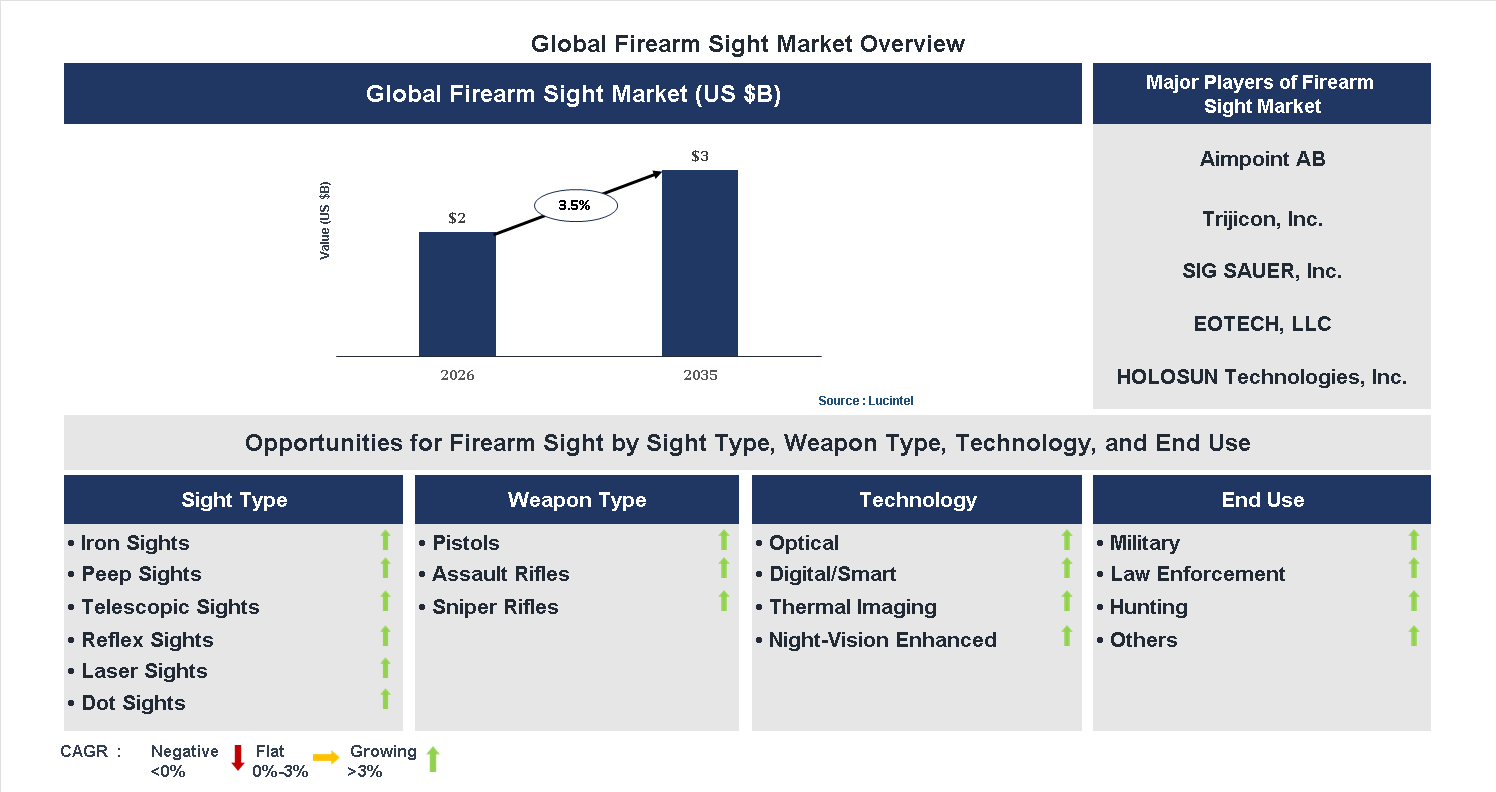
Key data points: The market size in 2035 = $3 billion, growth forecast = 3.5% annually for the next 8 years. Scroll below to get more insights. This market report covers trends, opportunities and forecasts in firearm sight market to 2035 by sight type (iron sights, peep sights, telescopic sights, reflex sights, laser sights, and dot sights), weapon type (pistols, assault rifles, and sniper rifles), technology (optical, digital/smart, thermal imaging, and night-vision enhanced), end use (military, law enforcement, hunting, and others), and region (North America, Europe, Asia Pacific, and the Rest of the World)
We'll send your sample report shortly.
• Lucintel forecasts that, within the sight type category, telescopic sight is expected to witness the highest growth over the forecast period.
• Within the end use category, military is expected to witness the highest growth.
• In terms of region, North America is expected to witness the highest growth over the forecast period. Gain valuable insights for your business decisions with our comprehensive 150+ page report. Sample figures with some insights are shown below.
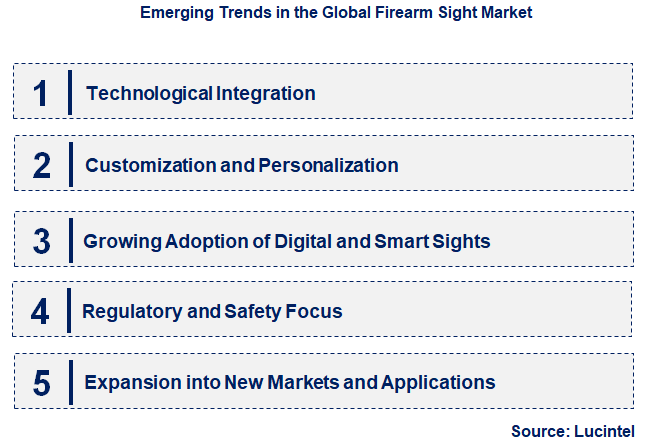
• Technological Integration: The adoption of advanced technologies such as laser, holographic, and digital sights is revolutionizing firearm sights. These innovations improve accuracy, target acquisition speed, and user experience. Digital sights with night vision and augmented reality features are becoming increasingly popular among tactical and sporting users. This trend enhances precision and situational awareness, making firearm sights more versatile and effective in various environments. As technology continues to evolve, the market will see more sophisticated, user-friendly, and customizable sighting solutions, driving demand and expanding applications.
• Customization and Personalization: Consumers are seeking tailored firearm sights that meet specific needs and preferences. Manufacturers are offering customizable options, including adjustable brightness, reticle types, and mounting systems. This trend allows users to optimize their sights for different scenarios, whether hunting, shooting sports, or tactical operations. Personalization enhances user satisfaction and performance, fostering brand loyalty. The rise of modular sight systems also supports this trend, enabling quick adjustments and upgrades. As personalization becomes a key differentiator, companies investing in flexible, adaptable products will gain competitive advantage.
• Growing Adoption of Digital and Smart Sights: The integration of smart technology into firearm sights is a significant trend. Features like ballistic calculators, range finders, and data recording are now embedded in sight systems. These digital sights provide real-time data, improving accuracy and decision-making. The connectivity with smartphones and other devices allows users to customize settings and access updates easily. This trend is particularly prominent among professional shooters, law enforcement, and military personnel. As digital and smart sights become more affordable and reliable, their adoption is expected to accelerate, transforming traditional sighting methods and elevating overall shooting performance.
• Regulatory and Safety Focus: Increasing regulatory scrutiny and safety concerns are influencing market trends. Manufacturers are designing sights that comply with legal standards and promote responsible firearm use. Features such as automatic shutoff, limited reticle brightness, and safety certifications are becoming standard. Additionally, there is a push for education and awareness about the proper use of advanced sights to prevent accidents. Regulatory developments may also impact product design and marketing strategies. This focus on safety and compliance ensures the market grows sustainably while addressing societal concerns and legal requirements.
• Expansion into New Markets and Applications: The firearm sight market is expanding beyond traditional shooting sports and hunting into areas like home defense, tactical training, and even recreational activities. Innovations are enabling sights suitable for different environments and user needs. The rise of civilian tactical training and competitive shooting is fueling demand for high-performance sights. Additionally, emerging markets in Asia, Africa, and Latin America present new growth opportunities. This diversification broadens the market scope, encourages innovation, and fosters global expansion, making firearm sights more accessible and versatile across various sectors. These emerging trends are reshaping the firearm sight market by fostering innovation, enhancing user experience, and expanding application areas. Technological advancements, customization, digital integration, safety considerations, and market diversification are collectively driving growth and competitiveness. As these trends continue to evolve, they will significantly influence product development, market strategies, and regulatory landscapes, ultimately transforming how firearm sights are designed, used, and perceived worldwide.
• Technological Integration: Smart Sights Enhance Precision and User Experience: The integration of digital and smart technologies into firearm sights is revolutionizing the market. Features like night vision, ballistic calculators, and augmented reality provide shooters with real-time data, improving accuracy and safety. This innovation attracts tech-savvy consumers and military agencies, expanding market reach. As technology becomes more affordable and reliable, adoption rates are expected to rise, driving overall market growth and creating new revenue streams for manufacturers.
• Material Innovation: Durable and Lightweight Materials Improve Product Performance: Advances in materials such as carbon fiber and high-grade polymers are enabling the production of lighter, more durable sights. These materials enhance user comfort and product longevity, especially in harsh environments. The demand for rugged, lightweight sights in hunting and tactical applications is increasing, prompting manufacturers to invest in research and development. This trend boosts product differentiation and market competitiveness, ultimately expanding the customer base and increasing sales.
• Regulatory and Safety Standards: Stricter Regulations Drive Market Adaptation: Evolving regulations concerning firearm accessories are prompting manufacturers to innovate within compliance frameworks. Enhanced safety features, such as automatic shut-off and tamper-proof designs, are becoming standard. These standards influence product design, quality assurance, and marketing strategies. Companies that adapt swiftly to regulatory changes can gain a competitive edge, ensuring market access and consumer trust. This dynamic fosters a safer, more regulated market environment, encouraging responsible innovation and growth.
• Customization and Modular Designs: Personalized Sights Meet Diverse User Needs: The trend toward customizable and modular sight systems allows users to tailor their equipment for specific applications. Interchangeable lenses, mounts, and reticles enable versatility and user preference. This flexibility appeals to professional shooters, hunters, and law enforcement agencies seeking specialized solutions. Manufacturers offering modular options can capture niche markets and foster brand loyalty. The ability to upgrade and personalize products enhances customer satisfaction and drives repeat sales, fueling overall market expansion.
• E-commerce and Distribution Channels: Digital Platforms Expand Market Reach: The rise of online retail channels has made firearm sights more accessible to a global audience. E-commerce platforms facilitate direct sales, offering a wider product range and competitive pricing. This shift reduces reliance on traditional brick-and-mortar stores and enables manufacturers to reach remote or underserved markets. Enhanced logistics and digital marketing strategies further boost sales. As online purchasing becomes more prevalent, market penetration accelerates, fostering growth and diversification of the customer base. These developments are significantly transforming the firearm sight market by enhancing product innovation, safety, and accessibility. Technological advancements and material innovations are driving higher performance and durability, while regulatory compliance ensures safer products. Customization options cater to diverse user needs, and e-commerce channels expand market reach. Collectively, these trends foster a competitive, dynamic environment that encourages growth, innovation, and increased adoption across various sectors, shaping a promising future for the market.
• Integration of Smart Technologies in Firearm Sights: The adoption of smart features like digital displays, Bluetooth connectivity, and augmented reality is transforming firearm sights. These innovations enable real-time data access, target tracking, and enhanced accuracy, appealing to military and civilian users. The integration of IoT and AI further enhances functionality, making sights more intuitive and adaptable. This technological shift offers manufacturers a competitive edge and opens new revenue streams through advanced, connected sighting solutions.
• Rising Demand for Night Vision and Thermal Sights: Increasing security concerns and tactical needs are driving demand for night vision and thermal imaging sights. These sights allow users to operate effectively in low-light or no-light conditions, crucial for military, law enforcement, and hunting applications. Technological improvements have made these sights more compact, affordable, and efficient. The expanding adoption of night vision and thermal sights is expected to significantly boost market growth, especially in regions with heightened security requirements.
• Expansion of Civilian and Sporting Markets: The civilian market for firearm sights, including hunting, shooting sports, and personal defense, is rapidly growing. Consumers seek high-precision, durable, and easy-to-use sights to improve shooting accuracy. Manufacturers are developing specialized products tailored to these segments, such as variable magnification scopes and reflex sights. The increasing popularity of shooting sports and hunting activities worldwide is fueling demand, creating lucrative opportunities for market players to diversify their product portfolios.
• Technological Advancements in Red Dot and Reflex Sights: Red dot and reflex sights are gaining popularity due to their quick target acquisition and ease of use. Innovations like lightweight designs, longer battery life, and multi-reticle options are enhancing user experience. These sights are increasingly used in tactical, hunting, and competitive shooting scenarios. Continuous R&D efforts to improve optical clarity and durability are expected to sustain growth, making these sights a preferred choice among both professionals and enthusiasts.
• Growing Focus on Customization and Durability: Consumers and professionals demand customizable, rugged sights capable of withstanding harsh environments. Manufacturers are offering modular designs, adjustable reticles, and weather-resistant features to meet these needs. The focus on durability, lightweight materials, and ergonomic design is critical for military and outdoor applications. This trend toward tailored, resilient sights is expected to drive market expansion by attracting a broader customer base seeking reliable, adaptable solutions. The overall market outlook indicates that technological innovation, expanding application areas, and increasing consumer demand will significantly propel the firearm sight market forward, fostering competitive growth and global reach.
• Technological Innovation: The development of advanced optical systems, such as night vision and thermal imaging, enhances accuracy and usability. These innovations attract both military and civilian users, expanding market reach. Continuous R&D efforts lead to lighter, more durable, and more precise sights, fueling consumer interest and adoption. As technology evolves, manufacturers can offer differentiated products, boosting sales and market share.
• Increasing Demand for Precision and Tactical Shooting: Growing interest in hunting, sport shooting, and tactical applications drives demand for high-quality firearm sights. Consumers seek products that improve accuracy, especially in low-light or challenging conditions. Military and law enforcement agencies also require reliable sights for operational effectiveness. This rising demand encourages manufacturers to innovate and diversify their product portfolios, fostering market growth.
• Military and Law Enforcement Spending: Governments worldwide are increasing budgets for defense and security, which directly impacts the firearm sight market. Advanced sights are integral to modern weapon systems, prompting procurement and upgrades. This sustained investment ensures a steady demand from institutional buyers, supporting market stability and expansion.
• Regulatory Environment and Safety Standards: Evolving firearm regulations influence market dynamics. Stricter laws can restrict firearm sales and accessories, impacting demand. Conversely, regulations promoting safety standards encourage the adoption of certified, high-quality sights. Manufacturers must navigate these regulatory landscapes to ensure compliance and capitalize on emerging opportunities.
• Consumer Preference for Customization and Innovation: Modern consumers favor customizable and innovative sight options, such as adjustable reticles and multi-spectral capabilities. This trend pushes manufacturers to develop versatile products that cater to specific needs, enhancing user experience and satisfaction. The focus on personalization drives market differentiation and growth. The challenges facing the firearm sight market include:
• Stringent Regulations and Legal Restrictions: Many countries impose strict laws on firearm accessories, including sights, which can limit market access and sales. These regulations often involve lengthy approval processes, import restrictions, and compliance costs, creating barriers for manufacturers and retailers. Such legal complexities can slow market growth and reduce product availability in certain regions.
• Market Saturation and Intense Competition: The market is highly competitive, with numerous established players and new entrants vying for market share. This saturation leads to price wars, reduced profit margins, and the need for continuous innovation. Companies must invest heavily in R&D and marketing to differentiate their products, which can be challenging for smaller firms.
• Technological Obsolescence and High Development Costs: Rapid technological advancements require ongoing investment in R&D to stay competitive. Developing cutting-edge sights involves significant costs and risks, especially when consumer preferences shift quickly. Additionally, rapid obsolescence of older models can lead to inventory write-offs and reduced profitability for manufacturers. The firearm sight market is shaped by technological advancements, increasing demand for precision, and supportive military spending, which drive growth. However, regulatory restrictions, market saturation, and high R&D costs pose significant challenges. These factors collectively influence the markets trajectory, requiring stakeholders to innovate continuously while navigating legal and competitive hurdles. Overall, the markets future depends on balancing technological progress with regulatory compliance and strategic differentiation to sustain growth and profitability.
• Aimpoint AB
• Trijicon, Inc.
• SIG SAUER, Inc.
• EOTECH, LLC
• HOLOSUN Technologies, Inc.
• Bushnell
• Leupold® & Stevens, Inc.
• Beretta Holding S.A.
• Vortex Optics
• Sight mark
• Iron Sights
• Peep Sights
• Telescopic Sights
• Reflex Sights
• Laser Sights
• Dot Sights
• Pistols
• Assault Rifles
• Sniper Rifles
• Optical
• Digital/Smart
• Thermal Imaging
• Night-Vision Enhanced
• Military
• Law Enforcement
• Hunting
• Others
• North America
• Europe
• Asia Pacific
• The Rest of the World
• United States: The U.S. firearm sight market is expanding rapidly due to high demand from hunting, shooting sports, and military sectors. Innovations include the integration of electronic and smart sight technologies, such as night vision and laser rangefinders. Regulatory changes and increased firearm ownership have further fueled market growth, with key players focusing on product durability and advanced targeting features.
• China: Chinas market is witnessing steady growth driven by a rising middle class and increased interest in shooting sports and hunting. Local manufacturers are investing in affordable, technologically advanced sights, including red dot and holographic sights. Government policies promoting domestic manufacturing and exports are also shaping market dynamics, with a focus on quality improvements and innovation.
• Germany: Known for precision engineering, Germanys firearm sight market emphasizes high-quality, durable products for both civilian and military use. The country is a leader in optical technology, with significant advancements in scope clarity, waterproofing, and ergonomic design. The market is also influenced by strict regulations and a focus on safety and reliability.
• India: The Indian firearm sight market is growing due to increased demand from the defense sector, law enforcement, and civilian shooters. Local companies are developing cost-effective, robust sights suitable for diverse terrains and conditions. The government’s push for modernization of armed forces and rising hunting and shooting sports participation are key drivers.
• Japan: Japans market is characterized by technological innovation and high standards of quality. The focus is on compact, lightweight sights with advanced features like digital targeting and integration with other electronic systems. The market is also influenced by strict firearm regulations, leading to a niche but technologically sophisticated industry.


• Aimpoint AB
• Trijicon, Inc.
• SIG SAUER, Inc.
• EOTECH, LLC
• HOLOSUN Technologies, Inc.
• Bushnell
• Leupold® & Stevens, Inc.
• Beretta Holding S.A.
• Vortex Optics
• Sight mark Q6. Which firearm sight market segment will be the largest in future? Answer: Lucintel forecasts that, within the sight type category, telescopic sight is expected to witness the highest growth over the forecast period. Q7. In firearm sight market, which region is expected to be the largest in next 8 years? Answer: In terms of region, North America is expected to witness the highest growth over the forecast period. Q8. Do we receive customization in this report? Answer: Yes, Lucintel provides 10% customization without any additional cost.


Choose a license that fits your team. Instant PDF delivery.
Prices exclude taxes. Instant delivery. Custom licensing available on request.
Market Report · July 31, 2026
Market Report · July 31, 2026
Market Report · July 31, 2026
Trusted partner for strategic intelligence and business growth


Receive a complimentary market analysis tailored to your industry. Our analysts will identify key growth opportunities and competitive dynamics specific to your business.

Market size, growth rate, and key trend analysis for your specific sector.

Top competitor positioning and market share analysis.

Strategic recommendations backed by data-driven insights.
Get curated market intelligence and competitive moves straight to your inbox.
By subscribing, you agree to receive our monthly insights. Unsubscribe anytime.
Receive a complimentary market analysis tailored to your industry. Our analysts will identify key growth opportunities and competitive dynamics specific to your business.
Market size, growth rate, and key trend analysis for your specific sector.
Top competitor positioning and market share analysis.
Strategic recommendations backed by data-driven insights.
Get curated market intelligence, emerging trends, and competitive moves straight to your inbox each month.
By subscribing, you agree to receive our monthly insights. Unsubscribe anytime.
We'll send your sample report shortly.