
Market Report · July 22, 2026

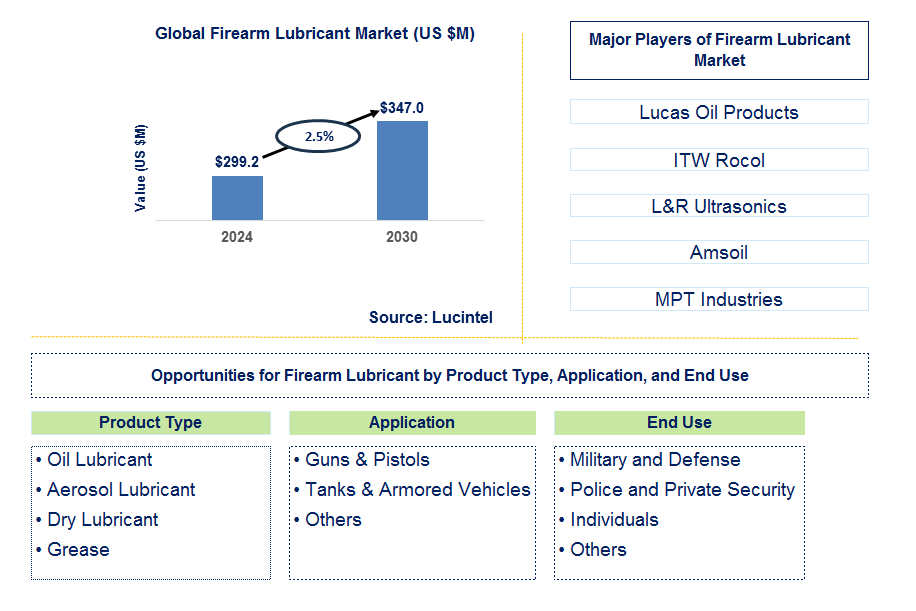
Key data points: The market size in 2030 = $347.0 million, growth forecast = 2.5% annually for the next 6 years. Scroll below to get more insights. This market report covers trends, opportunities, and forecasts in the global firearm lubricant market to 2030 by product type (oil lubricant, aerosol lubricant, dry lubricant, and grease), application (guns & pistols, tanks & armored vehicles, and others), end use (military and defense, police and private security, individuals, and others), and region (North America, Europe, Asia Pacific, and the Rest of the World)
We'll send your sample report shortly.
• United States: U.S. manufacturers are increasingly focusing on bio-based and non-toxic lubricants, responding to environmental regulations and consumer demand for sustainable products. Enhanced formulations are being developed to improve performance under extreme conditions, particularly for military applications.
• China: In China, there is a rising trend toward synthetic lubricants tailored for law enforcement and security applications. Local companies are investing in R&D to create high-performance products that meet the growing needs of both the government and civilian markets.
• Germany: Germany's firearm lubricant market is advancing with a focus on innovative formulations that enhance performance and corrosion resistance. The country’s robust engineering capabilities are leading to the development of specialized products for both military and civilian firearms.
• India: India's expanding defense sector is driving demand for high-quality firearm lubricants. Local manufacturers are forming partnerships with international firms to improve product offerings, focusing on lubricants that meet the rigorous requirements of military and civilian users.
• Japan: Japan is witnessing growth in the niche market for firearm lubricants, emphasizing eco-friendly solutions. Recent developments include low-odor and non-toxic formulations that cater to recreational users, particularly in shooting sports and hunting.
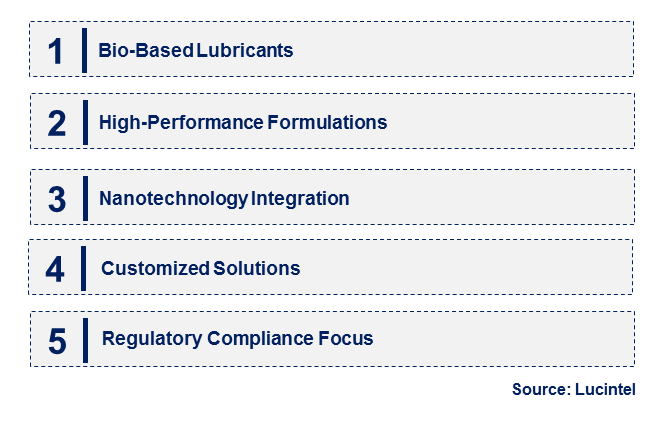
• Bio-Based Lubricants: The demand for environmentally friendly lubricants is growing as consumers and manufacturers prioritize sustainability. Bio-based products reduce ecological impact and comply with increasing regulations, appealing to both military and civilian markets.
• High-Performance Formulations: New formulations that enhance lubrication and protect against corrosion in extreme conditions are being developed. These products cater to military applications and consumers who require reliable performance in harsh environments.
• Nanotechnology Integration: The incorporation of nanotechnology in lubricants enhances their effectiveness by reducing friction and wear. These advanced products extend the lifespan of firearms, making them appealing to both enthusiasts and professional users.
• Customized Solutions: Manufacturers are increasingly offering specialized lubricants tailored for different types of firearms. This trend meets the specific needs of various applications, enhancing user satisfaction and product performance.
• Regulatory Compliance Focus: As regulations become stricter, manufacturers are prioritizing compliance in their product development. This shift encourages innovation in eco-friendly formulations that do not compromise performance, ensuring market competitiveness. These trends are driving innovation and shaping the firearm lubricant market, pushing manufacturers toward sustainability, customization, and high performance to meet evolving consumer and regulatory demands.
• Development of Bio-Based Formulations: Companies are focusing on creating bio-based lubricants that comply with environmental regulations. These products offer effective lubrication while minimizing ecological impact, appealing to a growing segment of environmentally conscious consumers.
• Military-Grade Lubricants: The military sector is increasingly adopting advanced lubricants designed for extreme conditions. Innovations that enhance corrosion resistance and temperature stability are gaining traction, ensuring reliable performance in critical situations.
• Synthetic Lubricants Growth: The market for synthetic firearm lubricants is expanding, driven by their superior performance characteristics. These products offer better lubrication, reduce wear, and provide longer-lasting protection, catering to both military and civilian applications.
• Collaboration with Defense Agencies: Manufacturers are forming partnerships with defense agencies to develop customized lubricant solutions. These collaborations lead to innovations that meet specific operational requirements, enhancing the effectiveness of military firearms.
• Rising Demand for Eco-Friendly Options: There is a notable shift toward eco-friendly lubricants in the civilian market. Consumers are increasingly seeking non-toxic, biodegradable products that align with their environmental values, driving growth in this segment. These developments highlight a transformative phase in the firearm lubricant market, with a focus on sustainability, performance, and collaboration, reshaping the industry's landscape and responding to evolving consumer and regulatory demands.
• Military Applications: The military sector represents a significant growth opportunity due to increasing defense budgets and demand for high-performance lubricants. Innovations that improve reliability in extreme conditions are particularly sought after.
• Law Enforcement: There is a growing need for specialized lubricants in law enforcement. Products designed for durability and effectiveness in urban environments offer substantial potential for growth in this segment.
• Sporting and Recreational Firearms: As shooting sports gain popularity, the demand for quality lubricants tailored to recreational firearms is increasing. This sector offers opportunities for manufacturers to develop products that enhance performance and user experience.
• Antique and Collector Firearms: The market for lubricants designed specifically for antique and collectible firearms is expanding. Collectors seek high-quality products that protect their investments while maintaining the integrity of older models.
• DIY and Home Maintenance: With more civilians taking an interest in firearm maintenance, there is a growing opportunity for DIY-oriented lubricants. Products that are easy to apply and provide long-lasting protection cater to this expanding market. These strategic growth opportunities across various applications are driving the firearm lubricant market forward, enabling manufacturers to tailor their offerings to meet diverse consumer needs and preferences.
• Increasing Military Expenditures: Growing defense budgets worldwide are driving demand for advanced lubricants in military applications, ensuring optimal firearm performance and reliability in diverse conditions.
• Rising Environmental Regulations: Stricter regulations concerning emissions and toxicity are pushing manufacturers to innovate eco-friendly lubricants, aligning products with consumer preferences and regulatory demands.
• Technological Advancements: Innovations in formulation, including nanotechnology and synthetic lubricants, enhance product performance and durability, appealing to both military and civilian markets.
• Growing Civilian Firearm Ownership: Increased civilian interest in firearms, particularly for recreational purposes, is expanding the market for quality lubricants, leading to more specialized product offerings.
• Demand for Customization: Consumers are seeking tailored lubricant solutions for specific firearm types, creating opportunities for manufacturers to develop niche products that enhance performance. Challenges in the firearm lubricant market include:
• High Production Costs: The development of advanced lubricants, particularly bio-based or synthetic varieties, can be costly, limiting market accessibility for some manufacturers.
• Regulatory Compliance Challenges: Navigating complex regulations regarding environmental standards and product safety poses challenges for manufacturers aiming to introduce new products.
• Market Fragmentation: The highly fragmented nature of the firearm lubricant market complicates entry for new players and increases competition among existing manufacturers.
• Technological Barriers: While innovations offer advantages, they also present challenges in terms of mass production and cost management, affecting market dynamics.
• Consumer Awareness: Many consumers, particularly in the civilian market, lack knowledge of advanced lubricant benefits, resulting in slower adoption rates for innovative products. The interplay of these drivers and challenges significantly influences the firearm lubricant market, shaping product development and market strategies while presenting both opportunities and obstacles for manufacturers in this evolving landscape.
• Lucas Oil Products
• ITW Rocol
• L&R Ultrasonics
• Amsoil
• MPT Industries
• G96 Products
• Radco Industries
• Pacific Specialty Oils
• Ballistol
• Renewable Lubricants
• Oil Lubricant
• Aerosol Lubricant
• Dry Lubricant
• Grease
• Guns & Pistols
• Tanks & Armored Vehicles
• Others
• Military and Defense
• Police and Private Security
• Individuals
• Others
• North America
• Europe
• Asia Pacific
• The Rest of the World
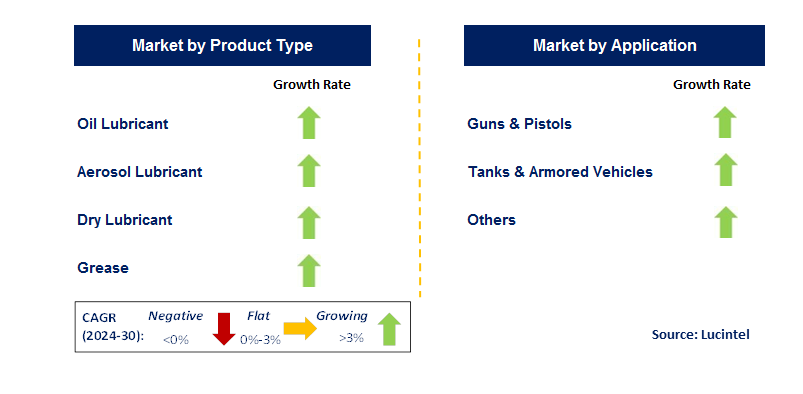
• Lucintel forecasts that, within the product type category, oil lubricant will remain the largest segment over the forecast period due to its excellent performance qualities and accessibility.
• In terms of regions, North America will remain the largest region over the forecast period due to an increase in both military and private firearm ownership in the region.


• Lucas Oil Products
• ITW Rocol
• L&R Ultrasonics
• Amsoil
• MPT Industries
• G96 Products
• Radco Industries
• Pacific Specialty Oils
• Ballistol
• Renewable Lubricants Q6. Which firearm lubricant market segment will be the largest in future? Answer: Lucintel forecasts that oil lubricant will remain the largest segment over the forecast period due to its excellent performance qualities and accessibility. Q7. In firearm lubricant market, which region is expected to be the largest in next 5 years? Answer: North America will remain the largest region over the forecast period due to an increase in both military and private firearm ownership in the region. Q.8 Do we receive customization in this report? Answer: Yes, Lucintel provides 10% customization without any additional cost.


Choose a license that fits your team. Instant PDF delivery.
Prices exclude taxes. Instant delivery. Custom licensing available on request.
Market Report · July 22, 2026
Market Report · July 22, 2026
Market Report · July 22, 2026
Trusted partner for strategic intelligence and business growth


Receive a complimentary market analysis tailored to your industry. Our analysts will identify key growth opportunities and competitive dynamics specific to your business.

Market size, growth rate, and key trend analysis for your specific sector.

Top competitor positioning and market share analysis.

Strategic recommendations backed by data-driven insights.
Get curated market intelligence and competitive moves straight to your inbox.
By subscribing, you agree to receive our monthly insights. Unsubscribe anytime.
Receive a complimentary market analysis tailored to your industry. Our analysts will identify key growth opportunities and competitive dynamics specific to your business.
Market size, growth rate, and key trend analysis for your specific sector.
Top competitor positioning and market share analysis.
Strategic recommendations backed by data-driven insights.
Get curated market intelligence, emerging trends, and competitive moves straight to your inbox each month.
By subscribing, you agree to receive our monthly insights. Unsubscribe anytime.
We'll send your sample report shortly.