
Market Report · July 22, 2026

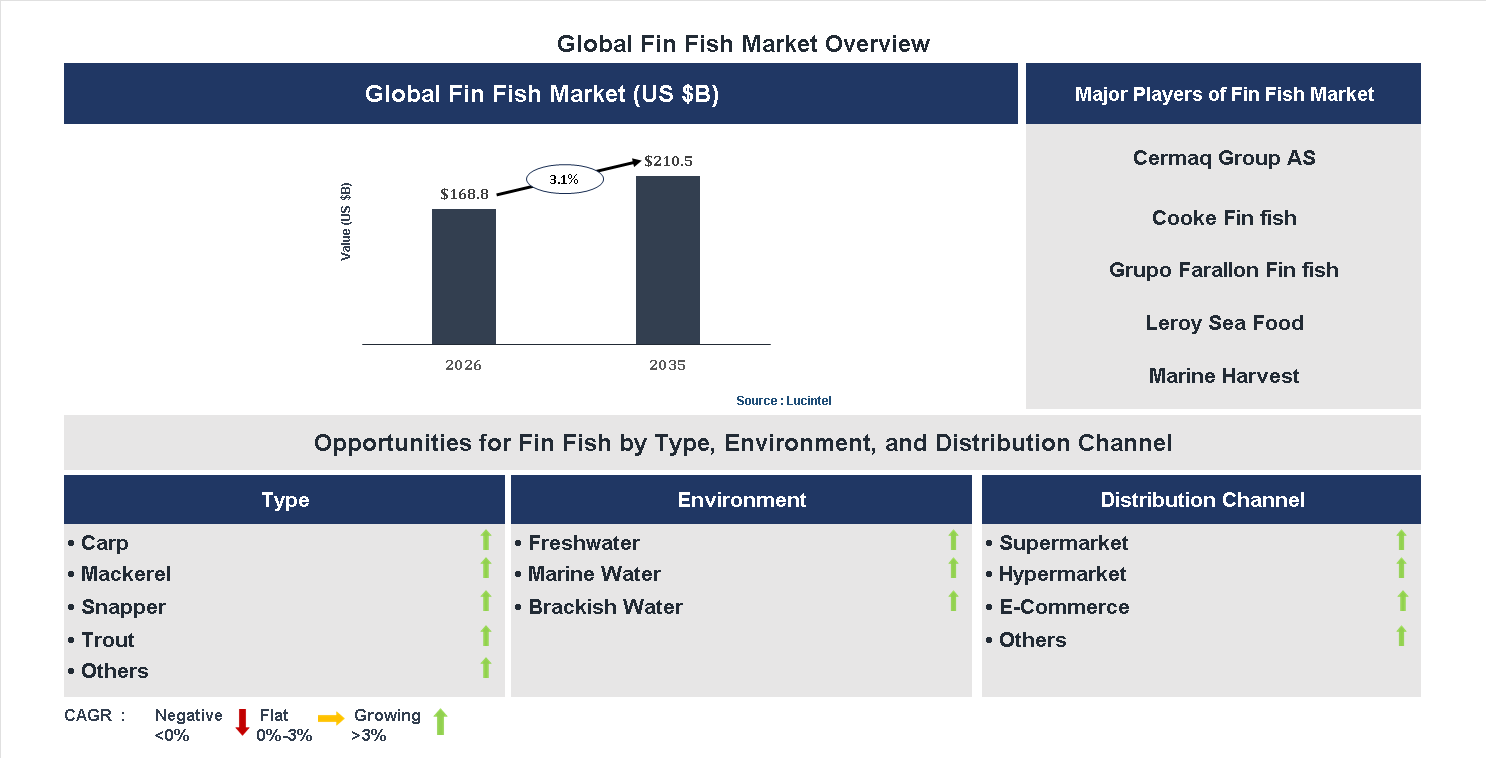
Key data points: The market size in 2035 = $210.5 billion, growth forecast = 3.1% annually for the next 8 years. Scroll below to get more insights. This market report covers trends, opportunities and forecasts in fin fish market to 2035 by type (carp, mackerel, snapper, trout, and others), environment (freshwater, marine water, and brackish water), distribution channel (supermarket, hypermarket, E-commerce, and others), and region (North America, Europe, Asia Pacific, and the Rest of the World)
We'll send your sample report shortly.
• Lucintel forecasts that, within the environment category, freshwater is expected to witness the highest growth over the forecast period.
• Within the distribution channel category, supermarket is expected to witness the highest growth.
• In terms of region, APAC is expected to witness the highest growth over the forecast period. Gain valuable insights for your business decisions with our comprehensive 150+ page report. Sample figures with some insights are shown below.
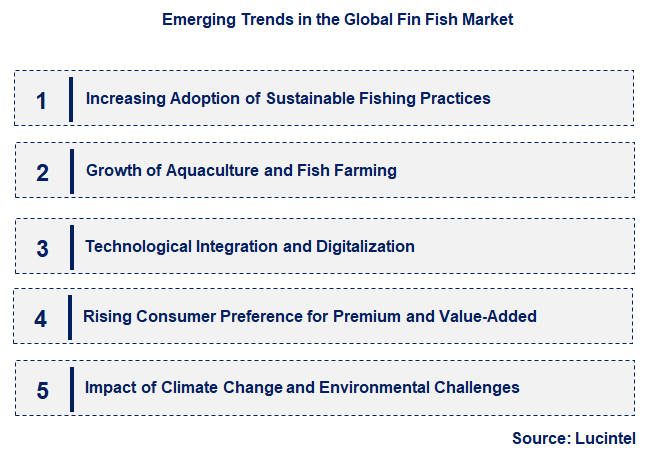
• Increasing Adoption of Sustainable Fishing Practices: This trend emphasizes reducing overfishing and minimizing ecological impact. Governments and organizations are implementing stricter regulations, promoting responsible fishing certifications, and encouraging eco-friendly methods. The shift aims to preserve fish populations and marine ecosystems, ensuring long-term supply stability. Consumers are also more conscious of sustainability, influencing purchasing decisions. As a result, sustainable practices are becoming a market differentiator, fostering trust and loyalty among buyers while supporting environmental conservation efforts.
• Growth of Aquaculture and Fish Farming: Aquaculture is expanding rapidly to meet rising demand for seafood. Innovations in fish farming techniques, such as recirculating systems and integrated multi-trophic aquaculture, improve efficiency and reduce environmental footprint. This trend offers a reliable, year-round supply of fresh fish, alleviating pressure on wild stocks. It also enables customization of fish species and quality, catering to diverse consumer preferences. The growth of aquaculture is reshaping supply chains, creating new opportunities for investors and producers, and contributing to food security globally.
• Technological Integration and Digitalization: The industry is increasingly leveraging technology for better resource management, traceability, and quality control. IoT sensors, blockchain, and data analytics enhance supply chain transparency, ensuring freshness and safety. Digital platforms facilitate direct-to-consumer sales, expanding market reach and reducing intermediaries. Automation in processing and packaging improves efficiency and reduces costs. These technological advancements enable stakeholders to respond swiftly to market demands, improve sustainability practices, and build consumer trust through transparent operations.
• Rising Consumer Preference for Premium and Value-Added Products: Consumers are seeking high-quality, sustainably sourced, and innovative seafood options. This trend drives the development of value-added products such as ready-to-eat, organic, and specialty fish items. Packaging innovations and branding strategies emphasize health benefits and sustainability credentials. The demand for premium products encourages producers to adopt better harvesting and processing techniques, often at higher price points. This shift not only boosts profit margins but also elevates the overall market standard, catering to a more discerning customer base.
• Impact of Climate Change and Environmental Challenges: Climate change affects fish migration patterns, breeding cycles, and habitat conditions, leading to supply fluctuations. Ocean acidification, rising temperatures, and pollution threaten marine biodiversity and fish stocks. Industry players are investing in research and adaptive strategies to mitigate these impacts, such as developing resilient fish species and habitat restoration projects. Addressing environmental challenges is crucial for maintaining sustainable supply chains and meeting regulatory requirements. This trend underscores the importance of environmental stewardship in ensuring the long-term viability of the fin fish market. In summary, these emerging trends are fundamentally reshaping the fin fish market by promoting sustainability, technological innovation, and product diversification. They are fostering a more resilient, transparent, and consumer-focused industry, capable of adapting to environmental and market challenges. As these developments continue, they will drive growth, improve sustainability, and enhance the overall value proposition for stakeholders across the supply chain.
• Growing Consumer Demand for Healthy Protein: Increasing awareness of health benefits associated with fish consumption is boosting demand globally. Consumers are seeking nutritious, omega-rich foods, which drives sales and encourages producers to expand their offerings. This trend supports market growth by opening new avenues for premium and specialty fish products, attracting health-conscious buyers, and fostering innovation in product development. As demand rises, supply chains are adapting to meet the increased consumption, further fueling industry expansion.
• Technological Advancements in Aquaculture: Innovations such as recirculating aquaculture systems (RAS), automation, and genetic improvements are enhancing productivity and sustainability. These technologies reduce environmental impact, improve fish health, and increase yield efficiency. They enable producers to meet rising demand while minimizing resource use and waste. The adoption of such advancements is transforming traditional practices, lowering costs, and improving product quality, which collectively strengthen the market’s resilience and growth potential.
• Expansion of Global Trade and Market Access: International trade agreements and improved logistics are facilitating easier access to new markets for fin fish products. Export opportunities are increasing for producers in emerging regions, boosting revenue streams and encouraging industry expansion. Enhanced market access also promotes diversification of product offerings and price competitiveness. As global trade grows, the industry benefits from increased demand, diversified supply chains, and greater market stability, supporting sustained growth.
• Focus on Sustainability and Eco-Friendly Practices: Environmental concerns are prompting industry players to adopt sustainable fishing and aquaculture practices. Certification schemes, such as MSC and ASC, are gaining importance, influencing consumer choices and market standards. Sustainable practices help preserve fish stocks, reduce ecological footprints, and meet regulatory requirements. This focus enhances brand reputation, attracts eco-conscious consumers, and ensures long-term resource availability, thereby positively impacting market stability and growth prospects.
• Product Diversification and Value Addition: Producers are expanding product portfolios to include processed, frozen, and value-added fish products. This diversification caters to evolving consumer preferences and increases market reach. Value addition, such as packaging innovations and branding, enhances product appeal and profitability. It also enables access to premium markets and supports price premiums. These strategies help industry players adapt to changing demand patterns, increase revenue, and strengthen competitive positioning in the global market. The recent developments in the fin fish market are collectively driving growth, improving sustainability, and expanding global reach. These opportunities are transforming the industry landscape, fostering innovation, and ensuring long-term viability. As a result, the market is poised for significant expansion, increased competitiveness, and enhanced resilience against environmental and economic challenges.
• Growing Demand for Healthy Protein Sources: The increasing consumer focus on health and wellness is driving demand for fin fish as a lean, nutrient-rich protein option. This trend is supported by rising awareness of the benefits of omega-3 fatty acids and other essential nutrients found in fin fish. As a result, retail and foodservice sectors are expanding their offerings, creating opportunities for suppliers to innovate with new species and product formats. This shift is expected to sustain long-term growth in the market.
• Expansion of Aquaculture for Sustainable Supply: Aquaculture is becoming a key driver of fin fish supply, reducing pressure on wild stocks and enabling consistent availability. Advances in farming techniques, feed efficiency, and disease management are improving yields and sustainability. Governments and industry stakeholders are investing in aquaculture infrastructure, fostering innovation in breeding and farming practices. This expansion offers opportunities for market players to meet rising demand while adhering to environmental standards, ensuring a stable supply chain.
• Technological Innovations Enhancing Fish Processing and Preservation: Innovations in processing, freezing, and packaging technologies are extending shelf life and maintaining fish quality. Automation and smart logistics improve efficiency and reduce waste, enabling wider distribution. These advancements open avenues for premium product development, value-added processing, and export expansion. Companies investing in such technologies can differentiate their offerings, meet consumer expectations for freshness, and tap into new markets, fueling overall market growth.
• Increasing Focus on Sustainable and Responsible Fishing Practices: Consumers and regulators are emphasizing sustainability, prompting industry players to adopt responsible fishing methods. Certification schemes like MSC and ASC are gaining prominence, influencing purchasing decisions. Sustainable practices reduce environmental impact and improve brand reputation, creating competitive advantages. This focus encourages innovation in traceability, eco-labeling, and sustainable sourcing, which can open new market segments and foster consumer trust, ultimately supporting market expansion.
• Rising Adoption of E-commerce and Digital Platforms for Fish Sales: The digital transformation is reshaping distribution channels, with e-commerce platforms enabling direct-to-consumer sales. Online platforms facilitate wider reach, convenience, and transparency, appealing to modern consumers. This trend allows suppliers to bypass traditional retail constraints, expand geographically, and offer customized products. Investment in digital marketing, logistics, and supply chain management is crucial for capturing this growth opportunity, which is expected to significantly boost market penetration and sales volume. The overall impact of these opportunities is a dynamic, resilient fin fish market poised for sustained growth. Innovation, sustainability, and digitalization are key drivers that will shape future market trajectories, offering lucrative prospects for industry stakeholders committed to adapting and evolving with consumer and environmental demands.
• Technological Advancements: Innovation in aquaculture techniques and fish farming equipment has significantly increased production efficiency, reduced costs, and improved fish quality. These advancements enable farmers to meet rising global demand sustainably and efficiently, fostering market growth. Automation, feed optimization, and disease management technologies further enhance productivity, making fin fish farming more viable and scalable. As technology continues to evolve, it will likely open new avenues for sustainable expansion and diversification within the market.
• Rising Global Demand: Increasing consumer awareness about health benefits and the growing preference for seafood as a protein source are driving demand for fin fish worldwide. Urbanization and changing dietary habits contribute to higher consumption levels, especially in developing countries. This surge in demand encourages producers to expand their operations and invest in sustainable practices to meet market needs, thereby fueling overall market growth.
• Export Opportunities and International Trade: Countries with abundant fish resources are capitalizing on export opportunities to meet global demand. Trade agreements and tariffs influence market access, enabling regions to expand their reach. The ability to export fin fish to international markets provides significant revenue streams for producers and encourages investments in infrastructure, quality standards, and sustainable practices, further boosting the market.
• Environmental and Sustainability Initiatives: Growing awareness of overfishing and environmental degradation has led to stricter regulations and sustainability initiatives. These efforts promote responsible fishing practices, aquaculture certification, and eco-friendly farming methods. Such initiatives help maintain fish populations and ensure long-term market viability, attracting environmentally conscious consumers and investors, thus positively impacting the market. The challenges in the fin fish market are:
• Regulatory and Policy Constraints: Stringent regulations aimed at sustainable fishing and environmental protection can restrict fishing quotas, licensing, and operational practices. Compliance costs increase for producers, and regulatory uncertainties may hinder market expansion. Navigating diverse international policies adds complexity, potentially limiting growth opportunities and creating barriers for new entrants.
• Environmental Concerns and Climate Change: Climate change impacts, such as rising sea temperatures, ocean acidification, and habitat destruction, threaten fish populations and disrupt ecosystems. These environmental challenges can lead to reduced fish stocks, affecting supply stability and increasing production costs. Addressing these issues requires significant investment in adaptive practices, which may strain resources and impact profitability.
• Disease Outbreaks and Biosecurity Risks: Fish farms are vulnerable to disease outbreaks that can decimate stocks and cause substantial economic losses. Maintaining biosecurity measures is costly and complex, especially across large-scale operations. Disease management challenges can disrupt supply chains, reduce product quality, and undermine consumer confidence, posing a persistent threat to market stability. In summary, the fin fish market is shaped by technological innovations, rising global demand, and favorable trade opportunities, which drive growth and expansion. However, regulatory constraints, environmental challenges, and disease risks present significant hurdles that could impede progress. The interplay of these drivers and challenges determines the markets trajectory, requiring stakeholders to adopt sustainable, innovative, and adaptive strategies. Successfully navigating these factors will be crucial for ensuring long-term growth, environmental sustainability, and market resilience in the evolving landscape of the fin fish industry.
• Cermaq Group AS
• Cooke Fin fish
• Grupo Farallon Fin fish
• Leroy Sea Food
• Marine Harvest
• P/F Bakkafrost
• Selonda Fin fish
• Stolt Sea Farm
• Tassal
• Thai Union Group
• Carp
• Mackerel
• Snapper
• Trout
• Others
• Freshwater
• Marine Water
• Brackish Water
• Supermarket
• Hypermarket
• E-Commerce
• Others
• North America
• Europe
• Asia Pacific
• The Rest of the World
• United States: The US fin fish market has seen increased investment in sustainable aquaculture practices and technology-driven supply chain improvements. Consumer demand for organic and locally sourced fish has grown, prompting regulatory updates to ensure environmental protection. Innovations in fish farming, such as recirculating aquaculture systems, are gaining traction, reducing environmental impact. The US also emphasizes seafood traceability and certification standards to meet consumer expectations and international trade requirements.
• China: China remains the worlds largest producer and consumer of fin fish, with rapid expansion in aquaculture capacity. Recent developments include the adoption of advanced breeding techniques and disease management practices to boost productivity. The government has implemented policies promoting sustainable aquaculture and reducing overfishing. Additionally, China is investing in processing infrastructure to increase export quality and meet global standards, positioning itself as a key player in the international fin fish market.
• Germany: Germany’s fin fish market is characterized by a focus on sustainability and high-quality products. The country has increased its import of sustainably farmed fish and emphasizes eco-labeling to appeal to environmentally conscious consumers. Innovations in cold chain logistics ensure freshness and reduce waste. Germany also promotes responsible fishing practices and supports research into alternative feed sources to minimize environmental impact, aligning with broader European Union sustainability goals.
• India: India’s fin fish market is rapidly growing, driven by increased aquaculture activities and government initiatives to boost fish production. Recent developments include the adoption of modern farming techniques, such as integrated multi-trophic aquaculture, and improved disease management. The government’s focus on export promotion and infrastructure development has expanded market access. Additionally, India is investing in research to enhance fish breeding and feed efficiency, aiming to meet domestic demand and increase exports.
• Japan: Japan’s fin fish industry continues to innovate with a focus on sustainability and technological integration. The country emphasizes the cultivation of high-value species like yellowtail and tuna using eco-friendly methods. Recent advancements include the use of aquaponics and smart farming technologies to optimize production. Japan also invests in research to develop sustainable feed options and reduce environmental impact, maintaining its reputation for high-quality seafood and catering to both domestic and international markets.


• Cermaq Group AS
• Cooke Fin fish
• Grupo Farallon Fin fish
• Leroy Sea Food
• Marine Harvest
• P/F Bakkafrost
• Selonda Fin fish
• Stolt Sea Farm
• Tassal
• Thai Union Group Q6. Which fin fish market segment will be the largest in future? Answer: Lucintel forecasts that, within the environment category, freshwater is expected to witness the highest growth over the forecast period. Q7. In fin fish market, which region is expected to be the largest in next 5 years? Answer: In terms of region, APAC is expected to witness the highest growth over the forecast period. Q8. Do we receive customization in this report? Answer: Yes, Lucintel provides 10% customization without any additional cost.


Choose a license that fits your team. Instant PDF delivery.
Prices exclude taxes. Instant delivery. Custom licensing available on request.
Market Report · July 22, 2026
Market Report · July 22, 2026
Market Report · July 22, 2026
Trusted partner for strategic intelligence and business growth


Receive a complimentary market analysis tailored to your industry. Our analysts will identify key growth opportunities and competitive dynamics specific to your business.

Market size, growth rate, and key trend analysis for your specific sector.

Top competitor positioning and market share analysis.

Strategic recommendations backed by data-driven insights.
Get curated market intelligence and competitive moves straight to your inbox.
By subscribing, you agree to receive our monthly insights. Unsubscribe anytime.
Receive a complimentary market analysis tailored to your industry. Our analysts will identify key growth opportunities and competitive dynamics specific to your business.
Market size, growth rate, and key trend analysis for your specific sector.
Top competitor positioning and market share analysis.
Strategic recommendations backed by data-driven insights.
Get curated market intelligence, emerging trends, and competitive moves straight to your inbox each month.
By subscribing, you agree to receive our monthly insights. Unsubscribe anytime.
We'll send your sample report shortly.