
Market Report · July 31, 2026

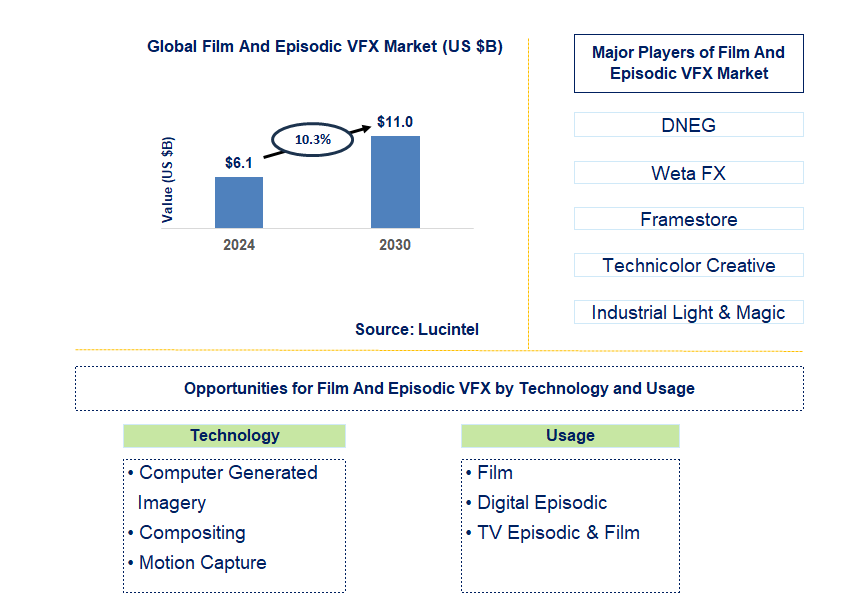
Key data points: The market size in 2030 = $11 billion, growth forecast = 10.3% annually for the next 6 years. Scroll below to get more insights. This market report covers trends, opportunities, and forecasts in the global film and episodic vfx market to 2030 by technology (computer generated imagery, compositing, and motion capture), usage (film, digital episodic, and TV episodic & film), and region (North America, Europe, Asia Pacific, and the Rest of the World)
We'll send your sample report shortly.
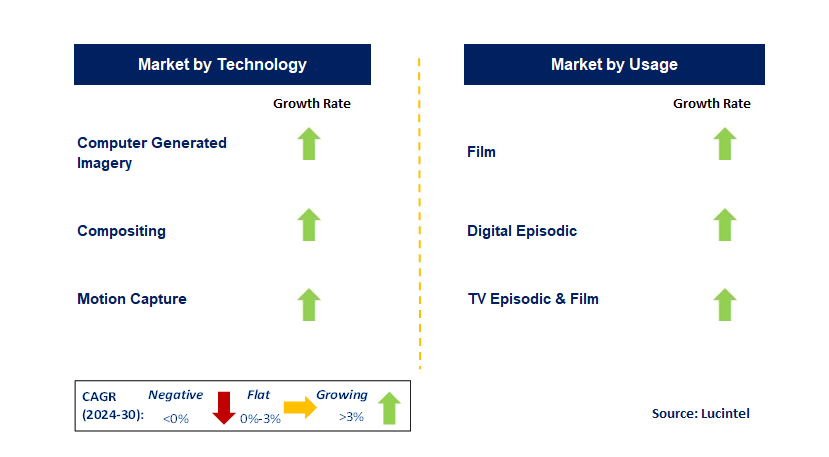
• Lucintel forecasts that, within the technology category, computer generated imagery will remain the largest segment over the forecast period due to the fact that it is applied in all areas of learning and education.
• Within the usage category, film will remain the largest segment due to growth in the popularity and development of computer-generated imagery.
• In terms of region, North America will remain the largest region over the forecast period due to high rate of regional adoption of iOS and android smartphones. Gain valuable insights for your business decisions with our comprehensive 150+ page report.
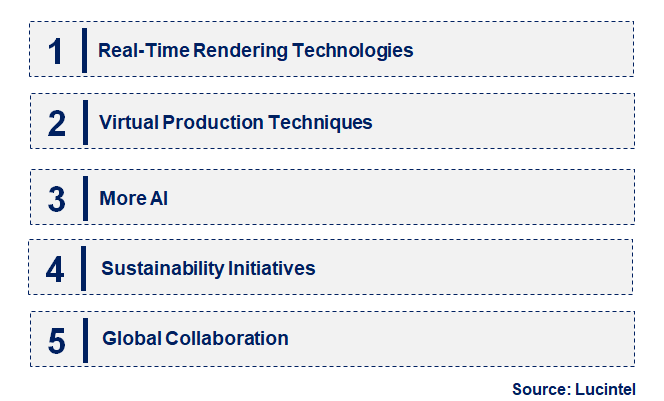
• Real-Time Rendering Technologies: Real-time rendering technologies like Unreal Engine can be used to visualize scenes in real time. This enhances production speed and gives directors greater creative freedom to suggest on-the-fly changes during filming.
• Virtual Production Techniques: Virtual production, using LED screens for immersive backgrounds, is transforming how scenes are filmed and approaches to filmmaking. This technique improves the integration of live acting and digital space, creating more fluid storytelling.
• More AI: Artificial intelligence is being applied to automate and simplify various steps of VFX, from monotonous tasks to enhancing animation quality. AI tools allow artists to focus on creative pursuits rather than technical problems.
• Sustainability Initiatives: The increasing environmental concerns have created a demand for sustainable practices across the board, even in VFX studios. Whether through using energy-efficient technology or minimizing waste during production, sustainability is quickly becoming the norm. This aligns with a global trend toward reducing the carbon footprint in the industry.
• Global Collaboration: Remote work has increased inter-studio collaboration around the world. As talent spreads widely along with a plethora of ideas, this trend enhances creativity and allows for better quality outputs. The trends mentioned are significantly changing the landscape of the Film and Episodic VFX market and driving new innovations to create and manage productions.
• Increased adoption of real-time rendering technologies by studios: Studios' dependency on real-time rendering technologies, like Unreal Engine, permits faster visualization of scenes through quick rendering, allowing filmmakers to make real-time changes and enhance creative decision-making.
• Virtual Production Increase: The growing popularity of virtual production techniques, such as LED volumes, enables filmmakers to produce immersive environments while emphasizing the quality of storytelling and minimizing the need for post-production work.
• Integration with AI Tools: AI has become a vital component in the VFX workflow with tailor-made tools dedicated to automating rotoscoping and tracking processes. This accelerates workflows and encourages artists to focus on more creative aspects of their work, ultimately raising the quality of output.
• Focus on Sustainable Practices: Sustainability has been emphasized in the VFX space. Studios are implementing environmentally friendly technologies and practices not only for environmental reasons but also to attract conscious audiences.
• Cross-Border Collaboration: Since the film industry is global in nature, international collaborations have gained significant importance. These cross-border arrangements enable knowledge sharing and skill building, thus enhancing the quality and creativity associated with VFX products in various markets. These trends improve quality, efficiency, and sustainability in the Film and Episodic VFX market.
• Streaming Services: Streaming services offer expansive growth for VFX studios. There are numerous opportunities in the production and creation of content for these services, with high-quality visual effects being at an all-time high for both creators and their audiences.
• Animated Content: With the growing popularity of animation, large opportunities arise for VFX in animated movies and series. Studios can utilize complex VFX techniques to enhance storytelling and visually appealing aspects, capturing larger audiences.
• Gaming Industry: The borderlines between film and gaming can bring significant VFX business opportunities for professionals in the medium. As video games become more cinematic, studios can offer VFX to make watching stories on screens more engaging.
• Virtual and Augmented Reality: Increasing applications of VR and AR in entertainment can open new avenues for VFX. Studios can create immersive experiences that intertwine storytelling with elements of interactivity to appeal to tech-savvy audiences.
• International Co-Productions: Collaboration with international studios can improve creative capabilities and expand markets by providing access to better resources and expertise, thereby innovating and upgrading production quality. These growth prospects represent potential for innovation and expansion within the Film and Episodic VFX market, adapting to ever-changing demands from consumers.
• Technological Advancements: Efficiency and ingenuity are sustained through VFX software and hardware development. Advances in rendering capabilities and computing power allow studios to generate complex effects with stunning visuals that were previously impossible.
• Growing Demand for Content: Streaming generates significant demand for content, compelling studios to invest in VFX to meet audience expectations for immersive experiences.
• Globalization of Film Production: The international nature of film production allows different countries to share their talents, resulting in quality VFX output. This globalization opens new markets for studios.
• Increased Investment in VFX: More studios are realizing that VFX is essential and are increasing their budgets to accommodate it. Investments in this area allow studios to benefit from leading technologies and top talent.
• Audience Expectations: Audiences today expect high-quality visual effects in movies and series. This demand drives studios to continuously innovate and improve their VFX capabilities to remain competitive. Challenges in the film and episodic VFX market include:
• High Production Costs: The costs of modern VFX tools and skilled professionals are high, which is particularly challenging for smaller studios. Achieving quality within budget is a significant hurdle.
• Skill Gaps: With exponential growth, there is a substantial gap in the required skills. Recruitment and talent retention are becoming increasingly difficult, complicating timelines and quality for productions.
• Intellectual Property Complexity: International collaborations create complexities in intellectual property rights. Accurate crediting and compensation for all VFX work are essential to maintain the industry's integrity. The drivers of the film and episodic VFX market include technological advancements and growing demand for content. However, challenges such as high production costs and skill shortages require careful navigation to ensure success.
• DNEG
• Weta FX
• Framestore
• Technicolor Creative Studios
• Industrial Light & Magic
• Computer Generated Imagery
• Compositing
• Motion Capture
• Film
• Digital Episodic
• TV Episodic & Film
• North America
• Europe
• Asia Pacific
• The Rest of the World
• United States: The VFX market continues to be strong in the U.S. due to major studios and streaming platforms such as Netflix and Disney. Recent trends include real-time rendering technologies that help production become faster and more interactive. Virtual production techniques, such as LED volume screens, create options for immersive environments that seamlessly merge live-action and digital elements and have become incredibly popular. At the same time, diversity and inclusion in storytelling have pushed studio heads to seek VFX talent from a broader pool of backgrounds.
• China: The domestic film industry is booming in China, with capital investments in technology continuing to rise. Local studios are embracing cutting-edge VFX techniques, with a strong focus on animation and CGI for a younger audience. Partnerships with global studios improve the quality of Chinese films while expanding their global market reach. Additionally, the government supports the creative industry by encouraging the innovation and development of locally produced VFX tools and software to compete directly with Hollywood.
• Germany: Germany is increasingly becoming an important VFX hub in Europe, known for highly skilled craftsmanship and artistic vision in production work. There has been a nationwide investment in training programs for artists in the VFX field, particularly regarding new technologies such as AR and VR integration. German studios are increasingly involved in international co-productions, facilitating cross-border talent exchange and knowledge sharing. Production processes are becoming more sustainable, promoting studios to opt for eco-friendly VFX solutions that mitigate adverse environmental effects.
• India: The VFX industry in India is growing rapidly, driven by the rise of OTT platforms and regional films. As production increases, so does the number of studios producing VFX not only for local Bollywood films but also for foreign clients. Recent investments focus on reskilling and training VFX professionals, coupled with collaborations with foreign studios to enhance technological capabilities. The growing demand for visual effects in Indian regional cinema also presents new opportunities for innovation and creativity.
• Japan: The VFX industry in Japan maintains a unique balance of conventionally created artworks combined with cutting-edge technology. Recent advancements include the use of AI and machine learning to introduce greater sophistication in animation and post-production. Japanese studios are also heavily partnering with global counterparts, particularly in the anime and gaming markets, to meet international audience demands. Storytelling and character development remain priorities; VFX enhances the visual appeal of such narratives.


• DNEG
• Weta FX
• Framestore
• Technicolor Creative Studios
• Industrial Light & Magic Q6. Which film and episodic VFX market segment will be the largest in future? Answer: Lucintel forecasts that computer generated imagery will remain the largest segment over the forecast period due to the fact that it is applied in all areas of learning and education. Q7. In film and episodic VFX market, which region is expected to be the largest in next 6 years? Answer: North America will remain the largest region over the forecast period due to high rate of regional adoption of iOS and android smartphones. Q.8 Do we receive customization in this report? Answer: Yes, Lucintel provides 10% customization without any additional cost.


Choose a license that fits your team. Instant PDF delivery.
Prices exclude taxes. Instant delivery. Custom licensing available on request.
Market Report · July 31, 2026
Market Report · July 31, 2026
Market Report · July 31, 2026
Trusted partner for strategic intelligence and business growth


Receive a complimentary market analysis tailored to your industry. Our analysts will identify key growth opportunities and competitive dynamics specific to your business.

Market size, growth rate, and key trend analysis for your specific sector.

Top competitor positioning and market share analysis.

Strategic recommendations backed by data-driven insights.
Get curated market intelligence and competitive moves straight to your inbox.
By subscribing, you agree to receive our monthly insights. Unsubscribe anytime.
Receive a complimentary market analysis tailored to your industry. Our analysts will identify key growth opportunities and competitive dynamics specific to your business.
Market size, growth rate, and key trend analysis for your specific sector.
Top competitor positioning and market share analysis.
Strategic recommendations backed by data-driven insights.
Get curated market intelligence, emerging trends, and competitive moves straight to your inbox each month.
By subscribing, you agree to receive our monthly insights. Unsubscribe anytime.
We'll send your sample report shortly.