
Market Report · July 29, 2026

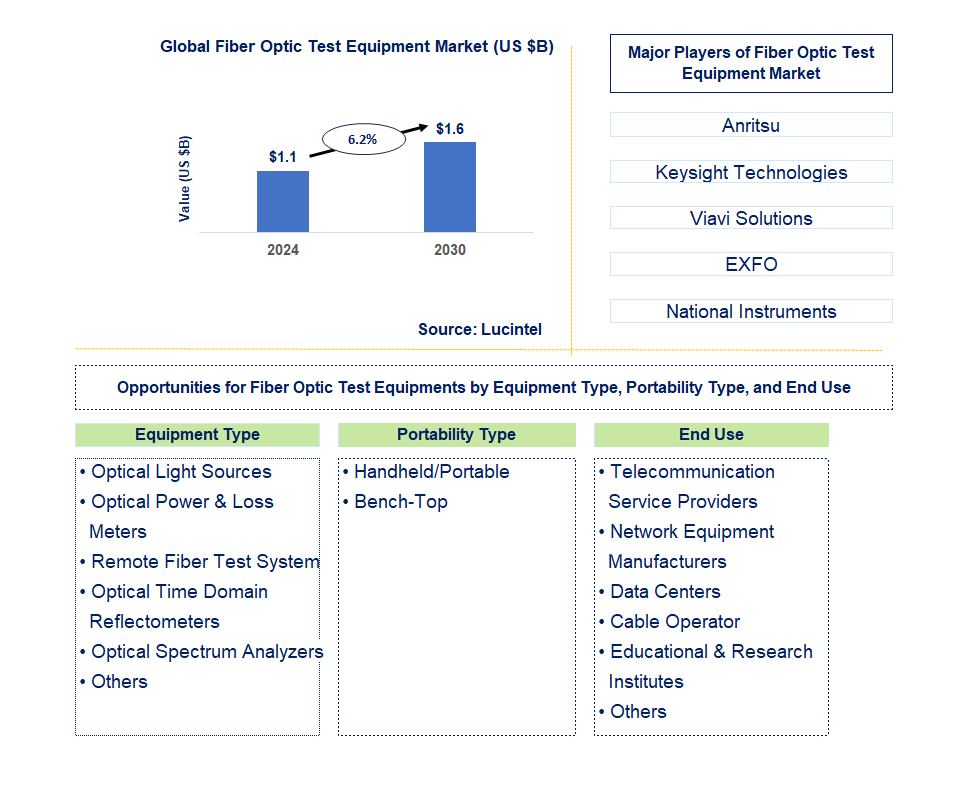
Key data points: The market size in 2030 = $1.6 billion, growth forecast = 6.2% annually for the next 6 years. Scroll below to get more insights. This market report covers trends, opportunities, and forecasts in the global fiber optic test equipment market to 2030 by equipment type (optical light sources, optical power & loss meters, remote fiber test systems, optical time domain reflectometers, optical spectrum analyzers, and others), portability type (handheld/portable and bench-top), end use (telecommunication service providers, network equipment manufacturers, data centers, cable operator, educational & research institutes, and others), and region (North America, Europe, Asia Pacific, and the Rest of the World)
We'll send your sample report shortly.
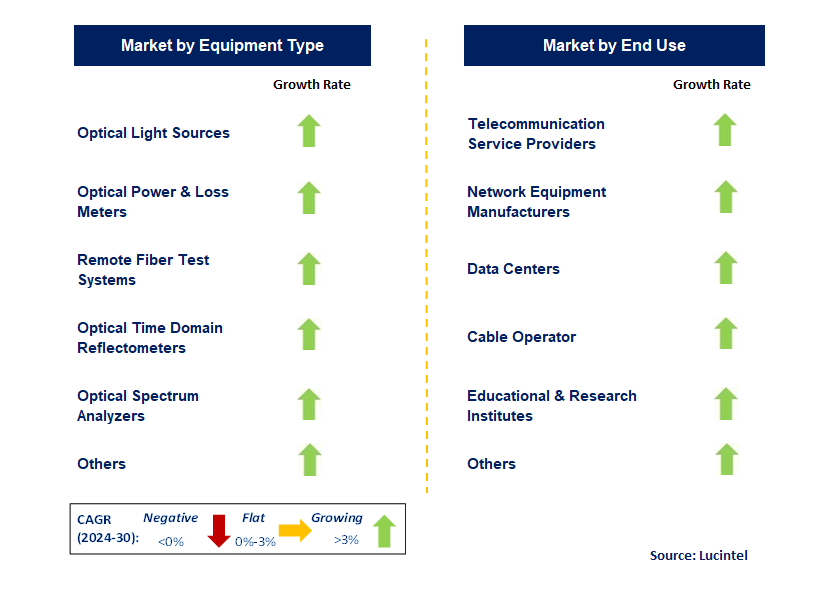
• Lucintel forecasts that, within the equipment type category, the optical time domain reflectometer will remain the largest segment over the forecast period.
• Within the end use category, data center is expected to witness the highest growth over the forecast period.
• In terms of regions, North America will remain the largest region over the forecast period. Gain valuable insights for your business decisions with our comprehensive 150+ page report.
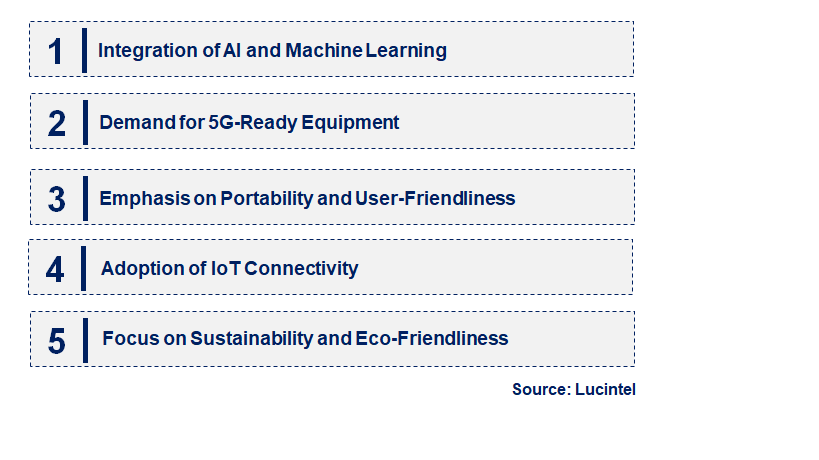
• Integration of AI and Machine Learning: The incorporation of AI and machine learning technologies into fiber optic test equipment is revolutionizing diagnostics and performance monitoring. AI algorithms analyze historical data to predict potential failures and optimize testing processes. This capability allows for proactive maintenance, reducing downtime and enhancing network reliability. As fiber networks grow in complexity, the need for intelligent testing solutions becomes essential, making AI integration a key trend in the market.
• Demand for 5G-Ready Equipment: The global rollout of 5G technology is significantly impacting the fiber optic test equipment market. With higher data rates and lower latency requirements, testing solutions must evolve to accommodate new standards. Manufacturers are developing advanced testing equipment specifically designed for 5G infrastructure, focusing on enhanced accuracy and speed. This trend underscores the necessity for robust testing solutions that can handle increased bandwidth demands associated with next-generation networks.
• Emphasis on Portability and User-Friendliness: There is a growing demand for portable and user-friendly fiber optic test equipment, driven by the need for field testing and maintenance. Technicians require lightweight devices that are easy to operate in various environments. Manufacturers are responding by creating compact, intuitive testing solutions with streamlined interfaces. This trend improves the efficiency of testing processes and enhances the user experience, enabling technicians to perform tests quickly and accurately on-site.
• Adoption of IoT Connectivity: The integration of Internet of Things (IoT) technology into fiber optic test equipment is facilitating real-time monitoring and data collection. IoT-enabled devices can connect to centralized systems, providing immediate access to testing data and analytics. This connectivity enhances decision-making processes and allows for timely responses to network issues. As the market moves towards more interconnected systems, the adoption of IoT in testing equipment is becoming increasingly important for efficient network management.
• Focus on Sustainability and Eco-Friendliness: Sustainability is becoming a central theme in the development of fiber optic test equipment. Manufacturers are prioritizing eco-friendly materials and energy-efficient designs in their products. Additionally, many companies are implementing recycling programs for outdated equipment. This trend reflects growing awareness of environmental issues and the importance of responsible manufacturing practices. By focusing on sustainability, companies contribute to global environmental goals and appeal to customers who prioritize eco-conscious solutions. These emerging trends in the fiber optic test equipment market highlight the industry's response to technological advancements and evolving user needs. From AI integration and 5G readiness to a focus on portability and sustainability, these trends are essential for enhancing the performance and reliability of fiber optic networks. As the market continues to grow, adapting to these trends will be crucial for manufacturers aiming to maintain competitiveness and meet the demands of an increasingly complex telecommunications landscape.
• AI-Powered Testing Solutions: Recent innovations have introduced AI-powered testing solutions that enhance diagnostic capabilities and optimize performance monitoring. These systems leverage machine learning algorithms to analyze data trends, predict potential network failures, and recommend maintenance actions. By automating complex analysis processes, AI-powered tools improve the accuracy and efficiency of fiber optic testing. This development is particularly crucial as networks grow in complexity, helping technicians make informed decisions quickly.
• 5G-Ready Testing Equipment: The transition to 5G technology has prompted manufacturers to develop specialized fiber optic test equipment tailored for 5G infrastructure. These advanced tools are designed to handle increased data rates and lower latency requirements associated with 5G networks. Enhanced testing capabilities, such as higher accuracy and faster processing times, are essential for ensuring network reliability and performance. This development meets current market demands and positions companies for future technological advancements.
• Increased Portability and User-Friendliness: Manufacturers are focusing on creating portable and user-friendly fiber optic test equipment. Compact designs and intuitive interfaces make it easier for technicians to conduct field tests and maintenance. Devices that are lightweight and easy to operate reduce training time and improve efficiency in various environments. This trend reflects the industry's need for adaptable solutions that can keep pace with on-site demands and enhance user experience.
• Integration of IoT Technology: The integration of Internet of Things (IoT) technology into fiber optic test equipment is enabling real-time monitoring and data analytics. IoT-enabled devices can connect to centralized platforms, allowing technicians to access testing data instantly and make informed decisions. This connectivity facilitates proactive maintenance strategies, reduces response times to issues, and enhances overall network management. The rise of IoT in testing equipment represents a shift towards smarter, more interconnected solutions.
• Emphasis on Sustainability: Sustainability is increasingly becoming a priority in the fiber optic test equipment market. Companies are adopting eco-friendly materials and energy-efficient designs, reflecting a commitment to environmental responsibility. Many manufacturers are implementing recycling programs for outdated equipment to minimize waste. This trend aligns with global sustainability goals and appeals to customers who prioritize environmentally conscious practices. The focus on sustainability is expected to shape future product development and corporate strategies. These recent developments in the fiber optic test equipment market highlight the ongoing evolution of the industry in response to technological advancements and user demands. From AI integration and 5G readiness to a strong emphasis on portability and sustainability, these trends are crucial for enhancing network performance and reliability. As the market continues to grow, these innovations will play a significant role in shaping the future of fiber optic testing solutions.
• Telecommunications Expansion: The ongoing expansion of telecommunications infrastructure, particularly with the rollout of 5G networks, presents a significant growth opportunity. Telecom companies require advanced fiber optic test equipment to ensure the performance and reliability of their networks. This demand is heightened by the need for efficient troubleshooting and maintenance solutions. Manufacturers can capitalize on this opportunity by developing cutting-edge testing tools tailored for high-frequency signals and low latency, thus positioning themselves as key partners in the telecom industry's transformation.
• Data Center Optimization: Data centers are experiencing unprecedented growth driven by the rise of cloud computing and data storage needs. As these facilities expand, the demand for efficient fiber optic testing solutions increases to ensure optimal data flow and connectivity. Growth opportunities lie in providing innovative testing equipment that supports high bandwidth and low attenuation. Companies can focus on developing integrated testing solutions that offer real-time monitoring and analytics, enhancing overall data center performance and reducing operational costs.
• Aerospace and Defense Applications: The aerospace and defense sectors are increasingly utilizing fiber optic technology for communication, sensing, and monitoring systems. This presents a unique opportunity for fiber optic test equipment manufacturers to cater to the stringent requirements of these industries. Opportunities include developing ruggedized testing solutions capable of operating in extreme conditions, along with compliance with industry standards. Targeting this market segment can yield substantial returns, given the critical nature of reliability and performance in aerospace applications.
• Healthcare Innovations: The healthcare industry is leveraging fiber optics for various applications, including medical imaging, diagnostics, and therapeutic equipment. This trend opens avenues for specialized fiber optic test equipment designed to ensure the integrity and performance of medical devices. Opportunities exist to create testing solutions that comply with regulatory standards while offering advanced functionalities. By focusing on healthcare, companies can contribute to the development of innovative solutions that improve patient care and operational efficiency.
• Smart Cities and IoT Integration: The rise of smart cities and the Internet of Things (IoT) creates significant demand for fiber optic connectivity and testing solutions. As cities adopt smart technologies, the need for reliable fiber optic networks grows, necessitating effective testing to maintain connectivity. Companies can develop testing equipment that integrates seamlessly with IoT platforms, enabling real-time data analytics and network management. Focusing on this sector allows manufacturers to position themselves as leaders in supporting the infrastructure of future smart cities. The fiber optic test equipment market offers numerous strategic growth opportunities across various applications. By targeting sectors such as telecommunications, data centers, aerospace, healthcare, and smart cities, manufacturers can position themselves to meet the evolving demands of the market. As technology advances, the focus on innovative, reliable, and efficient testing solutions will drive the future growth of this sector.
• Rising Demand for High-Speed Internet: The global demand for high-speed internet connectivity is driving the fiber optic test equipment market. With the rollout of 5G networks and increasing data consumption, service providers require reliable testing solutions to ensure optimal network performance. This demand is amplified by the transition to cloud computing and online services, necessitating advanced fiber optic technologies. Manufacturers who innovate and provide equipment that meets these evolving standards are well-positioned to capture significant market share.
• Growth of Data Centers: The proliferation of data centers, fueled by the rise of cloud computing and big data analytics, is a significant driver of the fiber optic test equipment market. As these facilities expand, the need for efficient testing solutions to ensure seamless connectivity and data flow increases. Data centers require precise and reliable testing to maintain optimal performance, leading to opportunities for manufacturers to develop advanced equipment tailored to this sector.
• Technological Advancements: Rapid advancements in fiber optic technologies, such as improved testing methods and enhanced measurement capabilities, are propelling market growth. Innovations like Optical Time Domain Reflectometers (OTDRs) and advanced light sources enable more efficient and accurate testing. As technology evolves, there is a growing demand for equipment that can support higher bandwidths and faster data rates, providing manufacturers with opportunities to introduce state-of-the-art solutions.
• Increasing Adoption of IoT: The rise of the Internet of Things (IoT) necessitates robust fiber optic networks for reliable data transmission. As smart devices proliferate, the demand for fiber optic testing equipment that can ensure connectivity and performance increases. Manufacturers can capitalize on this trend by developing solutions that cater specifically to the needs of IoT applications, thereby expanding their market reach and enhancing their product offerings.
• Regulatory Compliance Requirements: Regulatory standards concerning network performance and safety are becoming increasingly stringent. Companies are required to ensure their fiber optic networks meet these regulations, driving the demand for reliable testing equipment. Manufacturers that can provide equipment that not only meets but exceeds regulatory standards will have a competitive edge in the market, as they can assure clients of compliance and safety. Challenges in the fiber optic test equipment market are:
• Rapid Technological Changes: The fast pace of technological advancements poses a challenge for manufacturers in the fiber optic test equipment market. Companies must continually innovate and update their products to keep pace with new technologies and market demands. This necessitates significant investment in research and development, which can strain resources, particularly for smaller players. Failure to adapt quickly can result in loss of market share and competitive disadvantage.
• High Initial Costs: The initial investment required for fiber optic test equipment can be substantial, posing a barrier to entry for some companies, particularly in emerging markets. High costs may deter smaller service providers from adopting advanced testing solutions, limiting market growth. Additionally, existing companies may hesitate to upgrade their equipment, impacting the overall demand for new technologies. Manufacturers need to explore cost-effective solutions to encourage broader adoption.
• Skill Gaps in Workforce: As fiber optic technologies become more sophisticated, the need for skilled technicians and engineers to operate testing equipment has increased. However, there is often a shortage of qualified personnel, which can hinder effective implementation and usage of fiber optic test solutions. Companies may face challenges in training their workforce, which can impact operational efficiency and the overall quality of service. Addressing this skill gap is crucial for sustained growth in the market. The fiber optic test equipment market is driven by a combination of increasing demand for high-speed connectivity, technological advancements, and regulatory requirements. However, challenges such as rapid technological changes, high initial costs, and skill gaps pose significant hurdles. To thrive, market players must navigate these dynamics effectively, leveraging opportunities while addressing the associated challenges.
• Anritsu
• Keysight Technologies
• Viavi Solutions
• EXFO
• National Instruments
• Optical Light Sources
• Optical Power & Loss Meters
• Remote Fiber Test Systems
• Optical Time Domain Reflectometers
• Optical Spectrum Analyzers
• Others
• Handheld/Portable
• Bench-Top
• Telecommunication Service Providers
• Network Equipment Manufacturers
• Data Centers
• Cable Operator
• Educational & Research Institutes
• Others
• North America
• Europe
• Asia Pacific
• The Rest of the World
• United States: In the United States, the fiber optic test equipment market has seen robust growth fueled by the expansion of 5G networks and increasing investments in broadband infrastructure. Manufacturers are introducing advanced optical time-domain reflectometers (OTDRs) that provide faster testing and improved accuracy. The integration of AI-driven analytics in test equipment has enhanced diagnostic capabilities, allowing for predictive maintenance and efficient network management. Furthermore, regulatory support for broadband expansion has accelerated the adoption of fiber optic solutions, solidifying the U.S. position as a leader in this market.
• China: China continues to dominate the fiber optic test equipment market, driven by its vast telecommunications sector and the rapid rollout of 5G technology. Recent developments include the introduction of highly automated test systems that streamline installation and maintenance processes. The country is also focusing on R&D to develop next-generation test equipment that can handle the complexities of advanced fiber networks. Additionally, government initiatives to enhance digital infrastructure have spurred investments in fiber optics, leading to increased demand for testing solutions that ensure optimal performance and reliability.
• Germany: Germany's fiber optic test equipment market is advancing due to a strong emphasis on quality and precision. Manufacturers are adopting innovative technologies to enhance the efficiency of fiber testing, including handheld OTDRs with advanced features for mobile applications. The market is also witnessing a shift toward environmentally friendly solutions, with companies developing energy-efficient test equipment. Additionally, collaborations between industry players and research institutions are fostering innovation in test methodologies, thereby improving the overall effectiveness of fiber optic installations in the country.
• India: India's fiber optic test equipment market is rapidly evolving as the country pushes towards digitization and smart city initiatives. Recent developments include the introduction of cost-effective testing solutions tailored for smaller operators and service providers. Enhanced mobile testing equipment is gaining traction, enabling technicians to perform tests on-site with greater efficiency. Government policies promoting broadband expansion and digital infrastructure development are further driving demand for fiber optic testing solutions, positioning India as a growing market in this sector.
• Japan: Japan is witnessing significant advancements in the fiber optic test equipment market, driven by the need for high-speed internet and advanced telecommunications. Recent innovations include the development of compact, portable testing devices that improve operational efficiency and reduce testing times. Japanese companies are also focusing on integrating IoT capabilities into their test equipment, allowing for real-time monitoring and data analytics.


• Anritsu
• Keysight Technologies
• Viavi Solutions
• EXFO
• National Instruments Q6. Which fiber optic test equipment market segment will be the largest in future? Answer: Lucintel forecasts that, within the equipment type category, the optical time domain reflectometer will remain the largest segment over the forecast period. Q7. In fiber optic test equipment market, which region is expected to be the largest in next 5 years? Answer: In terms of regions, North America will remain the largest region over the forecast period. Q.8 Do we receive customization in this report? Answer: Yes, Lucintel provides 10% customization without any additional cost.


Choose a license that fits your team. Instant PDF delivery.
Prices exclude taxes. Instant delivery. Custom licensing available on request.
Market Report · July 29, 2026
Market Report · July 20, 2026
Market Report · July 20, 2026
Trusted partner for strategic intelligence and business growth


Receive a complimentary market analysis tailored to your industry. Our analysts will identify key growth opportunities and competitive dynamics specific to your business.

Market size, growth rate, and key trend analysis for your specific sector.

Top competitor positioning and market share analysis.

Strategic recommendations backed by data-driven insights.
Get curated market intelligence and competitive moves straight to your inbox.
By subscribing, you agree to receive our monthly insights. Unsubscribe anytime.
Receive a complimentary market analysis tailored to your industry. Our analysts will identify key growth opportunities and competitive dynamics specific to your business.
Market size, growth rate, and key trend analysis for your specific sector.
Top competitor positioning and market share analysis.
Strategic recommendations backed by data-driven insights.
Get curated market intelligence, emerging trends, and competitive moves straight to your inbox each month.
By subscribing, you agree to receive our monthly insights. Unsubscribe anytime.
We'll send your sample report shortly.