
Market Report · July 31, 2026

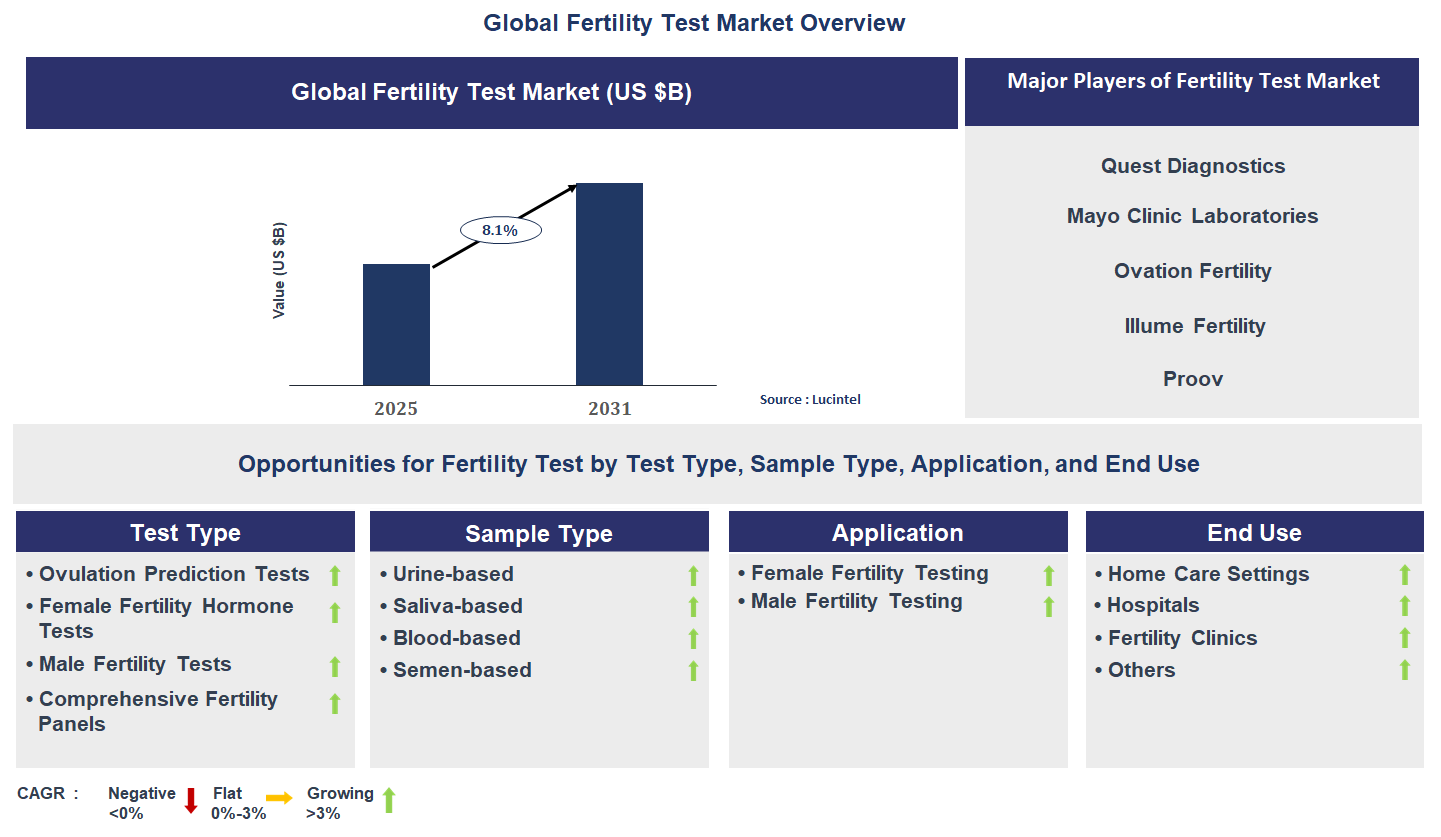
Key data points: The growth forecast = 8.1% annually for the next 7 years. Scroll below to get more insights. This market report covers trends, opportunities and forecasts in fertility test market to 2031 by test type (ovulation prediction tests, female fertility hormone tests, male fertility tests, and comprehensive fertility panels), sample type (urine-based, saliva-based, blood-based, and semen-based), application (female fertility testing and male fertility testing), end use (home care settings, hospitals, fertility clinics, and others), and region (North America, Europe, Asia Pacific, and the Rest of the World)
We'll send your sample report shortly.
• Lucintel forecasts that, within the test type category, ovulation prediction test is expected to witness the highest growth over the forecast period.
• Within the end use category, home care setting is expected to witness the highest growth.
• In terms of region, North America is expected to witness the highest growth over the forecast period. Gain valuable insights for your business decisions with our comprehensive 150+ page report. Sample figures with some insights are shown below.
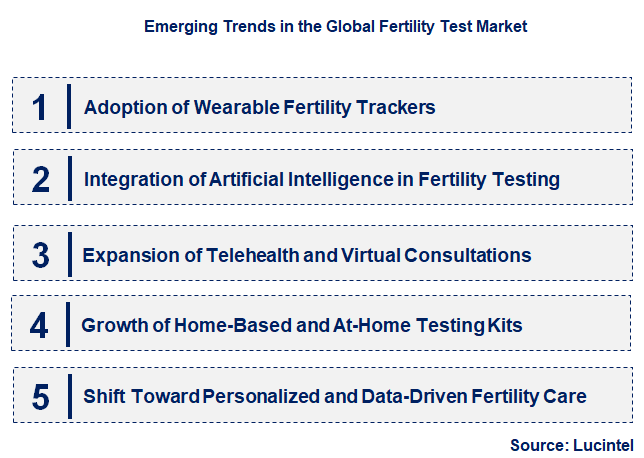
• Adoption of Wearable Fertility Trackers: Wearable devices that monitor temperature, heart rate, and hormonal fluctuations are gaining popularity. They allow continuous fertility tracking and data synchronization with mobile applications, helping users plan conception more effectively.
• Integration of Artificial Intelligence in Fertility Testing: AI algorithms are improving fertility predictions through data analysis of hormonal patterns and menstrual cycles. This enhances diagnostic precision and allows better decision-making for both patients and clinicians.
• Expansion of Telehealth and Virtual Consultations: Telehealth services are providing easy access to fertility specialists, enabling real-time consultations and remote monitoring. This trend improves convenience and patient engagement across geographies.
• Growth of Home-Based and At-Home Testing Kits: The demand for affordable, easy-to-use fertility test kits is growing as consumers prefer privacy and convenience. These kits enhance accessibility and empower users to manage their reproductive health independently.
• Shift Toward Personalized and Data-Driven Fertility Care: Personalized testing based on genetic, hormonal, and lifestyle factors is becoming more common. Data-driven insights allow targeted treatments, optimizing fertility outcomes and improving success rates. These emerging trends are redefining the fertility test market through innovation and accessibility. The integration of AI, wearable devices, and telehealth services enhances the precision and convenience of fertility monitoring. The shift toward personalized and home-based solutions empowers users to make informed decisions about reproductive health. Collectively, these developments create a connected ecosystem that supports early diagnosis, improves treatment outcomes, and drives global market expansion in fertility testing solutions.
• Advancement in Hormone-Based Diagnostic Technologies: Innovations in luteinizing hormone and estrogen testing have improved accuracy in detecting ovulation and fertility windows, reducing dependency on clinical visits.
• Integration of AI and Data Analytics in Fertility Monitoring: AI-powered algorithms analyze menstrual patterns and hormonal fluctuations, offering precise fertility predictions and personalized insights.
• Expansion of Mobile and App-Based Fertility Platforms: Mobile fertility tracking apps combined with smart devices provide real-time updates and educational content, enhancing user engagement and awareness.
• Rising Partnerships Between Tech Startups and Healthcare Providers: Strategic collaborations promote the development of connected fertility ecosystems, ensuring seamless integration between diagnostics and treatment.
• Development of Male Fertility Testing Solutions: Increased focus on male infertility has led to new at-home sperm test kits and digital analysis platforms that offer accurate and private testing solutions. These developments are driving innovation and inclusivity in the fertility test market. The introduction of AI-driven technologies, connected platforms, and male-oriented solutions is broadening accessibility. Enhanced diagnostic precision and patient engagement foster early detection and improved fertility outcomes. As digital tools integrate seamlessly with healthcare systems, fertility testing becomes more user-friendly and data-supported, paving the way for sustainable market growth.
• Ovulation and Hormone Testing Applications: High demand for hormone-based ovulation kits and continuous monitoring tools supports market expansion through enhanced detection accuracy.
• Male Fertility Testing Applications: Rising focus on male reproductive health creates opportunities for at-home sperm testing and digital fertility evaluation platforms.
• Reproductive Disorder Screening Applications: Diagnostic tools for identifying hormonal imbalances and conditions like PCOS and endometriosis enable early intervention and targeted treatment.
• Telemonitoring and Mobile Health Applications: The use of mobile apps and telehealth platforms for fertility monitoring improves accessibility and supports ongoing care for couples planning conception.
• Genetic and Personalized Fertility Testing Applications: Genetic profiling and personalized hormone analysis allow tailored reproductive care, leading to improved outcomes and informed family planning. Strategic growth opportunities in the fertility test market are expanding across clinical, digital, and personalized domains. Ovulation, hormone, and male fertility testing remain core areas, while genetic and telehealth applications provide new dimensions for growth. These advancements foster proactive reproductive management and empower individuals through technology-driven solutions, shaping the future of global fertility care.
• Quest Diagnostics
• Mayo Clinic Laboratories
• Ovation Fertility
• Illume Fertility
• Proov
• BioMérieux
• Labcorp
• CCRM Fertility
• Hertility Health
• Maven Clinic
• Ovulation Prediction Tests
• Female Fertility Hormone Tests
• Male Fertility Tests
• Comprehensive Fertility Panels
• Urine-based
• Saliva-based
• Blood-based
• Semen-based
• Female Fertility Testing
• Male Fertility Testing
• Home Care Settings
• Hospitals
• Fertility Clinics
• Others
• North America
• Europe
• Asia Pacific
• The Rest of the World
• United States: In the United States, the fertility test market is expanding due to technological innovation and lifestyle changes leading to delayed conception. The rise of digital ovulation trackers, hormone-based home kits, and wearable fertility monitors has improved accessibility and convenience for users. Companies are investing in AI-powered fertility prediction and telehealth integration, enhancing patient engagement. Increased awareness among both genders and supportive insurance coverage for fertility-related services are further driving growth. The market is characterized by strong regulatory oversight, ensuring accuracy and reliability, which boosts consumer trust and clinical adoption of fertility testing solutions.
• China: China’s fertility test market is growing rapidly due to demographic shifts, such as declining birth rates and changing family planning policies. Government initiatives encouraging childbirth and expanding reproductive health services are stimulating demand for fertility testing. The adoption of home-based ovulation kits and digital fertility platforms has surged among urban populations. Technological advancements in hormone analysis and AI-assisted fertility prediction are improving diagnosis accuracy. Collaborations between local manufacturers and global brands are increasing product availability and affordability. Rising awareness of reproductive health among younger consumers is transforming China into a significant market for fertility testing products.
• Germany: Germany’s fertility test market benefits from its advanced healthcare infrastructure and rising focus on women’s health. Increasing infertility rates and a growing preference for personalized reproductive care are driving demand for home-use and clinical testing kits. Integration of digital technologies, including mobile tracking and teleconsultation, enhances diagnostic accuracy. German consumers show strong preference for medically certified and eco-friendly testing solutions. Support from health insurance for fertility evaluation and the growing number of fertility clinics are strengthening the market. Germany’s emphasis on precision diagnostics and patient-centered care positions it as a leading European market in fertility testing.
• India: India’s fertility test market is witnessing significant expansion due to rising infertility awareness, lifestyle changes, and growing access to affordable testing solutions. Increasing demand for ovulation kits, sperm test kits, and hormone-based diagnostic tools reflects a shift toward proactive reproductive health management. The rise of telemedicine platforms and mobile health apps has improved fertility monitoring in remote areas. Government initiatives promoting maternal and reproductive health further support the market. Domestic manufacturers are introducing cost-effective, easy-to-use fertility kits, making testing more accessible. India’s expanding middle-class population and healthcare infrastructure are propelling long-term market growth.
• Japan: Japan’s fertility test market is shaped by demographic challenges, including declining fertility rates and an aging population. Advanced diagnostic technologies and AI-based fertility monitoring systems are gaining traction among both men and women. The cultural acceptance of home-based testing and the expansion of fertility clinics have improved early diagnosis rates. Government initiatives promoting childbirth and reproductive health awareness support market growth. The integration of wearable fertility devices with smartphone applications enhances user experience and accuracy. Japan’s focus on innovation and quality ensures steady market expansion supported by technological excellence and health awareness initiatives.


• Quest Diagnostics
• Mayo Clinic Laboratories
• Ovation Fertility
• Illume Fertility
• Proov
• BioMérieux
• Labcorp
• CCRM Fertility
• Hertility Health
• Maven Clinic Q5. Which fertility test market segment will be the largest in future? Answer: Lucintel forecasts that, within the test type category, ovulation prediction test is expected to witness the highest growth over the forecast period. Q6. In fertility test market, which region is expected to be the largest in next 5 years? Answer: In terms of region, North America is expected to witness the highest growth over the forecast period. Q7. Do we receive customization in this report? Answer: Yes, Lucintel provides 10% customization without any additional cost.


Choose a license that fits your team. Instant PDF delivery.
Prices exclude taxes. Instant delivery. Custom licensing available on request.
Market Report · July 31, 2026
Market Report · July 31, 2026
Market Report · July 31, 2026
Trusted partner for strategic intelligence and business growth


Receive a complimentary market analysis tailored to your industry. Our analysts will identify key growth opportunities and competitive dynamics specific to your business.

Market size, growth rate, and key trend analysis for your specific sector.

Top competitor positioning and market share analysis.

Strategic recommendations backed by data-driven insights.
Get curated market intelligence and competitive moves straight to your inbox.
By subscribing, you agree to receive our monthly insights. Unsubscribe anytime.
Receive a complimentary market analysis tailored to your industry. Our analysts will identify key growth opportunities and competitive dynamics specific to your business.
Market size, growth rate, and key trend analysis for your specific sector.
Top competitor positioning and market share analysis.
Strategic recommendations backed by data-driven insights.
Get curated market intelligence, emerging trends, and competitive moves straight to your inbox each month.
By subscribing, you agree to receive our monthly insights. Unsubscribe anytime.
We'll send your sample report shortly.