
Market Report · July 15, 2026

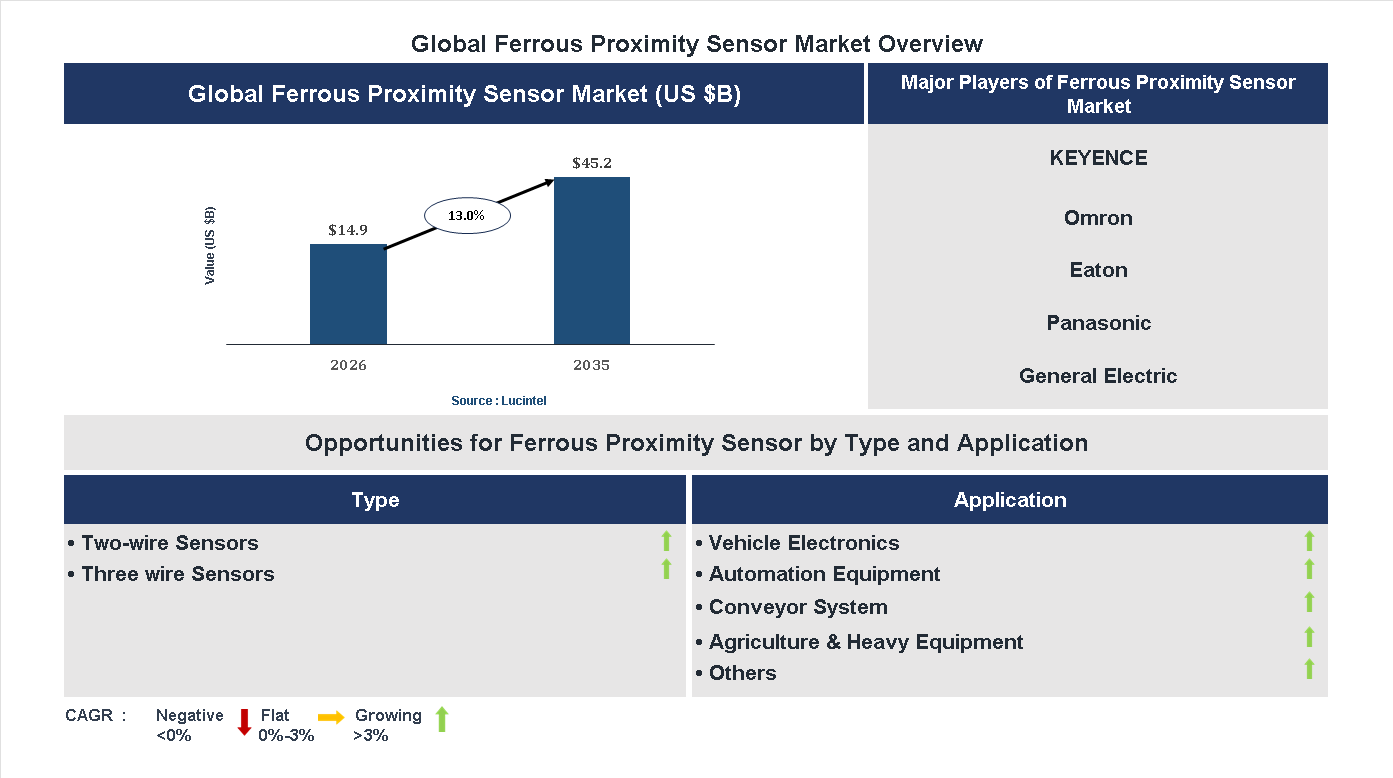
Key data points: The market size in 2035 = $45.2 billion, growth forecast = 13% annually for the next 8 years. Scroll below to get more insights. This market report covers trends, opportunities and forecasts in ferrous proximity sensor market to 2035 by type (two-wire sensors and three wire sensors), application (vehicle electronics, automation equipment, conveyor system, agriculture & heavy equipment, and others), and region (North America, Europe, Asia Pacific, and the Rest of the World)
We'll send your sample report shortly.
• Lucintel forecasts that, within the type category, three wire sensor is expected to witness higher growth over the forecast period.
• Within the application category, automation equipment is expected to witness the highest growth.
• In terms of region, APAC is expected to witness the highest growth over the forecast period. Gain valuable insights for your business decisions with our comprehensive 150+ page report. Sample figures with some insights are shown below.
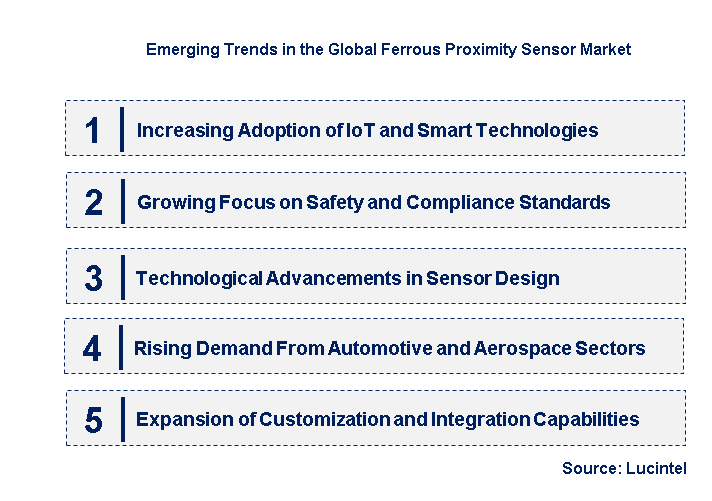
• Increasing Adoption of IoT and Smart Technologies: The integration of ferrous proximity sensors with IoT platforms is transforming industrial automation. These sensors enable real-time data collection and remote monitoring, leading to improved process control and predictive maintenance. As industries move towards smart factories, the demand for sensors that can seamlessly connect with digital systems is rising. This trend enhances operational efficiency, reduces downtime, and facilitates data-driven decision-making, making ferrous proximity sensors a vital component in Industry 4.0 initiatives.
• Growing Focus on Safety and Compliance Standards: Stringent safety regulations across industries are driving the adoption of ferrous proximity sensors for safety applications. These sensors are used to detect the presence of ferrous objects, ensuring machinery operates within safe parameters. Their ability to provide reliable, contactless detection helps prevent accidents and equipment damage. As safety standards become more rigorous, manufacturers are investing in advanced sensors that meet compliance requirements, thereby boosting market growth and emphasizing the importance of sensor reliability and precision.
• Technological Advancements in Sensor Design: Innovations such as miniaturization, increased sensitivity, and enhanced durability are shaping the market. Modern ferrous proximity sensors now feature improved electromagnetic compatibility, longer lifespan, and better resistance to environmental factors like dust, moisture, and temperature fluctuations. These advancements expand the range of applications and enable deployment in challenging environments. Enhanced sensor performance directly impacts operational efficiency and reduces maintenance costs, making them more attractive to end-users seeking reliable and long-lasting solutions.
• Rising Demand from Automotive and Aerospace Sectors: The automotive industry’s push towards automation and safety features, along with aerospace applications requiring precise detection, is fueling market growth. Ferrous proximity sensors are used in vehicle assembly lines, collision avoidance systems, and aircraft manufacturing. Their ability to detect ferrous components accurately and reliably is critical in these high-stakes environments. As these sectors continue to innovate and adopt automation, the demand for advanced proximity sensors is expected to grow significantly, opening new avenues for market expansion.
• Expansion of Customization and Integration Capabilities: Manufacturers are increasingly offering tailored sensor solutions to meet specific industry needs. Integration with other control systems, customizable sensing ranges, and form factors are becoming standard features. This flexibility allows for seamless incorporation into complex automation setups and bespoke applications. The trend towards customization enhances user experience, improves system compatibility, and broadens application scope. As industries seek more adaptable sensing solutions, the market is shifting towards more versatile, integrated products that can be easily adapted to diverse operational requirements. In summary, these emerging trends are fundamentally reshaping the ferrous proximity sensor market by promoting smarter, safer, and more adaptable sensing solutions. The integration with IoT, focus on safety, technological innovations, sector-specific demands, and customization are collectively driving growth and expanding the market’s horizons. These developments are enabling industries to achieve higher efficiency, safety, and operational excellence, positioning ferrous proximity sensors as critical components in modern automation ecosystems.
• Growing Adoption in Manufacturing: The manufacturing sector is increasingly integrating ferrous proximity sensors for automation and quality control, leading to improved efficiency and safety. These sensors enable precise detection of ferrous objects, reducing errors and downtime. As factories adopt Industry 4.0 practices, demand for reliable sensors rises, creating a substantial growth opportunity. Manufacturers are developing more durable, cost-effective sensors to meet the needs of diverse industrial environments, thus expanding market reach and application scope.
• Advancements in Sensor Technology: Recent innovations include miniaturization, enhanced sensitivity, and wireless connectivity, making ferrous proximity sensors more versatile and easier to deploy. These technological improvements allow for better integration with existing systems and enable real-time data collection. As industries seek smarter solutions, the development of advanced sensors is crucial. This progress not only boosts performance but also opens new avenues in automation, robotics, and safety systems, driving market growth further.
• Increasing Use in Automotive Industry: The automotive sector is adopting ferrous proximity sensors for applications such as parking assistance, collision avoidance, and manufacturing automation. These sensors improve vehicle safety and manufacturing precision, aligning with industry standards for safety and efficiency. The rising demand for autonomous vehicles and smart manufacturing processes amplifies the need for reliable ferrous detection. This trend offers manufacturers opportunities to innovate and expand their product portfolios tailored to automotive applications.
• Rising Demand in Construction and Infrastructure: Ferrous proximity sensors are increasingly used in construction machinery, elevators, and security systems to ensure safety and operational efficiency. Their ability to detect ferrous objects accurately enhances safety protocols and reduces accidents. As infrastructure projects grow globally, the need for robust sensing solutions intensifies. Manufacturers are focusing on rugged, weather-resistant sensors to meet construction industry demands, thereby expanding market penetration and application diversity.
• Impact of IoT and Industry 4.0: Integration of ferrous proximity sensors with IoT platforms enables real-time monitoring, predictive maintenance, and data-driven decision-making. This connectivity enhances operational efficiency and reduces downtime across industries. The shift towards Industry 4.0 accelerates the adoption of smart sensors, creating opportunities for innovative solutions that improve automation and safety. As digital transformation continues, the market for connected ferrous sensors is poised for significant expansion, influencing overall industry dynamics. The overall impact of these developments is a robust expansion of the ferrous proximity sensor market, driven by technological innovation and increasing industrial automation. Enhanced sensor capabilities and integration with digital systems are transforming manufacturing, automotive, construction, and safety sectors. This evolution fosters increased efficiency, safety, and cost savings, positioning the market for sustained growth and diversification in applications worldwide.
• Expansion Into Industrial Automation and Robotics: Ferrous proximity sensors are increasingly integrated into industrial automation and robotics systems to enable precise object detection and positioning. As industries move toward smart factories, the demand for reliable sensors that can operate in harsh environments grows. These sensors improve process efficiency, reduce downtime, and enhance safety. The integration of sensors into automated machinery and robotic arms is expected to drive substantial market growth, especially in manufacturing and assembly lines.
• Growing Adoption in Automotive Manufacturing and Safety Systems: The automotive industry is adopting ferrous proximity sensors for applications such as collision avoidance, parking assistance, and automated door systems. These sensors provide accurate detection of ferrous objects, contributing to vehicle safety and automation. As vehicle automation and electric vehicle production increase, the demand for advanced proximity sensors is expected to rise. This trend offers significant growth opportunities for sensor manufacturers targeting the automotive sector.
• Increasing Use in Material Handling and Logistics Operations: Ferrous proximity sensors are vital in material handling equipment like conveyor belts, automated guided vehicles (AGVs), and warehouse automation systems. They enable precise detection of ferrous objects, ensuring smooth operation and safety. The surge in e-commerce and warehouse automation is fueling demand for these sensors. Their ability to improve operational efficiency and reduce errors makes them essential in modern logistics, presenting a lucrative growth avenue for market players.
• Technological Innovations Enhancing Sensor Performance: Ongoing innovations in sensor technology, such as miniaturization, increased sensitivity, and wireless connectivity, are expanding application possibilities. Enhanced durability and environmental resistance allow sensors to operate reliably in extreme conditions. These technological advancements improve accuracy and ease of integration, making sensors more attractive for diverse applications. Continuous R&D efforts are expected to lead to new product launches, further boosting market growth and enabling sensors to meet evolving industry needs.
• Strategic Partnerships and Market Expansion in Emerging Economies: Collaborations between sensor manufacturers and end-user industries are facilitating market expansion. Companies are entering emerging economies with growing industrial bases, offering tailored solutions to local needs. This strategy helps penetrate new markets and diversify revenue streams. Additionally, investments in manufacturing facilities and distribution networks are supporting regional growth. Such strategic initiatives are crucial for capturing market share and driving long-term growth in the ferrous proximity sensor industry. The overall market outlook remains positive, with these growth opportunities collectively driving innovation, expanding applications, and increasing adoption across various sectors. As industries continue to modernize and prioritize automation, the demand for ferrous proximity sensors is expected to grow steadily, shaping a competitive and technologically advanced market landscape.
• Technological Innovation: The rapid development of sensor technology enhances accuracy, reliability, and integration capabilities, enabling broader application across manufacturing, automotive, and logistics sectors. Innovations such as miniaturization and wireless connectivity improve ease of installation and data collection, fostering market expansion.
• Growing Automation in Industries: Increasing adoption of automation in manufacturing, automotive, and warehousing sectors drives demand for ferrous proximity sensors to ensure safety, precision, and efficiency. The push towards Industry 4.0 accelerates sensor deployment for real-time monitoring and control.
• Regulatory and Safety Standards: Stringent safety regulations and quality standards compel industries to adopt reliable proximity sensing solutions. Compliance with these standards ensures operational safety and reduces liability, thereby boosting market growth.
• Cost Reduction and Economies of Scale: As manufacturing processes become more cost-effective, the price of sensors decreases, making them accessible to a broader range of industries. Economies of scale in production further support market expansion and innovation. The challenges in the ferrous proximity sensor market are:
• High Implementation Costs: Despite decreasing sensor prices, the initial investment for integrating proximity sensors into existing systems can be substantial. Costs related to installation, calibration, and maintenance may hinder adoption, especially for small and medium enterprises.
• Technological Limitations: Current sensor technology may face limitations in detecting ferrous objects in complex environments with interference or in extreme conditions such as high temperatures or electromagnetic interference, restricting their effectiveness.
• Regulatory and Standardization Complexities: Navigating diverse regional regulations and standards can be challenging. Variations in compliance requirements may delay deployment, increase costs, and complicate global market expansion efforts. In summary, the ferrous proximity sensor market is driven by technological advancements, industry automation, and regulatory compliance, which collectively foster growth. However, high costs, technological constraints, and regulatory complexities pose significant challenges. The markets future will depend on innovations that reduce costs, improve sensor robustness, and streamline compliance processes. Overall, these factors will shape the pace and scope of market development, requiring stakeholders to adapt strategically to capitalize on emerging opportunities while mitigating risks.
• KEYENCE
• Omron
• Eaton
• Panasonic
• General Electric
• Parker
• Standex Electronics
• Dwyer
• Rockwell Automation
• Asa Electronics Industry
• Two-wire Sensors
• Three wire Sensors
• Vehicle Electronics
• Automation Equipment
• Conveyor System
• Agriculture & Heavy Equipment
• Others
• North America
• Europe
• Asia Pacific
• The Rest of the World
• United States: The US market for ferrous proximity sensors is expanding rapidly due to increased automation in manufacturing and automotive industries. Innovations in sensor technology, such as improved detection accuracy and integration with IoT systems, are gaining traction. Major players are investing in R&D to develop more durable and energy-efficient sensors, aligning with Industry 4.0 initiatives. The adoption of smart factories and automation standards is further fueling demand, especially in automotive assembly lines and aerospace sectors. Additionally, government incentives for industrial modernization are encouraging widespread sensor deployment across various sectors.
• China: China remains a dominant force in the ferrous proximity sensor market, driven by rapid industrialization and infrastructure development. The country is focusing on upgrading its manufacturing capabilities through automation, which boosts sensor adoption. Local manufacturers are increasingly producing cost-effective sensors to meet domestic demand, while foreign companies are expanding their presence. The integration of sensors into smart city projects and robotics is also contributing to market growth. Furthermore, Chinas emphasis on technological innovation and government policies supporting Industry 4.0 are fostering a conducive environment for advanced sensor deployment.
• Germany: Germanys ferrous proximity sensor market is characterized by high-quality, precision sensors tailored for automotive and industrial machinery applications. The countrys strong engineering tradition and focus on automation excellence are driving innovation in sensor technology. German companies are investing in developing sensors with enhanced sensitivity and robustness to withstand harsh industrial environments. The automotive sector, especially electric vehicle manufacturing, is a significant consumer of these sensors. Additionally, Germanys commitment to Industry 4.0 and smart manufacturing is encouraging the integration of advanced proximity sensors into production lines, ensuring efficiency and safety.
• India: The Indian ferrous proximity sensor market is witnessing rapid growth due to expanding manufacturing, automotive, and electronics sectors. Increasing adoption of automation in small and medium enterprises is a key driver. Local manufacturers are offering affordable sensors to cater to price-sensitive markets, while multinational companies are establishing regional supply chains. The governments initiatives like Make in India and Digital India are promoting industrial modernization, further boosting sensor demand. Additionally, the rise of smart factories and robotics in India is encouraging the adoption of advanced sensing solutions to improve operational efficiency and safety standards.
• Japan: Japans market for ferrous proximity sensors is driven by its advanced manufacturing sector and focus on automation. The country is known for its high-quality, reliable sensors used in automotive, electronics, and robotics industries. Japanese companies are investing in developing sensors with higher precision, miniaturization, and energy efficiency. The integration of sensors into autonomous vehicles and industrial robots is a growing trend. Japans emphasis on innovation and technological excellence ensures continuous development of cutting-edge proximity sensing solutions, supporting the countrys leadership in automation and smart manufacturing initiatives.


• KEYENCE
• Omron
• Eaton
• Panasonic
• General Electric
• Parker
• Standex Electronics
• Dwyer
• Rockwell Automation
• Asa Electronics Industry Q6. Which ferrous proximity sensor market segment will be the largest in future? Answer: Lucintel forecasts that, within the type category, three wire sensor is expected to witness higher growth over the forecast period. Q7. In ferrous proximity sensor market, which region is expected to be the largest in next 5 years? Answer: In terms of region, APAC is expected to witness the highest growth over the forecast period. Q8. Do we receive customization in this report? Answer: Yes, Lucintel provides 10% customization without any additional cost.


Choose a license that fits your team. Instant PDF delivery.
Prices exclude taxes. Instant delivery. Custom licensing available on request.
Market Report · July 15, 2026
Market Report · July 13, 2026
Market Report · July 13, 2026
Trusted partner for strategic intelligence and business growth


Receive a complimentary market analysis tailored to your industry. Our analysts will identify key growth opportunities and competitive dynamics specific to your business.

Market size, growth rate, and key trend analysis for your specific sector.

Top competitor positioning and market share analysis.

Strategic recommendations backed by data-driven insights.
Get curated market intelligence and competitive moves straight to your inbox.
By subscribing, you agree to receive our monthly insights. Unsubscribe anytime.
Receive a complimentary market analysis tailored to your industry. Our analysts will identify key growth opportunities and competitive dynamics specific to your business.
Market size, growth rate, and key trend analysis for your specific sector.
Top competitor positioning and market share analysis.
Strategic recommendations backed by data-driven insights.
Get curated market intelligence, emerging trends, and competitive moves straight to your inbox each month.
By subscribing, you agree to receive our monthly insights. Unsubscribe anytime.
We'll send your sample report shortly.