
Market Report · July 22, 2026

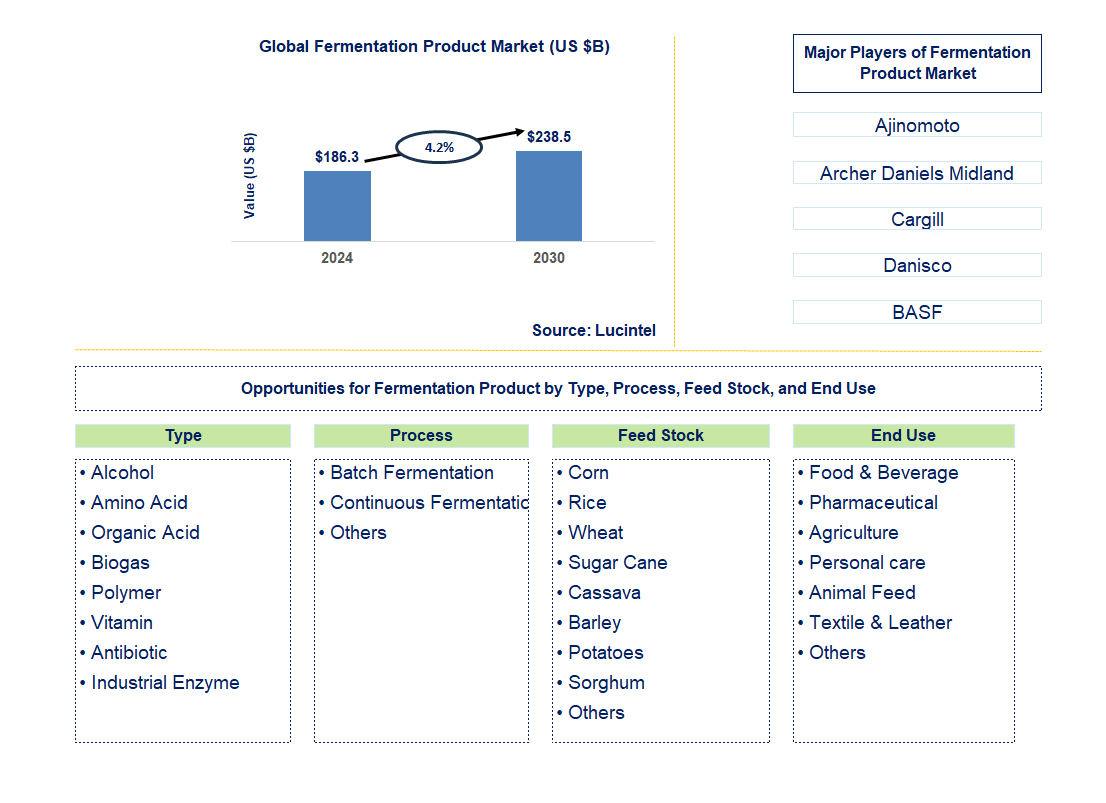
Key data points: The market size in 2030 = $238.5 billion, growth forecast = 4.2% annually for the next 6 years. Scroll below to get more insights. This market report covers trends, opportunities, and forecasts in the global fermentation product market to 2030 by type (alcohol, amino acid, organic acid, biogas, polymer, vitamin, antibiotic, and industrial enzyme), process (batch fermentation, continuous fermentation, and others), feed stock (corn, rice, wheat, sugar cane, cassava, barley, potatoes, sorghum, and others), end use (food & beverage, pharmaceutical, agriculture, personal care, animal feed, textile & leather, and others), and region (North America, Europe, Asia Pacific, and the Rest of the World)
We'll send your sample report shortly.
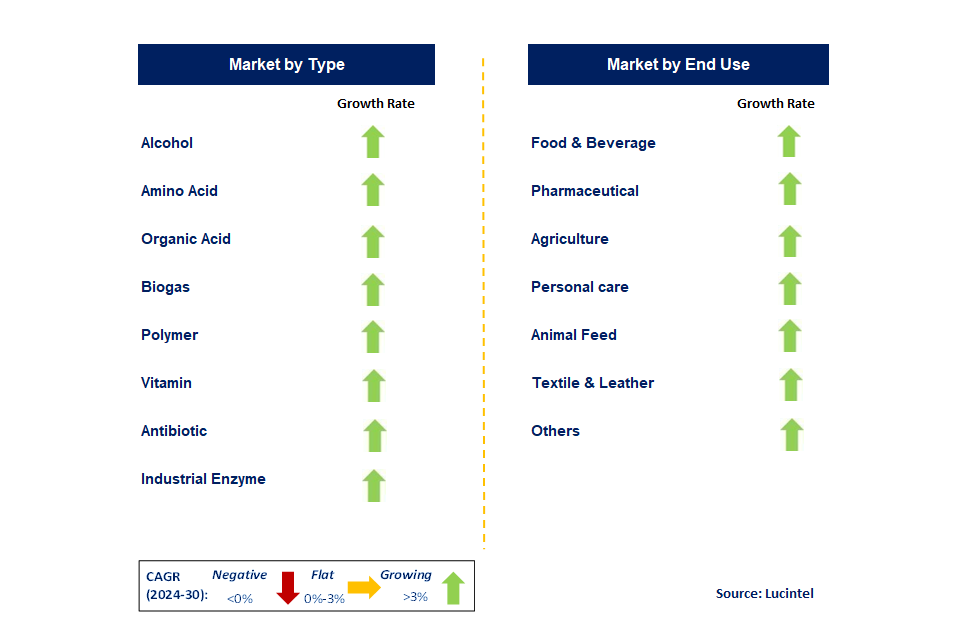
• Lucintel forecasts that, within the type category, organic acid is expected to witness the highest growth over the forecast period due to increasing adoption in the food & beverage industry.
• Within the end use category, food & beverage is expected to witness the highest growth.
• In terms of regions, APAC is expected to witness the highest growth over the forecast period due to surge in demand for antibiotics in the region. Gain valuable insights for your business decisions with our comprehensive 150+ page report.
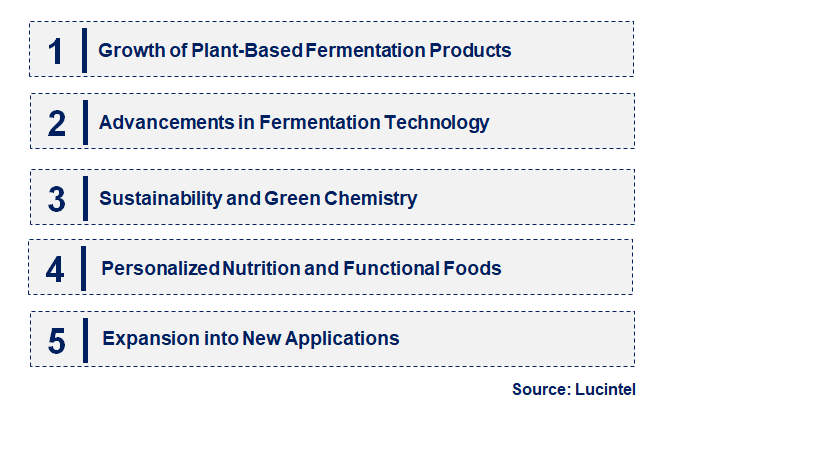
• Growth of Plant-Based Fermentation Products: Plant-based fermentation products are gaining traction due to increasing consumer demand for vegan and vegetarian options. Companies are developing new plant-based proteins and alternatives to traditional animal-derived products through fermentation. This trend drives innovation and expands the market reach of plant-based foods.
• Advancements in Fermentation Technology: Technological advancements in fermentation processes, such as precision fermentation and bioreactor innovations, are enhancing production efficiency and product quality. These advancements enable the production of high-value fermentation products with improved yields and reduced costs, fueling market growth.
• Sustainability and Green Chemistry: The push toward sustainability is leading to the development of eco-friendly fermentation processes. Companies are focusing on reducing waste, energy consumption, and carbon footprints. Green chemistry principles are being integrated into fermentation processes to promote environmental sustainability.
• Personalized Nutrition and Functional Foods: There is a growing interest in personalized nutrition and functional foods that offer health benefits beyond basic nutrition. Fermentation is being used to create products tailored to individual health needs, such as probiotics and prebiotics, enhancing consumer health and wellness.
• Expansion into New Applications: The fermentation product market is expanding into new applications, including pharmaceuticals, biofuels, and biodegradable materials. Innovations in fermentation are creating opportunities for new product developments and applications, broadening the market scope and potential. These emerging trends are significantly reshaping the fermentation product market by driving innovation, enhancing sustainability, and meeting evolving consumer demands. The integration of advanced technologies and sustainable practices is positioning the market for future growth and diversification.
• Technological Innovations in Fermentation: Advances in fermentation technology, such as improved bioreactor designs and automation, are enhancing production efficiency and product consistency. These innovations enable the production of high-quality fermentation products at lower costs, driving market growth and competitiveness.
• Increased Focus on Sustainability: There is a growing emphasis on sustainability within the fermentation industry. Companies are adopting eco-friendly practices, such as reducing waste and energy consumption, and developing sustainable raw materials. This shift toward green chemistry is helping to mitigate environmental impact and meet regulatory requirements.
• Expansion of Fermentation Applications: The scope of fermentation applications is broadening, with new developments in pharmaceuticals, biofuels, and biodegradable materials. This expansion is opening up new market opportunities and driving innovation in product development and application.
• Regulatory Changes and Support: Recent regulatory changes are impacting the fermentation product market by streamlining approval processes for novel products and providing support for research and development. These changes are fostering innovation and facilitating market entry for new products and technologies.
• Consumer Demand for Health and Wellness: Increasing consumer interest in health and wellness is driving demand for functional and fortified foods produced through fermentation. This trend is leading to the development of new products that offer health benefits, such as probiotics and prebiotics, and expanding market opportunities. These recent developments are significantly impacting the fermentation product market by enhancing technological capabilities, promoting sustainability, and expanding application areas. The evolving regulatory landscape and shifting consumer preferences are shaping the market's future and creating new opportunities for growth.
• Growth in Plant-Based Food Products: The rise in plant-based diets presents significant growth opportunities for fermentation products. Companies can develop innovative plant-based proteins and dairy alternatives through fermentation, catering to the increasing demand for vegan and vegetarian options. This segment is expected to grow rapidly, offering substantial market potential.
• Advancements in Pharmaceutical Applications: Fermentation technology is advancing pharmaceutical applications, including the production of antibiotics, vaccines, and therapeutic proteins. The ability to produce high-value pharmaceutical products with precision and efficiency is driving growth in this sector and opening new opportunities for market players.
• Expansion in Functional Foods and Nutraceuticals: The growing consumer focus on health and wellness is creating opportunities for fermentation products in functional foods and nutraceuticals. Products such as probiotics, prebiotics, and fortified foods are gaining popularity, offering growth prospects in this high-demand segment.
• Development of Biofuels and Biochemicals: Fermentation technology is being used to produce biofuels and biochemicals as sustainable alternatives to fossil fuels and petrochemicals. This development is driving growth in the bioenergy sector and creating new market opportunities for environmentally friendly products.
• Integration with Renewable Energy Sources: Integrating fermentation processes with renewable energy sources is a key growth opportunity. This approach reduces the environmental impact of fermentation processes and aligns with global sustainability goals. Companies adopting renewable energy solutions are likely to gain a competitive edge in the market. Strategic growth opportunities in the fermentation product market are driven by advancements in technology, shifting consumer demands, and the pursuit of sustainability. By leveraging these opportunities, stakeholders can expand their market presence and capitalize on emerging trends.
• Technological Advancements: Technological advancements in fermentation processes, such as improved bioreactor designs and automation, are enhancing production efficiency and product quality. These innovations enable the development of high-value products at lower costs, driving market growth and competitiveness.
• Growing Consumer Demand for Health and Wellness: Increasing consumer interest in health and wellness is driving demand for functional and fortified foods produced through fermentation. This trend is leading to the development of new products that offer health benefits, such as probiotics and prebiotics, thus expanding market opportunities.
• Sustainability Initiatives: The emphasis on sustainability is driving the adoption of eco-friendly fermentation practices. Companies are focusing on reducing waste, energy consumption, and carbon footprints, aligning with global sustainability goals and meeting regulatory requirements.
• Expansion of Application Areas: The broadening scope of fermentation applications, including pharmaceuticals, biofuels, and biodegradable materials, is creating new growth opportunities. Innovations in these areas are driving market expansion and offering diverse product options.
• Supportive Regulatory Environment: Favorable regulatory changes and government support for research and development are facilitating market growth. Streamlined approval processes for novel products and investments in biotechnology are fostering innovation and market entry. Challenges in the fermentation product market include:
• High Production Costs: Despite technological advancements, high production costs remain a challenge in the fermentation product market. The need for expensive equipment and raw materials can impact profitability and market competitiveness.
• Regulatory Compliance: Navigating complex regulatory requirements can be challenging for companies, especially when introducing new or novel fermentation products. Compliance with safety and environmental regulations is crucial but can be resource-intensive.
• Market Competition: The fermentation product market is highly competitive, with numerous players vying for market share. Maintaining a competitive edge requires continuous innovation, cost management, and differentiation strategies. The major drivers and challenges impacting the fermentation product market shape its growth trajectory and influence industry dynamics. Technological advancements and sustainability initiatives are driving market expansion, while high production costs, regulatory compliance, and intense competition pose challenges that stakeholders must address.
• Ajinomoto
• Archer Daniels Midland
• Cargill
• Danisco
• BASF
• Hansen Holding
• DuPont
• Evonik Industries
• DSM
• Dow
• Alcohol
• Amino Acid
• Organic Acid
• Biogas
• Polymer
• Vitamin
• Antibiotic
• Industrial Enzyme
• Batch Fermentation
• Continuous Fermentation
• Others
• Corn
• Rice
• Wheat
• Sugar Cane
• Cassava
• Barley
• Sorghum
• Others
• Food & Beverage
• Pharmaceutical
• Agriculture
• Personal care
• Animal Feed
• Textile & Leather
• Others
• North America
• Europe
• Asia Pacific
• The Rest of the World
• United States: Recent developments in the U.S. fermentation product market include a surge in plant-based protein alternatives driven by increasing consumer health consciousness and dietary shifts. Companies are investing in advanced fermentation technologies to enhance production efficiency and product quality. Regulatory support for novel fermentation products has also contributed to market growth, fostering innovation and competition in the sector.
• China: In China, the fermentation product market is experiencing rapid growth due to rising urbanization and an expanding middle class. The focus has been on improving traditional fermentation processes and developing new applications in pharmaceuticals and bioengineering. The government's investment in research and development, along with favorable policies, is accelerating market expansion.
• Germany: Germany is leading in the development of sustainable fermentation technologies, particularly in the production of bio-based chemicals and materials. There is a strong emphasis on integrating fermentation processes with renewable energy sources to reduce environmental impact. Germany’s robust regulatory framework supports innovation while ensuring product safety and environmental sustainability.
• India: India’s fermentation product market is growing due to increased demand for functional foods and dietary supplements. Advances in microbial fermentation technology are improving the quality and variety of products available. Government initiatives aimed at promoting biotechnology and rural entrepreneurship are also contributing to market growth and diversification.
• Japan: In Japan, the focus is on leveraging traditional fermentation techniques to create innovative products for both domestic and international markets. The market is witnessing growth in the development of specialty fermented foods and nutraceuticals. Japan’s strong emphasis on quality and safety in fermentation processes supports its competitive edge in the global market.


• Ajinomoto
• Archer Daniels Midland
• Cargill
• Danisco
• BASF
• Hansen Holding
• DuPont
• Evonik Industries
• DSM
• Dow Q6. Which fermentation product market segment will be the largest in future? Answer: Lucintel forecasts that organic acid is expected to witness the highest growth over the forecast period due to increasing adoption in the food & beverage industry. Q7. In fermentation product market, which region is expected to be the largest in next 5 years? Answer: APAC is expected to witness the highest growth over the forecast period due to surge in demand for antibiotics in the region. Q.8 Do we receive customization in this report? Answer: Yes, Lucintel provides 10% customization without any additional cost.


Choose a license that fits your team. Instant PDF delivery.
Prices exclude taxes. Instant delivery. Custom licensing available on request.
Market Report · July 22, 2026
Market Report · July 20, 2026
Market Report · July 20, 2026
Trusted partner for strategic intelligence and business growth


Receive a complimentary market analysis tailored to your industry. Our analysts will identify key growth opportunities and competitive dynamics specific to your business.

Market size, growth rate, and key trend analysis for your specific sector.

Top competitor positioning and market share analysis.

Strategic recommendations backed by data-driven insights.
Get curated market intelligence and competitive moves straight to your inbox.
By subscribing, you agree to receive our monthly insights. Unsubscribe anytime.
Receive a complimentary market analysis tailored to your industry. Our analysts will identify key growth opportunities and competitive dynamics specific to your business.
Market size, growth rate, and key trend analysis for your specific sector.
Top competitor positioning and market share analysis.
Strategic recommendations backed by data-driven insights.
Get curated market intelligence, emerging trends, and competitive moves straight to your inbox each month.
By subscribing, you agree to receive our monthly insights. Unsubscribe anytime.
We'll send your sample report shortly.