
Market Report · July 29, 2026

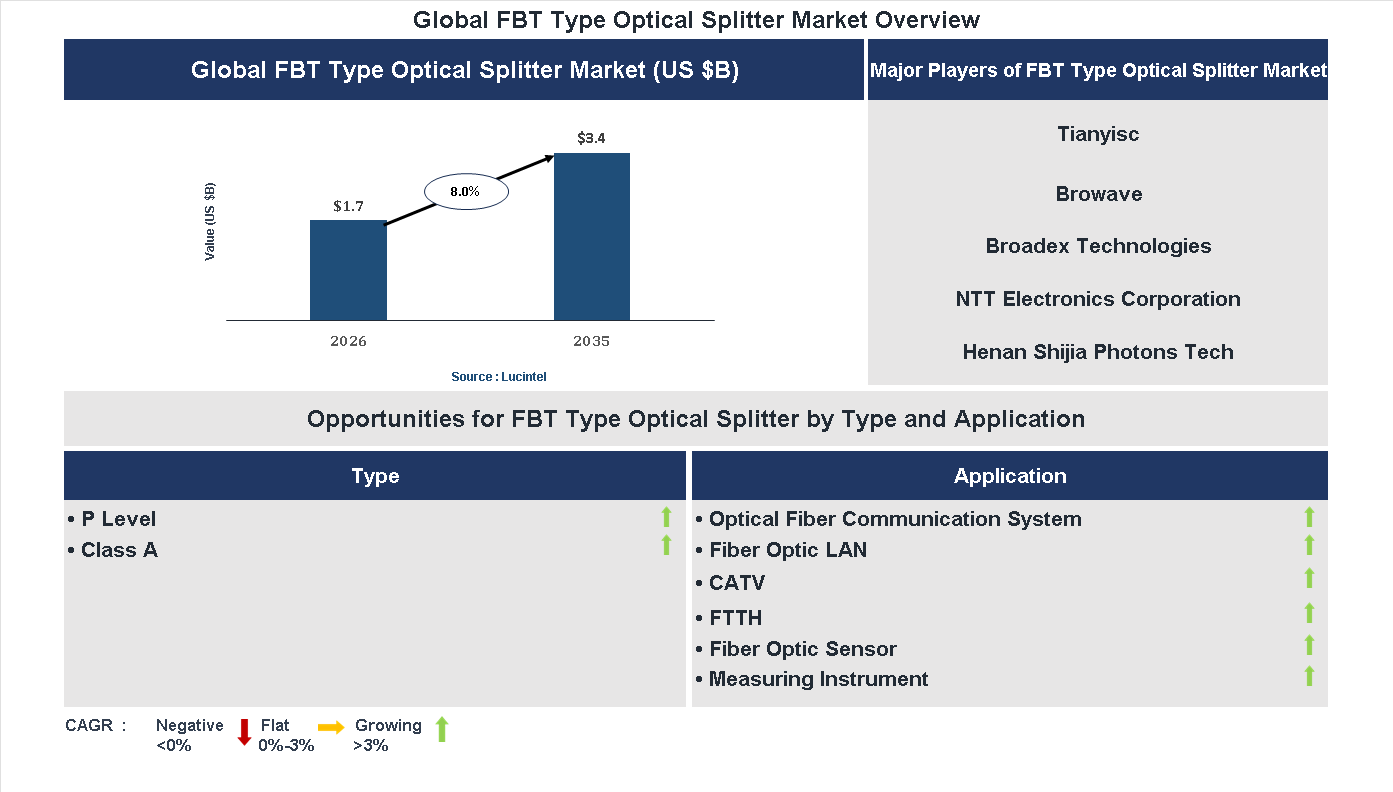
Key data points: The market size in 2035 = $3.4 billion, growth forecast = 8% annually for the next 8 years. Scroll below to get more insights. This market report covers trends, opportunities and forecasts in FBT type optical splitter market to 2035 by type (P level and class A), application (optical fiber communication system, fiber optic LAN, CATV, FTTH, fiber optic sensor, and measuring instrument), and region (North America, Europe, Asia Pacific, and the Rest of the World)
We'll send your sample report shortly.
• Lucintel forecasts that, within the type category, class A is expected to witness higher growth over the forecast period.
• Within the application category, FTTH is expected to witness the highest growth.
• In terms of region, APAC is expected to witness the highest growth over the forecast period. Gain valuable insights for your business decisions with our comprehensive 150+ page report. Sample figures with some insights are shown below.
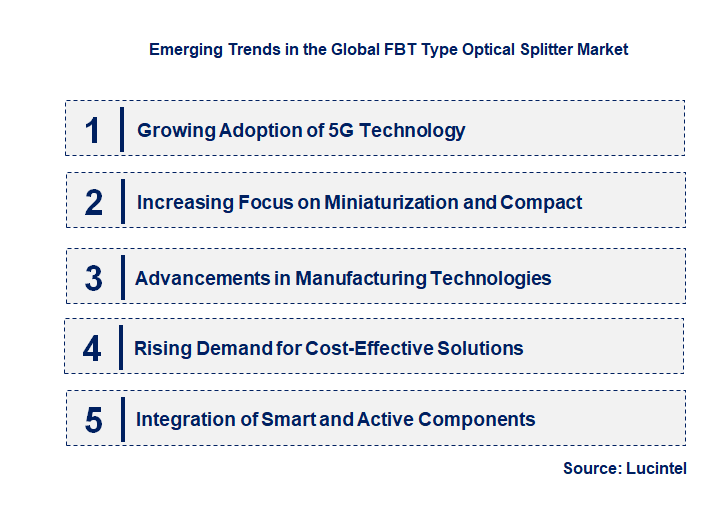
• Growing Adoption of 5G Technology: The deployment of 5G networks is significantly boosting the demand for optical splitters. 5G infrastructure requires extensive fiber optic cabling to support high data rates and low latency, leading to increased adoption of FBT splitters in network distribution points. This trend enhances connectivity, supports IoT applications, and accelerates digital transformation across industries, thereby expanding the market scope and driving revenue growth.
• Increasing Focus on Miniaturization and Compact Designs: Manufacturers are prioritizing the development of smaller, more efficient optical splitters to meet the demands of space-constrained environments such as data centers and urban fiber deployments. Miniaturization reduces installation costs and improves system performance. This trend is enabling more flexible network architectures, facilitating easier integration into existing infrastructure, and opening new avenues for deployment in residential and enterprise settings.
• Advancements in Manufacturing Technologies: Innovations in manufacturing processes, such as precision fusion splicing and improved tapering techniques, are enhancing the performance and reliability of FBT splitters. These technological improvements lead to lower insertion loss, higher uniformity, and better durability. As a result, the market benefits from higher-quality products that meet stringent industry standards, fostering increased customer confidence and expanding application areas.
• Rising Demand for Cost-Effective Solutions: Cost competitiveness remains a key driver in the market, prompting manufacturers to develop affordable FBT splitters without compromising quality. Economies of scale, streamlined production processes, and material innovations contribute to reducing prices. This trend makes optical splitters accessible to a broader customer base, including emerging markets, and supports the expansion of fiber optic networks in developing regions.
• Integration of Smart and Active Components: The integration of smart features, such as monitoring and diagnostic capabilities, into optical splitters is gaining traction. These advanced components enable real-time performance tracking, predictive maintenance, and improved network management. Incorporating such features enhances system reliability, reduces downtime, and provides valuable data insights, thereby increasing the value proposition for end-users and fostering innovation within the market. In summary, these emerging trends are transforming the FBT type optical splitter market by making products more efficient, affordable, and adaptable to evolving technological needs. They are facilitating the expansion of fiber optic networks worldwide, supporting next-generation communication systems, and enabling stakeholders to innovate and compete effectively in a rapidly changing landscape.
• Growing Demand for High-Speed Data Transmission: The surge in data consumption and the expansion of 5G networks are driving the need for high-capacity fiber optic splitters. These splitters enable efficient distribution of optical signals, supporting faster internet speeds and improved network reliability. As industries and consumers demand seamless connectivity, the market for FBT optical splitters is expected to grow substantially, offering opportunities for manufacturers to develop advanced, scalable solutions that meet evolving bandwidth requirements.
• Expansion in Telecommunication Infrastructure: The global rollout of 5G technology and the modernization of existing telecom networks are fueling demand for optical splitters. FBT type splitters are essential for splitting signals across multiple channels, ensuring efficient network operation. This expansion enhances connectivity in urban and rural areas, boosting market growth. Telecom operators are investing heavily in fiber infrastructure, creating a robust demand pipeline for FBT optical splitters, which are critical components in ensuring network performance and scalability.
• Increasing Adoption in Data Centers: Data centers require reliable and high-capacity optical components to manage growing data traffic. FBT optical splitters facilitate efficient signal distribution within data centers, supporting cloud computing and enterprise applications. The rising adoption of fiber optics in data center infrastructure enhances network flexibility and reduces latency. This trend is expected to continue, with manufacturers focusing on developing compact, high-performance splitters to meet the specific needs of data center operators, thereby expanding market opportunities.
• Technological Innovations and Product Development: Advances in manufacturing processes and materials are leading to more efficient and cost-effective FBT optical splitters. Innovations such as miniaturization and improved insertion loss are enhancing performance and ease of installation. These developments enable broader application across various sectors, including industrial automation and medical devices. Continuous R&D efforts are expected to drive product differentiation, increase market competitiveness, and open new avenues for growth within the optical splitter industry.
• Rising Investment in Fiber Optic Networks: Governments and private enterprises are investing heavily in fiber optic infrastructure to support digital transformation initiatives. This investment accelerates the deployment of fiber networks, increasing demand for FBT optical splitters. The focus on expanding broadband access and improving network resilience further boosts market prospects. As investments grow, manufacturers are poised to benefit from increased orders, fostering innovation and driving the overall expansion of the optical splitter market. The overall impact of these developments is a robust growth trajectory for the FBT type optical splitter market. Increased infrastructure investments, technological advancements, and expanding applications are collectively enhancing market size and competitiveness. This growth benefits manufacturers, service providers, and end-users by enabling faster, more reliable fiber optic networks, ultimately transforming global communication and data management landscapes.
• Growing Adoption of Fiber Optic Networks in Telecommunications: The surge in global data traffic and the rollout of 5G networks are accelerating fiber optic infrastructure development. FBT type optical splitters are essential for efficient signal distribution in these networks, enabling high-speed, reliable connectivity. As telecom providers expand their fiber footprints, demand for cost-effective, high-performance splitters increases, presenting substantial growth opportunities for manufacturers and suppliers in this sector.
• Expansion of Data Centers and Cloud Computing Infrastructure: The rapid growth of cloud services and data centers necessitates scalable and efficient fiber optic solutions. FBT optical splitters facilitate the distribution of signals across multiple servers and racks, improving network performance and reducing latency. The increasing need for high-capacity, flexible connectivity solutions in data centers is expected to drive demand for these splitters, fostering innovation and market expansion.
• Rising Investment in Industrial and Enterprise Networks: Industrial automation and enterprise networking require robust fiber optic connectivity for real-time data transmission. FBT type optical splitters are vital for deploying reliable communication links in manufacturing plants, hospitals, and corporate offices. As industries prioritize digital transformation, investments in fiber optic infrastructure will grow, creating opportunities for market players to supply tailored splitter solutions that meet specific industrial standards.
• Technological Advancements in Splitter Design and Manufacturing: Innovations such as miniaturization, improved insertion loss, and enhanced durability are transforming FBT optical splitter technology. These advancements enable better performance, easier installation, and longer lifespan, making splitters more attractive for diverse applications. Continuous R&D efforts are expected to lead to new product offerings, expanding market reach and enabling manufacturers to cater to emerging customer needs.
• Increasing Focus on Cost-Effective and Energy-Efficient Solutions: Cost reduction and energy efficiency are critical factors influencing market growth. FBT optical splitters with lower production costs and reduced power consumption are gaining popularity among service providers and enterprise users. The emphasis on sustainable and economical solutions is driving innovation in manufacturing processes and materials, ultimately broadening the adoption of FBT splitters across various sectors. The overall market outlook indicates that these growth opportunities will significantly enhance the adoption and development of FBT type optical splitters, fostering innovation, expanding applications, and strengthening the global fiber optic infrastructure landscape.
• Increasing Demand for High-Speed Internet and Data Transmission: The surge in data consumption driven by streaming, cloud computing, and IoT devices necessitates robust fiber optic networks. FBT type optical splitters are essential for efficient distribution of signals in fiber-to-the-home (FTTH) and enterprise networks, supporting the need for high bandwidth and reliable connectivity. This demand propels manufacturers to innovate and expand production capacities, fostering market growth. As digital infrastructure investments grow globally, the reliance on optical splitters becomes more pronounced, making this a key driver for market expansion.
• Technological Advancements in Fiber Optic Components: Continuous innovation in fiber optic technology enhances the performance, durability, and cost-efficiency of optical splitters. Developments such as improved manufacturing processes and miniaturization enable the production of more compact and reliable FBT splitters. These advancements reduce installation and maintenance costs, making fiber optic networks more accessible and scalable. As technology evolves, the market benefits from increased product capabilities, opening new applications and markets, thus fueling growth and competitiveness.
• Growing Adoption of Fiber Optic Networks in Telecom and Data Centers: Telecom operators and data centers are increasingly adopting fiber optic solutions to meet rising bandwidth demands. FBT type optical splitters are critical components in passive optical networks (PONs), facilitating efficient signal distribution. The expansion of 5G infrastructure and cloud data centers further accelerates this trend. The need for scalable, high-capacity networks drives demand for reliable splitters, supporting the deployment of next-generation communication systems. This adoption trend significantly contributes to market expansion and technological development.
• Regulatory Support and Government Initiatives Promoting Fiber Deployment: Governments worldwide are implementing policies and funding programs to promote fiber optic infrastructure development. Initiatives aimed at bridging the digital divide and enhancing broadband access stimulate market growth. Regulatory frameworks that encourage investment in fiber networks create a favorable environment for manufacturers and service providers. These policies often include subsidies, tax incentives, and standards that facilitate the deployment of fiber optic components, including FBT splitters, thereby accelerating market penetration and expansion.
• Rising Investment in Smart City and Industrial Automation Projects: The global push towards smart city initiatives and Industry 4.0 increases the demand for reliable, high-speed communication networks. FBT optical splitters are vital for connecting various sensors, devices, and control systems in these environments. The integration of fiber optics into urban infrastructure and industrial settings enhances connectivity, efficiency, and data management. As investments in these sectors grow, so does the need for scalable and efficient optical components, making this a significant driver for the market’s future growth. The challenges facing this FBT type optical splitter market include:
• High Manufacturing Costs and Complex Production Processes: Producing high-quality FBT optical splitters involves sophisticated manufacturing techniques and precise assembly, which can be costly. The need for specialized materials and stringent quality control increases production expenses, impacting profit margins. Additionally, fluctuations in raw material prices can further escalate costs. These factors may hinder the ability of manufacturers to offer competitive pricing, potentially limiting market growth, especially in price-sensitive regions. Overcoming these cost barriers requires technological innovation and supply chain optimization, which can be time-consuming and resource-intensive.
• Intense Competition and Price Pressures: The market is highly competitive, with numerous players vying for market share. This competition often leads to price wars, reducing profit margins and challenging smaller or newer entrants. Companies must continuously innovate and differentiate their products to maintain a competitive edge, which can increase R&D expenses. Price pressures may also limit the ability to invest in new technologies or expand production capacity. Navigating this competitive landscape requires strategic positioning and cost management to sustain profitability and market presence.
• Rapid Technological Changes and Short Product Lifecycles: The fast pace of technological innovation in fiber optics means products can quickly become obsolete. Manufacturers face the challenge of continuously updating their offerings to meet evolving standards and customer requirements. Short product lifecycles increase R&D costs and inventory risks, complicating planning and investment decisions. Companies must stay ahead of technological trends to remain relevant, which demands significant resources and agility. Failure to adapt swiftly can result in loss of market share and reduced competitiveness, posing a substantial challenge to sustained growth. In summary, the FBT type optical splitter market is driven by technological progress, increasing demand for high-capacity networks, supportive regulatory policies, and investments in smart infrastructure. However, it faces challenges such as high manufacturing costs, intense competition, and rapid technological changes. These factors collectively influence the market’s growth potential, requiring stakeholders to innovate strategically and adapt swiftly to maintain competitiveness. Overall, the market’s future hinges on balancing these drivers and challenges to capitalize on emerging opportunities while mitigating risks.
• Tianyisc
• Browave
• Broadex Technologies
• NTT Electronics Corporation
• Henan Shijia Photons Tech
• Wuxi AOF
• Wooriro
• FOCI Fiber Optic Communications
• Hengtong Optic-Electric
• Sindi Technologies
• P Level
• Class A
• Optical Fiber Communication System
• Fiber Optic LAN
• CATV
• FTTH
• Fiber Optic Sensor
• Measuring Instrument
• North America
• Europe
• Asia Pacific
• The Rest of the World
• United States: The US market has seen rapid adoption of FBT optical splitters driven by investments in 5G networks and broadband expansion. Major telecom providers are deploying advanced fiber infrastructure, emphasizing high-quality, reliable splitters to support increased data traffic. Innovations in splitter design aim to improve performance and reduce costs, aligning with the countrys push for smart city projects and digital inclusivity. The government’s initiatives to expand rural broadband access further boost market growth, with key players focusing on scalable and efficient solutions.
• China: China remains a dominant force in the FBT optical splitter market, fueled by aggressive infrastructure development and 5G rollout. The government’s substantial investments in fiber-optic networks and urban digitalization projects have accelerated demand. Local manufacturers are innovating with cost-effective, high-performance splitters to meet domestic and export needs. The focus on smart city initiatives and rural connectivity expansion continues to drive market growth, positioning China as a global leader in optical communication technology.
• Germany: Germanys market is characterized by a strong emphasis on high-quality, reliable optical components, driven by its advanced telecommunications infrastructure and Industry 4.0 initiatives. The adoption of FBT optical splitters is increasing in enterprise networks, data centers, and smart manufacturing facilities. Regulatory standards and sustainability goals influence product development, with a focus on energy-efficient and environmentally friendly solutions. Collaborations between technology providers and research institutions are fostering innovation, ensuring Germany remains competitive in the European optical market.
• India: India’s optical splitter market is experiencing rapid growth due to expanding fiber broadband infrastructure and government initiatives like Digital India. The increasing demand for affordable, scalable solutions to connect rural and urban areas is a key driver. Local manufacturers are focusing on cost-effective FBT splitters to cater to the price-sensitive market while maintaining quality. The surge in 4G and 5G deployments, along with smart city projects, is further propelling market expansion, making India a significant emerging player in the optical communication sector.
• Japan: Japan’s market is characterized by advanced technological adoption and high standards for quality and reliability. The country is investing heavily in 5G infrastructure, data centers, and smart city projects, which require sophisticated optical splitters. Japanese manufacturers are innovating with miniaturized, high-performance FBT splitters to meet the demands of dense urban environments and high-speed networks. Sustainability and energy efficiency are also priorities, aligning with Japan’s environmental policies. The market remains competitive, with a focus on integrating cutting-edge technology into existing infrastructure.


• Tianyisc
• Browave
• Broadex Technologies
• NTT Electronics Corporation
• Henan Shijia Photons Tech
• Wuxi AOF
• Wooriro
• FOCI Fiber Optic Communications
• Hengtong Optic-Electric
• Sindi Technologies Q6. Which FBT type optical splitter market segment will be the largest in future? Answer: Lucintel forecasts that, within the type category, class A is expected to witness higher growth over the forecast period. Q7. In FBT type optical splitter market, which region is expected to be the largest in next 5 years? Answer: In terms of region, APAC is expected to witness the highest growth over the forecast period. Q8. Do we receive customization in this report? Answer: Yes, Lucintel provides 10% customization without any additional cost.


Choose a license that fits your team. Instant PDF delivery.
Prices exclude taxes. Instant delivery. Custom licensing available on request.
Market Report · July 29, 2026
Market Report · July 20, 2026
Market Report · July 20, 2026
Trusted partner for strategic intelligence and business growth


Receive a complimentary market analysis tailored to your industry. Our analysts will identify key growth opportunities and competitive dynamics specific to your business.

Market size, growth rate, and key trend analysis for your specific sector.

Top competitor positioning and market share analysis.

Strategic recommendations backed by data-driven insights.
Get curated market intelligence and competitive moves straight to your inbox.
By subscribing, you agree to receive our monthly insights. Unsubscribe anytime.
Receive a complimentary market analysis tailored to your industry. Our analysts will identify key growth opportunities and competitive dynamics specific to your business.
Market size, growth rate, and key trend analysis for your specific sector.
Top competitor positioning and market share analysis.
Strategic recommendations backed by data-driven insights.
Get curated market intelligence, emerging trends, and competitive moves straight to your inbox each month.
By subscribing, you agree to receive our monthly insights. Unsubscribe anytime.
We'll send your sample report shortly.