
Market Report · September 3, 2026

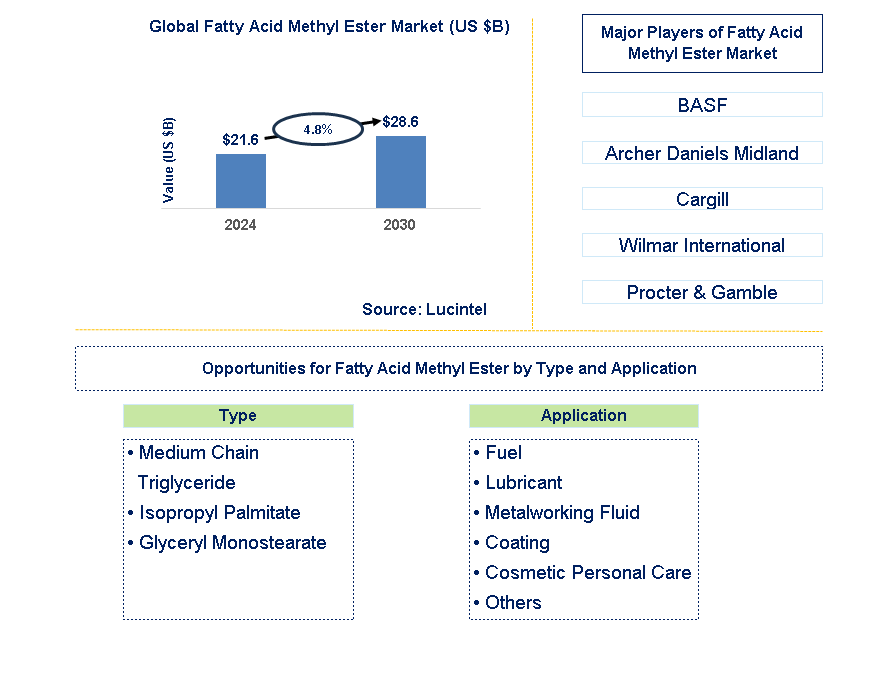
Key data points: The market size in 2030 = $28.6 billion, growth forecast = 4.8% annually for the next 6 years. Scroll below to get more insights. This market report covers trends, opportunities, and forecasts in the global fatty acid methyl ester market to 2030 by type (medium chain triglyceride, isopropyl palmitate, and glyceryl monostearate), application (fuel, lubricant, metalworking fluid, coating, cosmetic personal care, and others), and region (North America, Europe, Asia Pacific, and the Rest of the World)
We'll send your sample report shortly.
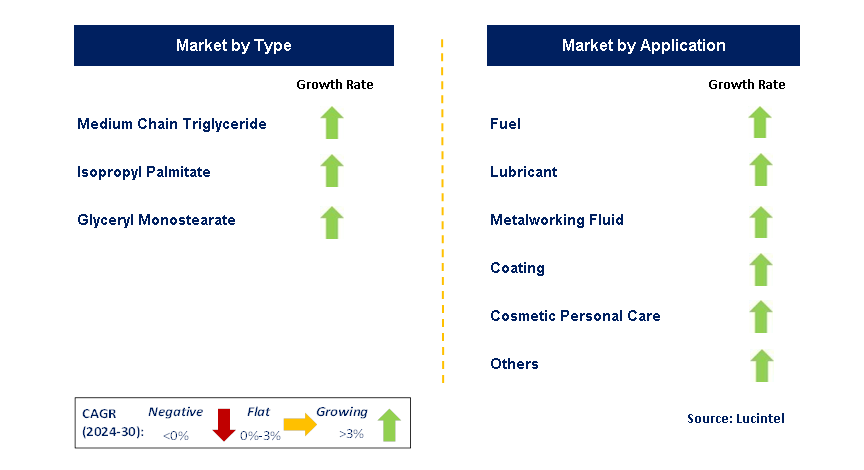
• Lucintel forecasts that, within the type category, medium chain triglyceride is expected to witness the highest growth over the forecast period due to increasing use of glyceryl monostearate as an emulsifier in confections and bakery preparation.
• In terms of regions, APAC is expected to witness highest growth over the forecast period due to growing investment in research and development activities and technological advancements, greater demand for biodiesel, rising environmental concerns, and growing population in the region. Gain valuable insights for your business decisions with our comprehensive 150+ page report.
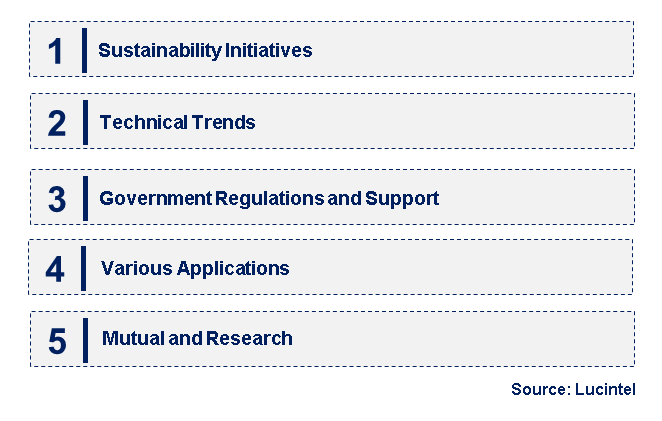
• Sustainability Initiatives: One primary trend is the increasing focus on sustainability in production processes. This adoption of sustainable practices starts from the procurement and supply chain management level, using waste oils and renewable feedstocks. These practices help companies enhance sustainable products, improve brand image, and strengthen market position regarding global environmental goals and consumer demand.
• Technical Trends: Further advancements in production technology through enzymatic processes and biotechnological methods improve the efficiency and yield of FAME, reducing the cost of production and environmental damage. This makes FAME a more attractive fuel source for biodiesel and other applications, fostering market growth.
• Government Regulations and Support: The FAME market is driven by growing government support and favorable regulations for renewable energy. Examples of such policies that advocate for the use of biodiesel include tax incentives and mandates, which promote investment and innovation in a positive environment for both the production and utilization of FAME.
• Various Applications: The versatility of FAME has enabled new opportunities for applications that extend beyond biodiesel, such as in personal care products, lubricants, and industrial chemicals. This diversification opens up more markets as firms look to innovate and develop new products that involve FAME.
• Mutual Research: The FAME sector is engaging in research and development through partnerships between industrial and academic sectors. Such collaborative initiatives ensure that production processes are improved and new feedstocks are identified, thus driving innovation to meet the changing requirements of consumers and regulatory standards. These changes in the FAME market focus on sustainability, improve product quality, and open up wider application domains. Thus, these changes will offer stakeholders growth opportunities in the times ahead.
• Facilities Expansion: Increasing investments in new production facilities by many companies will raise their FAME output. This expansion can lead to higher capacities, efficiency, and economies of scale, addressing the already growing market for biodiesel and other applications.
• Exploration of Alternative Feedstocks: The current state of affairs emphasizes an increasing focus on research efforts toward alternative feedstocks, particularly algae and non-edible oils, for FAME production. This shift helps avoid food security issues and promotes improved sustainability in biodiesel production.
• Incorporation of Digital Technologies: Digital technologies, such as IoT and data analytics, are radically changing FAME production processes. These improvements enhance efficiency in production operations, predictive maintenance capabilities, and smart procurement management. Together, they result in cost savings and improved product quality.
• Increase in R&D Investments: Increased investment in research and development fuels further innovation in the FAME sector. Most companies are examining new production techniques and applications to stay ahead of the curve and respond to the changing nature of consumer needs and regulatory requirements.
• Enhancement of the Regulatory Framework: Mandates and incentives related to government approaches to renewable energy and biodiesel are becoming stronger. Worldwide, the degree of governmental oversight is increasing, placing added pressure on manufacturers to comply and invest in sustainability, which will, in turn, drive market expansion. All these changes in the marketplace spur further innovation, enhance sustainability, and create increased opportunities for growth. Companies that strategically embrace these changes will likely weather the shifting tides of the FAME market successfully.
• Biodiesel Production: The primary application of FAME is in the manufacture of biodiesel. With the growing push for reduced carbon emissions and renewable energy, countries will require more biodiesel, presenting a golden opportunity for FAME manufacturers to gain considerable market share.
• Personal Care Products: FAME is increasingly used in the personal care industry, where it serves as a sustainable ingredient in formulations. It can turn cosmetics and skincare products into natural and biodegradable offerings, thus meeting the growing consumer demand for such ingredients.
• Industrial Applications: FAME is becoming more popular in industrial applications, including lubricants and solvents. As the food industry focuses on sustainability and finding alternative materials, manufacturers can create special formulations that address these emerging needs, driving demand in the industrial sector.
• Food Industry: The food industry is exploring FAME applications in food additives and flavoring agents. As the industry manufactures food-grade FAME products safely, new opportunities arise in this diversified market.
• Export Markets: Growth opportunities in emerging markets are largely untapped. By adapting products to comply with local regulatory and preference requirements, manufacturers can tap into the increasing demand for sustainable ingredients and biodiesel, extending their global reach. These growth prospects provide a glimpse into the potential for further expansion in the FAME market. Companies that respond appropriately to these opportunities will be well-positioned to tap into emerging trends and meet evolving consumer needs.
• Increasing Demand for Renewable Energy: Awareness of climate change and environmental sustainability is a critical factor driving high demand for renewable energy sources like biodiesel in FAME. With carbon-emission reduction policies being enforced by governments, the market for FAME is expected to grow significantly.
• Improvements in Production Technologies: Advances in production techniques, such as enzymatic catalysis and biotechnological processes, are increasing the efficiency of FAME production. These developments enable manufacturers to reduce costs and environmental impacts, making FAME a more viable alternative to fossil fuels.
• Government Incentives and Policies: Favorable government policies and incentives that encourage investments in renewable energy and biodiesel production support the FAME market. Tax credits, subsidies, and mandates boost the consumption of FAME, indicating a friendly business climate for manufacturers. Challenges in the fatty acid methyl ester market include:
• Price Volatility of Feedstocks: Feedstock prices are vulnerable to volatility, reflecting fluctuations in the vegetable oils and fats market. Such price uncertainty directly affects profits, suppressing investments in production capacity.
• Competition from Synthetic Alternatives: The FAME market faces competition from synthetic alternative products that appear more cost-effective. Consumer education on the value of natural products will be essential to overcoming this challenge and expanding the market.
• Cost of Regulatory Compliance: High regulatory standards compel FAME manufacturers to operate under increased operational costs. Compliance measures can be expensive, creating barriers to entry for small-scale manufacturers. These factors significantly impact the FAME market, affecting production strategies and altering the market landscape. Only companies that understand these factors will be able to seize growth opportunities and manage associated risks effectively.
• BASF
• Archer Daniels Midland
• Cargill
• Wilmar International
• Procter & Gamble
• Emery Oleochemicals
• Evonik Industries
• KLK Oleo
• Longyan Zhuoyue New Energy
• Alnor Oil
• Medium Chain Triglyceride
• Isopropyl Palmitate
• Glyceryl Monostearate
• Fuel
• Lubricant
• Metalworking Fluid
• Coating
• Cosmetic Personal Care
• Others
• North America
• Europe
• Asia Pacific
• The Rest of the World
• United States: Increased biodiesel production is driving growth in the FAME market in the U.S. Recent policies encouraging renewable energy and sustainability have led to investments in advanced processing technologies. Companies are now targeting FAME production efficiency by utilizing waste oils and fats, enhancing the sustainability attributes of their products. There is also increasing collaboration between the government and private sector to create research initiatives that optimize biodiesel blends and explore further applications of FAME in transportation.
• China: The growth of FAME production in China has been rapid, underpinned by the need for alternative fuels and growing environmental regulations. Successive governments have created policies to support renewable energy sources, backed by significant investments in biodiesel facilities. Recent developments include the creation of feedstocks with exceptionally high yields and the introduction of novel processing technologies that markedly increase production efficiency. International cooperation is also promoting innovation; the involvement of global companies in Sino-based FAME production positions China as a leader in the global FAME market.
• Germany: Germany remains a market leader in FAME, emphasizing sustainability and renewable energy. Recent developments in FAME production include biotechnological processes aimed at producing FAME from organic waste materials. Favorable policies and incentives have encouraged the German government to support biodiesel initiatives, increasing innovation in biodiesel production technologies. This has led German companies to produce high-quality, sustainable biodiesel blends that meet stringent European regulations, enhancing their competitiveness.
• India: The FAME sector in India is booming, driven by rising energy demands and a commitment to reducing carbon emissions. The Indian government has announced initiatives to promote biodiesel production using non-edible oils. Investments in research and infrastructure are designed to add value to production by developing cost-effective and sustainable feedstocks. These measures aim to enhance energy security by reducing dependence on fossil fuels, positioning India as an emerging force in the FAME market.
• Japan: The FAME market in Japan is evolving with a focus on renewability and sustainability. Recent trends include government support for biodiesel production projects and significant investments in advanced processing technologies. Japanese companies are exploring innovative feedstock sources, such as algae and waste materials, to enhance sustainability. Collaborations between industry and research bodies are also yielding high-quality biodiesel blends that can help reduce greenhouse gas emissions and promote cleaner energy sources.


• BASF
• Archer Daniels Midland
• Cargill
• Wilmar International
• Procter & Gamble
• Emery Oleochemicals
• Evonik Industries
• KLK Oleo
• Longyan Zhuoyue New Energy
• Alnor Oil Q6. Which fatty acid methyl ester market segment will be the largest in future? Answer: Lucintel forecasts that, within the type category, medium chain triglyceride is expected to witness the highest growth over the forecast period due to increasing use of glyceryl monostearate as an emulsifier in confections and bakery preparation. Q7. In fatty acid methyl ester market, which region is expected to be the largest in next 5 years? Answer: In terms of regions, APAC is expected to witness highest growth over the forecast period due to growing investment in research and development activities and technological advancements, greater demand for biodiesel, rising environmental concerns, and growing population in the region. Q.8 Do we receive customization in this report? Answer: Yes, Lucintel provides 10% customization without any additional cost.


Choose a license that fits your team. Instant PDF delivery.
Prices exclude taxes. Instant delivery. Custom licensing available on request.
Market Report · September 3, 2026
Market Report · July 22, 2026
Market Report · July 22, 2026
Trusted partner for strategic intelligence and business growth


Receive a complimentary market analysis tailored to your industry. Our analysts will identify key growth opportunities and competitive dynamics specific to your business.

Market size, growth rate, and key trend analysis for your specific sector.

Top competitor positioning and market share analysis.

Strategic recommendations backed by data-driven insights.
Get curated market intelligence and competitive moves straight to your inbox.
By subscribing, you agree to receive our monthly insights. Unsubscribe anytime.
Receive a complimentary market analysis tailored to your industry. Our analysts will identify key growth opportunities and competitive dynamics specific to your business.
Market size, growth rate, and key trend analysis for your specific sector.
Top competitor positioning and market share analysis.
Strategic recommendations backed by data-driven insights.
Get curated market intelligence, emerging trends, and competitive moves straight to your inbox each month.
By subscribing, you agree to receive our monthly insights. Unsubscribe anytime.
We'll send your sample report shortly.