
Report Feature
Fashion Accessory Market Trends and Forecast
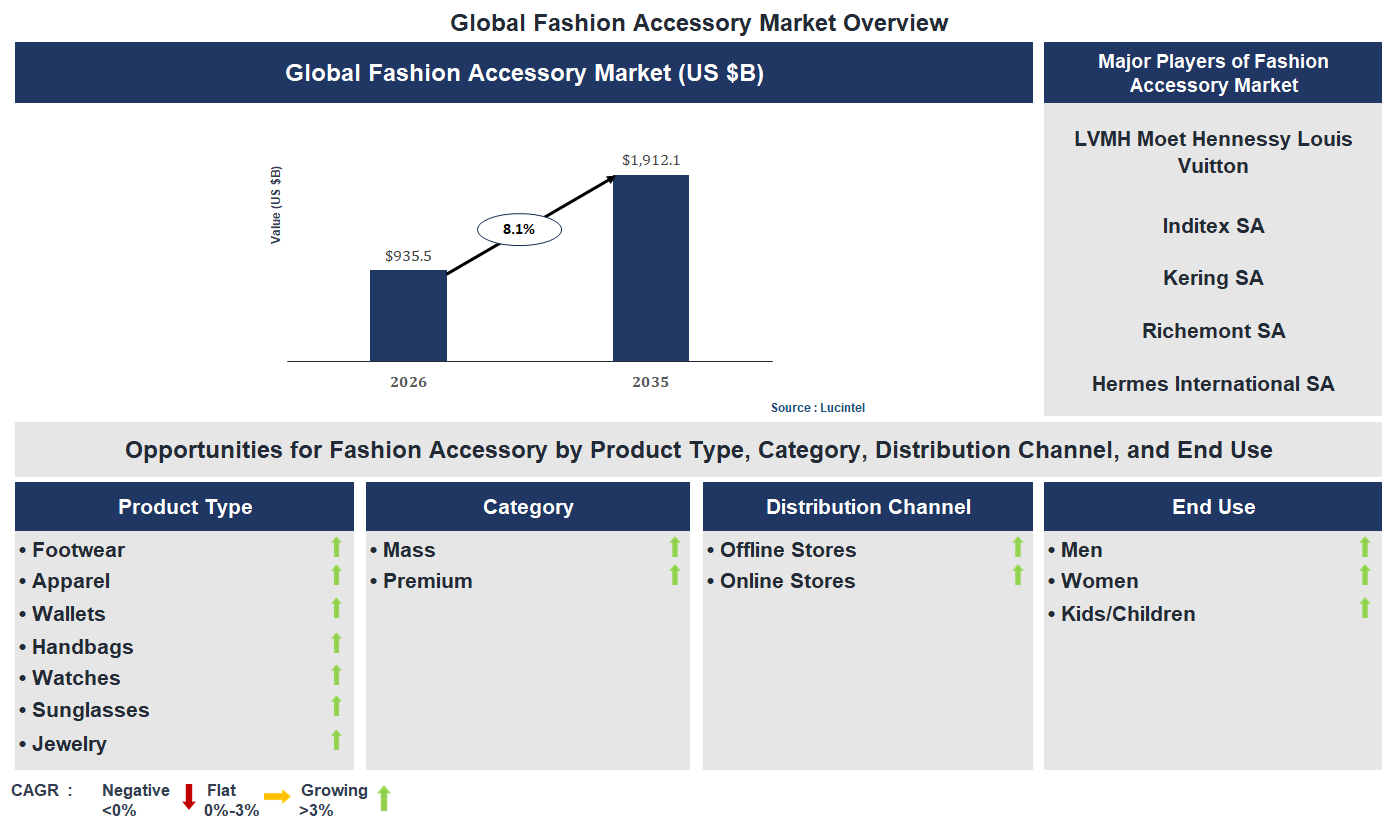
The future of the global fashion accessory market looks promising with opportunities in the offline store and online store markets. The global fashion accessory market is expected to reach an estimated $1912.1 billion by 2035 with a CAGR of 8.1% from 2026 to 2035. The major drivers for this market are the increasing demand for personalized fashion items, the rising influence of social media trends, and the growing preference for sustainable fashion accessories.• Lucintel forecasts that, within the product type category, apparel is expected to witness the highest growth over the forecast period.
• Within the distribution channel category, offline store is expected to witness higher growth.
• In terms of region, APAC is expected to witness the highest growth over the forecast period. Gain valuable insights for your business decisions with our comprehensive 150+ page report. Sample figures with some insights are shown below.
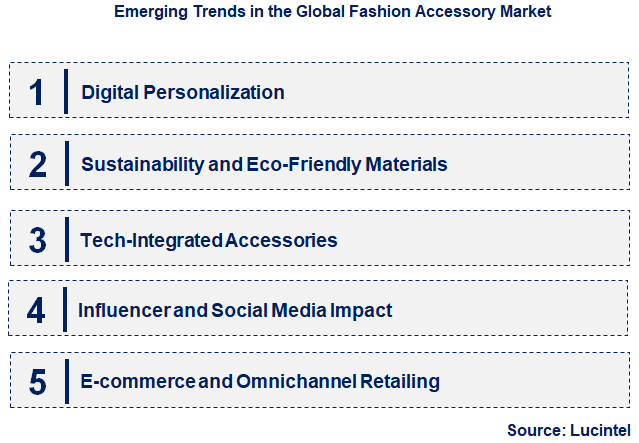
Emerging Trends in the Fashion Accessory Market
The fashion accessory market is experiencing rapid transformation driven by technological advancements, shifting consumer preferences, and global economic changes. As consumers seek personalized, sustainable, and innovative products, brands are adapting quickly to stay competitive. The integration of digital technology, sustainability initiatives, and evolving fashion trends is shaping the future landscape of this industry. These developments are not only influencing product offerings but also redefining how brands engage with their audiences. Understanding these emerging trends is crucial for stakeholders aiming to capitalize on new opportunities and navigate the dynamic environment of the fashion accessory market.• Digital Personalization: Consumers increasingly demand customized accessories tailored to their individual style and preferences. Brands are leveraging AI and data analytics to offer personalized products, enhancing customer engagement and loyalty. This trend allows for more targeted marketing and product development, creating a unique shopping experience. As a result, companies can better meet consumer expectations, reduce inventory waste, and foster stronger brand loyalty, ultimately driving sales growth in a competitive market.
• Sustainability and Eco-Friendly Materials: There is a growing consumer preference for sustainable and ethically produced accessories. Brands are adopting eco-friendly materials such as recycled metals, vegan leather, and biodegradable components. This shift is driven by environmental concerns and a desire for transparency in supply chains. Incorporating sustainability not only appeals to eco-conscious consumers but also helps brands comply with regulations and improve their corporate social responsibility profiles. This trend is reshaping product development and marketing strategies across the industry.
• Tech-Integrated Accessories: Wearable technology and smart accessories are gaining popularity, blending fashion with functionality. Items like smart watches, fitness trackers, and tech-enabled jewelry are becoming mainstream. These products offer convenience, health monitoring, and connectivity, appealing to tech-savvy consumers. The integration of technology into fashion accessories is opening new revenue streams and creating innovative design opportunities, transforming traditional accessory markets into tech-driven segments.
• Influencer and Social Media Impact: Social media platforms and influencers are playing a pivotal role in shaping consumer trends and driving sales. Brands collaborate with influencers to showcase new collections, generate buzz, and reach targeted audiences quickly. User-generated content and viral marketing campaigns amplify brand visibility and credibility. This trend accelerates trend cycles and demands agility from brands to stay relevant. It also emphasizes the importance of digital marketing strategies in the modern fashion accessory landscape.
• E-commerce and Omnichannel Retailing: The shift towards online shopping continues to accelerate, with brands investing in seamless omnichannel experiences. Virtual try-ons, augmented reality, and direct-to-consumer models are enhancing customer convenience and engagement. E-commerce platforms enable brands to reach global markets efficiently, while physical stores integrate digital tools to provide immersive experiences. This trend is transforming traditional retail models, making accessibility and convenience key drivers of growth in the fashion accessory market. In summary, these trends are collectively reshaping the fashion accessory market by emphasizing personalization, sustainability, technological innovation, digital influence, and seamless shopping experiences. They are driving brands to adapt quickly, innovate continuously, and prioritize consumer-centric strategies, ultimately leading to a more dynamic and competitive industry landscape.
Recent Development in the Fashion Accessory Market
The fashion accessory market is experiencing rapid evolution driven by technological advancements, changing consumer preferences, and increasing demand for personalized products. Innovations in sustainable materials and digital integration are reshaping the industry landscape. Market players are focusing on expanding their product lines and enhancing their online presence to capture new customer segments. These developments are creating new opportunities for growth, investment, and competitive differentiation, ultimately influencing the global fashion accessory markets trajectory and consumer engagement.• Growing Demand for Sustainable Accessories: Increasing consumer awareness about environmental impact is driving demand for eco-friendly fashion accessories. Brands are adopting sustainable materials like recycled metals and organic fabrics, which appeal to eco-conscious buyers. This shift not only enhances brand reputation but also opens new market segments. The focus on sustainability is fostering innovation and encouraging companies to develop greener supply chains, thus transforming the industry and promoting responsible consumption.
• Digital Integration and E-Commerce Expansion: The rise of online shopping platforms and digital marketing strategies is significantly impacting the fashion accessory market. Brands are leveraging social media, virtual try-ons, and augmented reality to enhance customer experience. E-commerce provides a wider reach and convenience, enabling brands to target global markets efficiently. This digital shift is accelerating sales growth, reducing reliance on brick-and-mortar stores, and fostering direct-to-consumer models, which are reshaping market dynamics.
• Personalization and Customization Trends: Consumers increasingly seek personalized fashion accessories that reflect their individual style. Brands are offering customization options, such as monogramming and bespoke designs, to meet this demand. This trend enhances customer engagement and loyalty, allowing brands to differentiate themselves in a competitive market. The focus on personalization is driving innovation in product design and manufacturing processes, creating new revenue streams and strengthening brand identity.
• Innovation in Materials and Design: Advances in material science are enabling the creation of innovative, lightweight, and durable accessories. Designers are experimenting with unconventional materials like bio-based plastics and 3D-printed components. These innovations improve product functionality and aesthetic appeal, attracting tech-savvy and trend-conscious consumers. The integration of new materials and design techniques is fostering industry growth, encouraging sustainable practices, and expanding the creative possibilities within the market.
• Expansion into Emerging Markets: Emerging economies present significant growth opportunities due to rising disposable incomes and increasing fashion consciousness. Companies are entering these markets through localized marketing strategies and affordable product lines. This expansion helps diversify revenue streams and tap into new customer bases. As these markets develop, they are expected to become key drivers of global growth, influencing product offerings and marketing approaches to cater to diverse consumer preferences. The overall impact of these developments is a dynamic, innovative, and sustainable fashion accessory market. Increased digitalization, personalization, and expansion into emerging markets are driving growth and competitiveness. Sustainability efforts are reshaping supply chains and product offerings. Collectively, these opportunities are fostering a more inclusive, environmentally responsible, and consumer-centric industry, positioning the market for sustained future growth.
Strategic Growth Opportunities in the Fashion Accessory Market
The fashion accessory market is experiencing rapid expansion driven by changing consumer preferences, technological advancements, and increasing disposable incomes worldwide. As consumers seek personalized and innovative products, brands are exploring new channels and materials to meet these demands. The integration of e-commerce and social media platforms further accelerates growth, enabling brands to reach global audiences efficiently. Strategic investments in product development, sustainability, and digital marketing are creating significant opportunities for market players to enhance their market share and profitability.• Expanding E-commerce Channels for Greater Reach: The growth of online shopping platforms offers brands an unprecedented opportunity to reach a global customer base. E-commerce enables personalized shopping experiences, targeted marketing, and easy access to a diverse range of products. As consumers increasingly prefer online purchasing, brands investing in robust digital infrastructure and user-friendly interfaces can capitalize on this trend, boosting sales and brand visibility across different regions.
• Innovation in Sustainable and Eco-Friendly Accessories: Rising environmental awareness among consumers is driving demand for sustainable fashion accessories. Brands adopting eco-friendly materials, ethical sourcing, and transparent supply chains can differentiate themselves in a competitive market. Developing biodegradable, recycled, or upcycled products not only aligns with consumer values but also opens new market segments, fostering brand loyalty and reducing environmental impact.
• Integration of Technology for Smart Accessories: The incorporation of technology into fashion accessories, such as smart jewelry, wearable tech, and connected devices, presents a significant growth avenue. These innovative products appeal to tech-savvy consumers seeking functionality and style. Collaborations with tech companies and investment in R&D can lead to the development of cutting-edge accessories that enhance user experience, create new revenue streams, and position brands as industry innovators.
• Customization and Personalization Trends: Consumers increasingly seek personalized accessories that reflect their individual style and identity. Brands offering customization options—such as monogramming, bespoke designs, or modular accessories—can attract a broader customer base. Leveraging digital tools and on-demand manufacturing enables quick turnaround times, fostering customer engagement, loyalty, and higher profit margins through premium pricing.
• Strategic Collaborations and Brand Partnerships: Collaborations between fashion brands, designers, and celebrities can generate buzz and expand market reach. Such partnerships often lead to limited-edition collections, attracting media attention and consumer interest. Strategic alliances also facilitate entry into new markets, enhance brand credibility, and foster innovation through shared expertise, ultimately driving sales growth and strengthening market positioning. These growth opportunities—spanning digital expansion, sustainability, technological innovation, personalization, and strategic collaborations—are poised to significantly influence the fashion accessory market. Embracing these trends enables brands to meet evolving consumer demands, differentiate themselves, and sustain competitive advantage in a dynamic industry landscape.
Fashion Accessory Market Driver and Challenges
The fashion accessory market is influenced by a complex interplay of technological, economic, and regulatory factors. Rapid technological advancements have revolutionized design, manufacturing, and distribution channels, enabling brands to reach global audiences efficiently. Economic shifts, such as changing consumer disposable incomes and emerging markets, significantly impact demand and supply dynamics. Regulatory frameworks concerning sustainability, ethical sourcing, and import-export policies also shape market operations. Additionally, evolving consumer preferences driven by social media and cultural trends further influence product innovation and marketing strategies. Navigating these multifaceted drivers and challenges is essential for stakeholders aiming to sustain growth and competitiveness in this dynamic industry. The factors responsible for driving the fashion accessory market include:• Technological Innovation: The integration of advanced technologies like 3D printing, AI, and virtual try-ons has transformed product development and customer engagement. These innovations enable brands to create customized accessories rapidly, reduce production costs, and enhance the shopping experience. E-commerce platforms and social media marketing further expand reach, making it easier for brands to connect with global consumers. As technology continues to evolve, it fosters creativity, efficiency, and personalization, which are critical for staying competitive in a fast-paced market.
• Rising Disposable Incomes: Increasing disposable incomes in emerging economies and developed nations have led to higher consumer spending on fashion accessories. Consumers are now willing to invest in premium, branded, and luxury accessories, driving demand across various segments. This economic growth supports the expansion of retail outlets, online stores, and luxury brands, creating new opportunities for market players. The trend reflects a shift towards more aspirational and style-conscious purchasing behaviors, fueling overall market growth.
• Changing Consumer Preferences: Modern consumers are highly influenced by social media, celebrity endorsements, and cultural trends, which shape their preferences for unique, trendy, and sustainable accessories. The demand for eco-friendly and ethically sourced products is rising, prompting brands to adopt sustainable practices. Additionally, the preference for personalized and customizable accessories is increasing, encouraging innovation in product offerings. These evolving tastes compel brands to adapt quickly, fostering a competitive environment focused on innovation and consumer engagement.
• Globalization and Market Expansion: The globalization of fashion has opened new markets and diversified consumer bases. International brands are expanding into emerging regions such as Asia-Pacific, Latin America, and Africa, where rising middle classes seek fashionable accessories. Cross-border e-commerce and international trade agreements facilitate this expansion, increasing market size and competition. This global reach allows brands to leverage diverse cultural influences, innovate designs, and tap into new revenue streams, making globalization a key driver of growth.
• Sustainability and Ethical Practices: Growing awareness of environmental issues and ethical concerns has prompted brands to adopt sustainable sourcing, eco-friendly materials, and transparent supply chains. Consumers increasingly prefer brands that demonstrate social responsibility, influencing purchasing decisions. Regulatory pressures and industry standards are also pushing companies toward greener practices. Embracing sustainability not only enhances brand reputation but also aligns with long-term market trends, fostering loyalty and opening avenues for innovation in sustainable fashion accessories. The challenges facing the fashion accessory market include:
• Regulatory Compliance and Trade Policies: Stringent regulations related to product safety, environmental standards, and import-export policies pose significant hurdles. Compliance costs can be high, especially for small and medium-sized enterprises, impacting profitability. Trade tensions and tariffs can disrupt supply chains and increase costs, while differing regional standards complicate international expansion. Navigating these regulatory landscapes requires substantial resources and strategic planning, which can hinder agility and growth prospects in the global market.
• Rapidly Changing Consumer Trends: The fast-paced nature of fashion trends demands quick adaptation from brands, which can be challenging to sustain. Failure to anticipate or respond promptly to shifting preferences can lead to excess inventory and financial losses. Additionally, the pressure to innovate continuously may strain resources and lead to increased R&D costs. Staying relevant requires constant market research, agile supply chains, and creative marketing, making trend management a persistent challenge for industry players.
• Supply Chain Disruptions: The global nature of the fashion accessory industry makes it vulnerable to supply chain disruptions caused by geopolitical tensions, pandemics, or natural disasters. These disruptions can delay production, increase costs, and lead to stock shortages, negatively impacting sales and customer satisfaction. Ensuring supply chain resilience involves significant investment in diversification and risk management strategies, which can be resource-intensive. Maintaining a balance between cost efficiency and supply chain stability remains a critical challenge for market participants. In summary, the fashion accessory market is driven by technological advancements, economic growth, consumer preferences, globalization, and sustainability initiatives. However, regulatory complexities, rapid trend shifts, and supply chain vulnerabilities pose substantial challenges. These factors collectively influence market dynamics, requiring companies to innovate, adapt, and strategize effectively. Success in this competitive landscape hinges on leveraging drivers while mitigating challenges, ensuring sustainable growth and long-term profitability.
List of Fashion Accessory Companies
Companies in the market compete on the basis of product quality offered. Major players in this market focus on expanding their manufacturing facilities, R&D investments, infrastructural development, and leverage integration opportunities across the value chain. With these strategies fashion accessory companies cater increasing demand, ensure competitive effectiveness, develop innovative products & technologies, reduce production costs, and expand their customer base. Some of the fashion accessory companies profiled in this report include-• LVMH Moet Hennessy Louis Vuitton
• Inditex SA
• Kering SA
• Richemont SA
• Hermes International SA
• Tapestry Inc.
• Capri Holdings
• Prada SpA
• Giorgio Armani SpA
• Dolce & Gabbana SRL
Fashion Accessory Market by Segment
The study includes a forecast for the global fashion accessory market by product type, category, distribution channel, end use, and region.Fashion Accessory Market by Product Type [Value from 2019 to 2035]:
• Footwear
• Apparel
• Wallets
• Handbags
• Watches
• Sunglasses
• Jewelry
Fashion Accessory Market by Category [Value from 2019 to 2035]:
• Mass
• Premium
Fashion Accessory Market by Distribution Channel [Value from 2019 to 2035]:
• Offline Stores
• Online Stores
Fashion Accessory Market by End Use [Value from 2019 to 2035]:
• Men
• Women
• Kids/Children
Fashion Accessory Market by Region [Value from 2019 to 2035]:
• North America
• Europe
• Asia Pacific
• The Rest of the World
Country Wise Outlook for the Fashion Accessory Market
The fashion accessory market has experienced significant shifts driven by technological innovation, changing consumer preferences, and economic factors. As countries adapt to new trends and sustainability demands, key developments are emerging across major markets. These changes influence product offerings, retail strategies, and consumer engagement, shaping the future landscape of fashion accessories worldwide. Understanding these regional dynamics is essential for industry stakeholders aiming to capitalize on growth opportunities and navigate challenges effectively.• United States: The US market has seen a surge in sustainable and eco-friendly accessories, driven by increasing consumer awareness. Digital retail channels and social media marketing are expanding brand reach, while luxury brands incorporate innovative designs to attract younger consumers. Customization options and smart accessories, such as wearable tech, are gaining popularity, reflecting a shift towards personalized and functional fashion items. The market also benefits from a robust e-commerce infrastructure, facilitating rapid growth and product diversification.
• China: Chinas fashion accessory market continues to grow rapidly, fueled by a burgeoning middle class and rising disposable incomes. Local brands are gaining prominence through innovative designs and collaborations with international designers. E-commerce platforms like Tmall and JD.com dominate sales, with live-streaming and influencer marketing boosting consumer engagement. Sustainability is becoming a focus, with brands exploring eco-friendly materials and transparent supply chains. The integration of technology, such as augmented reality for virtual try-ons, enhances the shopping experience.
• Germany: The German market emphasizes quality, craftsmanship, and sustainability. Consumers favor durable, timeless accessories, with a growing interest in ethically sourced materials. Retailers are adopting omnichannel strategies, blending online and offline experiences to meet customer expectations. Innovation in materials, such as biodegradable and recycled components, is gaining traction. The market also sees increased demand for minimalist and functional designs, aligning with broader European trends towards sustainability and practicality.
• India: The Indian fashion accessory market is expanding rapidly, driven by urbanization and a young, fashion-conscious population. Traditional jewelry and accessories are blending with contemporary styles, creating a diverse product landscape. E-commerce platforms and social media influence purchasing decisions significantly. Local artisans and brands are gaining recognition, emphasizing handcrafted and culturally inspired designs. The market is also witnessing a shift towards sustainable and eco-friendly accessories, with consumers seeking ethically produced items that reflect their cultural identity.
• Japan: Japans market is characterized by innovation and a focus on technology integration. Smart accessories, including wearable tech and digitally connected jewelry, are popular among tech-savvy consumers. Minimalist and functional designs dominate, with an emphasis on quality and craftsmanship. Sustainability initiatives are gaining momentum, with brands exploring eco-friendly materials and production methods. The influence of street fashion and pop culture continues to shape trends, while online retail channels expand access to both domestic and international markets.

Features of the Global Fashion Accessory Market
Market Size Estimates: Fashion accessory market size estimation in terms of value ($B). Trend and Forecast Analysis: Market trends (2019 to 2025) and forecast (2026 to 2035) by various segments and regions. Segmentation Analysis: Fashion accessory market size by various segments, such as by product type, category, distribution channel, end use, and region in terms of value ($B). Regional Analysis: Fashion accessory market breakdown by North America, Europe, Asia Pacific, and Rest of the World. Growth Opportunities: Analysis of growth opportunities in different product types, categories, distribution channels, end uses, and regions for the fashion accessory market. Strategic Analysis: This includes M&A, new product development, and competitive landscape of the fashion accessory market. Analysis of competitive intensity of the industry based on Porter’s Five Forces model.
FAQ
Q1. What is the fashion accessory market size? Answer: The global fashion accessory market is expected to reach an estimated $1912.1 billion by 2035. Q2. What is the growth forecast for fashion accessory market? Answer: The global fashion accessory market is expected to grow with a CAGR of 8.1% from 2026 to 2035. Q3. What are the major drivers influencing the growth of the fashion accessory market? Answer: The major drivers for this market are the increasing demand for personalized fashion items, the rising influence of social media trends, and the growing preference for sustainable fashion accessories. Q4. What are the major segments for fashion accessory market? Answer: The future of the fashion accessory market looks promising with opportunities in the offline store and online store markets. Q5. Who are the key fashion accessory market companies? Answer: Some of the key fashion accessory companies are as follows:• LVMH Moet Hennessy Louis Vuitton
• Inditex SA
• Kering SA
• Richemont SA
• Hermes International SA
• Tapestry Inc.
• Capri Holdings
• Prada SpA
• Giorgio Armani SpA
• Dolce & Gabbana SRL Q6. Which fashion accessory market segment will be the largest in future? Answer: Lucintel forecasts that, within the product type category, apparel is expected to witness the highest growth over the forecast period. Q7. In fashion accessory market, which region is expected to be the largest in next 5 years? Answer: In terms of region, APAC is expected to witness the highest growth over the forecast period. Q8. Do we receive customization in this report? Answer: Yes, Lucintel provides 10% customization without any additional cost.
Table of Contents
List of Figures
List of Tables
Methodology
- In-depth interviews of the major players in this market
- Detailed secondary research from competitors’ financial statements and published data
- Extensive searches of published works, market, and database information pertaining to industry news, company press releases, and customer intentions
- A compilation of the experiences, judgments, and insights of Lucintel’s professionals, who have analyzed and tracked this market over the years.


Buy Now
Choose a license that fits your team. Instant PDF delivery.
Prices exclude taxes. Instant delivery. Custom licensing available on request.
Key Questions
- • What are some of the most promising, high-growth opportunities for the fashion accessory market by product type (footwear, apparel, wallets, handbags, watches, sunglasses, and jewelry), category (mass and premium), distribution channel (offline stores and online stores), end use (men, women, and kids/children), and region (North America, Europe, Asia Pacific, and the Rest of the World)?
- • Which segments will grow at a faster pace and why?
- • Which region will grow at a faster pace and why?
- • What are the key factors affecting market dynamics? What are the key challenges and business risks in this market?
- • What are the business risks and competitive threats in this market?
- • What are the emerging trends in this market and the reasons behind them?
- • What are some of the changing demands of customers in the market?
- • What are the new developments in the market? Which companies are leading these developments?
- • Who are the major players in this market? What strategic initiatives are key players pursuing for business growth?
- • What are some of the competing products in this market and how big of a threat do they pose for loss of market share by material or product substitution?
- • What M&A activity has occurred in the last 7 years and what has its impact been on the industry? For any questions related to Fashion Accessory Market, Fashion Accessory Market Size, Fashion Accessory Market Growth, Fashion Accessory Market Analysis, Fashion Accessory Market Report, Fashion Accessory Market Share, Fashion Accessory Market Trends, Fashion Accessory Market Forecast, Fashion Accessory Companies, write Lucintel analyst at email: helpdesk@lucintel.com. We will be glad to get back to you soon.


