
Market Report · July 20, 2026

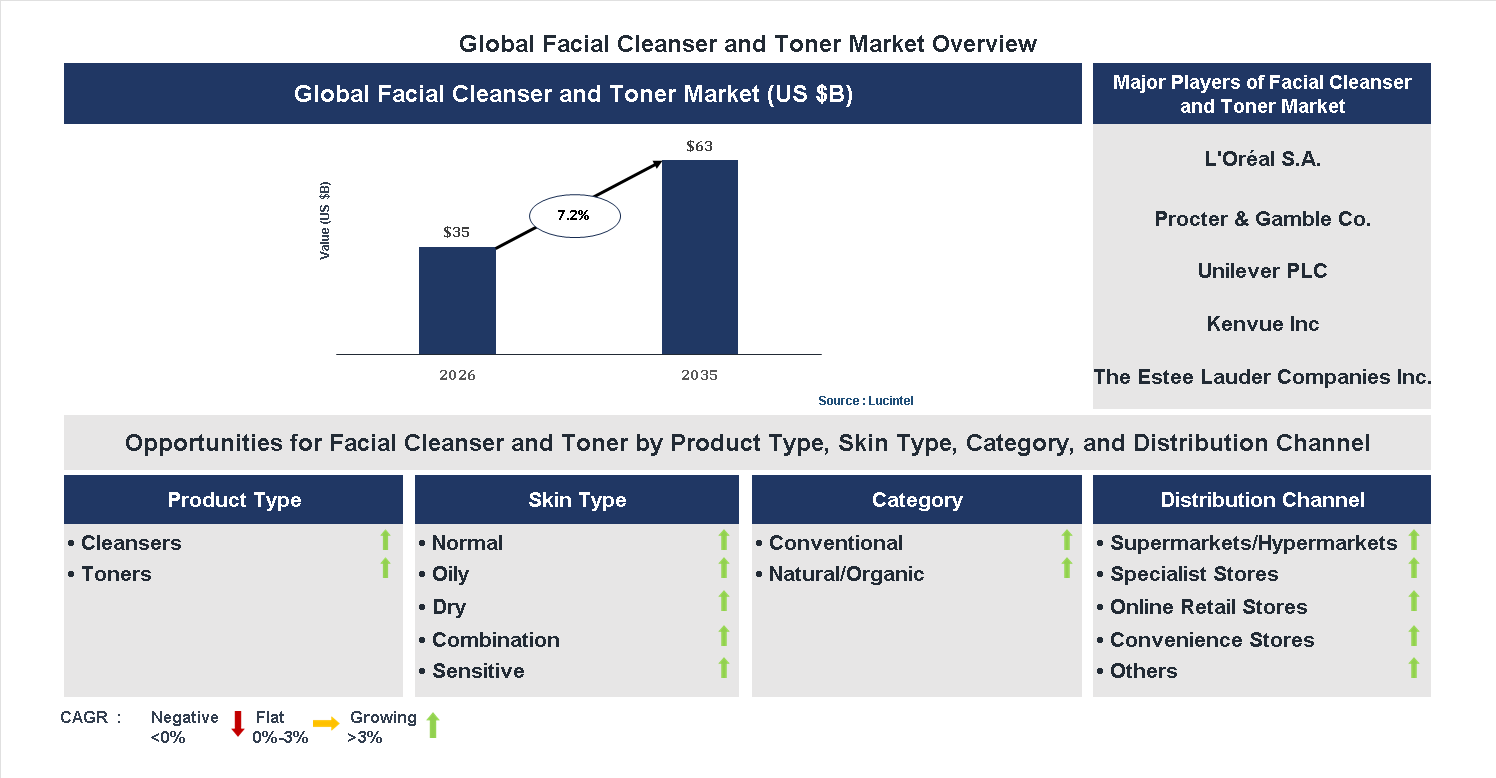
Key data points: The market size in 2035 = $63 billion, growth forecast = 7.2% annually for the next 8 years. Scroll below to get more insights. This market report covers trends, opportunities and forecasts in facial cleanser and toner market to 2035 by product type (cleansers and toners), skin type (normal, oily, dry, combination, and sensitive), category (conventional and natural/organic), distribution channel (supermarkets/hypermarkets, specialist stores, online retail stores, convenience stores, and others), and region (North America, Europe, Asia Pacific, and the Rest of the World)
We'll send your sample report shortly.
• Lucintel forecasts that, within the skin type category, normal is expected to witness the highest growth over the forecast period.
• Within the product type category, cleanser is expected to witness higher growth.
• In terms of region, APAC is expected to witness the highest growth over the forecast period. Gain valuable insights for your business decisions with our comprehensive 150+ page report. Sample figures with some insights are shown below.
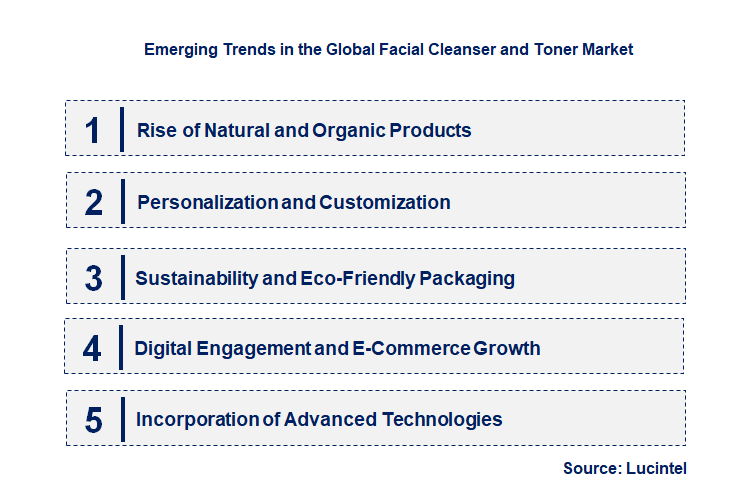
• Rise of Natural and Organic Products: Increasing consumer awareness about chemical-free skincare is driving demand for natural and organic facial cleansers and toners. Consumers prefer products with plant-based ingredients, free from parabens, sulfates, and synthetic fragrances. This trend encourages brands to reformulate and innovate with sustainable ingredients, appealing to health-conscious buyers. The shift towards natural products also aligns with broader environmental concerns, prompting companies to adopt eco-friendly sourcing and production practices. As a result, natural and organic offerings are gaining significant market share, influencing product development and marketing strategies.
• Personalization and Customization: Consumers now seek tailored skincare solutions that address their unique skin types and concerns. Advances in technology enable brands to offer personalized cleansers and toners based on skin analysis, AI-driven diagnostics, and customer preferences. This trend enhances customer engagement and loyalty by providing targeted solutions, improving efficacy, and delivering a more satisfying user experience. Personalization also allows brands to differentiate themselves in a crowded market, fostering innovation in product formulations and marketing approaches. As a result, customized skincare is becoming a key driver of growth and consumer satisfaction.
• Sustainability and Eco-Friendly Packaging: Environmental concerns are prompting brands to adopt sustainable practices, including biodegradable, recyclable, and refillable packaging. Consumers increasingly prefer products that minimize ecological impact, influencing purchasing decisions. Companies are investing in innovative packaging solutions that reduce plastic waste and carbon footprint, aligning with global sustainability goals. This trend not only enhances brand reputation but also meets regulatory requirements and consumer expectations. The shift towards eco-friendly packaging is reshaping supply chains, product design, and marketing, making sustainability a core component of brand identity in the facial cleanser and toner market.
• Digital Engagement and E-Commerce Growth: The rise of digital platforms and e-commerce channels is transforming how consumers discover and purchase skincare products. Brands leverage social media, influencer marketing, and virtual consultations to reach wider audiences and build brand loyalty. The convenience of online shopping, coupled with detailed product information and reviews, influences purchasing decisions. Digital engagement also enables brands to gather valuable consumer data, personalize marketing efforts, and launch targeted campaigns. This trend accelerates market penetration, especially among younger consumers, and encourages innovation in digital marketing strategies and online retail experiences.
• Incorporation of Advanced Technologies: Innovations such as AI, skin sensors, and augmented reality are revolutionizing product development and consumer interaction. AI-driven formulations enable precise targeting of skin concerns, while skin sensors provide real-time analysis for personalized recommendations. Augmented reality apps allow consumers to virtually try products before purchasing, enhancing confidence and satisfaction. These technologies improve product efficacy, streamline the shopping experience, and foster trust. As a result, the integration of advanced tech is making skincare routines more effective and engaging, positioning brands at the forefront of innovation and elevating the overall market standard. These trends are collectively reshaping the facial cleanser and toner market by emphasizing natural ingredients, personalization, sustainability, digital engagement, and technological innovation. They are driving product differentiation, enhancing consumer experience, and fostering sustainable practices, ultimately leading to a more dynamic, responsive, and environmentally conscious industry.
• Growing Demand for Natural and Organic Products: The shift towards clean beauty has increased consumer preference for natural, organic, and chemical-free facial cleansers and toners. This trend is driven by health consciousness and environmental concerns, prompting brands to develop plant-based formulations. The demand for transparency and ingredient safety is encouraging companies to innovate with sustainable ingredients, which enhances brand loyalty and market share. This shift is significantly expanding the market, attracting new customer segments, and fostering product diversification.
• Technological Innovations in Product Formulations: Advances in skincare technology are enabling the development of more effective and targeted facial cleansers and toners. Innovations such as microbiome-friendly formulations, pH-balanced products, and multi-functional solutions are gaining popularity. These technological developments improve product efficacy, safety, and user experience, leading to increased consumer satisfaction. Companies investing in R&D are gaining competitive advantages, expanding their product portfolios, and capturing a larger market share, thus driving overall industry growth.
• Expansion of E-commerce Channels: The rise of online shopping platforms has transformed the distribution landscape for facial cleansers and toners. E-commerce offers consumers convenience, a wider product selection, and access to international brands. Digital marketing strategies, influencer collaborations, and personalized recommendations are boosting online sales. This channel expansion allows brands to reach a broader audience, reduce distribution costs, and gather valuable consumer data. Consequently, e-commerce is becoming a critical growth driver, especially among younger demographics, significantly impacting market dynamics.
• Increasing Focus on Sustainable Packaging and Eco-Friendly Formulations: Environmental concerns are prompting brands to adopt sustainable packaging solutions, such as biodegradable bottles and refillable containers. Eco-friendly formulations, free from harmful chemicals, are also gaining traction. These initiatives appeal to environmentally conscious consumers and enhance brand reputation. Companies investing in sustainability are differentiating themselves in a competitive market, fostering customer loyalty, and complying with regulatory standards. This focus on sustainability is shaping product development strategies and influencing market growth trajectories.
• Rising Popularity of Personalized Skincare Solutions: Consumers are seeking tailored facial cleansers and toners that address specific skin types and concerns. Advances in diagnostics and AI-driven customization enable brands to offer personalized products. This trend enhances consumer engagement and satisfaction, leading to increased brand loyalty. Personalized skincare solutions are also opening new revenue streams for companies, encouraging innovation and product diversification. As demand for customized products grows, the market is witnessing a shift towards more targeted, effective, and consumer-centric offerings. These developments are significantly transforming the facial cleanser and toner market by fostering innovation, sustainability, and consumer-centric approaches. The focus on natural ingredients, technological advancements, e-commerce expansion, eco-friendly packaging, and personalization is driving market growth, attracting new consumers, and increasing competition. Overall, these opportunities are creating a dynamic, sustainable, and highly competitive industry landscape, positioning brands for long-term success and reshaping consumer expectations worldwide.
• Growing Demand for Natural and Organic Facial Cleansers and Toners: Consumers are increasingly prioritizing products with natural ingredients, free from chemicals and synthetic additives. This shift is driven by health consciousness and environmental concerns, prompting brands to develop organic formulations that appeal to eco-conscious buyers. The demand for plant-based, cruelty-free, and sustainable products is fueling innovation and expanding market share in natural skincare segments.
• Rising Popularity of Multi-Functional Skincare Products: Consumers prefer products that combine multiple benefits, such as cleansing, toning, and moisturizing, in a single step. Multi-functional facial cleansers and toners offer convenience, time-saving benefits, and cost-effectiveness. Brands are developing innovative formulations that deliver enhanced skincare benefits, catering to busy lifestyles and increasing consumer loyalty through comprehensive solutions.
• Increasing Adoption of Technologically Advanced Formulations: Advances in skincare technology, such as encapsulation, probiotics, and bioactive ingredients, are enhancing product efficacy. These innovations enable targeted action, longer shelf life, and improved skin compatibility. Companies investing in R&D to incorporate cutting-edge ingredients are gaining competitive advantages, attracting tech-savvy consumers seeking effective, science-backed skincare solutions.
• Expansion of Personalized Skincare Solutions: Customization is becoming a key trend, with brands offering tailored facial cleansers and toners based on individual skin types, concerns, and preferences. This approach enhances customer engagement and satisfaction. The integration of AI and skin analysis tools facilitates personalized product recommendations, driving market growth by meeting specific consumer needs and fostering brand loyalty.
• Growing Influence of E-commerce and Digital Marketing Channels: Online platforms provide wider reach, convenience, and access to a diverse product range. Digital marketing strategies, including social media influencers and targeted advertising, boost brand visibility and consumer engagement. E-commerce growth enables brands to gather consumer data for personalized marketing, accelerating sales and expanding market penetration in both developed and emerging regions. The overall impact of these opportunities is a robust, innovative, and consumer-centric market landscape. Companies that leverage natural ingredients, technological advancements, personalization, and digital channels will be well-positioned for sustained growth. As consumer preferences evolve, embracing these opportunities will be crucial for market players to maintain competitiveness and capitalize on emerging trends in the facial cleanser and toner industry.
• Technological Innovations: The development of advanced formulations and delivery systems enhances product efficacy and consumer appeal. Innovations such as microemulsions, encapsulation, and natural preservative systems improve product stability and performance. These technological advancements enable brands to differentiate themselves and meet consumer demand for effective, safe, and innovative skincare solutions. As R&D investments increase, new product launches with unique features are expected to stimulate market growth, attracting a broader customer base seeking personalized and high-performance facial cleansers and toners.
• Rising Consumer Awareness and Preference for Natural Products: Consumers are increasingly seeking organic, cruelty-free, and chemical-free skincare options. This shift is driven by growing awareness of the potential adverse effects of synthetic ingredients and a desire for sustainable products. Brands that incorporate natural ingredients and transparent labeling are gaining consumer trust and loyalty. The demand for eco-friendly packaging and ethically sourced ingredients further supports this trend. As consumers become more informed and health-conscious, the market for natural facial cleansers and toners is expected to expand significantly, encouraging companies to innovate and adapt their product lines accordingly.
• Economic Growth and Increasing Disposable Income: Economic development in emerging markets has led to higher disposable incomes, enabling consumers to spend more on premium skincare products. This financial empowerment allows consumers to prioritize skincare routines and invest in high-quality facial cleansers and toners. The expanding middle class in regions like Asia-Pacific and Latin America is a key driver, as these consumers seek effective and luxurious skincare solutions. Increased marketing efforts and retail expansion in these regions further boost sales, making economic growth a critical factor in market expansion and product diversification.
• E-commerce and Digital Marketing Expansion: The proliferation of online retail channels and digital marketing strategies has made facial cleansers and toners more accessible to a global audience. E-commerce platforms provide consumers with detailed product information, reviews, and personalized recommendations, influencing purchasing decisions. Social media influencers and targeted advertising campaigns enhance brand visibility and consumer engagement. The convenience of online shopping, coupled with exclusive online offers, encourages repeat purchases and brand loyalty. This digital shift is particularly impactful in reaching younger demographics and expanding market reach beyond traditional retail outlets.
• Regulatory Frameworks and Safety Standards: Stringent regulations regarding product safety, labeling, and ingredient disclosures influence manufacturing and marketing practices. Compliance with standards set by authorities such as the FDA or EU regulations ensures consumer safety and builds brand credibility. However, navigating these regulatory landscapes can be challenging for companies, especially those expanding into new markets. Non-compliance risks legal penalties and damage to reputation. As regulations evolve to address concerns about synthetic chemicals and environmental impact, companies must adapt their formulations and transparency practices, which can impact product development timelines and costs. The challenges facing the facial cleanser and toner market include:-
• Stringent Regulatory Compliance: Navigating complex and evolving regulations related to ingredient safety, labeling, and environmental impact poses significant challenges. Companies must invest in compliance processes to meet diverse regional standards, which can increase costs and delay product launches. Non-compliance risks legal penalties, product recalls, and damage to brand reputation. As authorities tighten regulations around synthetic chemicals, preservatives, and eco-friendly packaging, firms need to continuously adapt their formulations and marketing strategies, which can hinder innovation and market entry, especially for smaller players with limited resources.
• Intense Market Competition: The facial cleanser and toner market is highly competitive, with numerous established brands and new entrants vying for consumer attention. Differentiating products through innovation, branding, and pricing becomes increasingly difficult. Price wars and promotional activities can erode profit margins, while the need for continuous innovation demands substantial R&D investments. Additionally, counterfeit products and grey market sales threaten brand integrity and consumer trust. Companies must develop unique value propositions and strengthen distribution channels to maintain market share in a crowded landscape.
• Fluctuating Raw Material Prices and Supply Chain Disruptions: The market relies heavily on natural ingredients, which are subject to supply chain volatility due to climate change, geopolitical tensions, and agricultural challenges. Fluctuations in raw material prices can impact production costs and profit margins. Supply chain disruptions, such as transportation delays or shortages, can lead to product shortages and delayed launches. These uncertainties force companies to seek alternative sourcing strategies and inventory management practices, increasing operational complexity and costs, which can hinder growth and responsiveness to market demands. The facial cleanser and toner market is shaped by technological advancements, consumer preferences for natural products, economic growth, digital marketing, and regulatory standards. While these drivers foster innovation and expansion, challenges such as regulatory compliance, intense competition, and supply chain issues pose significant hurdles. The overall impact is a dynamic environment requiring strategic agility, innovation, and compliance to capitalize on growth opportunities. Companies that effectively navigate these factors can strengthen their market position and meet evolving consumer needs, ensuring sustained growth in this competitive landscape.
• LOréal S.A.
• Procter & Gamble Co.
• Unilever PLC
• Kenvue Inc
• The Estee Lauder Companies Inc.
• Shiseido Company, Limited
• Beiersdorf AG
• Colgate-Palmolive Company
• Kao Corporation
• LVMH Moët Hennessy Louis Vuitton SE
• Cleansers
• Toners
• Normal
• Oily
• Dry
• Combination
• Sensitive
• Conventional
• Natural/Organic
• Supermarkets/Hypermarkets
• Specialist Stores
• Online Retail Stores
• Convenience Stores
• Others
• North America
• Europe
• Asia Pacific
• The Rest of the World
• United States: The US market has seen a surge in organic and cruelty-free facial cleansers and toners, driven by consumer demand for clean beauty products. Major brands are investing in R&D to develop innovative formulations with natural ingredients. E-commerce sales have increased significantly, with social media influencers shaping trends. There is also a growing focus on eco-friendly packaging and sustainable practices. The rise of personalized skincare solutions, including customizable cleansers and toners, is gaining popularity among consumers seeking tailored products.
• China: The Chinese market is experiencing rapid growth, fueled by increasing urbanization and rising disposable incomes. International brands are expanding their presence through online platforms like Tmall and JD.com, while local brands are gaining market share with affordable, effective products. Natural and herbal ingredients are highly favored, aligning with traditional Chinese medicine principles. Innovations in product formulations and packaging are attracting younger consumers. The market is also witnessing a shift towards premium and luxury skincare products, with a focus on health-conscious and eco-friendly options.
• Germany: The German market emphasizes sustainability and organic certifications, with consumers prioritizing environmentally friendly products. There is a strong demand for dermatologist-recommended and hypoallergenic cleansers and toners. Brands are incorporating innovative ingredients such as probiotics and plant-based extracts. The market is also influenced by strict regulations on product safety and labeling, ensuring high-quality standards. Digital marketing and e-commerce are expanding, with consumers seeking convenient online purchasing options. Additionally, there is a growing trend towards minimalist skincare routines, favoring multi-purpose products.
• India: The Indian market is witnessing rapid growth due to increasing awareness of skincare and rising disposable incomes. Consumers are favoring herbal and ayurvedic formulations, reflecting traditional practices. Local brands are gaining prominence by offering affordable, effective products tailored to Indian skin types. The market is also seeing a rise in natural and organic product demand, driven by health-conscious consumers. E-commerce platforms are playing a crucial role in expanding reach, especially in rural areas. Innovations include herbal toners and cleansers with ingredients like neem, turmeric, and aloe vera, catering to the growing preference for natural skincare.
• Japan: The Japanese market is characterized by a focus on gentle, high-quality skincare products. Consumers prefer products with innovative textures and formulations that emphasize hydration and skin barrier protection. There is a strong trend towards multifunctional products, combining cleansing and toning benefits. Natural ingredients and minimalistic packaging are highly valued. The market is also influenced by technological advancements, such as skincare devices integrated with cleansers and toners. Sustainability and eco-conscious packaging are gaining importance. Japanese consumers continue to prioritize skincare routines that promote healthy, youthful skin, with a preference for scientifically backed products.


• LOréal S.A.
• Procter & Gamble Co.
• Unilever PLC
• Kenvue Inc
• The Estee Lauder Companies Inc.
• Shiseido Company, Limited
• Beiersdorf AG
• Colgate-Palmolive Company
• Kao Corporation
• LVMH Moët Hennessy Louis Vuitton SE Q6. Which facial cleanser and toner market segment will be the largest in future? Answer: Lucintel forecasts that, within the skin type category, normal is expected to witness the highest growth over the forecast period. Q7. In facial cleanser and toner market, which region is expected to be the largest in next 5 years? Answer: In terms of region, APAC is expected to witness the highest growth over the forecast period. Q8. Do we receive customization in this report? Answer: Yes, Lucintel provides 10% customization without any additional cost.


Choose a license that fits your team. Instant PDF delivery.
Prices exclude taxes. Instant delivery. Custom licensing available on request.
Market Report · July 20, 2026
Market Report · July 15, 2026
Market Report · July 15, 2026
Trusted partner for strategic intelligence and business growth


Receive a complimentary market analysis tailored to your industry. Our analysts will identify key growth opportunities and competitive dynamics specific to your business.

Market size, growth rate, and key trend analysis for your specific sector.

Top competitor positioning and market share analysis.

Strategic recommendations backed by data-driven insights.
Get curated market intelligence and competitive moves straight to your inbox.
By subscribing, you agree to receive our monthly insights. Unsubscribe anytime.
Receive a complimentary market analysis tailored to your industry. Our analysts will identify key growth opportunities and competitive dynamics specific to your business.
Market size, growth rate, and key trend analysis for your specific sector.
Top competitor positioning and market share analysis.
Strategic recommendations backed by data-driven insights.
Get curated market intelligence, emerging trends, and competitive moves straight to your inbox each month.
By subscribing, you agree to receive our monthly insights. Unsubscribe anytime.
We'll send your sample report shortly.