
Market Report · July 20, 2026

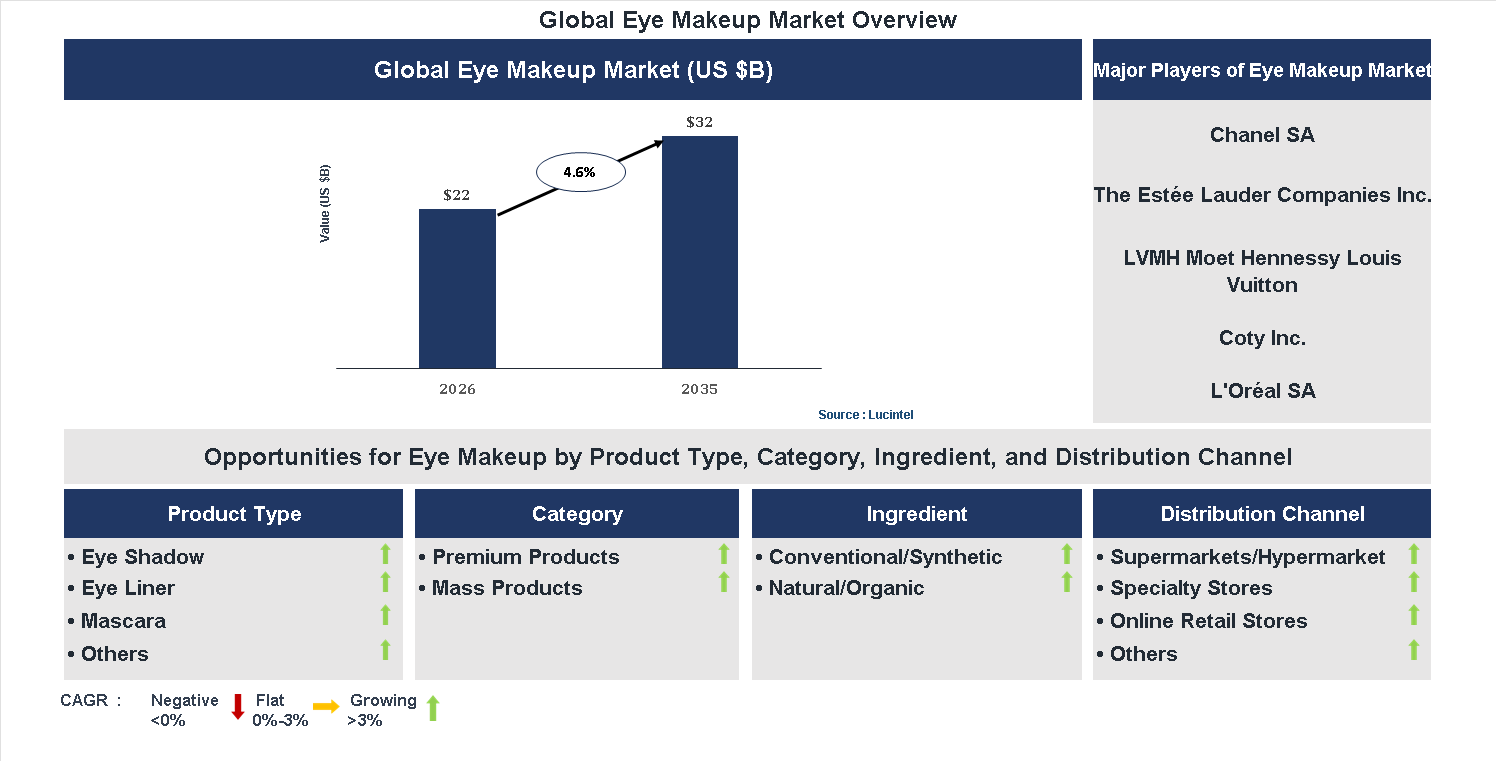
Key data points: The market size in 2035 = $32 billion, growth forecast = 4.6% annually for the next 8 years. Scroll below to get more insights. This market report covers trends, opportunities and forecasts in eye makeup market to 2035 by product type (eye shadow, eye liner, mascara, and others), category (premium products and mass products), ingredient (conventional/synthetic and natural/organic), distribution channel (supermarkets/hypermarket, specialty stores, online retail stores, and others), and region (North America, Europe, Asia Pacific, and the Rest of the World)
We'll send your sample report shortly.
• Lucintel forecasts that, within the product type category, mascara is expected to witness the highest growth over the forecast period.
• Within the ingredient category, conventional/synthetic is expected to witness higher growth.
• In terms of region, APAC is expected to witness the highest growth over the forecast period. Gain valuable insights for your business decisions with our comprehensive 150+ page report. Sample figures with some insights are shown below.
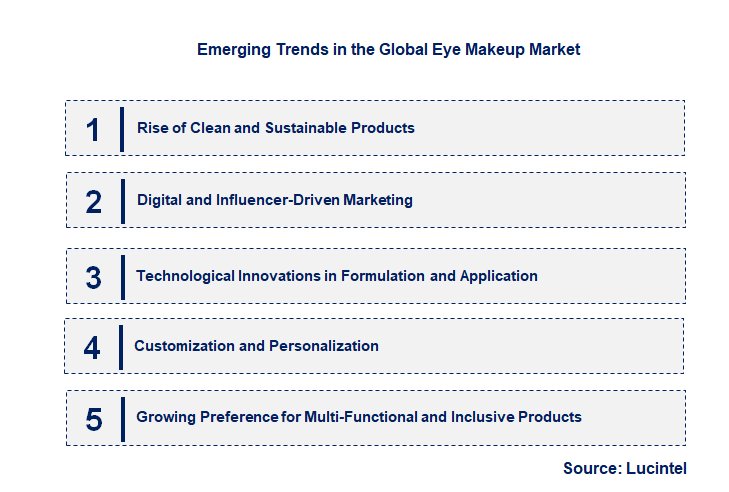
• Rise of Clean and Sustainable Products: Consumers are increasingly prioritizing eco-friendly and non-toxic eye makeup options. Brands are responding by developing products with natural ingredients, biodegradable packaging, and cruelty-free certifications. This trend reflects a broader shift towards sustainability and health consciousness, influencing purchasing decisions and encouraging innovation in formulation and packaging. As a result, the market is witnessing a surge in organic, vegan, and clean-label eye makeup products, appealing to environmentally aware consumers and setting new industry standards.
• Digital and Influencer-Driven Marketing: The proliferation of social media platforms and beauty influencers is significantly impacting the eye makeup market. Brands leverage influencer collaborations, tutorials, and user-generated content to reach targeted audiences effectively. Digital marketing allows for personalized advertising and real-time engagement, boosting brand visibility and consumer trust. This trend democratizes beauty, enabling smaller brands to compete with established players and accelerating product adoption through viral campaigns, ultimately shaping consumer preferences and driving sales growth.
• Technological Innovations in Formulation and Application: Advances in cosmetic science are leading to the development of long-lasting, smudge-proof, and highly pigmented eye makeup products. Innovations such as gel, liquid, and cushion formulas enhance ease of application and durability. Additionally, smart applicators and augmented reality (AR) try-on tools are improving the consumer experience by enabling virtual testing and precise application. These technological advancements are elevating product performance and convenience, fostering brand loyalty, and attracting tech-savvy consumers seeking high-quality, innovative solutions.
• Customization and Personalization: Consumers now demand tailored eye makeup products that suit their individual preferences, skin tones, and styles. Brands are offering customizable palettes, shades, and formulations, often through online platforms that utilize AI and virtual consultations. Personalization enhances consumer engagement and satisfaction, fostering brand loyalty. This trend is also encouraging the development of inclusive shade ranges and versatile products, ensuring broader accessibility and catering to diverse consumer needs, thereby expanding market reach and driving growth.
• Growing Preference for Multi-Functional and Inclusive Products: The market is shifting towards multi-purpose eye makeup products that combine benefits such as hydration, anti-aging, and long wear. Additionally, there is a strong emphasis on inclusivity, with brands expanding shade ranges to accommodate all skin tones and creating products suitable for diverse demographics. This trend reflects a more holistic approach to beauty, emphasizing functionality and representation. It is broadening the consumer base, encouraging innovation, and fostering a more inclusive industry environment that aligns with contemporary social values. These trends are collectively reshaping the eye makeup market by emphasizing sustainability, digital engagement, technological innovation, personalization, and inclusivity. They are driving product development, influencing marketing strategies, and expanding consumer choices, ultimately creating a more dynamic, responsible, and consumer-centric industry landscape.
• Innovation in Formulations: New textures and long-lasting formulas are enhancing consumer experience. Brands are developing smudge-proof, waterproof, and quick-drying products to meet active lifestyles. This innovation increases customer satisfaction and loyalty, driving sales growth. The focus on hypoallergenic and cruelty-free options also appeals to ethically conscious consumers, expanding market reach. Overall, advanced formulations are setting new standards for quality and performance in eye makeup.
• Sustainable Packaging and Eco-Friendly Products: Companies are adopting eco-conscious packaging to reduce environmental impact. Recyclable materials, refillable containers, and biodegradable components are gaining popularity. This shift appeals to environmentally aware consumers and enhances brand reputation. Sustainable practices also align with global regulatory trends, ensuring compliance and future-proofing product lines. The emphasis on eco-friendly packaging is fostering a more responsible and attractive market environment, encouraging brands to innovate sustainably.
• Digital Marketing and Influencer Collaborations: Social media platforms and influencers are playing a pivotal role in shaping consumer preferences. Brands are leveraging influencer partnerships, tutorials, and virtual try-ons to boost engagement. This digital strategy increases brand visibility and drives online sales. Personalized marketing and user-generated content foster community building and trust. As a result, digital marketing is transforming how eye makeup products are promoted, making campaigns more targeted and effective.
• Expansion of E-Commerce Channels: Online retail platforms are becoming primary sales channels for eye makeup products. E-commerce offers convenience, wider product selection, and competitive pricing. Brands are investing in seamless online shopping experiences, virtual try-on tools, and direct-to-consumer models. This expansion allows brands to reach global markets efficiently and gather valuable consumer data. The growth of e-commerce is significantly contributing to increased sales and market penetration in the eye makeup industry.
• Customization and Personalization Trends: Consumers seek personalized eye makeup solutions tailored to their preferences and styles. Brands are offering customizable palettes, shades, and applicators. Digital tools enable virtual consultations and personalized recommendations. This trend enhances customer engagement and satisfaction, fostering brand loyalty. The focus on personalization is driving innovation and differentiation in a competitive market, meeting the demand for unique, individual beauty expressions. The overall impact of these developments is a more innovative, sustainable, and consumer-centric eye makeup market. Enhanced product quality, eco-conscious practices, and digital engagement are expanding market reach and increasing sales. These opportunities are fostering a competitive environment that encourages continuous innovation, ultimately benefiting consumers with diverse, high-quality options and a more responsible industry landscape.
• Innovation in Long-Lasting and Smudge-Proof Formulas: Developing advanced formulations that offer durability, resistance to smudging, and water-proof features can meet consumer demand for reliable eye makeup. Brands investing in research to create innovative textures and ingredients will attract customers seeking high-performance products. This focus on longevity and ease of use enhances customer satisfaction and brand loyalty, driving overall market growth.
• Expansion of Natural and Organic Eye Makeup Products: Rising awareness of health and environmental concerns is fueling demand for natural, organic, and cruelty-free eye makeup options. Companies that develop eco-friendly formulations with safe ingredients can tap into a growing segment of conscious consumers. Offering sustainable packaging and transparent labeling further strengthens brand reputation, opening new avenues for market penetration and consumer trust.
• Growth of E-commerce and Digital Marketing Strategies: The increasing shift toward online shopping provides brands with opportunities to reach wider audiences through e-commerce platforms and social media. Leveraging influencer collaborations, virtual try-on tools, and targeted digital advertising can boost sales and brand visibility. Enhanced online presence allows for personalized marketing, customer engagement, and rapid product launches, accelerating market expansion.
• Rising Popularity of Specialty and Artistic Eye Makeup: Consumers are increasingly experimenting with bold, creative, and artistic eye looks, driving demand for specialty products like glitter, pigments, and unique applicators. Brands that offer innovative, trend-setting products catering to makeup artists and enthusiasts can capitalize on this niche. This trend encourages product diversification and fosters a culture of self-expression, fueling overall market growth.
• Strategic Collaborations and Brand Partnerships: Collaborations between eye makeup brands and fashion designers, celebrities, or influencers can generate buzz and attract new customer segments. Limited-edition collections and co-branded products create exclusivity and excitement, boosting sales. Such partnerships enhance brand visibility, expand consumer reach, and foster innovation, ultimately strengthening the competitive landscape and accelerating market growth. The overall impact of these opportunities is a robust, innovative, and consumer-centric eye makeup market poised for sustained growth. Brands that effectively leverage these strategies can enhance their market share, foster brand loyalty, and meet evolving consumer preferences. Continuous innovation and strategic collaborations will be key drivers in shaping the future landscape of the eye makeup industry.
• Technological Innovations: The advent of new formulations, long-lasting textures, and innovative applicators enhances product efficacy and consumer appeal. Companies invest heavily in R&D to develop hypoallergenic, cruelty-free, and eco-friendly products, which meet evolving consumer expectations. Advanced manufacturing processes also improve product quality and safety, fostering trust and brand loyalty. Digital tools and augmented reality apps enable consumers to virtually try products, increasing purchase confidence and engagement. These technological advancements not only improve product performance but also create opportunities for differentiation in a competitive landscape, fueling market growth.
• Rising Beauty Consciousness: Increasing awareness about personal grooming and beauty standards, especially among younger demographics, drives demand for eye makeup products. Social media influencers and celebrity endorsements amplify beauty trends, encouraging consumers to experiment with different looks. The desire for self-expression and confidence boosts the consumption of eye makeup items such as mascaras, eyeliners, and eyeshadows. Moreover, the growing popularity of makeup tutorials and beauty blogs educates consumers about new products and techniques, further stimulating market expansion. This heightened beauty consciousness directly correlates with increased sales and product innovation within the market.
• Urbanization and Changing Lifestyles: Rapid urbanization leads to a higher concentration of working professionals and urban dwellers who prioritize appearance and grooming. Busy lifestyles create demand for convenient, easy-to-apply, and long-lasting eye makeup products suitable for on-the-go use. The expansion of retail outlets, e-commerce platforms, and beauty salons enhances accessibility and availability of diverse product ranges. Urban consumers tend to follow global beauty trends, prompting brands to develop innovative and trendy eye makeup options. This shift in lifestyle and shopping behavior significantly propels market growth by broadening consumer bases and increasing product penetration.
• Economic Growth and Disposable Income: Improved economic conditions and rising disposable incomes enable consumers to spend more on premium and luxury eye makeup products. As economies grow, consumers are willing to invest in high-quality, branded, and innovative products that offer better results and safety. The increasing affordability of international brands through globalization and e-commerce further boosts sales. Additionally, promotional activities, discounts, and product bundling attract price-sensitive consumers, expanding the market reach. Economic stability thus acts as a catalyst for market expansion by increasing consumer purchasing power and encouraging brand loyalty.
• Product Diversification and Customization: The market witnesses continuous diversification of product offerings to cater to diverse consumer preferences and skin types. Brands develop specialized products such as waterproof eyeliners, hypoallergenic mascaras, and mineral-based eyeshadows to meet specific needs. Customization options, including personalized shades and packaging, enhance consumer engagement and satisfaction. This trend encourages innovation and differentiation, enabling brands to target niche segments and increase market share. The focus on product variety and tailored solutions fosters consumer loyalty and stimulates demand, contributing to overall market growth. The challenges facing the eye makeup market include:-
• Regulatory and Safety Concerns: Stringent regulations regarding ingredient safety, labeling, and environmental impact pose significant hurdles for market players. Compliance with diverse international standards requires substantial investment in testing, certification, and documentation, which can delay product launches and increase costs. Additionally, rising consumer awareness about harmful chemicals and allergens leads to demand for safer, natural, and organic products, compelling brands to reformulate and adapt. Failure to meet regulatory requirements or address safety concerns can result in legal penalties, reputational damage, and loss of consumer trust, thereby hindering market growth.
• Intense Competition and Market Saturation: The eye makeup market is highly competitive, with numerous established brands and new entrants vying for consumer attention. Market saturation makes it challenging for brands to differentiate and maintain market share. Price wars, promotional activities, and product imitation further intensify competition, squeezing profit margins. Additionally, rapid product obsolescence driven by fast-changing trends pressures companies to continuously innovate and invest in marketing. This competitive landscape demands strategic agility and significant marketing expenditure, which can be a barrier for smaller or emerging brands.
• Environmental and Ethical Challenges: Growing environmental concerns and ethical considerations influence consumer choices and regulatory policies. The use of non-biodegradable packaging, animal testing, and synthetic ingredients faces increasing scrutiny. Brands are pressured to adopt sustainable practices, eco-friendly packaging, and cruelty-free formulations, often at higher costs. Failure to align with these ethical standards can lead to consumer boycotts and reputational damage. Balancing innovation, sustainability, and cost-efficiency remains a critical challenge for market players aiming to meet evolving societal expectations while maintaining profitability. The eye makeup market is shaped by rapid technological advancements, changing consumer preferences, and economic factors that promote growth. However, regulatory hurdles, intense competition, and sustainability concerns pose significant challenges. Navigating these drivers and challenges requires strategic innovation, compliance, and a focus on ethical practices. The markets future depends on how effectively brands can adapt to these dynamic forces, balancing innovation with responsibility to sustain long-term growth and consumer trust.
• Chanel SA
• The Estée Lauder Companies Inc.
• LVMH Moet Hennessy Louis Vuitton
• Coty Inc.
• LOréal SA
• Puig SL
• Shiseido Co. Ltd.
• Natura & Co. Holding SA
• Revlon Inc.
• e.l.f. Beauty Inc
• Eye Shadow
• Eye Liner
• Mascara
• Others
• Premium Products
• Mass Products
• Conventional/Synthetic
• Natural/Organic
• Supermarkets/Hypermarket
• Specialty Stores
• Online Retail Stores
• Others
• North America
• Europe
• Asia Pacific
• The Rest of the World
• United States: The US eye makeup market has seen a surge in demand for cruelty-free and vegan products, driven by rising ethical consumerism. Major brands are launching innovative formulations with long-lasting, smudge-proof, and waterproof features. Digital marketing and influencer collaborations are boosting sales, especially through social media platforms. The market is also witnessing growth in premium and luxury segments, with consumers seeking high-quality, exclusive products. Additionally, there is an increasing focus on inclusivity, offering a wider range of shades suitable for diverse skin tones.
• China: China’s eye makeup market is rapidly expanding, fueled by a growing middle class and increasing beauty consciousness among young consumers. Local brands are gaining prominence by offering affordable, trendy, and innovative products tailored to Asian eye shapes. E-commerce platforms and live-streaming sales are major distribution channels, enhancing accessibility and engagement. There is a rising trend in multifunctional products, such as eye palettes with skincare benefits. Sustainability is also gaining importance, with brands introducing eco-friendly packaging and formulations to meet consumer demand.
• Germany: The German eye makeup market is characterized by a focus on quality, safety, and sustainability. Consumers prefer products with natural ingredients and environmentally friendly packaging. The market is witnessing a shift towards minimalist and versatile makeup options, catering to the busy lifestyles of urban consumers. Innovative product launches include waterproof eyeliners and long-lasting mascaras. Digital marketing campaigns emphasizing product transparency and ethical practices are resonating well. The market also shows a growing interest in cruelty-free and organic products, aligning with Germany’s strong environmental values.
• India: The Indian eye makeup market is experiencing rapid growth due to increasing urbanization and changing beauty standards. Traditional products like kohl and kajal are evolving with modern formulations offering smudge-proof and long-lasting features. The rise of social media influencers and beauty tutorials is driving product awareness and adoption. Local brands are expanding their offerings with affordable, innovative, and culturally relevant products. There is also a rising demand for inclusive shades and formulations suitable for diverse skin tones. Eco-friendly and natural ingredients are gaining popularity among environmentally conscious consumers.
• Japan: Japan’s eye makeup market is marked by a preference for high-quality, innovative, and aesthetically appealing products. Consumers favor lightweight, easy-to-apply, and long-lasting formulations. The market is driven by technological advancements, such as smudge-proof and waterproof eyeliners, and the integration of skincare benefits into makeup products. Limited-edition collaborations and cute, packaging designs appeal to the Japanese aesthetic sensibility. Sustainability and eco-conscious products are gaining traction, with brands emphasizing cruelty-free and environmentally friendly ingredients. The market continues to evolve with a focus on precision and natural looks, catering to Japan’s sophisticated beauty consumers.


• Chanel SA
• The Estée Lauder Companies Inc.
• LVMH Moet Hennessy Louis Vuitton
• Coty Inc.
• LOréal SA
• Puig SL
• Shiseido Co. Ltd.
• Natura & Co. Holding SA
• Revlon Inc.
• e.l.f. Beauty Inc Q6. Which eye makeup market segment will be the largest in future? Answer: Lucintel forecasts that, within the product type category, mascara is expected to witness the highest growth over the forecast period. Q7. In eye makeup market, which region is expected to be the largest in next 5 years? Answer: In terms of region, APAC is expected to witness the highest growth over the forecast period. Q8. Do we receive customization in this report? Answer: Yes, Lucintel provides 10% customization without any additional cost.


Choose a license that fits your team. Instant PDF delivery.
Prices exclude taxes. Instant delivery. Custom licensing available on request.
Market Report · July 20, 2026
Market Report · July 15, 2026
Market Report · July 15, 2026
Trusted partner for strategic intelligence and business growth


Receive a complimentary market analysis tailored to your industry. Our analysts will identify key growth opportunities and competitive dynamics specific to your business.

Market size, growth rate, and key trend analysis for your specific sector.

Top competitor positioning and market share analysis.

Strategic recommendations backed by data-driven insights.
Get curated market intelligence and competitive moves straight to your inbox.
By subscribing, you agree to receive our monthly insights. Unsubscribe anytime.
Receive a complimentary market analysis tailored to your industry. Our analysts will identify key growth opportunities and competitive dynamics specific to your business.
Market size, growth rate, and key trend analysis for your specific sector.
Top competitor positioning and market share analysis.
Strategic recommendations backed by data-driven insights.
Get curated market intelligence, emerging trends, and competitive moves straight to your inbox each month.
By subscribing, you agree to receive our monthly insights. Unsubscribe anytime.
We'll send your sample report shortly.