
Market Report · July 22, 2026

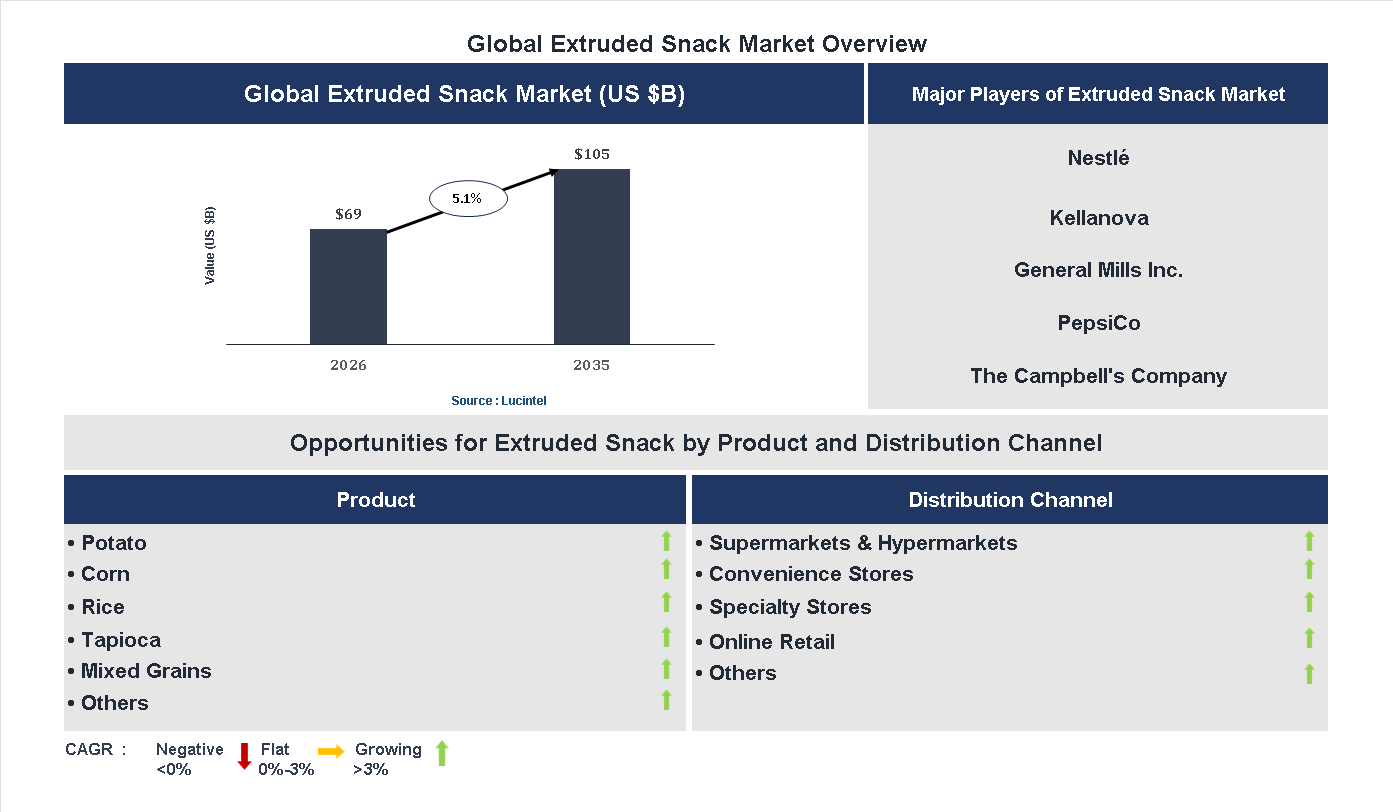
Key data points: The market size in 2035 = $105 billion, growth forecast = 5.1% annually for the next 8 years. Scroll below to get more insights. This market report covers trends, opportunities and forecasts in extruded snack market to 2035 by product (potato, corn, rice, tapioca, mixed grains, and others), distribution channel (supermarkets & hypermarkets, convenience stores, specialty stores, online retail, and others), and region (North America, Europe, Asia Pacific, and the Rest of the World)
We'll send your sample report shortly.
• Lucintel forecasts that, within the distribution channel category, supermarket & hypermarket is expected to witness the highest growth over the forecast period.
• Within the product category, potato is expected to witness the highest growth.
• In terms of region, Europe is expected to witness the highest growth over the forecast period. Gain valuable insights for your business decisions with our comprehensive 150+ page report. Sample figures with some insights are shown below.
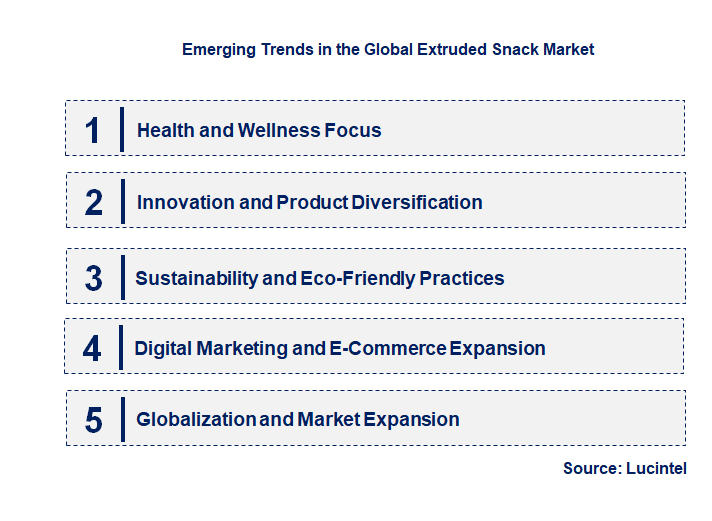
• Health and Wellness Focus: Consumers are increasingly seeking healthier snack options with reduced fat, sugar, and artificial ingredients. This trend is prompting manufacturers to develop products with added nutritional benefits, such as high fiber, protein, or functional ingredients. The demand for clean-label and organic extruded snacks is rising, influencing product formulations and marketing strategies. This shift towards health-conscious products is expanding the market to include a broader demographic, including fitness enthusiasts and health-conscious consumers, thereby driving innovation and growth in the extruded snack segment.
• Innovation and Product Diversification: Companies are investing in R&D to create unique flavors, textures, and formats to attract consumers. Innovations include incorporating ethnic flavors, spicy varieties, and novel ingredients like plant-based proteins. Additionally, product formats such as mini bites, multi-grain, and gluten-free options are gaining popularity. This diversification helps brands differentiate themselves in a competitive market and caters to diverse consumer preferences. Continuous innovation is essential for maintaining consumer interest and expanding market share, making the extruded snack market more dynamic and appealing.
• Sustainability and Eco-Friendly Practices: Environmental concerns are influencing manufacturing processes and packaging choices. Companies are adopting sustainable sourcing of raw materials, reducing waste, and using eco-friendly packaging materials. These practices resonate with environmentally conscious consumers and enhance brand reputation. The shift towards sustainability is also driven by regulatory pressures and the desire to reduce carbon footprints. As a result, the market is witnessing a rise in eco-friendly products, which not only appeal to a broader audience but also promote responsible consumption and production within the industry.
• Digital Marketing and E-Commerce Expansion: The rise of digital platforms is transforming how brands reach consumers. E-commerce channels are becoming vital for product distribution, offering convenience and wider reach. Social media marketing, influencer collaborations, and targeted advertising are increasing brand visibility and consumer engagement. Digital tools also enable personalized marketing and direct consumer feedback, fostering innovation and loyalty. This trend is particularly significant for reaching younger demographics and urban consumers, making online presence and digital marketing essential components of market strategy in the extruded snack industry.
• Globalization and Market Expansion: The extruded snack market is expanding beyond traditional regions into emerging markets. Globalization facilitates the introduction of new flavors, ingredients, and product concepts across borders. International brands are entering local markets, adapting products to regional tastes and preferences. This expansion increases competition but also offers growth opportunities for local manufacturers. The globalization trend is fostering cultural exchange and innovation, leading to a more diverse and vibrant market landscape. It also encourages manufacturers to adopt flexible strategies to cater to a global consumer base, thereby reshaping industry dynamics. These emerging trends—focused on health, innovation, sustainability, digital engagement, and globalization—are collectively transforming the extruded snack market. They are driving product development, expanding consumer bases, and fostering sustainable practices, ultimately reshaping how the industry operates and competes in a rapidly evolving landscape.
• Growing Consumer Demand for Healthy Snacks: The market is witnessing a shift towards healthier options, prompting manufacturers to develop extruded snacks with reduced fat, salt, and artificial ingredients. This trend is expanding the consumer base to include health-conscious individuals and families. Innovative formulations with added nutrients, such as fiber and protein, are gaining popularity. As a result, companies are investing in R&D to create healthier product lines, which are driving sales and market penetration in both developed and emerging markets.
• Technological Innovations in Manufacturing: Advances in extrusion technology have enabled the production of a wider variety of snack textures, shapes, and flavors. Automation and precision engineering improve efficiency, reduce waste, and lower costs. These innovations allow for customization and rapid product development, helping brands respond quickly to consumer preferences. Enhanced shelf life and product stability are also achieved through new processing techniques, boosting overall product quality and consumer satisfaction, thereby strengthening market competitiveness.
• Expansion into Emerging Markets: Rapid urbanization and rising disposable incomes in emerging economies are creating new growth opportunities. Companies are tailoring products to local tastes and preferences, often introducing region-specific flavors and packaging. Strategic partnerships and distribution expansion are facilitating market entry. This growth is significantly increasing market size and diversifying consumer demographics. As a result, companies are experiencing increased sales volumes and brand recognition, positioning themselves for long-term success in these high-potential markets.
• Focus on Sustainability and Eco-Friendly Practices: Consumers and regulators are demanding environmentally sustainable products and packaging. Companies are adopting eco-friendly sourcing, reducing carbon footprints, and using biodegradable packaging materials. These initiatives enhance brand reputation and appeal to environmentally conscious consumers. Sustainability efforts also lead to cost savings and compliance with regulations. As a result, the market is witnessing a shift towards greener practices, which is influencing product development, supply chain management, and overall industry standards.
• Product Innovation and Flavor Diversification: Continuous innovation in flavors, ingredients, and formats is attracting a broader consumer base. Unique and exotic flavors, limited editions, and functional ingredients are being introduced to differentiate products. This diversification caters to evolving tastes and preferences, encouraging repeat purchases. Companies are leveraging consumer insights and market trends to develop appealing new products, which boost sales and market share. The focus on innovation is vital for staying competitive in a rapidly changing industry landscape. The overall impact of these developments is a dynamic, expanding market characterized by increased consumer choice, technological advancement, and sustainable practices. Companies are better positioned to meet diverse consumer needs, leading to higher sales, market penetration, and global growth. These opportunities are fostering innovation, improving product quality, and enhancing competitiveness, ultimately driving the extruded snack market toward sustained long-term growth.
• Product Innovation and Healthier Options Drive Market Expansion: The demand for healthier extruded snacks, such as low-fat, high-protein, and gluten-free varieties, is increasing. Companies are investing in R&D to develop innovative formulations that cater to health-conscious consumers. Incorporating natural ingredients, reducing artificial additives, and offering functional benefits like added vitamins or probiotics are key trends. These innovations help brands differentiate themselves, meet evolving consumer preferences, and expand their market share in a competitive landscape.
• Growing Demand in Emerging Markets Presents Significant Opportunities: Emerging economies in Asia, Africa, and Latin America are witnessing rising disposable incomes and urbanization, leading to increased snack consumption. Local manufacturers are expanding their product portfolios to include extruded snacks tailored to regional tastes. International brands are also entering these markets through strategic partnerships and distribution channels. This growth offers substantial revenue potential, especially as consumers seek affordable, convenient snack options, and provides a platform for long-term market penetration and brand loyalty development.
• Innovation in Flavors and Packaging Enhances Consumer Appeal: Flavor diversification and attractive packaging are crucial for capturing consumer interest in a crowded market. Companies are experimenting with bold, ethnic, and fusion flavors to appeal to diverse palates. Additionally, innovative packaging solutions such as resealable pouches, eco-friendly materials, and portion-controlled packs improve convenience and sustainability. These strategies increase product visibility, encourage repeat purchases, and cater to evolving consumer preferences for personalization and environmental responsibility.
• Expansion of Distribution Channels Accelerates Market Reach: The growth of e-commerce platforms, convenience stores, and modern trade channels is facilitating wider product availability. Online sales enable brands to reach niche markets and younger consumers seeking convenience. Retail partnerships and direct-to-consumer models also enhance market penetration. Strengthening distribution networks ensures product freshness, availability, and visibility, ultimately boosting sales. This expansion supports brand growth, increases consumer access, and helps companies adapt to changing purchasing behaviors.
• Strategic Collaborations and Brand Positioning Foster Market Leadership: Partnerships with foodservice providers, co-branding initiatives, and celebrity endorsements are strengthening brand positioning. Collaborations with health and wellness brands can enhance credibility and appeal to health-conscious consumers. Effective marketing campaigns, social media engagement, and participation in food expos increase brand awareness. These strategies help companies differentiate themselves, build consumer trust, and establish a competitive edge in the evolving extruded snack landscape, ensuring sustained growth and market leadership. The overall growth opportunities in the extruded snack market are poised to significantly influence industry dynamics. Innovation, market expansion, and strategic collaborations will drive revenue growth, diversify product offerings, and enhance consumer engagement. Companies that effectively leverage these opportunities will strengthen their market position, meet evolving consumer demands, and capitalize on emerging trends, ensuring long-term success in this competitive sector.
• Technological Advancements: The development of advanced extrusion machinery and techniques has enabled manufacturers to produce a wider variety of snack products with improved texture, flavor, and nutritional content. Automation and innovation in processing reduce costs and increase efficiency, allowing for rapid product development and customization to meet consumer preferences. These technological improvements also facilitate the use of healthier ingredients, catering to health-conscious consumers, thus expanding market reach.
• Changing Consumer Preferences: Modern consumers are increasingly seeking convenient, tasty, and innovative snack options. There is a rising demand for healthier snacks with natural ingredients, low fat, and reduced artificial additives. Additionally, consumers are interested in unique flavors and functional snacks that offer added health benefits. This shift in preferences encourages manufacturers to innovate and diversify their product offerings, fueling market growth.
• Urbanization and Lifestyle Changes: Rapid urbanization and busy lifestyles have led to a surge in demand for on-the-go snack options. Consumers prefer quick, portable, and ready-to-eat snacks, which extruded snacks conveniently provide. The increasing urban population, especially among millennials and working professionals, supports sustained demand for these products, driving market expansion.
• Economic Growth and Disposable Income: Rising disposable incomes in emerging economies enable consumers to spend more on premium and innovative snack products. Economic development also encourages retail expansion and improved distribution channels, making extruded snacks more accessible. This economic upliftment directly correlates with increased consumption and market growth. The challenges in the extruded snack market are:
• Regulatory and Health Concerns: Stringent regulations related to food safety, labeling, and health standards pose significant challenges. Governments are increasingly imposing restrictions on artificial additives, preservatives, and unhealthy ingredients, which can limit product formulations. Compliance costs and the need for transparency can hinder innovation and increase operational expenses for manufacturers.
• Raw Material Price Volatility: Fluctuations in the prices of key raw materials such as corn, wheat, and oil impact production costs. Price volatility can lead to reduced profit margins and pricing pressures, making it difficult for manufacturers to maintain competitive pricing while ensuring quality. This unpredictability can hamper long-term planning and investment.
• Competition and Market Saturation: The market is highly competitive with numerous local and international players. Market saturation in developed regions limits growth opportunities, forcing companies to innovate continuously and adopt aggressive marketing strategies. Intense competition can lead to price wars, reducing profitability and challenging new entrants. The extruded snack market is driven by technological innovations, evolving consumer preferences, urbanization, and economic growth, which collectively foster expansion. However, regulatory hurdles, raw material price fluctuations, and intense competition present significant challenges. These factors collectively influence market stability and growth potential, requiring stakeholders to adapt strategically. Overall, the market's future depends on balancing innovation with compliance and managing economic and competitive pressures effectively.
• Nestlé
• Kellanova
• General Mills Inc.
• PepsiCo
• The Campbell's Company
• Calbee
• ITC Limited
• Old Dutch Foods, Inc.
• Europesnacks
• Universal Robina Corporation
• Potato
• Corn
• Rice
• Tapioca
• Mixed Grains
• Others
• Supermarkets & Hypermarkets
• Convenience Stores
• Specialty Stores
• Online Retail
• Others
• North America
• Europe
• Asia Pacific
• The Rest of the World
• United States: The U.S. market has seen a surge in health-oriented extruded snacks, such as gluten-free and protein-rich options. Major brands are investing in clean-label ingredients and innovative flavors to attract health-conscious consumers. The rise of e-commerce has expanded reach, while snack bars and multipacks are gaining popularity. Plant-based and organic extruded snacks are also gaining traction, reflecting broader dietary trends. Additionally, sustainability initiatives in packaging are becoming more prominent among leading companies.
• China: China’s extruded snack market is expanding rapidly, driven by urbanization and increasing disposable incomes. Local flavors and ingredients are being incorporated to cater to regional tastes, such as spicy and savory options. The growth of convenience stores and online retail channels has boosted sales. Domestic manufacturers are investing in R&D to develop innovative products, including healthier variants. The younger demographic’s preference for novel and trendy snacks is fueling product diversification. Export opportunities are also emerging as Chinese brands gain international recognition.
• Germany: The German market emphasizes health and sustainability, with a focus on organic, gluten-free, and low-fat extruded snacks. Consumers are increasingly seeking products with clean labels and natural ingredients. Innovation in flavor profiles and functional benefits, such as added vitamins, is prevalent. Retailers are expanding their private label offerings to meet demand for affordable yet healthy options. The market also sees a rise in plant-based and vegan extruded snacks, aligning with Germany’s strong environmental and ethical values. E-commerce sales are growing steadily, supporting market expansion.
• India: India’s extruded snack market is experiencing rapid growth due to changing lifestyles and urbanization. Traditional flavors like masala and spicy variants are popular, with local ingredients being incorporated. The demand for affordable, convenient snacks is driving innovation in packaging and product formats. Healthier options, including baked and low-oil variants, are gaining popularity among health-conscious consumers. Regional and ethnic flavors are being introduced to cater to diverse tastes. The expansion of modern retail outlets and online platforms is further boosting market penetration, with domestic players leading the growth.
• Japan: The Japanese extruded snack market is characterized by a focus on health, quality, and unique flavors. Consumers prefer low-calorie, low-sodium, and functional snacks with added health benefits. Innovation in ingredients, such as incorporating traditional Japanese flavors like wasabi and seaweed, is common. Premium and artisanal products are gaining popularity among discerning consumers. The market also emphasizes sustainable packaging and ethical sourcing. E-commerce and specialty stores are key channels for distribution. Overall, Japan’s market reflects a blend of health consciousness and a penchant for innovative, culturally inspired flavors.


• Nestlé
• Kellanova
• General Mills Inc.
• PepsiCo
• The Campbell's Company
• Calbee
• ITC Limited
• Old Dutch Foods, Inc.
• Europesnacks
• Universal Robina Corporation Q6. Which extruded snack market segment will be the largest in future? Answer: Lucintel forecasts that, within the distribution channel category, supermarket & hypermarket is expected to witness the highest growth over the forecast period. Q7. In extruded snack market, which region is expected to be the largest in next 5 years? Answer: In terms of region, Europe is expected to witness the highest growth over the forecast period. Q8. Do we receive customization in this report? Answer: Yes, Lucintel provides 10% customization without any additional cost.


Choose a license that fits your team. Instant PDF delivery.
Prices exclude taxes. Instant delivery. Custom licensing available on request.
Market Report · July 22, 2026
Market Report · July 22, 2026
Market Report · July 22, 2026
Trusted partner for strategic intelligence and business growth


Receive a complimentary market analysis tailored to your industry. Our analysts will identify key growth opportunities and competitive dynamics specific to your business.

Market size, growth rate, and key trend analysis for your specific sector.

Top competitor positioning and market share analysis.

Strategic recommendations backed by data-driven insights.
Get curated market intelligence and competitive moves straight to your inbox.
By subscribing, you agree to receive our monthly insights. Unsubscribe anytime.
Receive a complimentary market analysis tailored to your industry. Our analysts will identify key growth opportunities and competitive dynamics specific to your business.
Market size, growth rate, and key trend analysis for your specific sector.
Top competitor positioning and market share analysis.
Strategic recommendations backed by data-driven insights.
Get curated market intelligence, emerging trends, and competitive moves straight to your inbox each month.
By subscribing, you agree to receive our monthly insights. Unsubscribe anytime.
We'll send your sample report shortly.