
Market Report · July 22, 2026

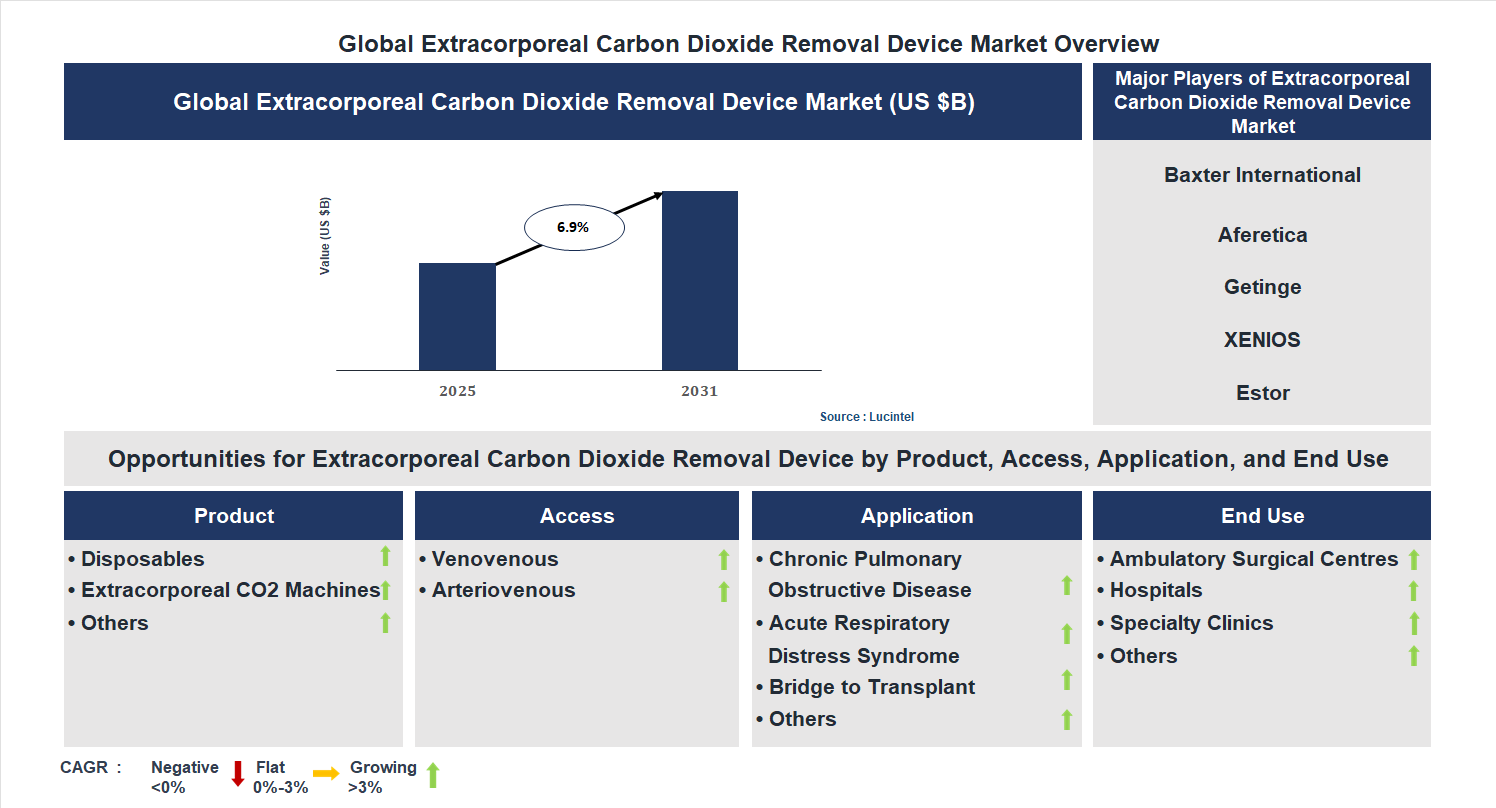
Key data points: The growth forecast = 6.9% annually for the next 7 years. Scroll below to get more insights. This market report covers trends, opportunities and forecasts in extracorporeal carbon dioxide removal device market to 2031 by product (disposables, extracorporeal CO2 machines, and others), access (venovenous and arteriovenous), application (chronic pulmonary obstructive disease, acute respiratory distress syndrome, bridge to transplant, and others), end use (ambulatory surgical centres, hospitals, specialty clinics, and others), and region (North America, Europe, Asia Pacific, and the Rest of the World)
We'll send your sample report shortly.
• Lucintel forecasts that, within the product category, disposable is expected to witness higher growth over the forecast period.
• Within the end use category, hospital is expected to witness the highest growth.
• In terms of region, APAC is expected to witness the highest growth over the forecast period. Gain valuable insights for your business decisions with our comprehensive 150+ page report. Sample figures with some insights are shown below.
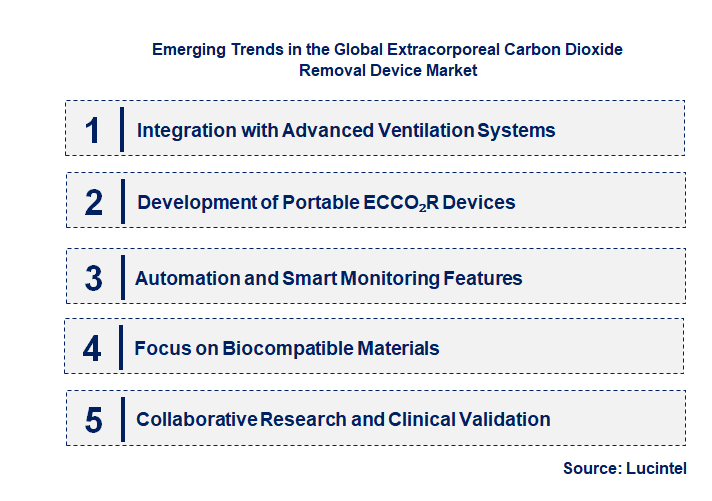
• Integration with Advanced Ventilation Systems: ECCO₂R systems are increasingly being integrated with mechanical ventilators, allowing synchronized control of oxygenation and carbon dioxide removal. This integration minimizes lung injury and optimizes patient management, particularly in intensive care units handling complex respiratory conditions.
• Development of Portable ECCO₂R Devices: Manufacturers are designing lightweight, portable ECCO₂R systems suitable for bedside and transport use. These innovations improve patient mobility, reduce dependency on large hospital equipment, and support the growing need for decentralized and flexible critical care solutions.
• Automation and Smart Monitoring Features: Smart ECCO₂R systems with automated monitoring and feedback mechanisms enhance clinical accuracy. Real-time data analytics allow precise adjustments to flow rates and gas exchange parameters, improving patient outcomes and reducing the burden on medical staff.
• Focus on Biocompatible Materials: Companies are investing in biocompatible membranes and coatings to reduce thrombosis and infection risks. Improved material compatibility increases system durability, patient safety, and device reliability during prolonged use, making ECCO₂R systems more viable for extended clinical applications.
• Collaborative Research and Clinical Validation: Increased collaboration between academic institutions and medical device firms is leading to evidence-based product development. Ongoing trials and research are strengthening regulatory acceptance and expanding the clinical use cases for ECCO₂R in managing respiratory failure. These emerging trends are redefining the extracorporeal carbon dioxide removal device market by enhancing portability, safety, and precision. The integration of smart features and material innovations is enabling more adaptable respiratory support systems, positioning ECCO₂R technology as a critical component of advanced intensive care strategies.
• Launch of Next-Generation Compact Systems: New compact ECCO₂R devices with simplified setup and enhanced mobility are improving clinical accessibility and patient handling.
• Integration with Digital Control Platforms: Advanced ECCO₂R systems now incorporate automated controls and digital monitoring for improved precision and workflow efficiency in intensive care units.
• Focus on Long-Term Biocompatibility: Innovations in coating technologies and membrane materials are extending device lifespan and reducing risks of clot formation and inflammation.
• Expansion of Clinical Research Programs: Hospitals and research institutions are conducting large-scale trials to establish standardized ECCO₂R protocols, enhancing safety and effectiveness.
• Strategic Collaborations for Market Expansion: Partnerships between device manufacturers and healthcare networks are accelerating market reach and enabling cost-effective product distribution globally. These developments are modernizing extracorporeal carbon dioxide removal device market by improving system reliability, clinical usability, and accessibility. The growing collaboration between industry and research sectors is ensuring steady innovation and broader clinical adoption worldwide.
• Critical Care Units: ECCO₂R devices are being increasingly used in intensive care for patients with severe respiratory distress, improving lung-protective ventilation strategies.
• Emergency and Transport Care: Portable ECCO₂R systems are enabling on-the-move support during emergency transfers, ensuring continuous respiratory stabilization for critically ill patients.
• Post-Surgical Recovery: ECCO₂R is being adopted in post-operative care to support patients with compromised lung function, improving recovery time and reducing ventilator dependency.
• Pulmonary Disease Management: Chronic respiratory disease treatment protocols are incorporating ECCO₂R systems to facilitate effective CO₂ clearance, improving patient quality of life.
• Research and Training Institutions: Medical centers are adopting ECCO₂R systems for clinical trials and academic training, supporting knowledge advancement and new treatment methodologies. These strategic applications are broadening the extracorporeal carbon dioxide removal device market’s clinical scope. With enhanced adaptability and safety, ECCO₂R devices are becoming integral to modern respiratory care, offering significant potential for sustainable market expansion.
• Baxter International
• Aferetica
• Getinge
• XENIOS
• Estor
• Disposables
• Extracorporeal CO2 Machines
• Others
• Venovenous
• Arteriovenous
• Chronic Pulmonary Obstructive Disease
• Acute Respiratory Distress Syndrome
• Bridge to Transplant
• Others
• Ambulatory Surgical Centres
• Hospitals
• Specialty Clinics
• Others
• North America
• Europe
• Asia Pacific
• The Rest of the World
• United States: In the United States, hospitals are expanding the clinical adoption of ECCO₂R systems to support patients with respiratory failure. Manufacturers are introducing advanced, user-friendly devices with improved gas exchange efficiency and monitoring capabilities. Research collaborations between hospitals and medical technology firms are enhancing system safety and reliability for prolonged patient support.
• China: China’s ECCO₂R market is growing through domestic manufacturing initiatives and strategic partnerships. Healthcare providers are adopting ECCO₂R devices in tertiary hospitals to improve outcomes for patients with respiratory complications. Local manufacturers are developing cost-effective and technologically upgraded systems, supported by favorable policies encouraging innovation and local production in advanced respiratory care technologies.
• Germany: Germany is emphasizing the clinical expansion of ECCO₂R technology in intensive care units. Hospitals are integrating ECCO₂R systems with advanced ventilators for optimized respiratory support. Research institutions are conducting studies to standardize device protocols and enhance patient safety. These efforts reflect the country’s commitment to adopting precision-driven respiratory management technologies.
• India: India is witnessing gradual adoption of ECCO₂R devices, driven by the need for affordable and accessible respiratory care solutions. Partnerships between healthcare providers and technology suppliers are facilitating clinical trials and pilot projects. The emphasis on cost-efficient, portable systems suitable for high-volume hospitals is fostering innovation and localized device manufacturing.
• Japan: Japan’s ECCO₂R market is advancing through innovation in compact and efficient extracorporeal systems. Medical device companies are focusing on reducing system complexity and improving patient comfort. Integration with real-time monitoring systems and automation features enhances clinical precision. The country’s strong focus on research-driven product development is accelerating market adoption in specialized care settings.


• Baxter International
• Aferetica
• Getinge
• XENIOS
• Estor Q5. Which extracorporeal carbon dioxide removal device market segment will be the largest in future? Answer: Lucintel forecasts that, within the product category, disposable is expected to witness higher growth over the forecast period. Q6. In extracorporeal carbon dioxide removal device market, which region is expected to be the largest in next 5 years? Answer: In terms of region, APAC is expected to witness the highest growth over the forecast period. Q7. Do we receive customization in this report? Answer: Yes, Lucintel provides 10% customization without any additional cost.


Choose a license that fits your team. Instant PDF delivery.
Prices exclude taxes. Instant delivery. Custom licensing available on request.
Market Report · July 22, 2026
Market Report · July 22, 2026
Market Report · July 22, 2026
Trusted partner for strategic intelligence and business growth


Receive a complimentary market analysis tailored to your industry. Our analysts will identify key growth opportunities and competitive dynamics specific to your business.

Market size, growth rate, and key trend analysis for your specific sector.

Top competitor positioning and market share analysis.

Strategic recommendations backed by data-driven insights.
Get curated market intelligence and competitive moves straight to your inbox.
By subscribing, you agree to receive our monthly insights. Unsubscribe anytime.
Receive a complimentary market analysis tailored to your industry. Our analysts will identify key growth opportunities and competitive dynamics specific to your business.
Market size, growth rate, and key trend analysis for your specific sector.
Top competitor positioning and market share analysis.
Strategic recommendations backed by data-driven insights.
Get curated market intelligence, emerging trends, and competitive moves straight to your inbox each month.
By subscribing, you agree to receive our monthly insights. Unsubscribe anytime.
We'll send your sample report shortly.