
Report Feature
External Defibrillator Market Trends and Forecast
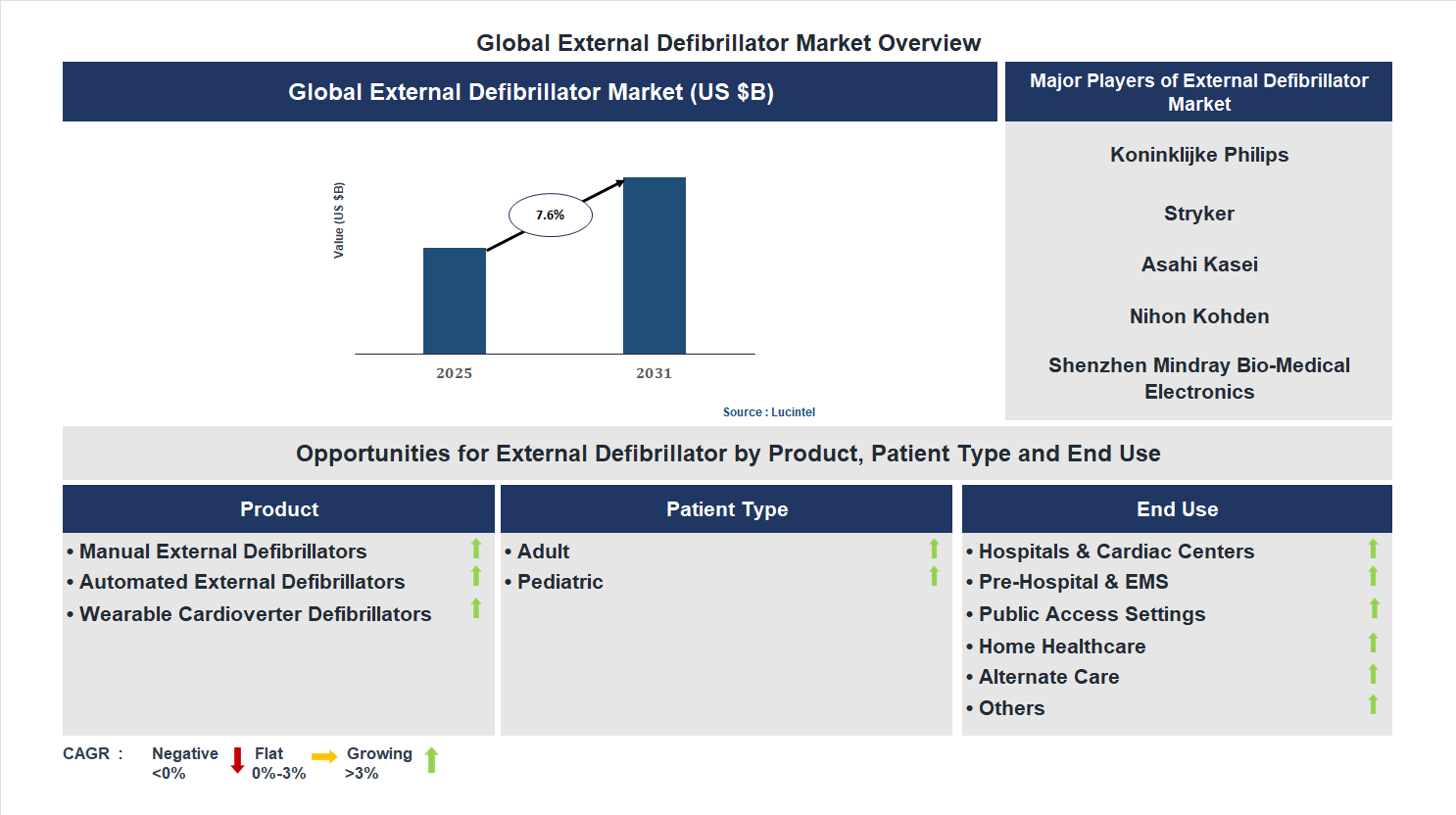
The future of the global external defibrillator market looks promising with opportunities in the hospital & cardiac center, pre-hospital & EMS, public access setting, home healthcare, and alternate care markets. The global external defibrillator market is expected to grow with a CAGR of 7.6% from 2025 to 2031. The major drivers for this market are the increasing incidence of sudden cardiac arrest, the rising awareness about emergency cardiac care, and the growing adoption of automated external defibrillators.• Lucintel forecasts that, within the product category, automated external defibrillator is expected to witness the highest growth over the forecast period.
• Within the end use category, public access setting is expected to witness the highest growth.
• In terms of region, APAC is expected to witness the highest growth over the forecast period. Gain valuable insights for your business decisions with our comprehensive 150+ page report. Sample figures with some insights are shown below.
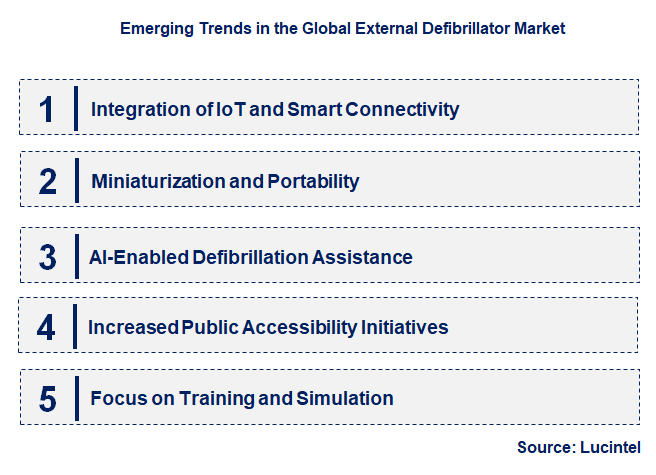
Emerging Trends in the External Defibrillator Market
The external defibrillator market is being transformed by innovation, digital integration, and increased public engagement. As awareness about sudden cardiac arrest grows, manufacturers and governments are focusing on accessibility, reliability, and connectivity. The following key trends highlight how emerging technologies and strategies are enhancing life-saving efficiency across healthcare and public domains.• Integration of IoT and Smart Connectivity: Smart defibrillators with IoT capabilities are improving data sharing, remote maintenance, and emergency tracking. These connected devices ensure readiness through automated system checks, enhance location-based access, and provide real-time operational updates to emergency networks. This integration strengthens community-level cardiac response systems.
• Miniaturization and Portability: Manufacturers are developing lightweight and compact AEDs for easier public use and transport. Portable models enhance accessibility in emergency settings and remote areas. This trend is enabling faster deployment during cardiac events, empowering non-medical personnel to provide life-saving interventions efficiently.
• AI-Enabled Defibrillation Assistance: Artificial intelligence is being integrated into defibrillators to analyze cardiac rhythms accurately and guide users during emergencies. AI algorithms enhance shock precision and reduce response errors. This technological shift improves survival outcomes and simplifies device operation for laypersons.
• Increased Public Accessibility Initiatives: Governments and health organizations are expanding AED installation programs in public areas. Enhanced community awareness and training campaigns are encouraging bystander intervention, resulting in broader AED utilization and better preparedness for cardiac emergencies in non-hospital settings.
• Focus on Training and Simulation: Digital training platforms and virtual simulations are helping users gain practical knowledge of AED use. These initiatives improve response confidence and readiness among citizens, creating safer communities equipped with essential cardiac response skills. Emerging trends are redefining the external defibrillator market through innovation, connectivity, and accessibility. As devices become smarter and more portable, and as public training expands, the global cardiac response network is becoming faster, more efficient, and highly responsive to life-threatening emergencies.
Recent Development in the External Defibrillator Market
Recent developments in the external defibrillator market emphasize innovation, accessibility, and connectivity. Manufacturers and healthcare organizations are focusing on enhancing device reliability, improving operational simplicity, and ensuring widespread deployment across both professional and public sectors. The following developments highlight major advancements shaping the global market landscape.• Launch of Smart Connected Defibrillators: Manufacturers are introducing connected AEDs with real-time data monitoring and self-diagnostic features. These devices ensure operational readiness and faster emergency responses.
• Growth of Public Access AED Programs: Governments and healthcare institutions are expanding initiatives for installing AEDs in airports, schools, and commercial complexes to increase community-level emergency response.
• Advancement in Battery and Energy Systems: New models feature improved battery life and energy efficiency, ensuring reliable operation and reduced maintenance for extended periods.
• Introduction of Pediatric-Compatible Devices: Innovative AEDs now include settings suitable for both adult and pediatric use, increasing their applicability and safety across diverse patient demographics.
• Integration with Emergency Dispatch Systems: AEDs are being integrated with emergency call centers for immediate location tracking and response coordination, ensuring quicker lifesaving interventions. These developments are modernizing the external defibrillator market, making devices more intelligent, accessible, and user-friendly. The integration of smart technologies and expanded public availability is strengthening global emergency preparedness and patient survival outcomes.
Strategic Growth Opportunities in the External Defibrillator Market
The external defibrillator market offers significant growth opportunities across multiple applications as healthcare systems and public agencies focus on improving emergency response capabilities. Technological advancement and community preparedness programs are expanding the reach and efficiency of defibrillation across critical care environments.• Hospitals and Clinics: Hospitals are upgrading to advanced defibrillator models with data integration and patient monitoring features, improving care coordination and treatment outcomes during cardiac events.
• Emergency Medical Services (EMS): Ambulance and emergency units are adopting portable AEDs and professional defibrillators to ensure immediate intervention during pre-hospital cardiac emergencies.
• Public Access Locations: Deployment of AEDs in public facilities such as transport hubs, malls, and schools enhances community readiness and enables timely intervention before professional help arrives.
• Military and Aviation Applications: Compact and durable defibrillators are being deployed in military and aviation sectors to manage cardiac emergencies in challenging and remote environments.
• Corporate and Educational Institutions: Workplaces and schools are increasingly investing in AED installations and staff training to ensure rapid response during health emergencies, improving safety standards. Strategic opportunities across these applications are expanding the role of external defibrillators in emergency response. Enhanced accessibility, technological integration, and user preparedness are driving broader market adoption and improving cardiac care resilience worldwide.
External Defibrillator Market Driver and Challenges
The external defibrillator market is shaped by technological, economic, and healthcare factors. Key drivers include rising cardiac health awareness, technological innovations, and government-led public safety initiatives. However, challenges such as high device costs, limited public training, and regulatory complexities continue to influence market expansion and adoption patterns globally. The factors responsible for driving the external defibrillator market include: 1. Increasing Prevalence of Cardiac Emergencies: The growing occurrence of sudden cardiac arrest has heightened demand for accessible defibrillation devices, driving widespread installations across public and medical settings. 2. Technological Advancements in Defibrillation Devices: Innovations such as AI integration, smart connectivity, and portability are enhancing efficiency and user confidence in life-saving interventions. 3. Rising Focus on Public Safety Programs: Government and community initiatives promoting public access AEDs are increasing awareness and improving emergency readiness among non-medical users. 4. Improvement in Emergency Response Infrastructure: Enhanced collaboration between healthcare networks and emergency services supports faster intervention and better patient survival outcomes. 5. Expansion of Training and Awareness Initiatives: Increased emphasis on CPR and AED training programs is creating a knowledgeable public base capable of performing life-saving procedures effectively. Challenges in the external defibrillator market are: 1. High Cost of Advanced Devices: The expense associated with technologically advanced defibrillators limits adoption, especially in low-resource regions. 2. Lack of Public Awareness and Training: Despite increased availability, inadequate knowledge of AED usage restricts the effectiveness of public access programs. 3. Regulatory and Maintenance Complexities: Varying safety regulations and maintenance requirements create operational challenges for large-scale deployment and device upkeep. The external defibrillator market continues to expand through innovation, awareness, and government support. However, addressing cost barriers, regulatory hurdles, and training gaps remains essential to achieving universal accessibility and improving global cardiac emergency outcomes.List of External Defibrillator Companies
Companies in the market compete on the basis of product quality offered. Major players in this market focus on expanding their manufacturing facilities, R&D investments, infrastructural development, and leverage integration opportunities across the value chain. With these strategies external defibrillator companies cater increasing demand, ensure competitive effectiveness, develop innovative products & technologies, reduce production costs, and expand their customer base. Some of the external defibrillator companies profiled in this report include-• Koninklijke Philips
• Stryker
• Asahi Kasei
• Nihon Kohden
• Shenzhen Mindray Bio-Medical Electronics
• Schiller
• GE Healthcare
• Medtronic
• Abbott Laboratories
• Boston Scientific Corp
External Defibrillator Market by Segment
The study includes a forecast for the global external defibrillator market by product, patient type, end use, and region.External Defibrillator Market by Product [Value from 2019 to 2031]:
• Manual External Defibrillators
• Automated External Defibrillators
• Wearable Cardioverter Defibrillators
External Defibrillator Market by Patient Type [Value from 2019 to 2031]:
• Adult
• Pediatric
External Defibrillator Market by End Use [Value from 2019 to 2031]:
• Hospitals & Cardiac Centers
• Pre-Hospital & EMS
• Public Access Settings
• Home Healthcare
• Alternate Care
• Others
External Defibrillator Market by Region [Value from 2019 to 2031]:
• North America
• Europe
• Asia Pacific
• The Rest of the World
Country Wise Outlook for the External Defibrillator Market
The external defibrillator market is advancing globally due to technological innovation, increased public awareness of cardiac health, and expanded access to life-saving devices. Governments and healthcare providers are emphasizing the importance of early cardiac arrest intervention, driving the adoption of automated and portable defibrillators across hospitals, emergency services, and public areas. Major economies are witnessing rapid modernization of defibrillation infrastructure.• United States: The U.S. market is expanding with strong focus on public access defibrillation programs. Deployment of automated external defibrillators (AEDs) in public spaces and workplaces is increasing. Manufacturers are introducing wireless-connected devices that integrate real-time monitoring and remote maintenance capabilities, improving readiness and emergency response times for sudden cardiac arrest incidents nationwide.
• China: China is advancing its external defibrillator market through large-scale installation of smart AED systems in public facilities. The integration of digital connectivity, GPS tracking, and centralized management platforms ensures quick accessibility and monitoring. Public awareness initiatives and collaborations between local authorities and private manufacturers are driving wider adoption and better preparedness for cardiac emergencies.
• Germany: Germany’s external defibrillator market is focusing on structured training programs and compliance with safety standards. Healthcare institutions are investing in technologically advanced AEDs equipped with voice guidance and real-time feedback systems. Integration of defibrillators with emergency response networks ensures faster assistance, contributing to improved survival rates and a more connected cardiac emergency ecosystem.
• India: In India, urban hospitals and emergency centers are increasingly adopting external defibrillators to strengthen cardiac care infrastructure. Partnerships between private players and healthcare organizations are improving accessibility and affordability. Awareness campaigns promoting timely defibrillation are supporting the growth of AED installations in public institutions and high-traffic areas, addressing rising cardiovascular health concerns.
• Japan: Japan’s external defibrillator market is evolving with the integration of smart, compact, and user-friendly AEDs designed for public and institutional use. Government initiatives promoting cardiac emergency preparedness are increasing installations in transportation hubs and schools. Advanced models with real-time monitoring and automated analysis are improving response accuracy and reliability in emergency situations.

Features of the Global External Defibrillator Market
Market Size Estimates: External defibrillator market size estimation in terms of value ($B). Trend and Forecast Analysis: Market trends (2019 to 2024) and forecast (2025 to 2031) by various segments and regions. Segmentation Analysis: External defibrillator market size by product, patient type, end use, and region in terms of value ($B). Regional Analysis: External defibrillator market breakdown by North America, Europe, Asia Pacific, and Rest of the World. Growth Opportunities: Analysis of growth opportunities in different products, patient types, end uses, and regions for the external defibrillator market. Strategic Analysis: This includes M&A, new product development, and competitive landscape of the external defibrillator market. Analysis of competitive intensity of the industry based on Porter’s Five Forces model.
FAQ
Q1. What is the growth forecast for external defibrillator market? Answer: The global external defibrillator market is expected to grow with a CAGR of 7.6% from 2025 to 2031. Q2. What are the major drivers influencing the growth of the external defibrillator market? Answer: The major drivers for this market are the increasing incidence of sudden cardiac arrest, the rising awareness about emergency cardiac care, and the growing adoption of automated external defibrillators. Q3. What are the major segments for external defibrillator market? Answer: The future of the external defibrillator market looks promising with opportunities in the hospital & cardiac center, pre-hospital & EMS, public access setting, home healthcare, and alternate care markets. Q4. Who are the key external defibrillator market companies? Answer: Some of the key external defibrillator companies are as follows:• Koninklijke Philips
• Stryker
• Asahi Kasei
• Nihon Kohden
• Shenzhen Mindray Bio-Medical Electronics
• Schiller
• GE Healthcare
• Medtronic
• Abbott Laboratories
• Boston Scientific Corp Q5. Which external defibrillator market segment will be the largest in future? Answer: Lucintel forecasts that, within the product category, automated external defibrillator is expected to witness the highest growth over the forecast period. Q6. In external defibrillator market, which region is expected to be the largest in next 5 years? Answer: In terms of region, APAC is expected to witness the highest growth over the forecast period. Q7. Do we receive customization in this report? Answer: Yes, Lucintel provides 10% customization without any additional cost.
Table of Contents
List of Figures
List of Tables
Methodology
- In-depth interviews of the major players in this market
- Detailed secondary research from competitors’ financial statements and published data
- Extensive searches of published works, market, and database information pertaining to industry news, company press releases, and customer intentions
- A compilation of the experiences, judgments, and insights of Lucintel’s professionals, who have analyzed and tracked this market over the years.


Buy Now
Choose a license that fits your team. Instant PDF delivery.
Prices exclude taxes. Instant delivery. Custom licensing available on request.
Key Questions
- • What are some of the most promising, high-growth opportunities for the external defibrillator market by product (manual external defibrillators, automated external defibrillators, and wearable cardioverter defibrillators), patient type (adult and pediatric), end use (hospitals & cardiac centers, pre-hospital & EMS, public access settings, home healthcare, alternate care, and others), and region (North America, Europe, Asia Pacific, and the Rest of the World)?
- • Which segments will grow at a faster pace and why?
- • Which region will grow at a faster pace and why?
- • What are the key factors affecting market dynamics? What are the key challenges and business risks in this market?
- • What are the business risks and competitive threats in this market?
- • What are the emerging trends in this market and the reasons behind them?
- • What are some of the changing demands of customers in the market?
- • What are the new developments in the market? Which companies are leading these developments?
- • Who are the major players in this market? What strategic initiatives are key players pursuing for business growth?
- • What are some of the competing products in this market and how big of a threat do they pose for loss of market share by material or product substitution?
- • What M&A activity has occurred in the last 5 years and what has its impact been on the industry? For any questions related to External Defibrillator Market, External Defibrillator Market Size, External Defibrillator Market Growth, External Defibrillator Market Analysis, External Defibrillator Market Report, External Defibrillator Market Share, External Defibrillator Market Trends, External Defibrillator Market Forecast, External Defibrillator Companies, write Lucintel analyst at email: helpdesk@lucintel.com. We will be glad to get back to you soon.


