
Market Report · July 16, 2026

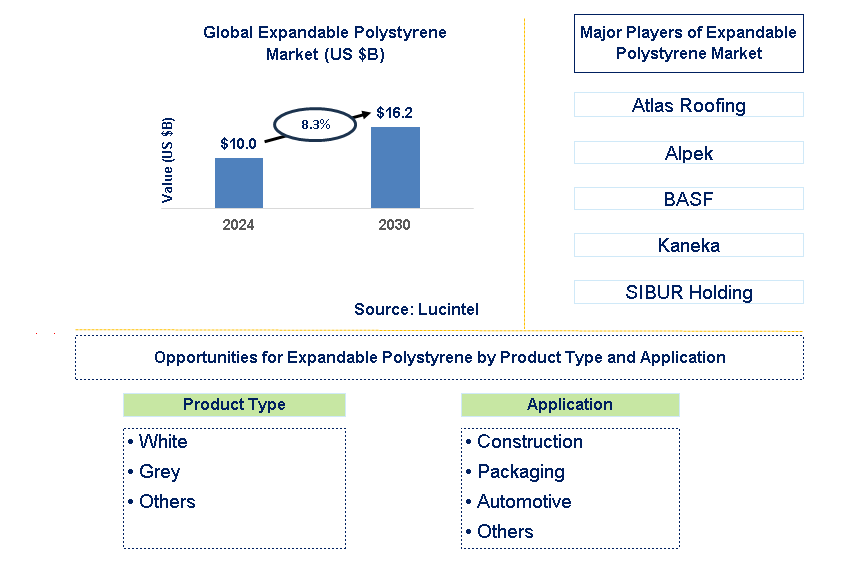
Key data points: The market size in 2030 = $16.2 billion, growth forecast = 8.3% annually for the next 6 years. Scroll below to get more insights. This market report covers trends, opportunities, and forecasts in the global expandable polystyrene market to 2030 by product type (white, grey, and others), application (construction, packaging, automotive, and others), and region (North America, Europe, Asia Pacific, and the Rest of the World)
We'll send your sample report shortly.
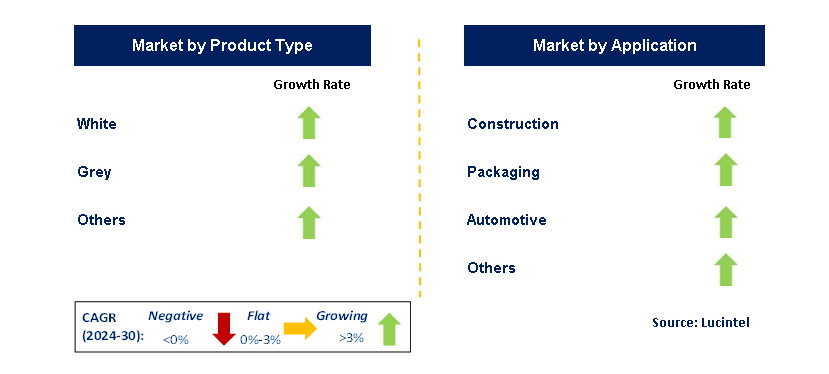
• Lucintel forecasts that, within the product type category, white will remain the larger segment over the forecast period due to its extensive use in packaging applications, including consumer goods packaging, electronics product packaging, and food packaging of food trays.
• Within the application category, construction will remain the largest segment due to significant application of expandable polystyrene in this sector given to its great thermal insulation, low weight, chemical inertness, and resistance to bacteria and pests.
• In terms of regions, APAC will remain the largest region over the forecast period due to increasing demand for expandable polystyrene in various sectors, such as construction, packaging, and automotive in the region. Gain valuable insights for your business decisions with our 150+ page report.
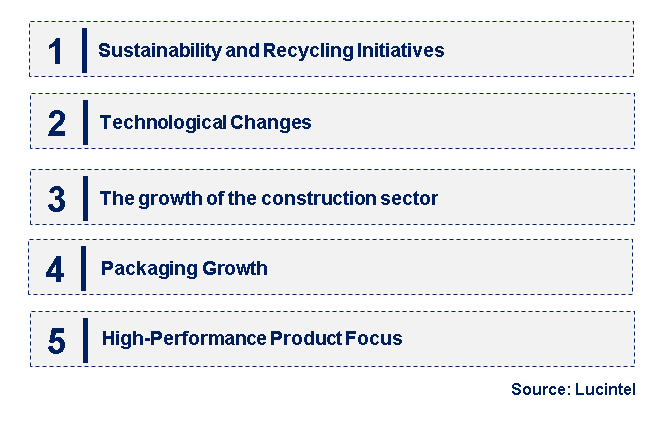
• Sustainability and Recycling Initiatives: The EPS industry has become very concerned with sustainability, with increased emphasis on recycling and the development of eco-friendly products. Several firms have invested in technologies that enhance processes for recycling EPS and developing recyclable EPS formulations. This trend addresses environmental concerns and meets global goals on sustainability, thus improving the long-term viability of the market.
• Technological Changes: New EPS production technologies improve the quality and efficiency of products. Improvements in blowing agents and automation of production processes reduce costs and achieve better performance. These advances allow for the manufacture of high-performance EPS with better insulation properties that reduce environmental impact.
• The growth of the construction sector is improving the demand for EPS, owing to its good insulation properties. In fact, the focus on energy-efficient buildings and sustainable methods of construction has increased, driving the demand for EPS. This underlines the importance of EPS in current construction due to its increasing use as both insulation material and components in buildings.
• Packaging Growth: Because of its lightweight and protective nature, EPS remains one of the most used packaging materials. Expanding industries, particularly in e-commerce and consumer goods, have forced enterprises to increase demand for EPS packaging solutions. Companies are developing new EPS formulations to fulfill specific packaging requirements, such as shock absorption and thermal protection.
• High-Performance Product Focus: High-performance EPS products are gaining demand and embody significant improvements in properties like thermal insulation and fire resistance. These trends respond to specifications for niche applications, including those related to automotive and electronics. Thus, companies have invested in R&D for the formulation of advanced EPS grades to meet these challenging specifications. These are the emerging trends that act as contributing factors to significant changes in the EPS market. Sustainability, technology, and increased applications are a few of the factors that will determine the future face of the industry. Companies, through investment in these trends, are developing better product offerings, enhancing their competitiveness in the market, and meeting the dynamic expectations of consumers and regulators.
• Recycling Technologies: Advances in recent years in the recycling technologies of EPS are improving process efficiency and increasing the reuse of EPS materials. These include advanced sorting and processing systems that will improve the quality of recycled EPS and reduce environmental impact by moving toward a circular economy.
• Sustainability Initiatives: The industry is also focused on sustainability by developing various recyclable and eco-friendly EPS products. Companies are interested in seeking alternative materials and methods of production as a way of reducing the environmental footprint EPS leaves behind, in order to meet global sustainability goals and regulations.
• Technological Innovations in Production: Improvements in EPS production technologies, such as new blowing agents and automation processes, are enhancing product quality and increasing productivity. These innovations are helping to reduce production costs of EPS and enhance its performance characteristics, making the polymer more competitive in various applications.
• Growth in Construction Applications: The demand for EPS in the construction field is increasing due to its superior thermal insulation properties. Developments have recently ranged from the use of EPS in energy-efficient building materials to infrastructure projects. This trend reflects a broader emphasis on sustainability and energy conservation within the construction sector.
• Packaging Growth: The packaging industry is increasingly using EPS material due to its lightweight and protective nature. Recent developments involve the creation of special formulations of EPS for advanced shock absorption along with thermal protection. This growth mainly pertains to the expansion of e-commerce, which involves growth in packaging solutions. The above are some of the critical happenings that have shaped the EPS market by enhancing its sustainability, improving production technologies, and increasing the number of applications. Recycling, technology, and market growth in construction and packaging are the three factors driving the evolution of the industry to set it for the future.
• Energy-Efficient Building Material: Increasing concern for energy-efficient and sustainable building construction creates a new avenue for EPS manufacturers in developing value-added insulation materials. Companies may focus on high-performance products with superior thermal properties to gain better benefits from the emerging demand for energy-saving building solutions.
• Recycling and Circular Economy: EPS recycling and the circular economy show significant growth potential. Advanced recycling technologies and recyclable EPS product designs can help companies meet regulatory requirements and sustainability goals, opening up new avenues and increasing brand value.
• E-Commerce Packaging Solutions: The rise of e-commerce opens up new avenues of growth for EPS in packaging applications. In line with emerging demand for safe and environmentally acceptable packaging, companies can create innovative EPS packaging solutions that offer better protection and efficiency for the e-retailing business.
• Specialized Industrial Applications: EPS finds new applications in more specialized industries such as automotive and electronics. High-performance EPS products can be developed with improved fire resistance and durability, enabling companies to capture these niche markets and fulfill specific industry demands.
• Expanding Reach into Emerging Markets: One growth opportunity for EPS manufacturers is expanding their reach into emerging markets, including Asia-Pacific and Latin America. Due to growing industrialization and infrastructure development, there will be increasing demand in these regions for EPS for use in construction and packaging, among other applications, opening new opportunities for the market. This list of strategic growth opportunities profiles key areas in which EPS manufacturers can grow and innovate. By paying close attention to energy-efficient building materials, recycling, e-commerce packaging, specialized applications, and emerging markets, companies will be well placed for long-term success and growth within the EPS market.
• Technological Development: Increased innovations in EPS production technologies and formulation processes drive market demand. Advancements in blowing agents and automation systems enhance product quality and efficiency, thereby reducing costs and making products more competitive.
• Growing Demand for Energy-Efficient Solutions: The increasing trend of energy efficiency within the building and industrial sectors creates wider demand for EPS. Hence, its distinguishing characteristic of insulation quality makes it the best choice for energy-saving materials in building and also for thermal protection across diverse applications.
• Packaging Industry Growth: The growth in the packaging industry, influenced by e-commerce and consumer goods, is responsible for increasing demand for packaging solutions involving EPS. Its lightweight and protective characteristics are ideal for packaging, hence driving market growth. Challenges in the expandable polystyrene market are:
• Environmental Concerns: Environmental issues and regulations regarding the impact of EPS present challenges for the industry. Companies must address waste generated from EPS and develop sustainable solutions to meet both regulatory requirements and customer expectations.
• Raw Material Cost Fluctuations: Fluctuations in raw material costs used in EPS production can impact profitability. Companies need to manage cost variations effectively to offer competitive pricing while maintaining market stability.
• Competition in the Marketplace: Competition among manufacturers of EPS is high, creating tough competition that lowers market share and prices. Thus, companies must innovate and differentiate their products to remain competitive and capture market opportunities. Drivers and challenges are two factors that shape the growth and development of the EPS market. Technological advancements, demand for energy-efficient solutions, expansion in packaging, and growth in emerging markets are positive influencing factors, whereas environmental concerns, raw material costs, and competition present challenges. Long-term success in this market can be achieved by appropriately balancing these factors.
• Atlas Roofing
• Alpek
• BASF
• Kaneka
• SIBUR Holding
• BEWI
• SUNPOR
• Synthos
• TotalEnergies
• Flint Hills Resources
• White
• Grey
• Others
• Construction
• Packaging
• Automotive
• Others
• North America
• Europe
• Asia Pacific
• The Rest of the World
• United States: Ongoing sustainability concerns and technological advancements are transforming the EPS market in the U.S. into a more sustainable and technologically viable product. The trend of investing in recyclable and environmentally friendly products that could reduce environmental strain and comply with stricter environmental regulations is strong. Innovations in production techniques have also made EPS a preferred building and packaging material due to increased efficiency and quality. Moreover, rapid penetration of EPS in energy-efficient insulation applications reflects the emerging trend toward green building practices.
• China: Rapidly developing demand for EPS is driven by high growth in industry and increasing construction and packaging demands. Recent developments include refining production technology to enhance product performance and reduce costs. The Chinese government emphasizes sustainable development by creating state-of-the-art eco-friendly products. Enormous investments are flowing into manufacturing capacity, and with export growth, China is rapidly emerging as a major player in the global EPS market.
• Germany: Technological innovations and eco-concerns are driving the EPS market in Germany. The focus is on high-performance EPS with better thermal insulation features, as demand for energy-efficient building materials continues to soar. Germany leads in recycling with innovations in various EPS recycling technologies to improve environmental impact and circularity of the material. All efforts aim to comply with strict environmental regulations and sustainability goals set by the European Union.
• India: The Indian market is also developing with increased construction and growing demands for lightweight and efficient packaging solutions. Local players are investing in manufacturing capacity to meet the rising demand for EPS, emphasizing improved production technologies that will enhance quality while addressing regulatory issues related to environmental sustainability. The government’s push for the construction of affordable housing projects will support demand for EPS in insulation applications in the future.
• Japan: In Japan, the EPS market reflects a strong focus on innovation and energy efficiency. Development in new production methods has increased product quality and reduced waste. Japan is also seeing an increased demand for EPS packaging solutions due to the growing e-commerce market, while new regulations regarding packaging waste are leading companies to invest in recyclable EPS products.


• Atlas Roofing
• Alpek
• BASF
• Kaneka
• SIBUR Holding
• BEWI
• SUNPOR
• Synthos
• TotalEnergies
• Flint Hills Resources Q6. Which expandable polystyrene market segment will be the largest in future? Answer: Lucintel forecasts that white will remain the larger segment over the forecast period due to its extensive use in packaging applications, including consumer goods packaging, electronics product packaging, and food packaging of food trays. Q7. In expandable polystyrene market, which region is expected to be the largest in next 5 years? Answer: APAC will remain the largest region over the forecast period due to increasing demand for expandable polystyrene in various sectors, such as construction, packaging, and automotive in the region. Q.8 Do we receive customization in this report? Answer: Yes, Lucintel provides 10% customization without any additional cost.


Choose a license that fits your team. Instant PDF delivery.
Prices exclude taxes. Instant delivery. Custom licensing available on request.
Market Report · July 16, 2026
Market Report · July 15, 2026
Market Report · July 15, 2026
Trusted partner for strategic intelligence and business growth


Receive a complimentary market analysis tailored to your industry. Our analysts will identify key growth opportunities and competitive dynamics specific to your business.

Market size, growth rate, and key trend analysis for your specific sector.

Top competitor positioning and market share analysis.

Strategic recommendations backed by data-driven insights.
Get curated market intelligence and competitive moves straight to your inbox.
By subscribing, you agree to receive our monthly insights. Unsubscribe anytime.
Receive a complimentary market analysis tailored to your industry. Our analysts will identify key growth opportunities and competitive dynamics specific to your business.
Market size, growth rate, and key trend analysis for your specific sector.
Top competitor positioning and market share analysis.
Strategic recommendations backed by data-driven insights.
Get curated market intelligence, emerging trends, and competitive moves straight to your inbox each month.
By subscribing, you agree to receive our monthly insights. Unsubscribe anytime.
We'll send your sample report shortly.