
Report Feature
Exoskeleton Robot Market Trends and Forecast
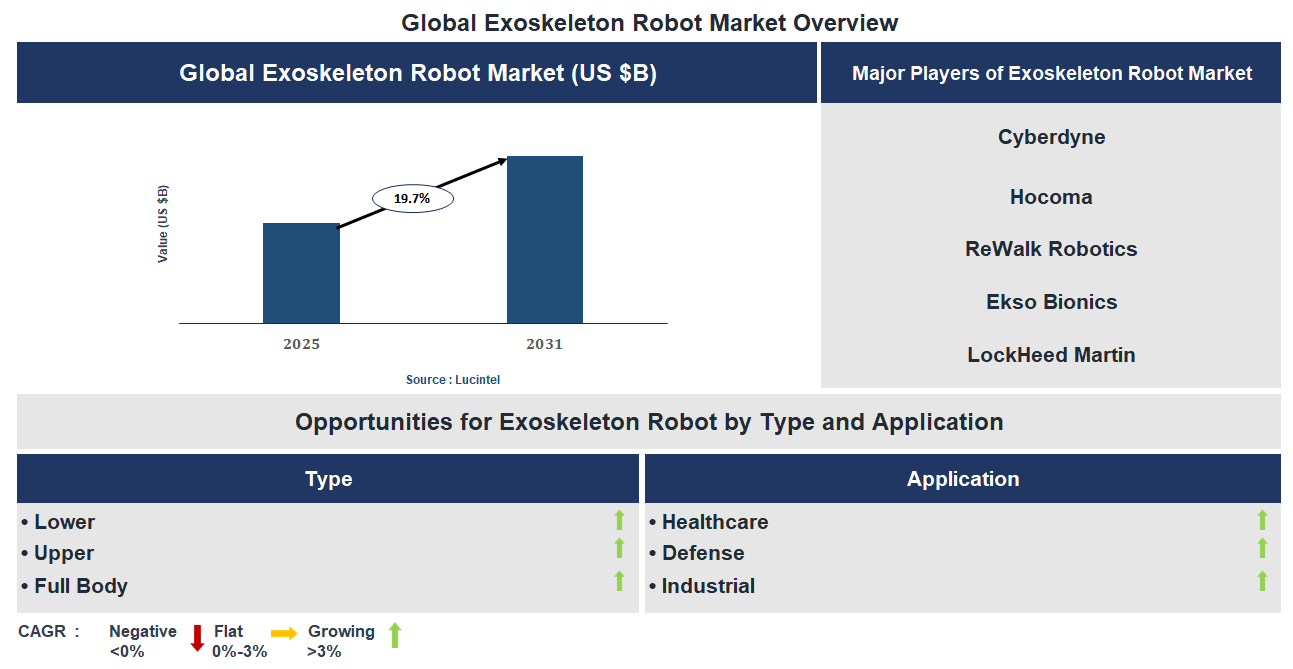
The future of the global exoskeleton robot market looks promising with opportunities in the healthcare, defense, and industrial markets. The global exoskeleton robot market is expected to grow with a CAGR of 19.7% from 2025 to 2031. The major drivers for this market are the increasing demand for mobility assistance devices, the rising prevalence of physical disabilities, and the growing investment in healthcare robotics technology.• Lucintel forecasts that, within the type category, full body is expected to witness the highest growth over the forecast period.
• Within the application category, healthcare is expected to witness the highest growth.
• In terms of region, APAC is expected to witness the highest growth over the forecast period. Gain valuable insights for your business decisions with our comprehensive 150+ page report. Sample figures with some insights are shown below.
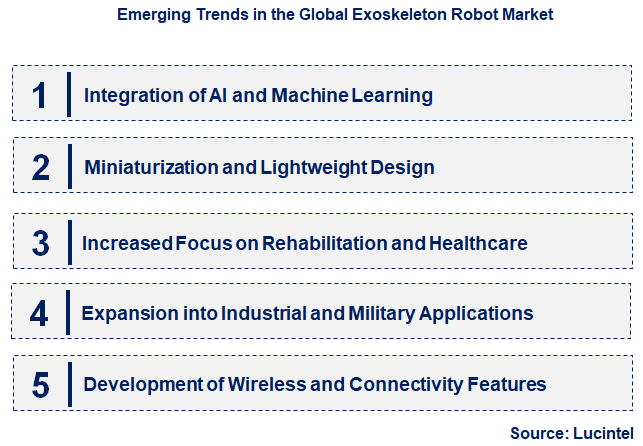
Emerging Trends in the Exoskeleton Robot Market
The exoskeleton robot market is experiencing rapid growth driven by technological advancements, increasing demand for rehabilitation and industrial applications, and a focus on improving human capabilities. As industries and healthcare sectors seek innovative solutions to enhance productivity, safety, and patient outcomes, several emerging trends are shaping the future of this market. These developments are not only expanding the scope of exoskeleton applications but also making these devices more accessible, efficient, and integrated with other technologies. Understanding these key trends is essential for stakeholders aiming to capitalize on the markets potential and address evolving user needs effectively.• Integration of AI and Machine Learning: This trend involves embedding artificial intelligence and machine learning algorithms into exoskeletons to enable adaptive control and personalized assistance. AI-powered exoskeletons can learn from user movements, optimize support levels, and improve responsiveness over time. This enhances user comfort, reduces fatigue, and increases safety, especially in rehabilitation and industrial settings. The integration also facilitates predictive maintenance and data collection for better performance analysis, making exoskeletons smarter and more efficient.
• Miniaturization and Lightweight Design: Advances in materials science and engineering are leading to smaller, lighter exoskeletons that do not compromise strength or functionality. These compact designs improve user comfort, mobility, and ease of use, encouraging wider adoption across healthcare, military, and industrial sectors. Lightweight exoskeletons reduce fatigue during prolonged use and are more discreet, which is particularly important for wearable applications. This trend is crucial for expanding the market to include more diverse user groups, including elderly and disabled individuals.
• Increased Focus on Rehabilitation and Healthcare: The healthcare sector is increasingly adopting exoskeletons for physical therapy, mobility assistance, and stroke rehabilitation. These devices help restore movement, improve muscle strength, and reduce recovery time. The trend is driven by technological improvements, cost reductions, and a growing aging population requiring mobility aids. As clinical evidence supports their efficacy, healthcare providers are integrating exoskeletons into standard treatment protocols, which is expanding market opportunities and fostering innovation in medical exoskeleton design.
• Expansion into Industrial and Military Applications: Beyond healthcare, exoskeletons are gaining traction in industrial environments to enhance worker strength, reduce injury risk, and improve productivity. Military applications include load carriage and enhanced endurance for soldiers. This trend is driven by the need for safer, more efficient work environments and the desire to augment human capabilities in demanding conditions. As these applications grow, they are prompting the development of rugged, high-performance exoskeletons tailored for tough environments, thereby broadening the market scope.
• Development of Wireless and Connectivity Features: The integration of wireless communication and connectivity options allows exoskeletons to interface with other devices and systems. This enables real-time data sharing, remote monitoring, and control, which are vital for rehabilitation progress tracking and industrial safety management. Connectivity also facilitates software updates and customization, enhancing device longevity and user experience. As IoT and wearable technology trends accelerate, wireless exoskeletons are becoming more versatile, user-friendly, and integrated into broader digital health and industrial ecosystems. In summary, these emerging trends are transforming the exoskeleton robot market by making devices more intelligent, comfortable, versatile, and integrated. They are expanding applications across healthcare, industrial, and military sectors, driving innovation, and increasing market accessibility. As these developments continue, the market is poised for significant growth, with exoskeletons becoming essential tools for enhancing human capabilities and safety in various environments.
Recent Development in the Exoskeleton Robot Market
The exoskeleton robot market has experienced rapid growth driven by technological advancements, increasing applications in healthcare, industrial sectors, and military use. As demand for enhanced mobility, strength, and rehabilitation solutions rises, key developments are shaping the future landscape of this industry. Innovations in materials, AI integration, and regulatory approvals are accelerating market expansion. Additionally, collaborations between tech firms and healthcare providers are fostering new product launches. The markets evolution reflects a shift towards more sophisticated, accessible, and versatile exoskeleton solutions, promising improved quality of life and productivity across various sectors.• Technological Advancements: Integration of AI and machine learning has enhanced exoskeleton responsiveness and adaptability, improving user experience and safety. These innovations enable real-time adjustments, making devices more intuitive and effective, which broadens their application scope and accelerates market growth.
• Material Innovation: The adoption of lightweight, durable materials such as carbon fiber and advanced composites has reduced device weight and increased comfort. This development improves user compliance and extends usage duration, positively impacting market adoption, especially in healthcare and industrial sectors.
• Regulatory Approvals: Increased approvals from regulatory bodies like the FDA have facilitated market entry for new exoskeleton devices. These approvals boost consumer confidence, encourage investments, and accelerate commercialization, thereby expanding market reach and adoption.
• Healthcare Applications Expansion: The use of exoskeletons in rehabilitation and mobility assistance has surged, driven by aging populations and rising disability rates. This growth enhances patient outcomes and reduces long-term healthcare costs, significantly impacting the market’s expansion.
• Industry and Military Adoption: Exoskeletons are increasingly adopted in industrial settings for load-bearing and in military applications for enhanced strength and endurance. These developments open new revenue streams, diversify market applications, and drive overall industry growth. In summary, these recent developments are propelling the exoskeleton robot market towards broader adoption, improved device performance, and diversified applications. The integration of advanced technologies, regulatory support, and expanding use cases are collectively fostering a dynamic and promising industry landscape.
Strategic Growth Opportunities in the Exoskeleton Robot Market
The exoskeleton robot market is experiencing rapid growth driven by technological advancements, increasing demand for rehabilitation and industrial applications, and a focus on enhancing human capabilities. As industries and healthcare sectors recognize the benefits of exoskeletons, key applications are expanding, creating significant opportunities for innovation and market penetration. These developments are shaping the future landscape, offering improved productivity, safety, and quality of life. Companies are investing heavily in research and development to capitalize on these trends, making the market highly dynamic and competitive. The following are five key growth opportunities across major applications in this evolving market.• Improving patient outcomes : Exoskeletons are increasingly used in rehabilitation to assist stroke, spinal cord injury, and mobility-impaired patients, enabling faster recovery and enhanced independence. This application drives demand for customizable, user-friendly devices, expanding market reach and improving healthcare efficiency.
• Enhancing productivity and safety : Industrial exoskeletons help workers lift heavy loads, reduce fatigue, and prevent injuries. This growth opportunity boosts operational efficiency, reduces downtime, and addresses labor shortages, especially in manufacturing, logistics, and construction sectors.
• Augmenting soldier capabilities : Exoskeletons are being developed to enhance soldiers strength, endurance, and load-carrying capacity. This application improves combat effectiveness, reduces injury risks, and supports long-duration missions, opening new avenues for defense contracts and technological innovation.
• Promoting mobility and fitness : The rising interest in personal mobility devices and fitness exoskeletons offers new markets for everyday users. These devices support mobility for the elderly and disabled, and assist in fitness training, broadening the consumer base and encouraging technological adoption.
• Supporting human space missions : Exoskeletons are being explored for use in space missions to assist astronauts with mobility and heavy equipment handling. This application enhances mission safety and efficiency, fostering collaborations between aerospace agencies and tech developers. In summary, these growth opportunities are significantly impacting the exoskeleton robot market by expanding its applications, driving technological innovation, and increasing market size. They are fostering new revenue streams, improving human capabilities across sectors, and positioning the market for sustained future growth.
Exoskeleton Robot Market Driver and Challenges
The exoskeleton robot market is influenced by a variety of technological, economic, and regulatory factors that shape its growth trajectory. Advances in robotics, artificial intelligence, and materials science are driving innovation, making exoskeletons more effective and accessible. Economic factors such as increasing healthcare costs and the rising prevalence of mobility impairments are fueling demand across medical and industrial sectors. Regulatory frameworks and government initiatives also play a crucial role in fostering market expansion by setting standards and providing funding. However, the market faces challenges related to high costs, technological limitations, and regulatory hurdles that could impede widespread adoption. Understanding these drivers and challenges is essential for stakeholders aiming to capitalize on this evolving industry. The factors responsible for driving the exoskeleton robot market include:-• Technological Advancements: The rapid development of robotics, sensor technology, and AI has significantly enhanced exoskeleton capabilities. These innovations improve user comfort, functionality, and safety, making exoskeletons more viable for medical rehabilitation, industrial applications, and military use. As technology continues to evolve, costs are decreasing, and performance is improving, which broadens market potential and accelerates adoption across various sectors.
• Rising Healthcare Expenditure and Aging Population: Increasing healthcare costs and a growing aging population worldwide are major drivers. Exoskeletons offer effective solutions for mobility assistance, stroke rehabilitation, and injury recovery, reducing long-term healthcare expenses. Governments and healthcare providers are investing more in assistive technologies to improve patient outcomes, thereby expanding the market.
• Increasing Adoption in Industrial and Military Sectors: Industries such as manufacturing and logistics are adopting exoskeletons to enhance worker productivity and reduce injury risks. Military applications include load carriage and soldier augmentation, which improve operational efficiency and safety. These sectors are investing heavily in exoskeleton technology, fueling market growth and encouraging further innovation.
• Regulatory Support and Government Initiatives: Governments across the globe are implementing policies, funding programs, and standards to promote exoskeleton development and deployment. Regulatory approval processes are becoming streamlined, and public-private partnerships are fostering innovation. Such support accelerates market penetration and encourages new entrants, expanding the overall market landscape. The challenges facing this exoskeleton robot market include:-
• High Cost of Exoskeleton Devices: The advanced technology and materials used in exoskeletons make them expensive, limiting accessibility for many potential users. High costs hinder widespread adoption in healthcare settings and industrial environments, especially in developing regions. Reducing manufacturing costs and increasing affordability remain critical to expanding market reach.
• Technological Limitations and User Comfort: Despite advancements, current exoskeletons face issues related to weight, battery life, and adaptability to different user needs. These limitations affect usability and comfort, which are essential for long-term wear and acceptance. Overcoming these technological barriers is vital for broader adoption and user satisfaction.
• Regulatory and Ethical Challenges: The lack of comprehensive regulatory frameworks and ethical considerations pose hurdles for market growth. Approval processes can be lengthy and complex, delaying product launches. Additionally, concerns about user safety, data privacy, and ethical use of augmentation technologies require clear guidelines to ensure responsible deployment and public trust. In summary, the exoskeleton robot market is driven by technological innovations, demographic shifts, and supportive policies, which collectively foster growth. However, high costs, technological constraints, and regulatory challenges present significant barriers. Addressing these issues through continued research, cost reduction, and regulatory clarity will be essential for sustainable expansion. Overall, the market holds substantial potential, but its success depends on overcoming these critical challenges to ensure broader accessibility and acceptance.
List of Exoskeleton Robot Companies
Companies in the market compete on the basis of product quality offered. Major players in this market focus on expanding their manufacturing facilities, R&D investments, infrastructural development, and leverage integration opportunities across the value chain. With these strategies exoskeleton robot companies cater increasing demand, ensure competitive effectiveness, develop innovative products & technologies, reduce production costs, and expand their customer base. Some of the exoskeleton robot companies profiled in this report include-• Cyberdyne
• Hocoma
• ReWalk Robotics
• Ekso Bionics
• LockHeed Martin
• Parker Hannifin
• Interactive Motion Technologies
• Panasonic
• Myomo
• B-TEMIA Inc.
Exoskeleton Robot Market by Segment
The study includes a forecast for the global exoskeleton robot market by type, application, and region.Exoskeleton Robot Market by Type [Value from 2019 to 2031]:
• Lower
• Upper
• Full Body
Exoskeleton Robot Market by Application [Value from 2019 to 2031]:
• Healthcare
• Defense
• Industrial
Exoskeleton Robot Market by Region [Value from 2019 to 2031]:
• North America
• Europe
• Asia Pacific
• The Rest of the World
Country Wise Outlook for the Exoskeleton Robot Market
The exoskeleton robot market has experienced rapid growth driven by technological advancements, increasing adoption in healthcare, industrial, and military sectors, and rising awareness of mobility solutions. Countries are investing heavily in research and development to enhance device capabilities, improve affordability, and expand applications. Regulatory frameworks are evolving to accommodate these innovations, fostering a competitive landscape. The markets expansion is also fueled by aging populations, the need for rehabilitation, and the demand for enhanced productivity in industrial settings. As these factors converge, each country is making strategic moves to establish leadership and capitalize on emerging opportunities in this dynamic sector.• United States: The US market has seen significant advancements with increased investments in R&D, leading to more sophisticated exoskeletons for medical rehabilitation and industrial use. Major tech companies and startups are collaborating to develop lightweight, user-friendly devices. Regulatory approvals have streamlined, facilitating faster market entry. The government’s focus on healthcare innovation and military applications has further propelled growth. Additionally, insurance coverage expansion is improving accessibility for patients requiring mobility assistance. Overall, the US remains a leader in exoskeleton technology, emphasizing both commercial and clinical applications.
• China: China is rapidly expanding its exoskeleton market through substantial government funding and strategic initiatives aimed at healthcare and manufacturing sectors. Domestic companies are developing cost-effective, durable exoskeletons tailored for industrial workers and rehabilitation patients. The country’s focus on smart manufacturing and robotics integration is driving innovation. Regulatory policies are being adapted to support commercialization and safety standards. The large aging population and workforce injuries are key drivers. China’s emphasis on mass production and affordability aims to make exoskeletons more accessible across urban and rural areas, positioning it as a major global player.
• Germany: Germany’s exoskeleton market is characterized by a strong emphasis on medical rehabilitation and industrial safety. Leading research institutions and companies are pioneering advanced, ergonomic exoskeleton designs that enhance user comfort and efficiency. The country’s strict safety and quality standards ensure high-performance devices. Germany’s focus on Industry 4.0 and automation integration is fostering innovative applications in manufacturing. Government funding for healthcare projects and collaborations with European partners are accelerating development. The market is also benefiting from a skilled workforce and a robust healthcare infrastructure, making Germany a key hub for exoskeleton research and deployment in Europe.
• India: India is witnessing a growing demand for affordable exoskeleton solutions driven by a large population with mobility impairments and a rising healthcare burden. Local startups and manufacturers are developing low-cost, portable exoskeletons suitable for rural and urban settings. Government initiatives promoting healthcare innovation and digital health are supporting market growth. The focus is on creating accessible devices for rehabilitation and assistive mobility. Challenges include regulatory hurdles and limited awareness, but ongoing efforts to improve healthcare infrastructure and affordability are expected to boost adoption. India’s market is poised for significant expansion as technology matures and costs decrease.
• Japan: Japan’s exoskeleton market is driven by its aging population and the need for advanced mobility aids. Leading companies are developing highly sophisticated, lightweight exoskeletons for elderly care and industrial applications. Japan’s strong robotics industry and technological expertise are key advantages. The government is supporting research through funding and regulatory reforms to facilitate commercialization. Collaborations between academia and industry are fostering innovation. The focus on improving quality of life for seniors and enhancing productivity in manufacturing is central. Japan’s emphasis on precision engineering and safety standards positions it as a global leader in high-end exoskeleton solutions.

Features of the Global Exoskeleton Robot Market
Market Size Estimates: Exoskeleton robot market size estimation in terms of value ($B). Trend and Forecast Analysis: Market trends (2019 to 2024) and forecast (2025 to 2031) by various segments and regions. Segmentation Analysis: Exoskeleton robot market size by type, application, and region in terms of value ($B). Regional Analysis: Exoskeleton robot market breakdown by North America, Europe, Asia Pacific, and Rest of the World. Growth Opportunities: Analysis of growth opportunities in different types, applications, and regions for the exoskeleton robot market. Strategic Analysis: This includes M&A, new product development, and competitive landscape of the exoskeleton robot market. Analysis of competitive intensity of the industry based on Porter’s Five Forces model.
FAQ
Q1. What is the growth forecast for exoskeleton robot market? Answer: The global exoskeleton robot market is expected to grow with a CAGR of 19.7% from 2025 to 2031. Q2. What are the major drivers influencing the growth of the exoskeleton robot market? Answer: The major drivers for this market are the increasing demand for mobility assistance devices, the rising prevalence of physical disabilities, and the growing investment in healthcare robotics technology. Q3. What are the major segments for exoskeleton robot market? Answer: The future of the exoskeleton robot market looks promising with opportunities in the healthcare, defense, and industrial markets. Q4. Who are the key exoskeleton robot market companies? Answer: Some of the key exoskeleton robot companies are as follows:• Cyberdyne
• Hocoma
• ReWalk Robotics
• Ekso Bionics
• LockHeed Martin
• Parker Hannifin
• Interactive Motion Technologies
• Panasonic
• Myomo
• B-TEMIA Inc. Q5. Which exoskeleton robot market segment will be the largest in future? Answer: Lucintel forecasts that, within the type category, full body is expected to witness the highest growth over the forecast period. Q6. In exoskeleton robot market, which region is expected to be the largest in next 5 years? Answer: In terms of region, APAC is expected to witness the highest growth over the forecast period. Q7. Do we receive customization in this report? Answer: Yes, Lucintel provides 10% customization without any additional cost.
Table of Contents
List of Figures
List of Tables
Methodology
- In-depth interviews of the major players in this market
- Detailed secondary research from competitors’ financial statements and published data
- Extensive searches of published works, market, and database information pertaining to industry news, company press releases, and customer intentions
- A compilation of the experiences, judgments, and insights of Lucintel’s professionals, who have analyzed and tracked this market over the years.


Buy Now
Choose a license that fits your team. Instant PDF delivery.
Prices exclude taxes. Instant delivery. Custom licensing available on request.
Key Questions
- • What are some of the most promising, high-growth opportunities for the exoskeleton robot market by type (lower, upper, and full body), application (healthcare, defense, and industrial), and region (North America, Europe, Asia Pacific, and the Rest of the World)?
- • Which segments will grow at a faster pace and why?
- • Which region will grow at a faster pace and why?
- • What are the key factors affecting market dynamics? What are the key challenges and business risks in this market?
- • What are the business risks and competitive threats in this market?
- • What are the emerging trends in this market and the reasons behind them?
- • What are some of the changing demands of customers in the market?
- • What are the new developments in the market? Which companies are leading these developments?
- • Who are the major players in this market? What strategic initiatives are key players pursuing for business growth?
- • What are some of the competing products in this market and how big of a threat do they pose for loss of market share by material or product substitution?
- • What M&A activity has occurred in the last 5 years and what has its impact been on the industry? For any questions related to Exoskeleton Robot Market, Exoskeleton Robot Market Size, Exoskeleton Robot Market Growth, Exoskeleton Robot Market Analysis, Exoskeleton Robot Market Report, Exoskeleton Robot Market Share, Exoskeleton Robot Market Trends, Exoskeleton Robot Market Forecast, Exoskeleton Robot Companies, write Lucintel analyst at email: helpdesk@lucintel.com. We will be glad to get back to you soon.


