
Report Feature
EVA Infusion Bag Market Trends and Forecast
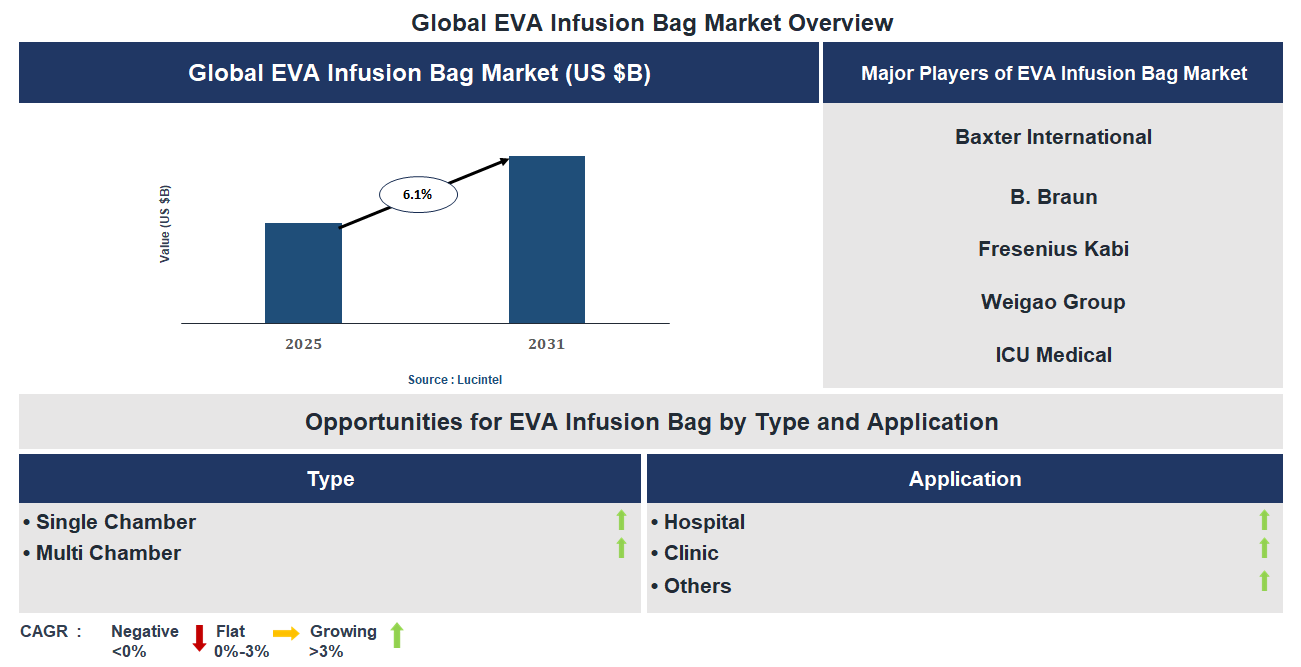
The future of the global EVA infusion bag market looks promising with opportunities in the hospital and clinic markets. The global EVA infusion bag market is expected to grow with a CAGR of 6.1% from 2025 to 2031. The major drivers for this market are the increasing demand for intravenous drug delivery, the rising need for safer medical packaging solutions, and the growing adoption of disposable medical products.• Lucintel forecasts that, within the type category, multi chamber is expected to witness higher growth over the forecast period.
• Within the application category, hospital is expected to witness higher growth.
• In terms of region, APAC is expected to witness the highest growth over the forecast period. Gain valuable insights for your business decisions with our comprehensive 150+ page report. Sample figures with some insights are shown below.
Emerging Trends in the EVA Infusion Bag Market
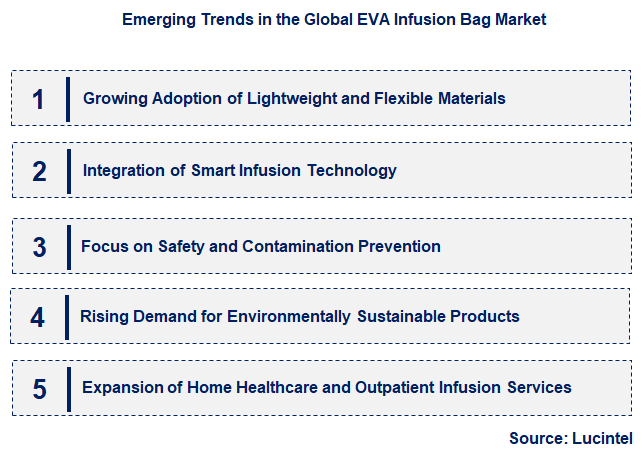
The EVA infusion bag market is experiencing rapid evolution driven by technological advancements, increasing healthcare demands, and a focus on patient safety. As hospitals and clinics seek more efficient, safe, and cost-effective solutions, several emerging trends are shaping the future of this market. These developments are not only improving product performance but also influencing manufacturing processes, regulatory standards, and market dynamics. Understanding these key trends is essential for stakeholders aiming to stay competitive and meet the growing needs of healthcare providers and patients worldwide.• Growing Adoption of Lightweight and Flexible Materials: EVA infusion bags are increasingly made from lightweight, flexible materials that enhance patient comfort and ease of use. These materials improve handling, reduce storage space, and facilitate better patient mobility during infusion therapy. The trend also supports the development of portable infusion systems, which are especially valuable in home healthcare and emergency settings. As regulatory standards emphasize safety and efficiency, manufacturers are investing in innovative material technologies to meet these demands, thereby expanding market opportunities.
• Integration of Smart Infusion Technology: The incorporation of smart features such as electronic flow regulators, sensors, and connectivity options is transforming EVA infusion bags. These smart systems enable real-time monitoring of infusion parameters, reduce medication errors, and improve patient safety. They also facilitate data collection for healthcare providers, enhancing treatment precision and operational efficiency. The adoption of IoT-enabled infusion bags is driven by the increasing demand for personalized medicine and digital health solutions, positioning the market for significant growth in technologically advanced healthcare environments.
• Focus on Safety and Contamination Prevention: Enhanced safety features are a key trend, with innovations aimed at minimizing contamination risks and ensuring sterility. Features such as tamper-evident seals, anti-bacterial coatings, and secure closures are becoming standard. These improvements address concerns related to infection control and medication integrity, especially in sterile environments like hospitals and clinics. The emphasis on safety not only boosts clinician confidence but also aligns with stringent regulatory requirements, thereby driving market growth and encouraging manufacturers to prioritize safety innovations.
• Rising Demand for Environmentally Sustainable Products: Environmental concerns are prompting manufacturers to develop eco-friendly EVA infusion bags. This includes using biodegradable materials, reducing plastic waste, and implementing sustainable manufacturing practices. The market is witnessing a shift towards greener solutions that meet regulatory standards and consumer expectations for sustainability. This trend enhances brand reputation and appeals to environmentally conscious healthcare providers, ultimately influencing purchasing decisions and fostering innovation in sustainable product development within the market.
• Expansion of Home Healthcare and Outpatient Infusion Services: The increasing preference for home-based care and outpatient services is significantly impacting the EVA infusion bag market. These bags are designed for ease of use, portability, and safety in non-clinical settings. The trend is driven by the need to reduce hospital stays, lower healthcare costs, and improve patient comfort. As healthcare systems worldwide emphasize outpatient and home infusion therapies, the demand for user-friendly, reliable infusion bags is expected to grow, prompting manufacturers to innovate products tailored for these settings and expanding market reach. In summary, these emerging trends are collectively reshaping the EVA infusion bag market by emphasizing safety, technological integration, sustainability, and adaptability to new healthcare delivery models. They are fostering innovation, improving patient outcomes, and expanding market opportunities, ensuring the industry remains responsive to evolving healthcare needs and regulatory landscapes.
Recent Development in the EVA Infusion Bag Market
The EVA infusion bag market has experienced significant growth driven by technological advancements, increasing healthcare needs, and evolving medical practices worldwide. As hospitals and clinics seek safer, more efficient infusion solutions, manufacturers are innovating to meet these demands. Recent developments reflect a focus on improving product safety, expanding application scope, and adopting sustainable practices. These changes are shaping the market landscape, influencing supply chains, and impacting patient care standards. Understanding these key developments provides insight into future trends and opportunities within the EVA infusion bag sector, highlighting the importance of innovation and adaptation in a competitive healthcare environment.• Technological Innovation: Introduction of Smart Infusion Bags: Advanced infusion bags equipped with sensors and electronic monitoring systems enable real-time tracking of infusion parameters, reducing errors and enhancing patient safety. This innovation improves clinical outcomes and streamlines hospital workflows, making infusion management more efficient and reliable.
• Material Advancements: Use of Eco-Friendly and Durable Materials : Manufacturers are shifting towards biodegradable and recyclable EVA materials to reduce environmental impact. These eco-friendly options maintain product integrity while aligning with sustainability goals, appealing to environmentally conscious healthcare providers and regulatory bodies.
• Market Expansion: Growing Adoption in Emerging Markets: Increasing healthcare infrastructure development in emerging economies is driving demand for EVA infusion bags. This expansion broadens market reach, offering new growth opportunities for manufacturers and improving access to advanced infusion solutions in underserved regions.
• Regulatory Enhancements: Stricter Safety and Quality Standards: Governments and health authorities are implementing more rigorous regulations concerning material safety, sterilization, and labeling. Compliance ensures product safety and boosts consumer confidence, although it may increase manufacturing costs and time-to-market.
• Customization and Product Diversification: Tailored Solutions for Specific Medical Needs: Companies are developing customized infusion bags for specialized treatments, such as chemotherapy or pediatric care. This diversification enhances clinical flexibility, improves patient comfort, and opens new revenue streams for manufacturers. In summary, these recent developments are significantly impacting the EVA infusion bag market by fostering innovation, expanding market reach, and emphasizing safety and sustainability. They are driving industry growth, improving product quality, and meeting evolving healthcare demands, ultimately enhancing patient care and operational efficiency across medical facilities.
Strategic Growth Opportunities in the EVA Infusion Bag Market
The EVA infusion bag market is experiencing rapid growth driven by technological advancements, increasing healthcare needs, and rising demand for safe, durable infusion solutions. As hospitals and clinics seek reliable and cost-effective options, key applications are expanding across various medical fields. These developments present significant opportunities for manufacturers to innovate and capture market share. Understanding these growth avenues is essential for stakeholders aiming to leverage emerging trends and meet evolving healthcare demands effectively.• Increasing Demand in Oncology: Growing cancer treatments require reliable infusion solutions, boosting EVA infusion bag adoption for chemotherapy and supportive care, leading to improved patient safety and treatment efficacy.
• Rising Use in Emergency and Critical Care: The need for quick, safe infusion options in emergency settings drives demand for durable EVA infusion bags, enhancing patient outcomes and operational efficiency.
• Expansion in Pediatric Care: The demand for safe, non-toxic infusion solutions for children promotes the development of specialized EVA infusion bags, ensuring safety and compliance with pediatric standards.
• Growth in Home Healthcare: The shift towards outpatient and home-based care increases the need for portable, easy-to-use EVA infusion bags, supporting patient independence and reducing hospital stays.
• Adoption in Surgical Applications: The increasing complexity of surgeries necessitates reliable infusion systems, with EVA bags offering durability and safety, thus expanding their use in surgical procedures. These opportunities are significantly impacting the EVA infusion bag market by driving innovation, expanding application scope, and increasing overall market size. As healthcare providers prioritize safety, efficiency, and patient comfort, the market is poised for sustained growth and technological advancement.
EVA Infusion Bag Market Driver and Challenges
The EVA infusion bag market is influenced by a variety of technological, economic, and regulatory factors that shape its growth trajectory. Advances in medical technology and materials science have led to the development of safer, more durable infusion bags, while economic factors such as increasing healthcare expenditure and rising prevalence of chronic diseases drive demand. Regulatory standards ensure product safety and quality, impacting manufacturing and distribution. Additionally, innovations in packaging and sterilization techniques contribute to market expansion. However, the market also faces challenges related to regulatory compliance costs, environmental concerns, and competition from alternative infusion solutions. Understanding these drivers and challenges is essential for stakeholders aiming to capitalize on market opportunities and mitigate risks. The factors responsible for driving the EVA infusion bag market include:• Technological Advancements: The development of new materials and manufacturing processes has led to safer, more reliable infusion bags. Innovations such as anti-microbial coatings and improved sterilization techniques enhance product safety and shelf life. These technological improvements meet increasing healthcare standards and patient safety requirements, boosting market growth. Moreover, automation and quality control advancements reduce production costs and improve consistency, making EVA infusion bags more accessible and affordable for healthcare providers worldwide.
• Rising Healthcare Expenditure: Increasing investments in healthcare infrastructure and services globally are fueling demand for infusion solutions. As healthcare systems expand and modernize, hospitals and clinics seek high-quality infusion bags to ensure patient safety and treatment efficacy. The growing burden of chronic diseases like diabetes and cancer necessitates frequent infusion therapies, further driving market growth. Additionally, government initiatives and funding programs aimed at improving healthcare access contribute to increased adoption of advanced infusion products, including EVA bags.
• Growing Prevalence of Chronic Diseases: The rising incidence of chronic conditions such as diabetes, cancer, and cardiovascular diseases increases the need for infusion therapies. EVA infusion bags are preferred due to their chemical stability, transparency, and compatibility with various drugs. As the patient population requiring long-term and complex treatments expands, demand for reliable infusion solutions grows. This trend is particularly prominent in emerging economies where healthcare infrastructure is rapidly developing, creating significant market opportunities for EVA infusion bag manufacturers.
• Regulatory and Quality Standards: Stringent regulatory frameworks and quality standards imposed by health authorities like the FDA and EMA ensure the safety and efficacy of infusion products. Compliance with these standards necessitates advanced manufacturing processes and rigorous testing, which can act as both a driver and a barrier. Companies investing in compliance and quality assurance gain competitive advantages, fostering innovation and market trust. These regulations also encourage the adoption of safer, high-quality EVA infusion bags, supporting overall market growth.
• Increasing Adoption of Single-Use and Sterile Packaging: The shift towards single-use, sterile infusion bags to prevent infections and cross-contamination is a significant market driver. EVA infusion bags offer advantages such as flexibility, transparency, and chemical resistance, making them ideal for sterile, single-use applications. The emphasis on infection control protocols in healthcare settings globally propels demand for these products. This trend aligns with the broader movement towards safer, more hygienic medical practices, thereby expanding the market for EVA infusion bags. The challenges facing this EVA infusion bag market include:
• Regulatory Compliance Costs: Meeting diverse and evolving regulatory requirements across different regions involves substantial costs related to testing, certification, and quality assurance. These expenses can hinder market entry for smaller manufacturers and slow product development cycles. Additionally, non-compliance risks lead to product recalls and legal penalties, impacting profitability. Navigating complex regulatory landscapes requires significant resources and expertise, which can be a barrier for market players, especially in emerging markets with less developed regulatory frameworks.
• Environmental Concerns and Sustainability: The increasing use of plastic infusion bags raises environmental issues related to waste management and pollution. EVA, while durable and safe, is a plastic polymer that poses challenges in disposal and recycling. Growing environmental awareness and regulations aimed at reducing plastic waste threaten the market’s sustainability. Companies are pressured to develop eco-friendly alternatives or improve waste management practices, which may increase costs and complicate manufacturing processes, potentially limiting market growth.
• Competition from Alternative Solutions: The market faces competition from other infusion technologies, such as pre-filled syringes, vials, and alternative bag materials like PVC or silicone. These alternatives may offer advantages in specific applications, cost, or ease of use, challenging EVA infusion bags’ market share. Additionally, innovations in drug delivery systems and portable infusion devices could reduce reliance on traditional infusion bags. This competitive landscape necessitates continuous innovation and differentiation by EVA bag manufacturers to maintain their market position. In summary, the EVA infusion bag market is driven by technological innovations, rising healthcare investments, increasing chronic disease prevalence, regulatory standards, and a shift towards sterile, single-use products. However, it faces challenges related to regulatory costs, environmental sustainability, and intense competition. These factors collectively influence market dynamics, requiring stakeholders to adapt strategies that leverage growth opportunities while addressing emerging risks. The overall impact is a complex balance of innovation and regulation, shaping the future landscape of infusion therapy solutions.
List of EVA Infusion Bag Companies
Companies in the market compete on the basis of product quality offered. Major players in this market focus on expanding their manufacturing facilities, R&D investments, infrastructural development, and leverage integration opportunities across the value chain. With these strategies EVA infusion bag companies cater increasing demand, ensure competitive effectiveness, develop innovative products & technologies, reduce production costs, and expand their customer base. Some of the EVA infusion bag companies profiled in this report include-• Baxter International
• B. Braun
• Fresenius Kabi
• Weigao Group
• ICU Medical
• Metrix
• Technoflex
• Bexen Medical
• Eraser Medical
• Valmed
EVA Infusion Bag Market by Segment
The study includes a forecast for the global EVA infusion bag market by type, application, and region.EVA Infusion Bag Market by Type [Value from 2019 to 2031]:
• Single Chamber
• Multi Chamber
EVA Infusion Bag Market by Application [Value from 2019 to 2031]:
• Hospital
• Clinic
• Others
EVA Infusion Bag Market by Region [Value from 2019 to 2031]:
• North America
• Europe
• Asia Pacific
• The Rest of the World
Country Wise Outlook for the EVA Infusion Bag Market
The EVA infusion bag market has experienced significant growth driven by increasing healthcare demands, technological advancements, and rising awareness of patient safety worldwide. As hospitals and clinics seek more efficient and safe infusion solutions, key players are innovating to meet these needs. The markets evolution is also influenced by regulatory changes, supply chain dynamics, and the adoption of eco-friendly materials. Countries like the United States, China, Germany, India, and Japan are at the forefront of these developments, each contributing uniquely to the global landscape through technological innovations, manufacturing capabilities, and healthcare infrastructure improvements.• United States: The US market has seen a surge in demand for advanced EVA infusion bags with enhanced safety features and eco-friendly materials. Leading companies are investing in R&D to develop biodegradable options, and regulatory agencies are tightening standards to ensure patient safety. The adoption of smart infusion systems integrated with digital health solutions is also increasing, improving monitoring and reducing errors. The COVID-19 pandemic accelerated the adoption of infusion therapy, further boosting market growth. Additionally, the US is witnessing increased imports and collaborations with international manufacturers to meet rising demand.
• China: China is experiencing rapid growth in the EVA infusion bag market due to expanding healthcare infrastructure and government initiatives to improve medical supplies. Local manufacturers are investing heavily in production capacity and quality improvements to meet domestic and export demands. The market is also benefiting from technological advancements in manufacturing processes, leading to cost-effective and high-quality products. The government’s focus on healthcare reform and increasing healthcare expenditure is driving demand for safe and reliable infusion solutions. Moreover, China is becoming a significant exporter of EVA infusion bags to other Asian countries.
• Germany: Germanys market is characterized by high-quality standards and stringent regulations, which drive innovation in EVA infusion bags. The country is focusing on developing eco-friendly and sustainable products, aligning with European Union environmental policies. German manufacturers are adopting advanced sterilization and manufacturing techniques to ensure product safety and durability. The increasing prevalence of chronic diseases and the aging population are fueling demand for infusion therapies. Germany also benefits from a strong healthcare infrastructure and collaborations with research institutions to develop next-generation infusion solutions, including smart and biodegradable bags.
• India: The Indian EVA infusion bag market is expanding rapidly due to rising healthcare awareness, increasing hospital infrastructure, and government initiatives to improve healthcare access. Local manufacturers are focusing on cost-effective production to cater to the price-sensitive market while maintaining quality standards. The growth of the pharmaceutical sector and the rise in outpatient care are also contributing to increased demand. Additionally, the adoption of advanced manufacturing technologies and quality control measures is improving product reliability. The government’s focus on healthcare reforms and initiatives like Ayushman Bharat is expected to further boost the market.
• Japan: Japans market is driven by an aging population and the increasing prevalence of chronic illnesses requiring infusion therapy. The country emphasizes high-quality, safe, and environmentally friendly EVA infusion bags. Japanese manufacturers are investing in innovative materials and manufacturing processes to enhance product safety and sustainability. The integration of digital health technologies for infusion management is gaining traction. Japan’s strict regulatory environment ensures high standards, fostering innovation in biodegradable and smart infusion bags. The market growth is also supported by government policies promoting healthcare innovation and sustainable medical products.

Features of the Global EVA Infusion Bag Market
Market Size Estimates: EVA infusion bag market size estimation in terms of value ($B). Trend and Forecast Analysis: Market trends (2019 to 2024) and forecast (2025 to 2031) by various segments and regions. Segmentation Analysis: EVA infusion bag market size by type, application, and region in terms of value ($B). Regional Analysis: EVA infusion bag market breakdown by North America, Europe, Asia Pacific, and Rest of the World. Growth Opportunities: Analysis of growth opportunities in different types, applications, and regions for the EVA infusion bag market. Strategic Analysis: This includes M&A, new product development, and competitive landscape of the EVA infusion bag market. Analysis of competitive intensity of the industry based on Porter’s Five Forces model.
FAQ
Q1. What is the growth forecast for EVA infusion bag market? Answer: The global EVA infusion bag market is expected to grow with a CAGR of 6.1% from 2025 to 2031. Q2. What are the major drivers influencing the growth of the EVA infusion bag market? Answer: The major drivers for this market are the increasing demand for intravenous drug delivery, the rising need for safer medical packaging solutions, and the growing adoption of disposable medical products. Q3. What are the major segments for EVA infusion bag market? Answer: The future of the EVA infusion bag market looks promising with opportunities in the hospital and clinic markets. Q4. Who are the key EVA infusion bag market companies? Answer: Some of the key EVA infusion bag companies are as follows:• Baxter International
• B. Braun
• Fresenius Kabi
• Weigao Group
• ICU Medical
• Metrix
• Technoflex
• Bexen Medical
• Eraser Medical
• Valmed Q5. Which EVA infusion bag market segment will be the largest in future? Answer: Lucintel forecasts that, within the type category, multi chamber is expected to witness higher growth over the forecast period. Q6. In EVA infusion bag market, which region is expected to be the largest in next 5 years? Answer: In terms of region, APAC is expected to witness the highest growth over the forecast period. Q7. Do we receive customization in this report? Answer: Yes, Lucintel provides 10% customization without any additional cost.
Table of Contents
List of Figures
List of Tables
Methodology
- In-depth interviews of the major players in this market
- Detailed secondary research from competitors’ financial statements and published data
- Extensive searches of published works, market, and database information pertaining to industry news, company press releases, and customer intentions
- A compilation of the experiences, judgments, and insights of Lucintel’s professionals, who have analyzed and tracked this market over the years.


Buy Now
Choose a license that fits your team. Instant PDF delivery.
Prices exclude taxes. Instant delivery. Custom licensing available on request.
Key Questions
- • What are some of the most promising, high-growth opportunities for the EVA infusion bag market by type (single chamber and multi chamber), application (hospital, clinic, and others), and region (North America, Europe, Asia Pacific, and the Rest of the World)?
- • Which segments will grow at a faster pace and why?
- • Which region will grow at a faster pace and why?
- • What are the key factors affecting market dynamics? What are the key challenges and business risks in this market?
- • What are the business risks and competitive threats in this market?
- • What are the emerging trends in this market and the reasons behind them?
- • What are some of the changing demands of customers in the market?
- • What are the new developments in the market? Which companies are leading these developments?
- • Who are the major players in this market? What strategic initiatives are key players pursuing for business growth?
- • What are some of the competing products in this market and how big of a threat do they pose for loss of market share by material or product substitution?
- • What M&A activity has occurred in the last 5 years and what has its impact been on the industry? For any questions related to EVA Infusion Bag Market, EVA Infusion Bag Market Size, EVA Infusion Bag Market Growth, EVA Infusion Bag Market Analysis, EVA Infusion Bag Market Report, EVA Infusion Bag Market Share, EVA Infusion Bag Market Trends, EVA Infusion Bag Market Forecast, EVA Infusion Bag Companies, write Lucintel analyst at email: helpdesk@lucintel.com. We will be glad to get back to you soon.


