
Market Report · July 22, 2026

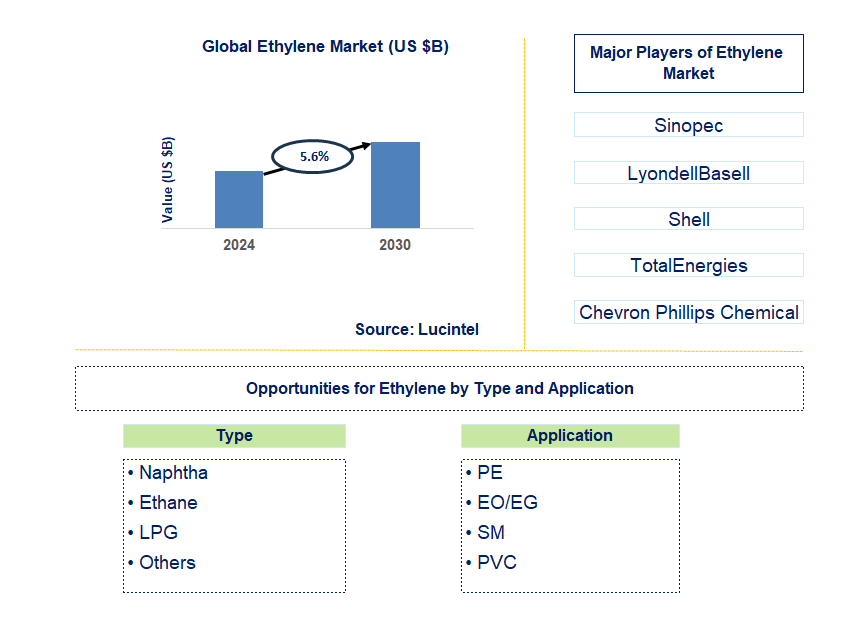
Key data points: The growth forecast = 5.6% annually next 6 years. Scroll below to get more insights. This market report covers trends, opportunities, and forecast in the global ethylene market to 2030 by type (naphtha, ethane, LPG, and others), application (PE, EO/EG, SM, and PVC), and region (North America, Europe, Asia Pacific, and the Rest of the World)
We'll send your sample report shortly.
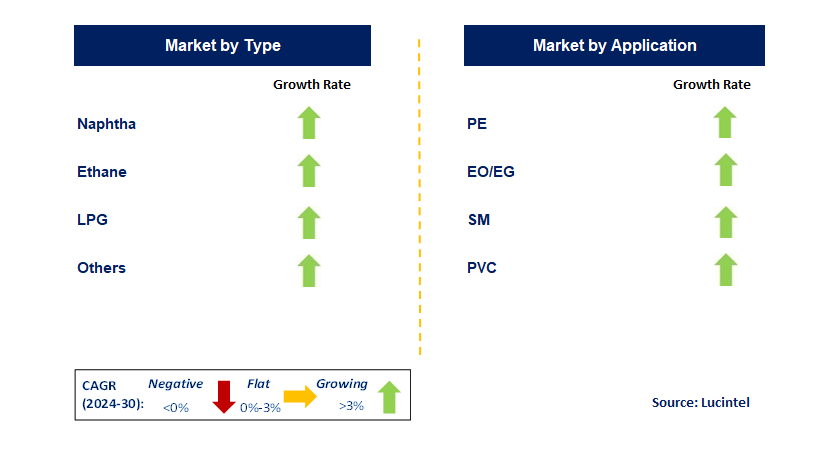
• Lucintel forecasts that ethane is expected to witness the highest growth over the forecast period.
• North America is expected to witness the highest growth over the forecast period. A more than 150-page report is developed to help in your business decisions.
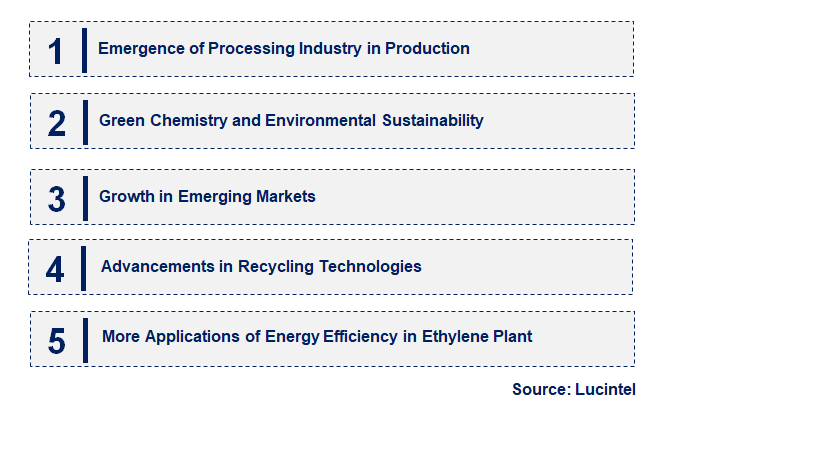
• Emergence of Processing Industry in Production: As such, technological progress is changing the very nature of ethylene production in the form of, for instance, new catalysts and better cracking. More effective catalysts improve both reaction efficiency and yield in lower energy consumption and costs of production. The emergence of newer and more versatile steam cracking processes allows for the cracking of more complex structures at high production and more efficient feedstock utilization. These gains give rise in the expansion of production capitalization at a lower cost that affords the producers to be active in a changing environment.
• Green Chemistry and Environmental Sustainability: Gradually, this growing trend across the whole value chain is also permeating within the ethylene segment of this industry. Such companies implement new ‘green’ technologies and processes: low-carbon and zero-carbon energy use and feedstock conversion. Efforts include the conversion of bio-ethanol to ethylene as a bio sustainable product, and carbon capture and storage technologies. Regulatory requirements and consumer consciousness concerning products of the environments influence the market development and processes of production, thus the focus on sustainability.
• Growth in Emerging Markets: The developing economies especially in Asia and Africa are demonstrating an increased appetite for ethylene and its derivatives. With industrialization and urbanization taking place in these areas, the demand for petrochemical products used in packaging, textiles, construction, and many other fields is also rising. Organizations are penetrating these markets by making investments in production plants and distribution channels. This growth presents opportunities for the expansion of the market and the generation of additional revenue streams for ethylene producers.
• Advancements in Recycling Technologies: The growth of recycling technologies is influencing the ethylene market by aiding the production of more sustainable ethylene compounds. Chemically advanced methods of recycling allow for sourcing and reusing ethylene from used plastic packaged items and this leads to reduced waste. Businesses are applying resources to recycling facilities and technologies to adhere to regulatory standards on the circular economy. These changes foster global sustainability significance and the lessening of negative impacts caused by ethylene production and use.
• More Applications of Energy Efficiency in Ethylene : The concern for energy efficiency is becoming of paramount importance in the production of ethylene owing to factors such as the rising cost of energy and the growing environmental regulations. There are measures taken by the companies to save energy, by for instance modernizing the equipment, optimizing the process and utilizing energy efficient equipment Energy efficiency also contributes to reducing operational cost of production of ethylene yet at the same time reducing the greenhouse gases emitted during the production processes. It is necessary to note that this trend develops, when there is a reasonable economic background, as well as increasing regulation requirements that affect both investment and operating practices in the industry. The ethylene industry is characterized by emerging trends such as improving technologies, increased focus on sustainability, expanding in new geographical regions, breakthroughs in recycling, and energy efficiency which are transforming the market. Such trends stress the need for flexibility in responding to new market and regulatory opportunities and challenges. The industry will transform and new technologies will emerge, and stakeholders will inevitably cater for these changes if they wish to sustain their position in the market and promote growth opportunities.
• Increase in Production Capacity: Over the last few years, there have been massive expenditures towards building ethanediol processing capacity, which has mostly been the middle eastern countries and the united states, in person. Low-cost raw materials such as U.S. shale gas and Middle East natural gas liquids have stimulated the construction of new cracker plants and the expansion of old ones. Suppressing this shift was an attempt to satisfy high ethylene and its derivatives demand in the worldwide market. Additional capacity helps to relax supply, reduce prices, and increase competition, making these areas dominant in the global ethylene market.
• Changes in Technology: The market for ethylene is also affected by technological advances such as those for the production of ethylene, steam cracking processing and catalyst designs. Higher yields and less energy use have resulted from new improved cracking technologies and novel catalytic processes. These innovations at the same time reduce the costs and the negative influences associated with the production of ethylene. As a result, the production gets easier and more cost effective due to these additional technologies improving the market.
• Emphasis on Sustainability: Eco-friendliness has become a recurring focus in great part due to the increased regulatory requirements and the pursuing of ecologically safe products in the ethylene market. Companies are developing technologies that will minimize their carbon footprints and enhance efficient energy use that incorporate the use of carbon capture and storage systems and renewable feedstocks. These activities that emphasize sustainability are direct determinants to the changes that have happened in the production systems and the supply chain structures to meet the environmental and regulatory demands of the world. Businesses are now experiencing pressure to practice sustainability as it also helps improve their public image and business performance by meeting environmental laws.
• Changes in Global Demand Patterns: There are due to intelligent economic problems or certain patterns of industrial growth that have changed the global demand for ethylene. Rapid industrialization and urbanization processes, especially in Asia, particularly in China and India, increase the demand for ethylene and its derivatives. For this reason, producers are increasing their footprint in these regions through new investments and strategic alliances. It has even changed the demand profile and has touched the global value chain with demand traveling from the established core markets to growth regions and countries.
• Practice of Circular Economy: The practice of circular economy provision stands to gain in the ethylene market, especially waste management on all ethylene derived products. The development of the chemical recycling industry makes it possible to recover ethylene from post-use plastic products with the potential of being reused, thus preserving the environment. Firms are spending in recycling systems and technologies because of the global demands of circularity and compliance demands. This practice where circular economy principles are embraced goes hand in hand with the reduction of the waste generated from production and consumption of ethylene. The ethylene market is constantly changing due to the recent changes such as the increase of production capacity, modernization of the equipment, enhancement of the sustainability policies, the rise of new global demand, and circular economy applications. The developments affect the production strategies, the behavior of the market, and the positioning of competition, stimulating the changes and the trends in the market. The ethylene market is not static; therefore the particular stakeholders will need to keep up with these changes in order to exploit the new opportunities and counter the emerging challenges.
• Expansion of the Packaging Applications: Packaging remains by far the largest sector for consumption of ethylene – most especially polyethylene (PE) and ethylene-vinyl acetate (EVA) films. Such expansion of the market offers good prospects for ethylene producers due to the growth of e-commerce and the increased need for environmentally friendly packaging solutions. These new products and the areas of their utilization are associated with the active development of such materials as biodegradable and/or recyclable packaging. On the one hand, this allows companies to take advantage of this trend by adopting new packaging technologies and developing a broader range of products due to increasing demand for eco-friendly packaging.
• Growth of the Applications in Automotives: Polyethylene and polycarbonate are ethylene derived polymers which find increasing usage in lightweight and durable parts in automobiles. The increasing automotive production level as well as the demand for fuel efficient cars creates prospects for the producers of ethylene. In addition, the creation of new materials for electric and self-driving cars brings new opportunities for products based on ethylene. Such companies can be actively engaged in the supply chain of the automotive industry and invest in the development of new materials that are in accordance with market trends and requirements of automotive manufacturers.
• Production of New Types of Construction Materials: The construction sector is a major area of growth for ethylene based materials namely insulation, pipes, and coatings. The energy efficiency in the buildings or even the entire infrastructure projects calls for high performance construction materials. Comprising ethylene polymers has advantages over a straightforward polymer botanicals such as strength properties, corrosion resistance, and thermal insulation performance. In this regard, companies can take advantage of opportunities by coming up and selling new construction materials that would satisfy market demands and policies geared towards sustainability and energy efficiency.
• Change in Particulars of Clothing Materials and Fabrics: Ethylene based fibers and fabrics are extensively utilized in the field of textiles due to their strength, pliability, and abrasion resistance. With the increase in functional high-performance fabrics, such as moisture management and antimicrobial fabrics comes the opportunity for innovation. Companies can put their money in emerging markets by creating new applications for textiles that will tell a new story to the present consumers and new markets. There exists a potential opportunity by embedding ethylene based materials into fabrics for performance use both for industrial and commercial purposes.
• Progress in Chemical Recycling: The use of chemical recycling machines in the market for ethylene is quite an avenue for growth. Dolphin has ventured into innovative recycling methods, which they believe will enable recovery of ethylene contained in post-consumer plastics thereby incurring less waste. Companies are able to put money in recycling of materials, installation of infrastructure and use of technology as a means towards a circular economy and to comply with environmental sustainability requirements. There are also notable benefits to ethylene producers in terms of the environmental performance gain, lower production cost of ethylene, and new income generation from recyclables. Commercial prospects for development of ethylene, are emerging in practice in the area concerning its use in the packaging, automotive, construction and textile industries and chemical recycling sectors intolerable growing areas. Companies must reinforce their market position and take advantage of new opportunities for growth by targeting the mentioned areas and exploiting emerging trends. Given the extricable nature of the stakeholders from the sociopolitical, advanced strategies must be pursued to remain productive within the bold ethylene market.
• Sinopec
• LyondellBasell
• Shell
• TotalEnergies
• Chevron Phillips Chemical
• INEOS
• CNPC
• Formosa
• National Petrochemical Company (NPC)
• BASF
• Naphtha
• Ethane
• LPG
• Others
• PE
• EO/EG
• SM
• PVC
• North America
• Europe
• Asia Pacific
• The Rest of the World
• The United States: In relation to the ethylene market in the United States, the recent trends in this sector can be associated with the improvement of production technology and the growth of capacity. As gas shale reserves expanded, the feedstock prices started to fall which led to a boom in ethylene production capacity. Companies plan the construction of new cracker plants and the modernization of existing ones to take advantage of cheap ethane from shale gas. There is also a rising trend towards sustainability with a bid to control CO2 emissions and improve on the energy efficiency of the processes used in making ethylene. These developments present the U.S. as one of the leading countries in ethylene production and exports, making it more competitive in the global arena.
• China: The China is channeling massive investments into the construction of new ethylene facilities and related capacity, aiming to satisfy the ever-growing demand for chemical products. There are also strong measures for the modernization of the existing facilities, particularly the use of modern catalyst technologies and technologies that consume less energy. Also, the Chinese government is enforcing strict environmental measures which require the companies to switch to cleaner technologies. The increase of ethylene production capabilities in China as well as the improvement of these technologies place the country in the ethylene market as a savvy user and manufacturer.
• Germany: The ethylene market in Germany is uniquely based on sustainable practices and innovation. Ethylene production companies are investing more on the construction and adoption of green production technologies. This includes the use of investment on renewable energy, bettering energy usage, and sourcing available biowaste instead of petroleum. Germany is also at the forefront of circular economy development in the petrochemical industry through recycling and upcycling of excessive ethylene waste and by-products. These developments are in line with the country’s other goals of environmental protection and legislative initiatives, thus allowing Germany to retain its relevance in the European ethylene materials market and enhancing global efforts towards sustainability.
• India: In the Indian ethylene market, currently undergoing new levels of growth, the advantages are obvious owing to the already outlined processes of industrialization and urbanization. The country is developing new ethylene production units and augmenting the existing ones to cater to the increasing domestic market. There is strong emphasis on upgrading existing technologies aimed at making the production process efficient and cost effective. Furthermore, various measures to foster the development of the petrochemicals industry including bonns for provision of the necessary for construction and research activities are undertaken by the Indian Government. The increase in the outputs of the ethylene market and improvement of facilities are also spurring the development of the downstream industrial sectors including plastics, and textiles which are important to the economy of India.
• Japan: Japan ethylene market is in a transition phase and moving toward sustainable developments and technological advancements. Ohtsuhi says Japanese firms’ capital is going to newer technologies of ethylene production to enhance its efficiency and cut its emissions. Specifically the basic new processes or catalysts which would contribute to higher product yields and lower greenhouse gas emissions. Japan is also seeking to improve sustainability of ethylene manufacturing by incorporating alternative energy forms in business operations. These advances allow Japan to further enhance its competitive edge overseas and to meet the growing regulatory and green product’s demands from the consumers.


• Sinopec
• LyondellBasell
• Shell
• TotalEnergies
• Chevron Phillips Chemical
• INEOS
• CNPC
• Formosa
• National Petrochemical Company (NPC)
• BASF Q5. Which ethylene market segment will be the largest in future? Answer: Lucintel forecasts that ethane is expected to witness the highest growth over the forecast period. Q6. In ethylene market, which region is expected to be the largest in next 5 years? Answer: North America is expected to witness the highest growth over the forecast period. Q.7 Do we receive customization in this report? Answer: Yes, Lucintel provides 10% customization without any additional cost.


Choose a license that fits your team. Instant PDF delivery.
Prices exclude taxes. Instant delivery. Custom licensing available on request.
Market Report · July 22, 2026
Market Report · July 22, 2026
Market Report · July 22, 2026
Trusted partner for strategic intelligence and business growth


Receive a complimentary market analysis tailored to your industry. Our analysts will identify key growth opportunities and competitive dynamics specific to your business.

Market size, growth rate, and key trend analysis for your specific sector.

Top competitor positioning and market share analysis.

Strategic recommendations backed by data-driven insights.
Get curated market intelligence and competitive moves straight to your inbox.
By subscribing, you agree to receive our monthly insights. Unsubscribe anytime.
Receive a complimentary market analysis tailored to your industry. Our analysts will identify key growth opportunities and competitive dynamics specific to your business.
Market size, growth rate, and key trend analysis for your specific sector.
Top competitor positioning and market share analysis.
Strategic recommendations backed by data-driven insights.
Get curated market intelligence, emerging trends, and competitive moves straight to your inbox each month.
By subscribing, you agree to receive our monthly insights. Unsubscribe anytime.
We'll send your sample report shortly.