
Report Feature
Xenon-126 Trends and Forecast
The future of the global xenon-126 market looks promising with opportunities in the isotope production and healthcare markets. The global xenon-126 market is expected to grow with a CAGR of 12.3% from 2024 to 2030. The major drivers for this market are increasing demand for medical imaging applications and expanding research applications in nuclear physics and environmental monitoring.• Lucintel forecasts that, within the type category, the abundance: <99% is expected to witness higher growth over the forecast period.
• Within the application category, the isotope production is expected to witness higher growth.
• In terms of region, North America is expected to witness the highest growth over the forecast period. A more than 150-page report is developed to help in your business decisions.

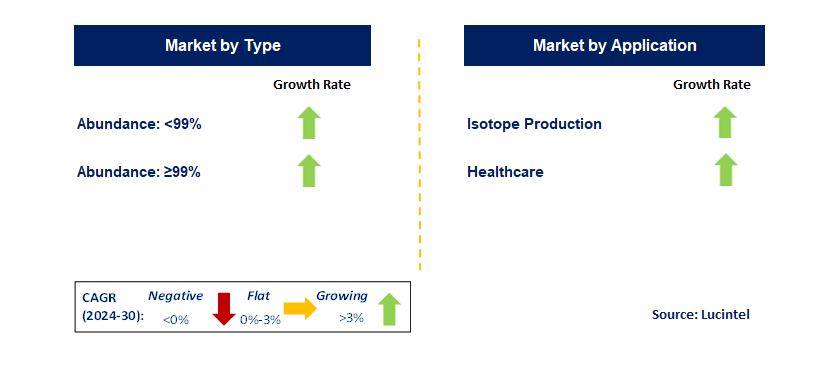
Emerging Trends in the Xenon-126 Market
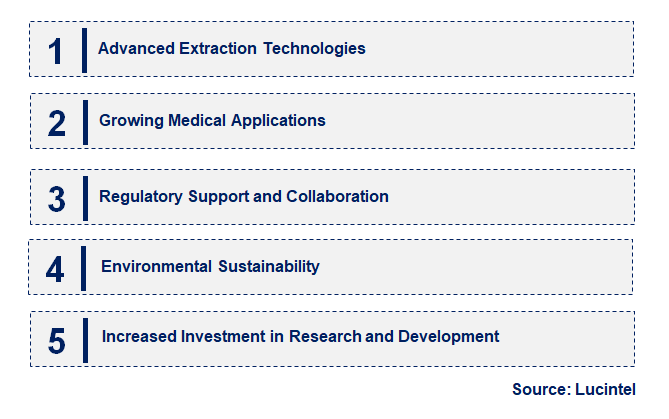
The Xenon-126 market is experiencing dynamic changes driven by technological advancements, increasing demand for medical applications, and evolving regulatory frameworks. As countries invest in research and infrastructure, several key trends are emerging, shaping the future of Xenon-126 production and utilization. These trends reflect a growing focus on efficiency, sustainability, and innovation across various sectors, particularly in healthcare and industrial applications. This overview identifies five critical trends influencing the Xenon-126 market and provides insight into how they are redefining its landscape.• Advanced Extraction Technologies: Emerging extraction technologies are revolutionizing the Xenon-126 market by increasing efficiency and reducing costs. Techniques such as cryogenic separation and laser isotopic enrichment are gaining traction, enabling producers to isolate higher-purity Xenon-126 from natural sources more effectively. These innovations not only improve yield but also decrease the environmental impact of production. Companies are investing in automated systems and cutting-edge equipment, further enhancing operational efficiency. As these technologies mature, they are expected to lower production costs significantly, making Xenon-126 more accessible for various applications in healthcare, research, and industry.
• Growing Medical Applications: The demand for Xenon-126 in medical applications is surging, particularly in imaging and radiotherapy. Its unique properties make it suitable for advanced diagnostic techniques, including nuclear medicine and PET scans. As healthcare systems increasingly prioritize non-invasive procedures, the role of Xenon-126 in providing high-resolution imaging and targeted therapies is becoming more prominent. Additionally, collaborations between pharmaceutical companies and research institutions are driving innovation in radiopharmaceuticals, further expanding the market. This growing focus on medical applications is positioning Xenon-126 as a vital component in modern healthcare solutions.
• Regulatory Support and Collaboration: Regulatory frameworks are evolving to support the safe production and use of Xenon-126, fostering industry growth. Governments are implementing policies that encourage research and collaboration between the public and private sectors. These initiatives aim to streamline approval processes for new technologies and applications, making it easier for companies to innovate. Enhanced regulatory clarity is also boosting investor confidence, leading to increased funding for Xenon-126 projects. As international partnerships grow, knowledge sharing and resource pooling are expected to drive further advancements in production techniques and applications, enhancing the overall market landscape.
• Environmental Sustainability: Sustainability is becoming a key focus in the Xenon-126 market, with producers seeking environmentally friendly extraction methods. Innovations aimed at reducing carbon footprints and waste generation are gaining prominence. For example, companies are exploring alternative energy sources for production processes and adopting closed-loop systems to minimize resource consumption. Additionally, the shift toward sustainable practices aligns with global initiatives to reduce environmental impacts across industries. This trend not only addresses regulatory pressures but also caters to the increasing demand from consumers and businesses for eco-friendly solutions, enhancing the market's appeal.
• Increased Investment in Research and Development: Investment in research and development (R&D) is critical for the continued advancement of the Xenon-126 market. Companies and research institutions are allocating significant resources to explore new applications and improve existing production methods. This investment is fostering innovation, resulting in the development of advanced isotopic technologies and enhanced purification techniques. Furthermore, partnerships between academia and industry are accelerating research initiatives, facilitating the translation of scientific discoveries into commercial applications. As R&D continues to flourish, it will drive competitive advantages for market players and enhance the overall viability of Xenon-126 across various sectors. These emerging trends are collectively reshaping the Xenon-126 market, driving advancements in technology, expanding applications, and promoting sustainability. As extraction methods improve and medical applications grow, the market is poised for significant expansion. Regulatory support and increased investment in R&D further enhance innovation, positioning Xenon-126 as a critical resource in healthcare and industry. As these trends unfold, they will not only redefine the market landscape but also elevate the significance of Xenon-126 in addressing contemporary challenges in science and medicine.
Recent Developments in the Xenon-126 Market
The Xenon-126 market is witnessing significant developments driven by advancements in extraction technologies, increasing demand in medical applications, and heightened regulatory support. As a crucial isotope for various scientific and industrial applications, the market is evolving to meet the needs of healthcare, research, and environmental monitoring. Key developments in this space reflect a broader trend toward innovation, sustainability, and collaboration across sectors. Understanding these developments provides insight into the future trajectory of the Xenon-126 market and its implications for stakeholders worldwide.• Enhanced Extraction Technologies: Recent innovations in extraction technologies, such as cryogenic and laser-based methods, have significantly improved the efficiency of isolating Xenon-126 from natural sources. These advancements allow for higher purity levels and greater yields, reducing production costs and environmental impact. By optimizing extraction processes, companies can meet the growing demand for high-quality isotopes in various applications, particularly in healthcare. Enhanced extraction technologies are also paving the way for more sustainable production practices, positioning the market favorably amid increasing regulatory pressures for eco-friendly operations.
• Expansion of Medical Applications: The rise in medical applications for Xenon-126, especially in imaging and therapeutic procedures, has become a critical development in the market. Its unique properties make it suitable for advanced diagnostic tools like PET scans and radiotherapy. As healthcare systems prioritize non-invasive technologies, the demand for Xenon-126 in medical settings is expected to surge. This trend not only highlights the isotope's versatility but also drives investments in research and development, further solidifying its role in modern medicine and enhancing the market's growth potential.
• Regulatory Support and Frameworks: Regulatory bodies are increasingly supporting the safe production and application of Xenon-126, resulting in a more favorable market environment. Recent updates to regulatory frameworks are aimed at streamlining approval processes for new technologies and applications, encouraging innovation. This regulatory clarity boosts investor confidence and fosters collaboration between public and private sectors. As companies navigate these supportive frameworks, they can accelerate the development of new products and technologies, ultimately enhancing the market landscape for Xenon-126.
• Focus on Environmental Sustainability: With growing awareness of environmental issues, the Xenon-126 market is shifting towards more sustainable production practices. Companies are adopting greener extraction methods and exploring energy-efficient technologies, which not only comply with regulations but also appeal to environmentally conscious consumers. This focus on sustainability is essential for meeting global standards and addressing societal demands for responsible resource management. As sustainability becomes a core principle, the market can enhance its reputation and attract investment while mitigating environmental impacts.
• Increased Research and Development Investments: A notable increase in investments directed toward research and development is shaping the future of the Xenon-126 market. Companies and academic institutions are collaborating to explore new applications, improve production techniques, and develop advanced isotopic technologies. This focus on R&D is fostering innovation, leading to breakthroughs that enhance the isotope's utility in various fields. As R&D initiatives expand, they will play a crucial role in driving competitive advantage, allowing stakeholders to leverage new findings and strengthen their positions in the market. These recent developments in the Xenon-126 market are significantly impacting its trajectory, driving innovation, expanding applications, and promoting sustainability. Enhanced extraction technologies and a focus on medical uses are propelling market growth, while supportive regulatory frameworks and increased R&D investments are fostering collaboration and innovation. As the industry evolves to meet contemporary challenges, these developments are not only reshaping the market landscape but also positioning Xenon-126 as a vital resource in various scientific and industrial sectors.
Strategic Growth Opportunities for Xenon-126 Market
The Xenon-126 market is poised for growth, driven by its diverse applications across healthcare, research, and industrial sectors. As demand for advanced diagnostic tools and therapeutic solutions increases, significant strategic growth opportunities are emerging. Companies are focusing on expanding their capabilities in various applications, including medical imaging, radiation therapy, environmental monitoring, and aerospace technology. By leveraging technological advancements and addressing market needs, stakeholders can capitalize on these opportunities to enhance their positions in the evolving Xenon-126 landscape.• Medical Imaging: The medical imaging sector represents a key growth opportunity for Xenon-126, particularly in positron emission tomography (PET) and single-photon emission computed tomography (SPECT). With its favorable properties, Xenon-126 enhances imaging clarity and accuracy, making it invaluable for early disease detection and monitoring. As healthcare providers increasingly prioritize non-invasive diagnostic tools, demand for high-purity isotopes like Xenon-126 is expected to rise. Investment in R&D focused on developing advanced imaging techniques will further solidify its role in modern diagnostics, creating new avenues for growth in the medical imaging market.
• Radiation Therapy: Xenon-126 is gaining traction in radiation therapy applications, particularly for cancer treatment. Its unique properties enable targeted radiation delivery, minimizing damage to surrounding tissues while maximizing therapeutic effects. As the global cancer burden rises, healthcare systems are increasingly seeking effective and less invasive treatment options. This presents a significant opportunity for companies specializing in radiopharmaceuticals to develop and commercialize Xenon-126-based therapies. Collaborations with healthcare providers and research institutions can accelerate product development, positioning stakeholders to meet the growing demand for innovative cancer treatments.
• Environmental Monitoring: Environmental monitoring is another promising application for Xenon-126, particularly in tracking atmospheric pollutants and studying climate change. Its isotopic properties make it a valuable tool for researchers assessing air quality and the effects of greenhouse gases. As governments and organizations prioritize sustainability and environmental protection, the demand for accurate monitoring solutions is increasing. Companies can capitalize on this trend by developing advanced monitoring technologies that utilize Xenon-126, positioning themselves as leaders in the burgeoning environmental sector and addressing global concerns over climate change.
• Aerospace and Defense: In the aerospace and defense sectors, Xenon-126 holds potential for applications in propulsion systems and radiation detection. Its use in ion propulsion systems can enhance spacecraft efficiency and performance, making it attractive for space agencies and private aerospace companies. Additionally, Xenon-126's properties are useful in developing advanced detection systems for nuclear materials, bolstering security efforts. As interest in space exploration and national security grows, companies investing in these applications can unlock new markets and drive innovation in aerospace and defense technologies.
• Research and Development: The research community presents a significant growth opportunity for Xenon-126, particularly in nuclear physics and isotope research. As scientific inquiries into isotopic behaviors expand, the demand for high-quality Xenon-126 for experimental purposes is increasing. Academic institutions and research laboratories are seeking reliable sources of isotopes for various experiments, creating opportunities for suppliers to establish partnerships. By focusing on collaboration with research entities, companies can not only diversify their product offerings but also contribute to groundbreaking scientific advancements, enhancing their market presence. These strategic growth opportunities in the Xenon-126 market highlight the diverse applications and potential for expansion across sectors. By capitalizing on trends in medical imaging, radiation therapy, environmental monitoring, aerospace, and research, stakeholders can strengthen their positions and drive innovation. As these opportunities unfold, they will shape the market landscape, ultimately leading to increased demand for Xenon-126 and fostering further developments in technology and application.
Xenon-126 Market Driver and Challenges
The Xenon-126 market is influenced by various technological, economic, and regulatory factors that drive its growth and present challenges. Understanding these drivers and challenges is crucial for stakeholders aiming to navigate the market effectively. While advancements in extraction technologies and increasing applications in healthcare provide growth momentum, regulatory hurdles and market competition pose significant challenges. This analysis outlines the key drivers and challenges impacting the Xenon-126 market, offering insights into their implications for market dynamics. The factors responsible for driving the Xenon-126 market include:• Advancements in Extraction Technologies: Innovative extraction technologies, such as cryogenic and laser-based methods, are significantly improving the efficiency and cost-effectiveness of isolating Xenon-126. These advancements enable producers to achieve higher purity levels and yields, reducing waste and environmental impact. As production becomes more efficient, the overall supply of Xenon-126 can better meet growing demand, particularly in medical and industrial applications. The continuous development of these technologies fosters a competitive market environment, encouraging further investments and innovations that benefit various stakeholders.
• Rising Demand in Medical Applications: The increasing prevalence of diseases requiring advanced diagnostic and therapeutic solutions drives demand for Xenon-126 in the medical sector. Its properties make it ideal for applications such as PET scans and radiation therapy, leading healthcare providers to seek reliable sources of high-purity isotopes. As healthcare systems prioritize non-invasive procedures and personalized medicine, the need for effective radiopharmaceuticals containing Xenon-126 is expected to rise. This trend not only enhances patient outcomes but also positions the market for significant growth.
• Supportive Regulatory Frameworks: Evolving regulatory frameworks are increasingly supporting the production and application of Xenon-126, creating a conducive environment for market growth. Governments are streamlining approval processes for new isotopic technologies, facilitating research and development efforts. This regulatory support encourages collaboration between the public and private sectors, leading to innovations that enhance the overall market. As companies navigate these supportive frameworks, they can accelerate product development and capitalize on new opportunities in various applications.
• Increased Investment in Research and Development: Growing investments in research and development are driving innovation within the Xenon-126 market. Companies and academic institutions are collaborating to explore new applications and improve existing technologies, enhancing the isotope's utility. This focus on R&D not only leads to breakthroughs that expand the market but also strengthens competitive advantages for stakeholders. As investment in innovation continues, the market is likely to see significant advancements that address emerging challenges and opportunities.
• Global Focus on Sustainability: The increasing emphasis on sustainability is influencing the Xenon-126 market, driving the adoption of environmentally friendly production practices. Companies are seeking greener extraction methods and energy-efficient technologies to align with global environmental standards. This trend not only meets regulatory requirements but also appeals to consumers and businesses looking for sustainable solutions. As the market shifts toward eco-friendly practices, stakeholders can enhance their reputation and attract investment while contributing to broader sustainability goals. Challenges in the Xenon-126 market are:
• High Production Costs: Despite advancements in extraction technologies, the production costs for Xenon-126 remain relatively high. The complexities involved in isolating and purifying the isotope can deter smaller players from entering the market and limit overall supply. High costs also affect the pricing of end products, potentially making them less competitive compared to alternative solutions. Companies must continuously seek ways to optimize production processes and reduce costs to maintain profitability and market competitiveness.
• Regulatory Hurdles: While supportive regulatory frameworks exist, navigating the complex regulatory landscape can pose challenges for companies in the Xenon-126 market. Compliance with safety and environmental regulations often requires substantial investments in infrastructure and operational practices. Furthermore, varying regulations across regions can complicate international trade and limit market access. Companies must remain vigilant and adaptable to regulatory changes to ensure compliance and avoid potential disruptions to their operations.
• Market Competition: The Xenon-126 market is becoming increasingly competitive, with both established players and new entrants vying for market share. This competition can drive prices down and pressure companies to innovate continuously. While competition can lead to advancements, it may also result in market saturation, making it challenging for companies to differentiate their offerings. To succeed, stakeholders must invest in unique value propositions and foster strategic partnerships that enhance their market positions. The interplay of drivers and challenges significantly impacts the Xenon-126 market, shaping its future trajectory. Advancements in extraction technologies and increasing demand for medical applications present promising growth opportunities, while regulatory support fosters innovation. However, high production costs, regulatory hurdles, and intense market competition pose substantial challenges. Navigating these dynamics will be crucial for stakeholders aiming to capitalize on the market's potential and drive sustainable growth in the evolving landscape of Xenon-126.
List of Xenon-126 Companies
Companies in the market compete on the basis of product quality offered. Major players in this market focus on expanding their manufacturing facilities, R&D investments, infrastructural development, and leverage integration opportunities across the value chain. Through these strategies xenon-126 companies cater increasing demand, ensure competitive effectiveness, develop innovative products & technologies, reduce production costs, and expand their customer base. Some of the xenon-126 companies profiled in this report include-• Company 1
• Company 2
• Company 3
• Company 4
• Company 5
Xenon-126 by Segment
The study includes a forecast for the global xenon-126 by type, application, and region.Xenon-126 Market by Type [Analysis by Value from 2018 to 2030]:
• Abundance: <99%
• Abundance: ≥99%
Xenon-126 Market by Application [Analysis by Value from 2018 to 2030]:
• Isotope Production
• Healthcare
Xenon-126 Market by Region [Analysis by Value from 2018 to 2030]:
• North America
• Europe
• Asia Pacific
• The Rest of the World
Country Wise Outlook for the Xenon-126 Market
Xenon-126, an isotope with significant applications in nuclear physics, medicine, and radiation detection, is experiencing notable technical developments across major global markets. Advances in extraction techniques, enhanced detection methodologies, and growing demand in medical and industrial sectors have spurred innovation. As countries invest in research and infrastructure, the dynamics of the Xenon-126 market are evolving, leading to new collaborations and technological breakthroughs. This report outlines the recent developments in key markets including the United States, China, Germany, India, and Japan, each contributing uniquely to the landscape of Xenon-126 production and application.• United States: In the U.S., advancements in Xenon extraction technologies have improved efficiency and reduced costs. Facilities are increasingly utilizing laser and cryogenic techniques to isolate Xenon-126 from natural sources. Additionally, the development of high-purity Xenon gas production has enhanced its applications in medical imaging and radiation therapy. Regulatory support has fostered collaborations between universities and the private sector, leading to innovative research in nuclear medicine. The growing market demand for non-invasive diagnostic tools has further spurred investments in Xenon-126-related technologies, driving expansion in both research and commercial applications.
• China: China has rapidly expanded its Xenon-126 production capacity, emphasizing both domestic supply and international collaboration. The government has made substantial investments in nuclear technology research, facilitating advancements in isotopic separation methods. As a result, facilities are now equipped with state-of-the-art extraction and purification systems that enable higher yields and purity levels. Moreover, China’s focus on medical applications, particularly cancer treatment and imaging, has led to the establishment of specialized research centers. This strategic investment positions China as a key player in the global Xenon-126 market, aiming to meet both domestic and export demands.
• Germany: German focus on sustainable and efficient production methods has led to significant improvements in Xenon-126 extraction technologies. Research institutions and companies are collaborating to develop advanced gas chromatography techniques, enhancing the purification process. The country’s robust regulatory framework supports innovations in medical applications, particularly in the field of radiopharmaceuticals. Additionally, Germany is investing in international partnerships to share technology and expertise, further solidifying its role in the global market. The rising demand for high-purity isotopes in scientific research and industrial applications is driving ongoing investments in R&D within the sector.
• India: India has made significant strides in the Xenon-126 market through increased investments in nuclear research and isotope production facilities. Recent developments include the establishment of new extraction units that utilize cost-effective methods tailored to local resources. The Indian government is promoting collaborations between academic institutions and private companies, focusing on medical and environmental monitoring applications. Furthermore, as healthcare needs rise, there is growing interest in using Xenon-126 for imaging technologies. As India works to enhance its self-sufficiency in isotopes, ongoing advancements are positioning the country as an emerging player in the market.
• Japan: Japan has leveraged its advanced technological infrastructure to enhance Xenon-126 production, with a focus on precision extraction techniques. Research initiatives at major universities and institutions have led to innovations in isotope applications, particularly in medical imaging and therapeutic uses. The government supports public-private partnerships aimed at developing high-efficiency production methods. Additionally, Japan’s emphasis on safety and environmental standards has prompted the adoption of cleaner technologies for Xenon extraction. With a strong commitment to advancing healthcare technologies, Japan is poised to expand its role in the global Xenon-126 market while maintaining sustainable practices.

Features of the Global Xenon-126 Market
Market Size Estimates: Xenon-126 market size estimation in terms of value ($B). Trend and Forecast Analysis: Market trends (2018 to 2023) and forecast (2024 to 2030) by various segments and regions. Segmentation Analysis: Xenon-126 market size by type, application, and region in terms of value ($B). Regional Analysis: Xenon-126 market breakdown by North America, Europe, Asia Pacific, and Rest of the World. Growth Opportunities: Analysis of growth opportunities in different type, application, and regions for the xenon-126 market. Strategic Analysis: This includes M&A, new product development, and competitive landscape of the xenon-126 market. Analysis of competitive intensity of the industry based on Porter’s Five Forces model.If you are looking to expand your business in this market or adjacent markets, then contact us. We have done hundreds of strategic consulting projects in market entry, opportunity screening, due diligence, supply chain analysis, M & A, and more.

FAQ
Q1. What is the growth forecast for the xenon-126 market? Answer: The global xenon-126 market is expected to grow with a CAGR of 12.3% from 2024 to 2030. Q2. What are the major drivers influencing the growth of the xenon-126 market? Answer: The major drivers for this market are increasing demand for medical imaging applications and expanding research applications in nuclear physics and environmental monitoring. Q3. What are the major segments for xenon-126 market? Answer: The future of the xenon-126 market looks promising with opportunities in the isotope production and healthcare markets. Q4. Who are the key xenon-126 market companies? Answer: Some of the key xenon-126 companies are as follows:• Company 1
• Company 2
• Company 3
• Company 4
• Company 5 Q5. Which xenon-126 market segment will be the largest in the future? Answer: Lucintel forecasts that an abundance: <99% is expected to witness higher growth over the forecast period. Q6. In the xenon-126 market, which region is expected to be the largest in the next 5 years? Answer: North America is expected to witness the highest growth over the forecast period. Q.7 Do we receive customization in this report? Answer: Yes, Lucintel provides 10% customization without any additional cost.
Table of Contents
Methodology
- In-depth interviews of the major players in this market
- Detailed secondary research from competitors’ financial statements and published data
- Extensive searches of published works, market, and database information pertaining to industry news, company press releases, and customer intentions
- A compilation of the experiences, judgments, and insights of Lucintel’s professionals, who have analyzed and tracked this market over the years.


Buy Now
Choose a license that fits your team. Instant PDF delivery.
Prices exclude taxes. Instant delivery. Custom licensing available on request.
Key Questions
- • What are some of the most promising, high-growth opportunities for the xenon-126 market by type (abundance:


