
Report Feature
Whole Slide Scanner Market Trends and Forecast
The technologies in the whole slide scanner market have witnessed significant changes in recent years, from "traditional brightfield microscopy" to "advanced digital slide scanning and artificial intelligence-based analysis". This shift has improved the efficiency, accuracy, and scalability of pathology diagnoses, enabling remote consultation and enhanced integration with IT infrastructures for better image management.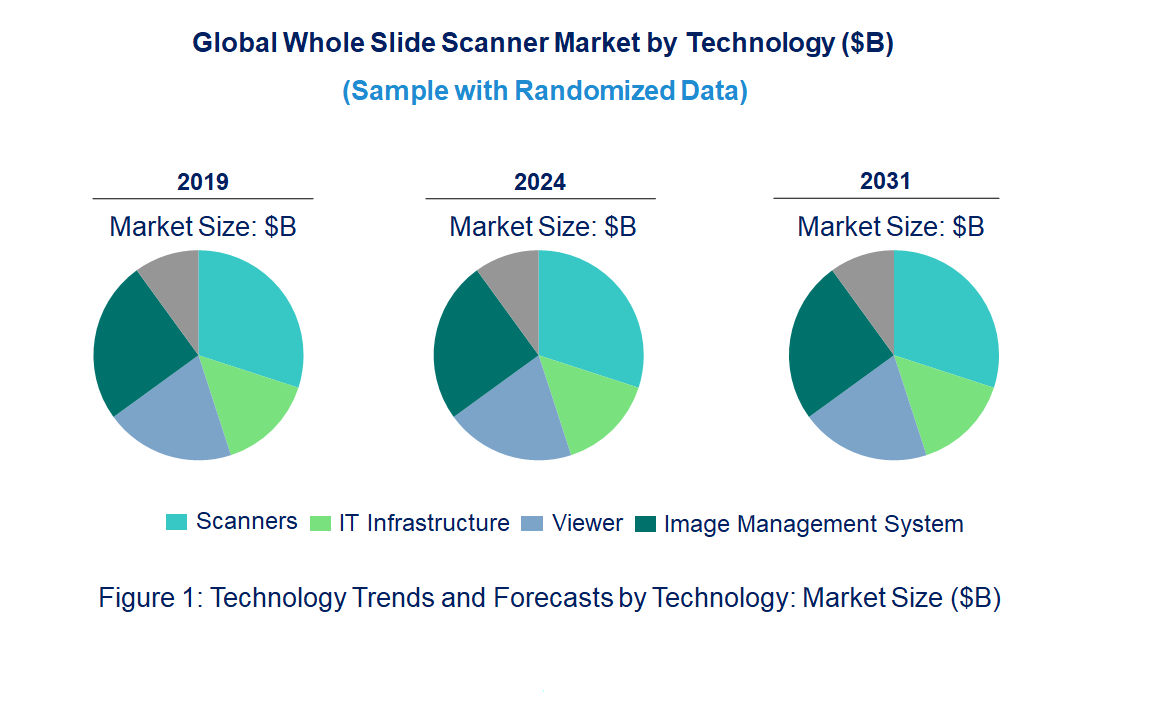
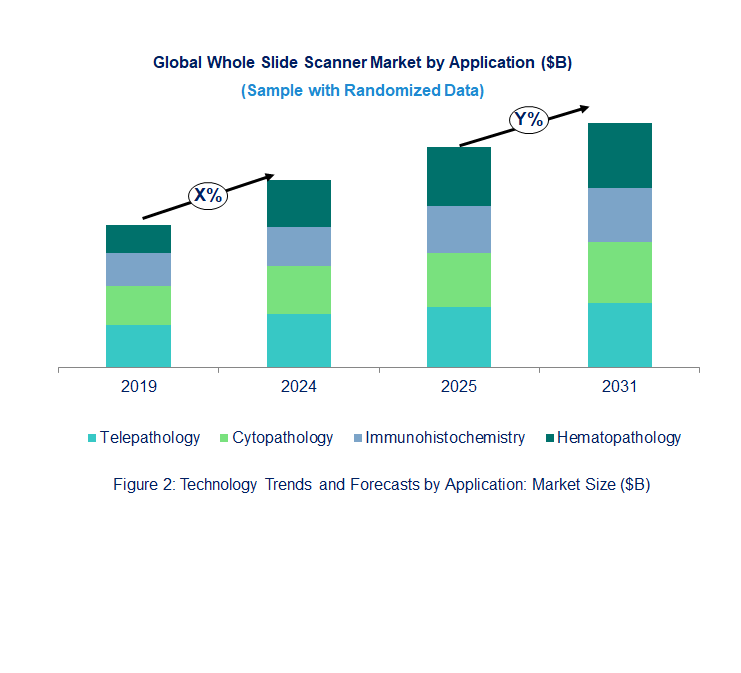
Emerging Trends in the Whole Slide Scanner Market
The whole slide scanner market is rapidly changing, and this pace is driven by advances in digital imaging, artificial intelligence (AI), and cloud technologies. These new trends are making slide scanning more efficient, enabling faster diagnoses, and expanding the scope of telepathology applications. Here are five key trends reshaping the market:• AI and Machine Learning Integration: The integration of AI and machine learning algorithms with whole slide scanners is transforming digital pathology. These technologies enable automated image analysis for tumor detection, cell counting, and diagnostic accuracy, which significantly reduces manual workload and improves diagnostic precision, particularly in cytopathology and immunohistochemistry.
• Cloud-Based Storage and Data Management: Cloud-based storage and management of whole slide images are gaining momentum. Such cloud-based platforms allow for easy sharing, retrieval, and analysis of digital slides at multiple locations. This trend is important in telepathology and remote consultations where pathologists can collaborate on accessing images from anywhere in the world.
• Growing Telepathology Adoption: Acceleration in telepathology, where digital slides are sent over secure networks for remote diagnosis, is driving the adoption of whole slide scanners. This mainly benefits people in geographically limited areas where pathologists are scarce, thus getting faster diagnoses and specialist expertise quicker, leading to improved patient outcomes.
• High-Resolution Scanning and Advanced Imaging Techniques: The need for higher resolution, and improved imaging techniques, such as fluorescence and confocal microscopy, drives innovation in whole slide scanners. Such systems lead to more accurate diagnoses, especially in the cases of immunohistochemistry and hematopathology, where fine details are crucial.
• Miniaturization and Cost Reduction: Manufacturers are focusing on miniaturizing whole slide scanners and reducing operational costs. These innovations are making whole slide scanning more affordable and accessible to smaller medical institutions, research labs, and developing regions. As such, more facilities are embracing digital pathology technologies. In conclusion, the integration of AI, cloud-based management, and telepathology is changing the whole slide scanner market completely to make diagnostic processes faster, more accurate, and more accessible. The push towards higher resolution and cost-effective solutions further strengthens the market's growth potential.

Whole Slide Scanner Market : Industry Potential, Technological Development, and Compliance Considerations
The whole slide scanners (WSS) are advanced imaging systems used to digitize microscope slides for high-resolution, large-format imaging in pathology and medical diagnostics. This technology enables the creation of virtual slides that can be analyzed remotely, thus helping advance telepathology, education, and clinical workflows.• Technology Potential: The potential for whole slide scanning is huge, especially with the growing popularity of digital pathology in healthcare systems across the globe. It increases the accuracy of diagnosis, accelerates the review process, and facilitates location-independent decision-making. Integration with AI and ML may transform the detection and prognosis of diseases, thus providing more accurate and personalized care. Digital slides can be stored and shared remotely, which expands the research and telemedicine scope.
• Degree of Disruption: The whole slide scanners are aimed at disrupting traditional pathology workflows, replacing traditional storage and review of slides with digital systems. Though the disruption may be gradual, the more affordable WSSs and easier WSSs in the future promise to bring about a real transformation of pathology, rendering diagnostics much faster, much more efficient, and universal.
• Current technology maturity: Technologies are generally mature, with numerous market-leaders already available, but advances continue to aim at the bettering of scan speeds, resolution, and integration with AI-driven diagnostic tools.
• Regulatory Compliance: Whole slide scanners are highly regulated medical devices. In the United States, FDA clearance is required; in Europe, CE marking is needed. Also, there are data privacy regulations like HIPAA in the United States because digital slides include patient information.
Recent Technological development in Whole Slide Scanner Market by Key Players
Key players in the whole slide scanner market, including Olympus Corporation, Koninklijke Philips N.V., Leica Microsystems GmbH, Nikon Corporation, Visiopharm, 3Dhistech, Hamamatsu Photonics KK, Indica Labs, Mikroscan Technologies Inc., and Akoya Biosciences, have been dynamically involved in innovations and new product launches. Some notable developments are as follows:• Olympus Corporation: Olympus Corporation introduced VS200 Slide Scanner, a throughput scanner for large-scale studies and clinical applications. Being linked to Olympus' image management software for completely automated scanning and high resolutions does accelerate diagnostic workflows, specially in academic and clinical arenas.
• Koninklijke Philips N.V.: Philips has developed the Philips IntelliSite Pathology Solution, a platform that combines whole slide scanning with AI-driven image analysis. This helps in the detection of cancer and other pathology diagnostics by automating image interpretation, enhancing accuracy, and reducing the time taken to diagnose, especially in remote diagnostics.
• Leica Microsystems GmbH: Leica Microsystems has developed the Aperio AT2 Slide Scanner, which is famous for its high-speed scanning and integration with Leica's digital pathology systems. This scanner has improved pathology lab workflow dramatically, ensuring high-resolution slides for better disease diagnosis especially in cytopathology and immunohistochemistry.
• Nikon Corporation: Nikon has introduced its Ci-L Whole Slide Scanner, which supports high-speed scanning and a range of imaging modalities, including fluorescence imaging. This scanner enables detailed and precise digital images, allowing pathologists to make more accurate diagnoses and to improve research capabilities in hematopathology.
• Visiopharm: Visiopharm has extended its image analysis capabilities with advanced AI-powered software that seamlessly integrates with whole slide scanners. Their focus on automation and AI-driven analysis tools has enhanced diagnostic workflows, especially in complex cases in immunohistochemistry and cancer research.
• 3Dhistech: The Pannoramic 1000 Scanner is developed by 3Dhistech, a versatile slide scanner. It allows for high-resolution imaging at speeds. The main focus has been on enhancing the speed and accuracy of pathological diagnostics as well as digital pathology workflows and is optimized for both research and clinical applications.
• Hamamatsu Photonics KK: Hamamatsu has developed the NanoZoomer 2.0-HT, which is a compact, high-resolution scanning solution for high-throughput environments. This increases productivity both in clinical and research settings, scanning large numbers of slides more quickly with high-quality images.
• Indica Labs: Indica Labs introduced their Aperio Image Analysis Platform that is for the quantitative analysis of tissue. The sophisticated software and integration with the scanner ease automated image segmentation and analysis that are very essential in applications like cytopathology and immunohistochemistry.
• Mikroscan Technologies Inc.: Mikroscan has offered affordable, high-resolution scanning systems to small and mid-sized clinics. The company's focus on making digital pathology accessible to more clinics around the world is realized through its Ultra series: affordable without compromise on performance.
• Akoya Biosciences: Akoya Biosciences has developed the Multiplexed Imaging technology, which is able to detect multiple biomarkers within a single tissue sample. This innovation enhances the use of whole slide scanners in precision medicine, especially for cancer diagnosis and research. Latest developments in whole slide scanning technology involve the improvement of scanning speed and image quality and integration with AI-powered analytics. These developments are actually shaping the market by enabling more efficient, accurate, and scalable solutions for diagnostics across clinical and research environments.
Whole Slide Scanner Market Driver and Challenges
The whole slide scanner market is driven by a combination of technological advancements and increasing demand for efficient diagnostic solutions. However, challenges remain, particularly related to cost, training, and system integration. Below are the key drivers and challenges impacting the market: The factors responsible for driving the whole slide scanner market include:• Rising Demand for Digital Pathology: This encompasses the growing adoption of digital pathology in clinical and research settings-the overall demand driver for a whole slide scanner. For instance, digital slides provide substantial advantages in terms of storage and accessibility and enable easy collaboration, remote diagnostics, and efficiency in diagnostics.
• Advances in AI and Machine Learning: The combination of whole slide scanners with AI and machine learning is completely transforming the marketplace. AI-scanned slides shorten diagnostic time because tumor detection, tissue analysis, and pattern recognition are automated, providing more accurate results.
• Increased Focus on Telepathology: The expansion of telepathology, especially in underserved regions, is driving the growth of the whole slide scanner market. Pathologists can now remotely access digital slides for analysis, enabling faster diagnoses and consultations, improving patient care in areas with limited access to experts.
• IT Infrastructure and Cloud Storage: The increasing adoption of cloud-based solutions for data storage and management, thereby making it easier to deal with large volumes of digital pathology data, is driving the adoption of whole slide scanners. Healthcare institutions would seek scalable, secure, accessible solutions for managing pathology images. Challenges in the whole slide scanner market are:
• High Initial Cost of Whole Slide Scanners: The high cost of whole slide scanners, combined with the needed IT infrastructure and software, remains a significant barrier for smaller health facilities and labs. This can decrease the rate of adoption, especially in price-sensitive markets.
• Integration with Other Systems: Integration of whole slide scanners to existing LIMS and EHR systems is difficult. Proper integration is essential for the smooth workflow of the system and sharing of data in between the platforms, which has a high cost and technical intensity.
• Training and Skill Development: For the systems to run, the technologies demand professionals with the necessary skills and qualifications for the operation and interpretation of digital slides. A lack of trained and competent professionals may hamper widespread adoption. The whole slide scanner market will rise with growing demand for digital pathology and AI development but will continue to face major constraints such as high cost, system integration challenges, and skilled personnel. Future growth and adoption will lie in how these challenges will be overcome.
List of Whole Slide Scanner Companies
Companies in the market compete based on product quality offered. Major players in this market focus on expanding their manufacturing facilities, R&D investments, infrastructural development, and leverage integration opportunities across the value chain. With these strategies whole slide scanner companies cater to increasing demand, ensure competitive effectiveness, develop innovative products & technologies, reduce production costs, and expand their customer base. Some of the whole slide scanner companies profiled in this report include.• Olympus Corporation
• Koninklijke Philips N.V
• Leica Microsystems GmbH
• Nikon Corporation
• Visiopharm
• 3Dhistech
Whole Slide Scanner Market by Technology
• Potential Disruption of Whole Slide Scanner Technologies: Scanners, IT Infrastructure, Viewers, and Image Management Systems are disrupting the Whole Slide Scanner market. Advanced Scanners speed up diagnostic processes and enhance their accuracy in pathology. IT Infrastructure allows cloud-based solutions for efficient data storage and access. Viewers offer intuitive interfaces for smooth review processes. Image Management Systems, with AI, increase the accuracy of diagnostics and remote consultations. These technologies disrupt traditional pathology, making healthcare more productive, precise, and accessible.
• Competitive Intensity and Regulatory Compliance: Competitive intensity varies across Scanners, IT Infrastructure, Viewers, and Image Management Systems. Scanners compete on resolution and automation, while IT Infrastructure providers focus on scalable, secure data solutions. Viewers and Image Management Systems compete on user experience and AI integration. Regulatory compliance is important, especially for healthcare applications, with strict data privacy, safety, and diagnostic accuracy standards (e.g., HIPAA)
• Technology Readiness by Type: Scanners are highly mature and used widely in pathology with robust readiness. IT Infrastructure is well-established and enables large-scale adoption in the healthcare industry. Viewers improve continually in integration and user interfaces. Image Management Systems, with a focus on AI-based, are evolving very fast for diagnostics and telemedicine. The competitive intensity is most prominent in Scanners and Image Management Systems where innovation is continuous. Regulatory compliance is necessary, especially for healthcare data security and privacy. The primary uses are diagnostics (Scanners), data management (IT Infrastructure), clinical review (Viewers), and decision support (Image Management Systems).
Whole Slide Scanner Market Trend and Forecast by Technology [Value from 2019 to 2031]:
• Scanners
• IT Infrastructure
• Viewer
• Image Management System
Whole Slide Scanner Market Trend and Forecast by Application [Value from 2019 to 2031]:
• Telepathology
• Cytopathology
• Immunohistochemistry
• Hematopathology
Whole Slide Scanner Market by Region [Value from 2019 to 2031]:
• North America
• Europe
• Asia Pacific
• The Rest of the World
• Latest Developments and Innovations in the Whole Slide Scanner Technologies
• Companies / Ecosystems
• Strategic Opportunities by Technology Type
Features of the Global Whole Slide Scanner Market
Market Size Estimates: Whole slide scanner market size estimation in terms of ($B).Trend and Forecast Analysis: Market trends (2019 to 2024) and forecast (2025 to 2031) by various segments and regions.Segmentation Analysis: Technology trends in the global whole slide scanner market size by various segments, such as application and technology in terms of value and volume shipments.Regional Analysis: Technology trends in the global whole slide scanner market breakdown by North America, Europe, Asia Pacific, and the Rest of the World.Growth Opportunities: Analysis of growth opportunities in different applications, technologies, and regions for technology trends in the global whole slide scanner market.Strategic Analysis: This includes M&A, new product development, and competitive landscape for technology trends in the global whole slide scanner market.Analysis of competitive intensity of the industry based on Porter’s Five Forces model.Table of Contents
Methodology
- In-depth interviews of the major players in this market
- Detailed secondary research from competitors’ financial statements and published data
- Extensive searches of published works, market, and database information pertaining to industry news, company press releases, and customer intentions
- A compilation of the experiences, judgments, and insights of Lucintel’s professionals, who have analyzed and tracked this market over the years.


Buy Now
Choose a license that fits your team. Instant PDF delivery.
Prices exclude taxes. Instant delivery. Custom licensing available on request.
Key Questions
- • What are some of the most promising potential, high-growth opportunities for the technology trends in the global whole slide scanner market by technology (scanners, it infrastructure, viewer, and image management system), application (telepathology, cytopathology, immunohistochemistry, and hematopathology), and region (North America, Europe, Asia Pacific, and the Rest of the World)?
- • Which technology segments will grow at a faster pace and why?
- • Which regions will grow at a faster pace and why?
- • What are the key factors affecting dynamics of different technology? What are the drivers and challenges of these technologies in the global whole slide scanner market?
- • What are the business risks and threats to the technology trends in the global whole slide scanner market?
- • What are the emerging trends in these technologies in the global whole slide scanner market and the reasons behind them?
- • Which technologies have potential of disruption in this market?
- • What are the new developments in the technology trends in the global whole slide scanner market? Which companies are leading these developments?
- • Who are the major players in technology trends in the global whole slide scanner market? What strategic initiatives are being implemented by key players for business growth?
- • What are strategic growth opportunities in this whole slide scanner technology space?
- • What M & A activities did take place in the last five years in technology trends in the global whole slide scanner market?


