
Report Feature
White Oil Trends and Forecast
The future of the global white oil market looks promising with opportunities in the plastic & polymer, pharmaceutical, food industry, personal care & cosmetic, and textile markets. The global white oil market is expected to reach an estimated $1.8 billion by 2030 with a CAGR of 4.2% from 2024 to 2030. The major drivers for this market are growth in the market for personal hygiene and care products and strong expansion in the pharmaceutical industry.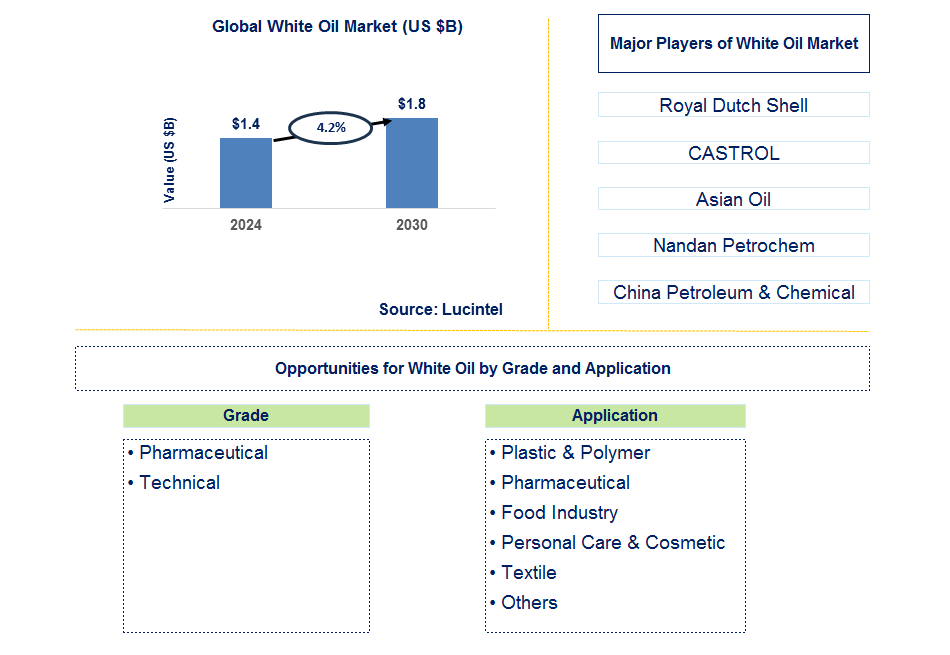
Country Wise Outlook for the White Oil Market
Major players in the market are expanding their operations and forming strategic partnerships to strengthen their positions. The following highlights recent developments by major white oil producers in key regions: the USA, China, Indian, Japan, and Germany.• United States: The U.S. has seen a surge in the production of white oil due to its increasing use in the cosmetics industry. Companies are investing in refining processes to enhance purity levels, meeting stringent regulations imposed by the FDA and ensuring compliance with safety standards.
• China: In China, white oil production has expanded significantly, focusing on sustainable sourcing and eco-friendly practices. The government is encouraging the use of white oil in food applications, leading to innovations in refining techniques to produce higher-grade products for consumer safety.
• Germany: Germany's white oil market is characterized by a strong emphasis on research and development. Companies are innovating to create multifunctional white oils, catering to diverse applications such as automotive and industrial uses, while also adhering to the EU's stringent environmental regulations.
• Indian: The Indian white oil market is witnessing growth, primarily driven by rising demand in pharmaceuticals and personal care products. Local manufacturers are enhancing their production capabilities and investing in modern refining technologies to ensure high-quality outputs and compliance with international standards.
• Japan: Japan's white oil market focuses on advanced purification technologies to improve product quality. The trend toward using white oil in health and wellness products is increasing, prompting companies to develop formulations that cater to specific consumer needs and preferences.
Emerging Trends in the White Oil Market
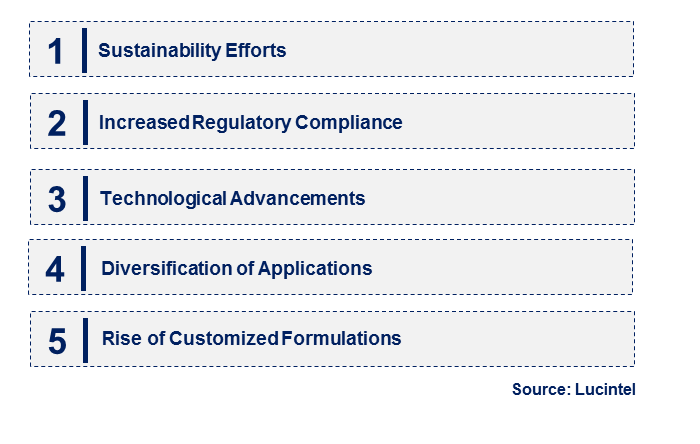
The white oil market is evolving with emerging trends that are reshaping its dynamics. These trends include sustainability efforts, increased regulatory compliance, technological advancements, diversification of applications, and the rise of customized formulations.• Sustainability Efforts: Companies are prioritizing sustainable practices by sourcing raw materials responsibly and developing eco-friendly white oil products. This shift addresses growing consumer demand for environmentally conscious products, reduces the industry's carbon footprint, and enhances brand reputation.
• Increased Regulatory Compliance: Stricter regulations globally are pushing manufacturers to ensure their white oil products meet safety and quality standards. This trend has led to increased investment in quality assurance and testing processes, resulting in higher consumer trust and product reliability.
• Technological Advancements: Innovations in refining technologies are enabling the production of higher purity white oils. Advanced methods, such as molecular distillation, enhance product quality and reduce impurities, expanding the range of applications in sensitive industries like pharmaceuticals and food.
• Diversification of Applications: White oil is finding new applications beyond traditional uses, including in automotive and industrial sectors. This diversification is creating new market opportunities and driving growth as companies adapt to the evolving needs of various industries.
• Rise of Customized Formulations: There is a growing trend toward developing customized white oil formulations tailored to specific consumer needs. This approach allows manufacturers to cater to niche markets, enhancing customer satisfaction and loyalty while driving product differentiation. These trends are significantly reshaping the white oil market, leading to enhanced product offerings, increased compliance with regulations, and a shift toward sustainable practices. The industry's ability to adapt to these changes will determine its future growth trajectory.
Recent Developments in the White Oil Market
The white oil market has seen key developments driven by technological advancements, regulatory changes, and increasing applications across various sectors. These developments reflect the industry's response to market demands and the need for higher-quality products.• Advanced Refining Techniques: Manufacturers are adopting advanced refining technologies to produce high-purity white oils. Techniques like hydrocracking and fractional distillation are enhancing product quality and reducing impurities, catering to the stringent requirements of the cosmetics and pharmaceutical industries.
• Sustainable Sourcing Initiatives: Companies are increasingly focusing on sustainable sourcing of raw materials for white oil production. This initiative aims to meet growing consumer demands for eco-friendly products and align with global sustainability goals, enhancing the industry's reputation.
• Regulatory Compliance Enhancements: With increasing regulatory scrutiny, manufacturers are investing in compliance measures to ensure their products meet safety and quality standards. This commitment not only fosters consumer trust but also mitigates the risk of legal repercussions associated with non-compliance.
• Growth in Food Applications: The demand for white oil in food applications is rising, prompting manufacturers to enhance their product offerings. This trend involves developing food-grade white oils that comply with health regulations, expanding market opportunities in the food processing sector.
• Investment in R&D: Companies are significantly investing in research and development to innovate and improve white oil formulations. This focus on R&D enables manufacturers to stay competitive by introducing new products that meet evolving consumer preferences and industry standards. These developments are positively impacting the white oil market by enhancing product quality, promoting sustainability, and expanding application areas. The industry's responsiveness to these trends is crucial for maintaining competitiveness and meeting consumer expectations.
Strategic Growth Opportunities for White Oil Market
The white oil market presents strategic growth opportunities across various applications. Manufacturers are exploring these opportunities to enhance their product portfolios and tap into new revenue streams.• Pharmaceutical Applications: The increasing demand for high-purity white oils in pharmaceuticals presents significant growth opportunities. Manufacturers can capitalize on this trend by developing specialized formulations that meet strict regulatory standards for drug production and delivery.
• Cosmetic and Personal Care Products: The cosmetics industry is a major consumer of white oil. Companies can explore growth by creating innovative formulations that enhance product performance and align with consumer preferences for natural and sustainable ingredients.
• Food Processing Sector: There is a growing demand for food-grade white oils in the food processing industry. Manufacturers can seize this opportunity by ensuring compliance with food safety regulations and developing versatile products that cater to various food applications.
• Industrial Uses: White oil is increasingly being utilized in industrial applications, such as lubricants and hydraulic fluids. Companies can tap into this market by offering high-performance white oils tailored for specific industrial needs, enhancing operational efficiency.
• Agricultural Applications: The use of white oil in agricultural products, such as pesticides and herbicides, is gaining traction. Manufacturers can explore this opportunity by developing formulations that enhance product efficacy and comply with environmental regulations. These growth opportunities highlight the diverse applications of white oil and the potential for market expansion. Companies that strategically align their product development and marketing efforts with these opportunities will likely thrive in the evolving landscape.
White Oil Market Driver and Challenges
The white oil market is influenced by various drivers and challenges, encompassing technological, economic, and regulatory factors. Understanding these dynamics is crucial for stakeholders to navigate the market effectively. The factors responsible for driving the white oil market include:• Growing Demand in Personal Care and Cosmetics: The increasing use of white oil in skincare, haircare, and cosmetic products drives demand. Its emollient properties make it a popular choice for formulators seeking safe and effective ingredients.
• Pharmaceutical Applications: White oil is commonly used in the pharmaceutical industry as a lubricant and carrier. The rising demand for pharmaceuticals, particularly in emerging markets, propels the growth of the white oil market.
• Industrial Applications: Various industrial sectors utilize white oil for lubrication, hydraulics, and as a solvent. The growth of manufacturing and construction activities in developing regions supports demand.
• Regulatory Compliance and Safety Standards: The increasing emphasis on product safety and compliance with regulations enhances the appeal of white oil, which is considered a non-toxic and safe ingredient in many applications.
• Sustainability Trends: As consumers and businesses prioritize sustainability, the search for eco-friendly and biodegradable alternatives has led to innovations in white oil formulations, boosting market interest. Challenges in the white oil market are:
• Volatility in Raw Material Prices: The white oil market is subject to fluctuations in the prices of crude oil and other raw materials, which can impact production costs and profitability.
• Environmental Regulations: Stricter environmental regulations concerning petroleum products may pose challenges for producers. Compliance with these regulations often requires significant investment in cleaner technologies and processes.
• Competition from Alternatives: The rise of bio-based oils and synthetic alternatives poses a competitive threat to traditional white oil products. Manufacturers must innovate to differentiate their offerings and retain market share.
• Supply Chain Disruptions: Global supply chain issues, exacerbated by geopolitical tensions and the COVID-19 pandemic, can lead to shortages or delays in the availability of white oil, impacting production schedules.
• Market Saturation: In some regions, the market for white oil is becoming saturated, leading to price competition and thinner margins. Companies must find ways to differentiate their products to maintain profitability. The interplay of these drivers and challenges is shaping the white oil market's landscape. Stakeholders must adapt to these dynamics to leverage opportunities for growth while effectively addressing the challenges they face.
List of White Oil Companies
Companies in the market compete on the basis of product quality offered. Major players in this market focus on expanding their manufacturing facilities, R&D investments, infrastructural development, and leverage integration opportunities across the value chain. Through these strategies white oil companies cater increasing demand, ensure competitive effectiveness, develop innovative products & technologies, reduce production costs, and expand their customer base. Some of the white oil companies profiled in this report include-• Royal Dutch Shell
• CASTROL
• Asian Oil
• Nandan Petrochem
• China Petroleum & Chemical
• RENKERT OIL
• Lanxess
• Lodha Petro
• Sonneborn
• Eastman Chemical
White Oil by Segment
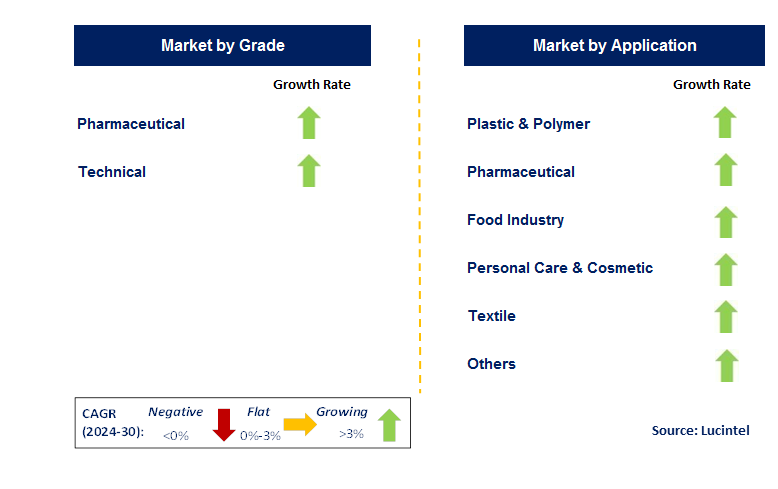
The study includes a forecast for the global white oil by grade, application, and region.White Oil Market by Grade [Analysis by Value from 2018 to 2030]:
• Pharmaceutical
• Technical
White Oil Market by Application [Analysis by Value from 2018 to 2030]:
• Plastic & Polymer
• Pharmaceutical
• Food Industry
• Personal Care & Cosmetic
• Textile
• Others
White Oil Market by Region [Analysis by Value from 2018 to 2030]:
• North America
• Europe
• Asia Pacific
• The Rest of the World
White Oil Market Insights
• Lucintel forecasts that, within the grade category, pharmaceutical will remain the larger segment over the forecast period due to growing consumer awareness of personal hygiene practices has raised the market for a range of personal hygiene products made with pharmaceutical-grade white oil formulations.
• Within the application category, pharmaceutical will remain the largest segment due to higher expenditures to support the growth of the pharmaceutical industry.
• In terms of regions, APAC is expected to witness the highest growth over the forecast period due to an increase in knowledge of self-care and self-beauty practices.

Features of the Global White Oil Market
Market Size Estimates: White oil market size estimation in terms of value ($B). Trend and Forecast Analysis: Market trends (2018 to 2023) and forecast (2024 to 2030) by various segments and regions. Segmentation Analysis: White oil market size by grade, application, and region in terms of value ($B). Regional Analysis: White oil market breakdown by North America, Europe, Asia Pacific, and Rest of the World. Growth Opportunities: Analysis of growth opportunities in different grade, application, and regions for the white oil market. Strategic Analysis: This includes M&A, new product development, and competitive landscape of the white oil market. Analysis of competitive intensity of the industry based on Porter’s Five Forces model.If you are looking to expand your business in this or adjacent markets, then contact us. We have done hundreds of strategic consulting projects in market entry, opportunity screening, due diligence, supply chain analysis, M & A, and more.

FAQ
Q1. What is the white oil market size? Answer: The global white oil market is expected to reach an estimated $1.8 billion by 2030. Q2. What is the growth forecast for white oil market? Answer: The global white oil market is expected to grow with a CAGR of 4.2% from 2024 to 2030. Q3. What are the major drivers influencing the growth of the white oil market? Answer: The major drivers for this market are growth in the market for personal hygiene and care products and strong expansion in the pharmaceutical industry. Q4. What are the major segments for white oil market? Answer: The future of the white oil market looks promising with opportunities in the plastic & polymer, pharmaceutical, food industry, personal care & cosmetic, and textile markets. Q5. Who are the key white oil market companies? Answer: Some of the key white oil companies are as follows:• Royal Dutch Shell
• CASTROL
• Asian Oil
• Nandan Petrochem
• China Petroleum & Chemical
• RENKERT OIL
• Lanxess
• Lodha Petro
• Sonneborn
• Eastman Chemical Q6. Which white oil market segment will be the largest in future? Answer: Lucintel forecasts that pharmaceutical will remain the larger segment over the forecast period due to growing consumer awareness of personal hygiene practices has raised the market for a range of personal hygiene products made with pharmaceutical-grade white oil formulations. Q7. In white oil market, which region is expected to be the largest in next 5 years? Answer: APAC is expected to witness the highest growth over the forecast period due to an increase in knowledge of self-care and self-beauty practices. Q.8 Do we receive customization in this report? Answer: Yes, Lucintel provides 10% customization without any additional cost.
Table of Contents
Methodology
- In-depth interviews of the major players in this market
- Detailed secondary research from competitors’ financial statements and published data
- Extensive searches of published works, market, and database information pertaining to industry news, company press releases, and customer intentions
- A compilation of the experiences, judgments, and insights of Lucintel’s professionals, who have analyzed and tracked this market over the years.


Buy Now
Choose a license that fits your team. Instant PDF delivery.
Prices exclude taxes. Instant delivery. Custom licensing available on request.
Key Questions
- • What are some of the most promising, high-growth opportunities for the white oil market by grade (pharmaceutical and technical), application (plastic & polymer, pharmaceutical, food industry, personal care & cosmetic, textile , and others), and region (North America, Europe, Asia Pacific, and the Rest of the World)?
- • Which segments will grow at a faster pace and why?
- • Which region will grow at a faster pace and why?
- • What are the key factors affecting market dynamics? What are the key challenges and business risks in this market?
- • What are the business risks and competitive threats in this market?
- • What are the emerging trends in this market and the reasons behind them?
- • What are some of the changing demands of customers in the market?
- • What are the new developments in the market? Which companies are leading these developments?
- • Who are the major players in this market? What strategic initiatives are key players pursuing for business growth?
- • What are some of the competing products in this market and how big of a threat do they pose for loss of market share by material or product substitution?
- • What M&A activity has occurred in the last 5 years and what has its impact been on the industry? For any questions related to White Oil Market, White Oil Market Size, White Oil Market Growth, White Oil Market Analysis, White Oil Market Report, White Oil Market Share, White Oil Market Trends, White Oil Market Forecast, White Oil Companies, write Lucintel analyst at email: helpdesk@lucintel.com. We will be glad to get back to you soon.


