
Report Feature
VDCI Digital Therapeutics Market Trends and Forecast
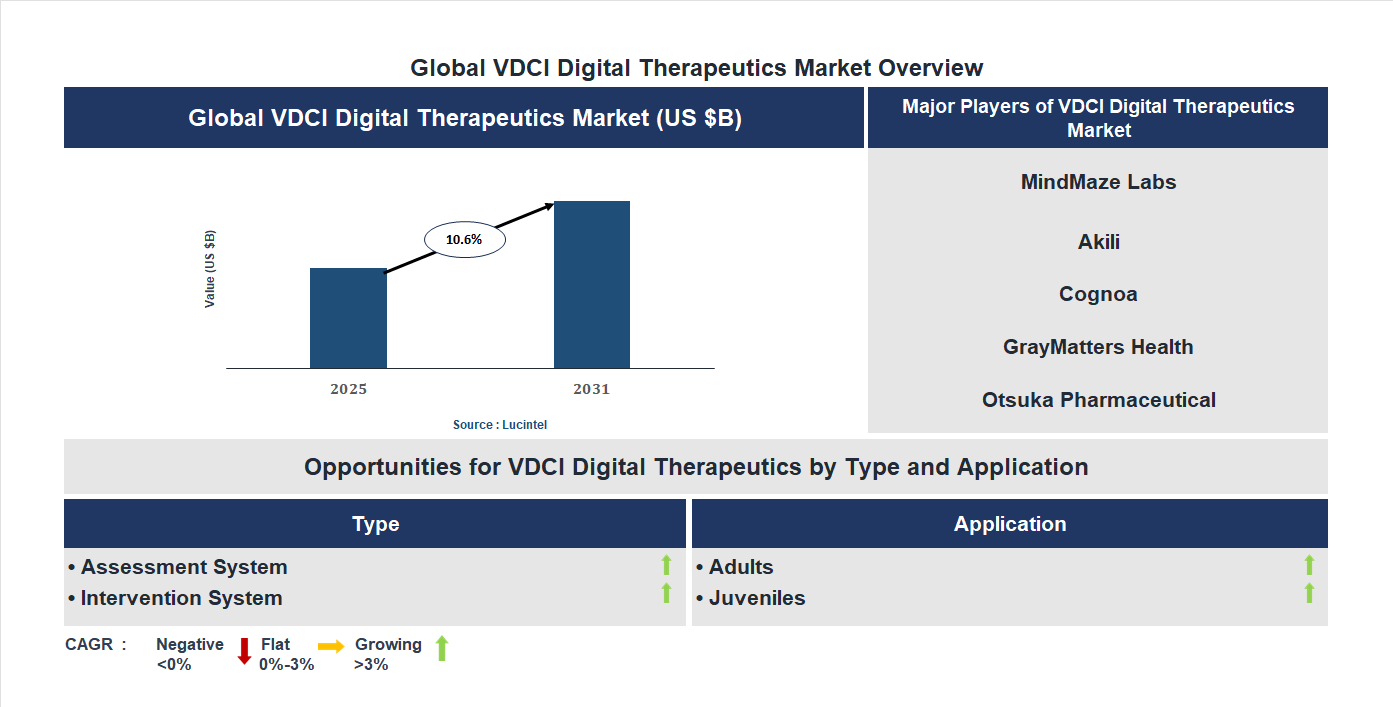
The future of the global VDCI digital therapeutics market looks promising with opportunities in the assessment system and intervention system markets. The global VDCI digital therapeutics market is expected to grow with a CAGR of 10.6% from 2025 to 2031. The major drivers for this market are the increasing prevalence of cardiovascular cognitive disorders, the rising adoption of digital health platforms, and the growing demand for personalized remote therapies.• Lucintel forecasts that, within the application category, adult is expected to witness higher growth over the forecast period.
• Within the type category, intervention system is expected to witness higher growth.
• In terms of region, APAC is expected to witness the highest growth over the forecast period. Gain valuable insights for your business decisions with our comprehensive 150+ page report. Sample figures with some insights are shown below.
Emerging Trends in the VDCI Digital Therapeutics Market
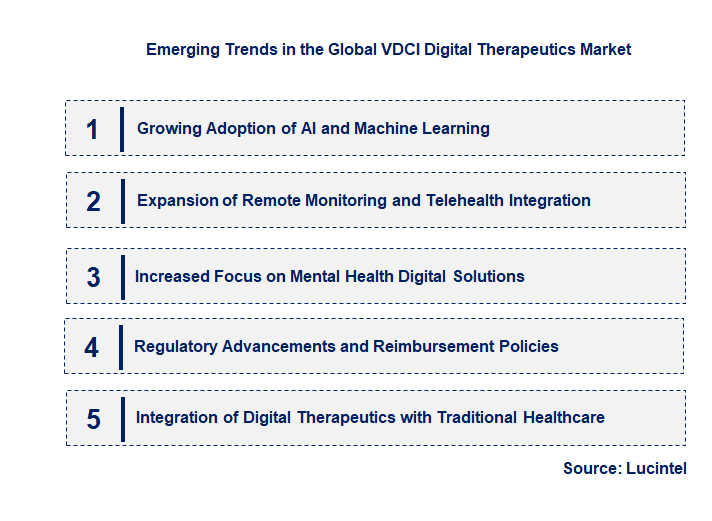
The VDCI digital therapeutics market is experiencing rapid growth driven by technological advancements, increasing healthcare needs, and a shift towards personalized medicine. As digital health solutions become more integrated into mainstream healthcare, various innovative trends are emerging to address diverse patient needs and improve treatment outcomes. These developments are transforming how healthcare is delivered, monitored, and managed, leading to more accessible, efficient, and patient-centric care. Stakeholders, including providers, payers, and patients, are adapting to these changes, which are poised to redefine the landscape of digital therapeutics in the coming years.• Growing Adoption of AI and Machine Learning: AI and machine learning are increasingly integrated into digital therapeutics to enhance personalization and predictive analytics. These technologies enable tailored treatment plans based on individual patient data, improving efficacy and engagement. AI-driven insights facilitate early intervention, optimize resource allocation, and support clinical decision-making. As AI becomes more sophisticated, its role in diagnosing, monitoring, and adjusting therapies will expand, making digital therapeutics more precise and effective. This trend is expected to significantly improve patient outcomes and streamline healthcare workflows.
• Expansion of Remote Monitoring and Telehealth Integration: Remote monitoring tools and telehealth platforms are becoming central to digital therapeutics, especially in managing chronic diseases and mental health conditions. These solutions allow continuous patient engagement outside traditional clinical settings, providing real-time data to healthcare providers. The integration of telehealth enhances accessibility, reduces hospital visits, and supports timely interventions. As internet connectivity and wearable devices improve, remote monitoring will become more seamless and widespread, enabling a more proactive approach to healthcare management and fostering patient empowerment.
• Increased Focus on Mental Health Digital Solutions: The mental health sector is witnessing a surge in digital therapeutics designed specifically for conditions like depression, anxiety, and stress. These solutions offer scalable, accessible, and stigma-free options for mental health support, often incorporating cognitive-behavioral therapy (CBT) and mindfulness techniques. The COVID-19 pandemic accelerated demand for such tools, highlighting their importance. As awareness grows and regulatory frameworks evolve, mental health digital therapeutics are expected to become a significant segment, addressing unmet needs and expanding mental health care access globally.
• Regulatory Advancements and Reimbursement Policies: Evolving regulatory landscapes and reimbursement models are facilitating the growth of digital therapeutics. Governments and agencies are establishing clearer guidelines for approval, safety, and efficacy, which boost investor confidence and market entry. Reimbursement policies are gradually adapting to include digital therapeutics as standard treatment options, encouraging adoption by healthcare providers and payers. These regulatory and financial supports are crucial for scaling innovations, ensuring quality, and integrating digital therapeutics into mainstream healthcare systems, ultimately driving market expansion.
• Integration of Digital Therapeutics with Traditional Healthcare: The convergence of digital therapeutics with conventional treatment modalities is creating hybrid care models. This integration allows for comprehensive patient management, combining medication, therapy, and digital interventions. It enhances treatment adherence, provides continuous support, and enables data-driven adjustments. Healthcare providers are increasingly adopting integrated approaches to improve outcomes and patient satisfaction. This trend is fostering a more holistic, coordinated healthcare ecosystem where digital therapeutics complement traditional practices, leading to more personalized and effective care pathways. In summary, these emerging trends are reshaping the VDCI digital therapeutics market by making treatments more personalized, accessible, and integrated. The adoption of advanced technologies, expanded mental health solutions, supportive regulatory frameworks, and hybrid care models are collectively driving growth and innovation. As these trends continue to evolve, they will significantly influence healthcare delivery, improve patient outcomes, and expand market opportunities, positioning digital therapeutics as a cornerstone of future healthcare systems.
Recent Development in the VDCI Digital Therapeutics Market
The VDCI digital therapeutics market has experienced significant growth driven by technological advancements, increasing adoption of digital health solutions, and a rising prevalence of chronic diseases. As healthcare systems shift towards more personalized and accessible care, digital therapeutics are becoming integral in managing various health conditions. Recent developments reflect innovations in product offerings, regulatory approvals, and strategic collaborations, which are shaping the future landscape of this market. These changes are not only expanding market reach but also improving patient outcomes and reducing healthcare costs. Understanding these key developments provides insight into the evolving dynamics and future potential of the VDCI digital therapeutics market.• Technological Innovations: Integration of AI and machine learning enhances personalized treatment plans, improving efficacy and patient engagement.
• Regulatory Approvals: Increased approvals from health authorities for digital therapeutics products boost market credibility and adoption.
• Strategic Collaborations: Partnerships between tech firms and healthcare providers facilitate wider distribution and integration into clinical practice.
• Market Expansion: Entry into emerging markets driven by rising healthcare awareness and digital infrastructure development.
• Patient-Centric Approaches: Focus on user-friendly interfaces and remote monitoring features to improve adherence and outcomes. These developments are collectively driving market growth by fostering innovation, expanding access, and establishing regulatory confidence. The market is becoming more competitive and patient-focused, leading to improved healthcare delivery and cost efficiencies. As a result, the VDCI digital therapeutics market is poised for sustained expansion and increased integration into mainstream healthcare systems.
Strategic Growth Opportunities in the VDCI Digital Therapeutics Market
The VDCI digital therapeutics market is experiencing rapid expansion driven by technological advancements, increasing healthcare awareness, and a shift towards personalized medicine. As digital solutions become integral to healthcare delivery, key applications are emerging as significant growth drivers. These opportunities are transforming patient care, improving outcomes, and reducing costs across various sectors. Stakeholders are increasingly investing in innovative digital therapies to address unmet medical needs and enhance treatment adherence. The evolving regulatory landscape and rising adoption of digital health tools further bolster market potential. Understanding these growth opportunities across applications is essential for stakeholders aiming to capitalize on this dynamic market.• Chronic Disease Management: The increasing prevalence of chronic conditions such as diabetes and cardiovascular diseases drives demand for digital therapeutics that enable remote monitoring, personalized treatment plans, and improved patient engagement, leading to better health outcomes and reduced healthcare costs.
• Mental Health Treatment: Growing awareness and destigmatization of mental health issues boost the adoption of digital therapeutics for conditions like depression, anxiety, and PTSD. These solutions offer accessible, scalable, and stigma-free options for therapy, expanding reach and improving patient adherence.
• Substance Use Disorder (SUD) Treatment: Digital therapeutics provide innovative tools for SUD management, including relapse prevention and behavioral therapy. Their ability to deliver discreet, personalized support enhances treatment engagement and recovery rates, addressing a critical healthcare need.
• Pediatric and Adolescent Care: The rising focus on early intervention and pediatric mental health creates opportunities for digital therapeutics tailored to younger populations. These tools facilitate engaging, age-appropriate therapies that promote healthier behaviors and long-term well-being.
• Post-Acute and Rehabilitation Care: Digital therapeutics support recovery and rehabilitation after surgeries or acute illnesses by providing continuous monitoring, education, and behavioral support. This reduces readmission rates and accelerates patient recovery, optimizing healthcare resource utilization. In summary, these growth opportunities are significantly impacting the VDCI digital therapeutics market by expanding its application scope, enhancing patient outcomes, and driving innovation. As adoption accelerates across diverse healthcare settings, the market is poised for sustained growth, offering substantial benefits to patients, providers, and payers alike.
VDCI Digital Therapeutics Market Driver and Challenges
The VDCI digital therapeutics market is influenced by a range of technological, economic, and regulatory factors that shape its growth trajectory. Advances in digital health technologies, increasing healthcare costs, and evolving regulatory frameworks are key drivers. Additionally, rising awareness of mental health and chronic disease management, along with the integration of artificial intelligence, are fueling market expansion. However, the market also faces challenges such as regulatory uncertainties, data privacy concerns, and reimbursement issues that could hinder growth. Understanding these drivers and challenges is essential for stakeholders to navigate the dynamic landscape effectively and capitalize on emerging opportunities. The factors responsible for driving the VDCI digital therapeutics market include:• Technological Advancements: The rapid development of digital health tools, wearable devices, and mobile applications has revolutionized patient engagement and treatment delivery. These innovations enable personalized, real-time monitoring and intervention, improving health outcomes. The integration of artificial intelligence and machine learning enhances diagnostic accuracy and treatment customization. As technology becomes more accessible and affordable, healthcare providers and patients are increasingly adopting digital therapeutics, driving market growth. Moreover, advancements in data analytics facilitate better clinical decision-making, further propelling the market forward.
• Rising Prevalence of Chronic Diseases: The global increase in chronic conditions such as diabetes, cardiovascular diseases, and mental health disorders significantly boosts demand for effective management solutions. Digital therapeutics offer scalable, cost-effective options for long-term disease management, reducing hospitalizations and improving quality of life. Governments and healthcare organizations are prioritizing digital interventions to address the growing burden of chronic illnesses. This trend encourages investment and innovation in digital therapeutic solutions tailored to specific disease profiles, thereby expanding market opportunities.
• Increasing Healthcare Expenditure: Growing healthcare budgets worldwide are facilitating the adoption of innovative treatment modalities, including digital therapeutics. As healthcare costs rise, payers and providers seek cost-effective alternatives that can deliver better outcomes. Digital therapeutics often reduce the need for expensive hospital visits and medication, making them attractive options for cost containment. Additionally, reimbursement policies are gradually evolving to include digital health solutions, encouraging wider adoption. This economic support accelerates market growth by enabling broader deployment and integration of digital therapeutic products.
• Regulatory Support and Policy Frameworks: Governments and regulatory bodies are increasingly recognizing the importance of digital therapeutics in healthcare. Clear guidelines and approval pathways are being established to ensure safety and efficacy, boosting stakeholder confidence. Regulatory support facilitates faster market entry and reimbursement, encouraging innovation and commercialization. Initiatives such as digital health standards and accreditation programs further promote adoption. As regulatory frameworks mature, they provide a conducive environment for investment and development, fostering sustainable growth in the VDCI digital therapeutics market.
• Growing Awareness and Acceptance: Increased awareness of mental health issues and chronic disease management benefits has led to higher acceptance of digital therapeutics among patients and healthcare providers. Educational campaigns and success stories demonstrate the effectiveness of digital interventions, reducing stigma and skepticism. The convenience and accessibility of digital solutions appeal to a broad demographic, including remote and underserved populations. This acceptance accelerates adoption rates, expands user base, and stimulates market expansion, making digital therapeutics a mainstream component of healthcare delivery. The challenges in the VDCI digital therapeutics market are:
• Regulatory Uncertainty: Despite progress, regulatory pathways for digital therapeutics remain complex and inconsistent across regions. Lack of standardized approval processes and evolving guidelines create uncertainty for developers and investors. This can delay product launches and increase compliance costs. Additionally, regulatory agencies are still assessing how to evaluate digital health solutions safety and efficacy, which may lead to delays or restrictions. Navigating these regulatory complexities requires significant resources and expertise, potentially hindering innovation and slowing market growth.
• Data Privacy and Security Concerns: Digital therapeutics rely heavily on collecting and analyzing sensitive patient data, raising significant privacy and security issues. Breaches or misuse of data can erode patient trust and lead to legal repercussions. Ensuring compliance with data protection regulations like GDPR and HIPAA adds complexity to product development and deployment. The risk of cyberattacks and data leaks poses ongoing threats, necessitating robust security measures. These concerns can slow adoption and limit market penetration, especially in regions with stringent data privacy laws.
• Reimbursement and Funding Challenges: Limited reimbursement policies for digital therapeutics remain a significant barrier. Payers often hesitate to cover new digital solutions due to concerns over cost-effectiveness and clinical validation. Without clear reimbursement pathways, healthcare providers may be reluctant to prescribe or recommend digital therapeutics, restricting market growth. Additionally, securing funding for research, development, and commercialization can be challenging, especially for smaller companies. Overcoming these financial hurdles is crucial for widespread adoption and sustained market expansion. In summary, the VDCI digital therapeutics market is driven by technological innovations, increasing disease prevalence, economic support, regulatory advancements, and growing acceptance. However, regulatory uncertainties, data privacy issues, and reimbursement challenges pose significant hurdles. These factors collectively influence the pace and scope of market growth. While opportunities abound for innovative solutions and expanded access, addressing these challenges is essential for sustainable development. Strategic collaborations, clear policies, and robust data security measures will be vital in harnessing the full potential of digital therapeutics in the evolving healthcare landscape.
List of VDCI Digital Therapeutics Companies
Companies in the market compete on the basis of product quality offered. Major players in this market focus on expanding their manufacturing facilities, R&D investments, infrastructural development, and leverage integration opportunities across the value chain. With these strategies VDCI digital therapeutics companies cater increasing demand, ensure competitive effectiveness, develop innovative products & technologies, reduce production costs, and expand their customer base. Some of the VDCI digital therapeutics companies profiled in this report include-• MindMaze Labs
• Akili
• Cognoa
• GrayMatters Health
• Otsuka Pharmaceutical
• TALi Health
• Dario Health
• Better Therapeutics
• Nanjing Vishee Medical Technology
• Zhejiang BrainAurora Medical Technology
VDCI Digital Therapeutics Market by Segment
The study includes a forecast for the global VDCI digital therapeutics market by type, application, and region.VDCI Digital Therapeutics Market by Type [Value from 2019 to 2031]:
• Assessment System
• Intervention System
VDCI Digital Therapeutics Market by Application [Value from 2019 to 2031]:
• Adults
• Juveniles
VDCI Digital Therapeutics Market by Region [Value from 2019 to 2031]:
• North America
• Europe
• Asia Pacific
• The Rest of the World
Country Wise Outlook for the VDCI Digital Therapeutics Market
The VDCI digital therapeutics market is experiencing rapid growth driven by technological advancements, increasing healthcare awareness, and regulatory support worldwide. As digital health solutions become more integrated into mainstream medicine, countries are adopting innovative approaches to improve patient outcomes and reduce healthcare costs. Each nation’s unique healthcare infrastructure, regulatory environment, and technological capabilities influence its development trajectory. The following summaries highlight recent key developments in the United States, China, Germany, India, and Japan, reflecting their respective strategies and progress in this evolving market.• United States: The US market has seen significant growth with increased FDA approvals for digital therapeutics, expanding reimbursement policies, and collaborations between tech firms and healthcare providers. Telehealth adoption surged during the pandemic, accelerating digital therapeutics integration into mainstream care. Companies are focusing on personalized solutions for chronic diseases, mental health, and addiction treatment, supported by robust R&D investments and regulatory clarity. The US remains a leader in innovation, with startups and established firms driving market expansion.
• China: China’s digital therapeutics market is rapidly expanding due to government initiatives promoting digital health and a large, tech-savvy population. Recent developments include the approval of several digital therapeutic apps for mental health and chronic disease management. The government’s Healthy China 2030 plan emphasizes digital health integration, fostering innovation and investment. Local companies are forming strategic partnerships with international firms to enhance product offerings, and increasing smartphone penetration supports the widespread adoption of digital health solutions.
• Germany: Germany has made notable progress through its Digital Healthcare Act, which facilitates reimbursement for digital therapeutics. Recent developments include the approval of several digital therapeutics for mental health, diabetes, and cardiovascular diseases. The country emphasizes evidence-based solutions and patient-centric approaches, with healthcare providers increasingly integrating digital therapeutics into standard treatment protocols. Public and private sector collaborations are fostering innovation, and Germany’s focus on data security and privacy enhances market confidence.
• India: India’s digital therapeutics market is emerging rapidly, driven by a large population, rising smartphone usage, and increasing awareness of mental health and chronic disease management. Recent initiatives include government programs promoting digital health infrastructure and telemedicine. Startups are developing affordable, scalable solutions tailored to local needs, with some receiving regulatory approval. The focus is on expanding access to underserved populations, leveraging mobile platforms, and integrating digital therapeutics into existing healthcare frameworks to improve outcomes.
• Japan: Japan’s market is advancing with a focus on aging populations and chronic disease management. Recent developments include regulatory reforms to facilitate digital therapeutics approval and reimbursement. The government is promoting digital health through strategic initiatives and collaborations with tech companies. Japan emphasizes evidence-based solutions and data security, with a growing number of digital therapeutics being integrated into clinical practice. The aging demographic presents opportunities for tailored solutions addressing age-related health issues, fostering innovation and market growth.

Features of the Global VDCI Digital Therapeutics Market
Market Size Estimates: VDCI digital therapeutics market size estimation in terms of value ($B). Trend and Forecast Analysis: Market trends (2019 to 2024) and forecast (2025 to 2031) by various segments and regions. Segmentation Analysis: VDCI digital therapeutics market size by type, application, and region in terms of value ($B). Regional Analysis: VDCI digital therapeutics market breakdown by North America, Europe, Asia Pacific, and Rest of the World. Growth Opportunities: Analysis of growth opportunities in different types, applications, and regions for the VDCI digital therapeutics market. Strategic Analysis: This includes M&A, new product development, and competitive landscape of the VDCI digital therapeutics market. Analysis of competitive intensity of the industry based on Porter’s Five Forces model.
FAQ
Q1. What is the growth forecast for VDCI digital therapeutics market? Answer: The global VDCI digital therapeutics market is expected to grow with a CAGR of 10.6% from 2025 to 2031. Q2. What are the major drivers influencing the growth of the VDCI digital therapeutics market? Answer: The major drivers for this market are the increasing prevalence of cardiovascular cognitive disorders, the rising adoption of digital health platforms, and the growing demand for personalized remote therapies. Q3. What are the major segments for VDCI digital therapeutics market? Answer: The future of the VDCI digital therapeutics market looks promising with opportunities in the assessment system and intervention system markets. Q4. Who are the key VDCI digital therapeutics market companies? Answer: Some of the key VDCI digital therapeutics companies are as follows:• MindMaze Labs
• Akili
• Cognoa
• GrayMatters Health
• Otsuka Pharmaceutical
• TALi Health
• Dario Health
• Better Therapeutics
• Nanjing Vishee Medical Technology
• Zhejiang BrainAurora Medical Technology Q5. Which VDCI digital therapeutics market segment will be the largest in future? Answer: Lucintel forecasts that, within the application category, adult is expected to witness higher growth over the forecast period. Q6. In VDCI digital therapeutics market, which region is expected to be the largest in next 5 years? Answer: In terms of region, APAC is expected to witness the highest growth over the forecast period. Q7. Do we receive customization in this report? Answer: Yes, Lucintel provides 10% customization without any additional cost.
Table of Contents
List of Figures
List of Tables
Methodology
- In-depth interviews of the major players in this market
- Detailed secondary research from competitors’ financial statements and published data
- Extensive searches of published works, market, and database information pertaining to industry news, company press releases, and customer intentions
- A compilation of the experiences, judgments, and insights of Lucintel’s professionals, who have analyzed and tracked this market over the years.


Buy Now
Choose a license that fits your team. Instant PDF delivery.
Prices exclude taxes. Instant delivery. Custom licensing available on request.
Key Questions
- • What are some of the most promising, high-growth opportunities for the VDCI digital therapeutics market by type (assessment system and intervention system), application (adults and juveniles), and region (North America, Europe, Asia Pacific, and the Rest of the World)?
- • Which segments will grow at a faster pace and why?
- • Which region will grow at a faster pace and why?
- • What are the key factors affecting market dynamics? What are the key challenges and business risks in this market?
- • What are the business risks and competitive threats in this market?
- • What are the emerging trends in this market and the reasons behind them?
- • What are some of the changing demands of customers in the market?
- • What are the new developments in the market? Which companies are leading these developments?
- • Who are the major players in this market? What strategic initiatives are key players pursuing for business growth?
- • What are some of the competing products in this market and how big of a threat do they pose for loss of market share by material or product substitution?
- • What M&A activity has occurred in the last 5 years and what has its impact been on the industry? For any questions related to VDCI Digital Therapeutics Market, VDCI Digital Therapeutics Market Size, VDCI Digital Therapeutics Market Growth, VDCI Digital Therapeutics Market Analysis, VDCI Digital Therapeutics Market Report, VDCI Digital Therapeutics Market Share, VDCI Digital Therapeutics Market Trends, VDCI Digital Therapeutics Market Forecast, VDCI Digital Therapeutics Companies, write Lucintel analyst at email: helpdesk@lucintel.com. We will be glad to get back to you soon.


