
Report Feature
Retail Clinic Market Trends and Forecast
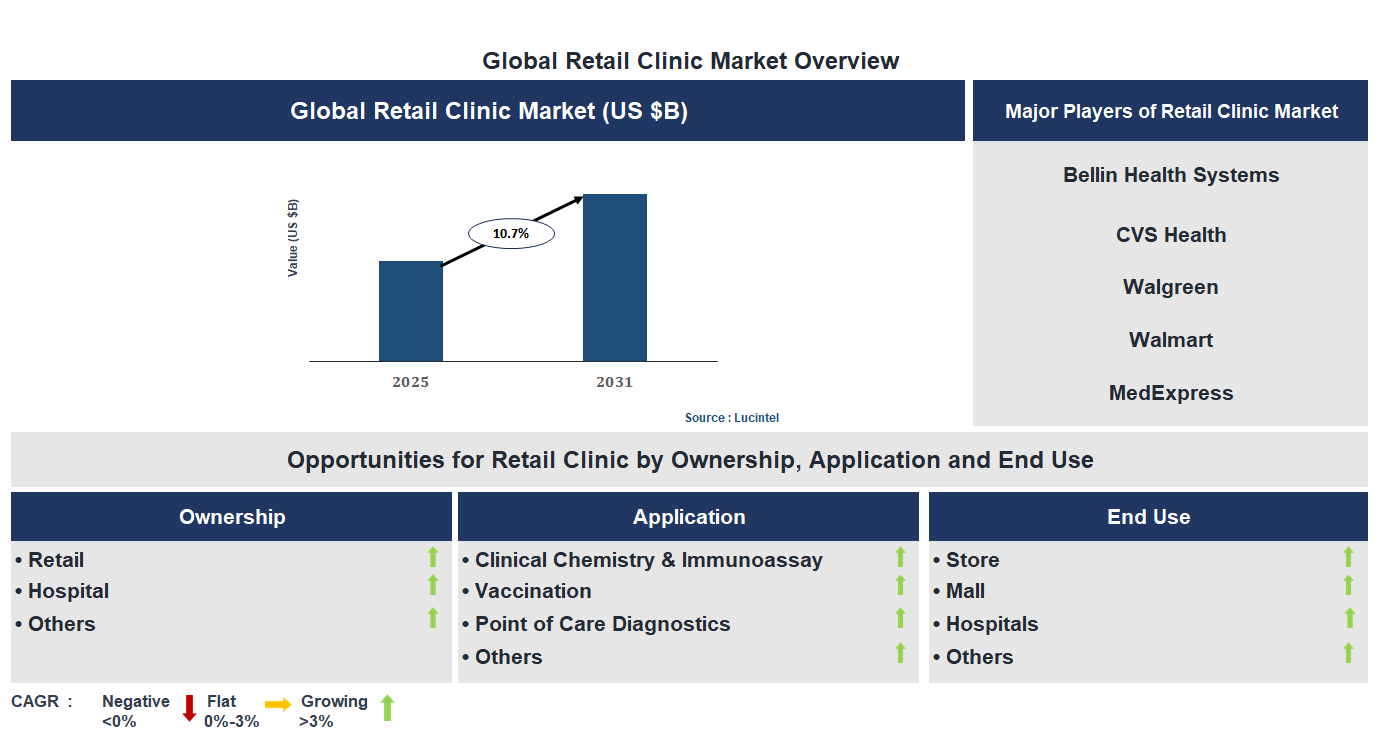
The future of the global retail clinic market looks promising with opportunities in the clinical chemistry & immunoassay, vaccination, and point of care diagnostic markets. The global retail clinic market is expected to grow with a CAGR of 10.7% from 2025 to 2031. The major drivers for this market are the increasing demand for affordable healthcare services, the rising preference for convenient medical access, and the growing focus on preventive health solutions.• Lucintel forecasts that, within the ownership category, retail is expected to witness higher growth over the forecast period.
• Within the application category, vaccination is expected to witness the highest growth.
• In terms of region, APAC is expected to witness the highest growth over the forecast period. Gain valuable insights for your business decisions with our comprehensive 150+ page report. Sample figures with some insights are shown below.
Emerging Trends in the Retail Clinic Market
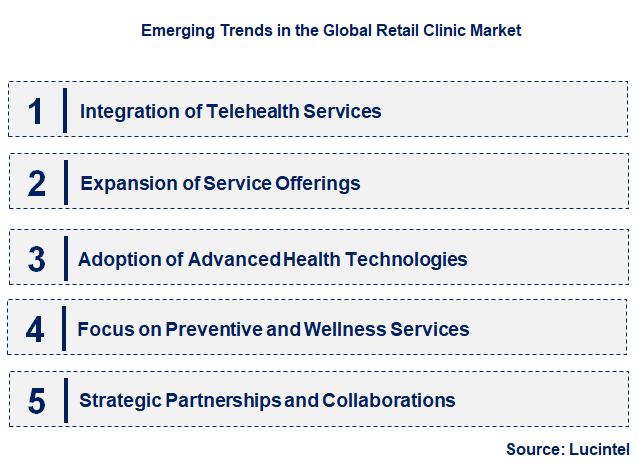
The retail clinic market is experiencing rapid transformation driven by technological advancements, changing consumer preferences, and healthcare policy shifts. As consumers seek more accessible, affordable, and convenient healthcare options, retail clinics are becoming an integral part of the healthcare ecosystem. These developments are reshaping how healthcare services are delivered, emphasizing efficiency, personalization, and integration with digital health tools. The following key trends highlight the evolving landscape of retail clinics and their growing influence on the broader healthcare market.• Integration of Telehealth Services: Retail clinics are increasingly incorporating telehealth to expand their reach and improve patient access. This integration allows patients to consult healthcare providers remotely, reducing wait times and enhancing convenience. Telehealth also enables clinics to offer a broader range of services, including follow-up care and chronic disease management, without requiring physical visits. This trend enhances patient engagement, improves health outcomes, and reduces healthcare costs by minimizing unnecessary emergency room visits.
• Expansion of Service Offerings: Retail clinics are broadening their scope beyond basic primary care to include services such as vaccinations, health screenings, minor urgent care, and chronic disease management. This diversification aims to meet a wider array of patient needs within a convenient setting. As a result, clinics are becoming one-stop health hubs, attracting more patients and increasing revenue streams. The expansion also helps reduce pressure on traditional healthcare facilities by handling minor ailments and preventive care efficiently.
• Adoption of Advanced Health Technologies: The use of AI, data analytics, and electronic health records is transforming retail clinics into more intelligent and personalized healthcare providers. These technologies enable better patient data management, predictive analytics for disease prevention, and tailored treatment plans. The adoption of advanced health tech improves diagnostic accuracy, streamlines operations, and enhances patient experience. It also facilitates seamless integration with larger healthcare systems, ensuring continuity of care and better health outcomes.
• Focus on Preventive and Wellness Services: There is a growing emphasis on preventive care and wellness programs within retail clinics. These clinics are increasingly offering services such as health coaching, lifestyle counseling, and immunizations to promote overall health and prevent chronic diseases. This shift aligns with broader healthcare trends prioritizing prevention over treatment, reducing long-term healthcare costs. By focusing on wellness, retail clinics attract health-conscious consumers and position themselves as proactive health partners, fostering long-term patient relationships.
• Strategic Partnerships and Collaborations: Retail clinics are forming alliances with hospitals, insurance companies, and pharmaceutical firms to enhance service delivery and expand their market presence. These partnerships facilitate integrated care models, improve reimbursement processes, and enable access to a broader patient base. Collaborations also support the development of innovative healthcare solutions and digital platforms, driving growth and competitiveness. Such strategic alliances are crucial for retail clinics to stay ahead in a competitive and rapidly evolving healthcare landscape. In summary, these trends are fundamentally reshaping the retail clinic market by making healthcare more accessible, personalized, and technologically advanced. They are driving increased patient engagement, expanding service capabilities, and fostering strategic collaborations, ultimately transforming retail clinics into vital components of modern healthcare delivery systems.
Recent Development in the Retail Clinic Market
The retail clinic market has experienced significant growth driven by evolving consumer preferences, technological advancements, and healthcare reforms. As consumers seek more accessible, affordable, and convenient healthcare options, retail clinics have become an integral part of the healthcare landscape. Recent developments reflect innovations in service delivery, expansion of clinic networks, and integration with digital health tools. These changes are reshaping how healthcare services are accessed and delivered, influencing market dynamics and competitive strategies. Understanding these key developments is essential for stakeholders aiming to capitalize on emerging opportunities and address challenges within this rapidly evolving sector.• Expansion of Retail Clinic Networks: Major retail chains like CVS, Walgreens, and Walmart are increasing the number of clinics, enhancing geographic coverage and accessibility for consumers. This expansion improves patient convenience, reduces wait times, and broadens service offerings, thereby driving market growth and increasing consumer engagement.
• Integration of Telehealth Services: Retail clinics are incorporating telehealth platforms to provide virtual consultations, follow-ups, and health monitoring. This integration enhances service flexibility, extends reach to remote areas, and improves patient outcomes, positioning retail clinics as comprehensive healthcare providers.
• Adoption of Advanced Diagnostic Technologies: The deployment of point-of-care testing and digital diagnostic tools in retail clinics has improved diagnostic accuracy and speed. This technological advancement enables quicker decision-making, enhances patient trust, and broadens the scope of services offered, boosting clinic efficiency.
• Focus on Chronic Disease Management: Retail clinics are increasingly offering chronic disease management programs, including diabetes and hypertension care. This focus addresses the rising prevalence of chronic conditions, reduces hospital visits, and promotes preventive healthcare, thereby expanding market relevance.
• Strategic Partnerships and Collaborations: Retail clinics are forming alliances with healthcare providers, insurance companies, and pharmaceutical firms to enhance service offerings and streamline patient care. These collaborations facilitate integrated healthcare delivery, improve patient retention, and foster innovation within the market. In summary, these developments are significantly transforming the Retail Clinic Market by increasing accessibility, integrating digital health solutions, adopting advanced diagnostics, emphasizing chronic disease management, and fostering strategic partnerships. Collectively, they are driving market expansion, improving patient outcomes, and positioning retail clinics as vital components of the future healthcare ecosystem.
Strategic Growth Opportunities in the Retail Clinic Market
The retail clinic market is experiencing rapid expansion driven by increasing consumer demand for accessible, cost-effective healthcare services. As healthcare delivery shifts towards convenience and efficiency, retail clinics are emerging as vital components within the broader healthcare ecosystem. Technological advancements, evolving consumer preferences, and regulatory support are fueling growth opportunities across various applications. These developments are transforming how healthcare services are delivered, making them more accessible and affordable. Understanding these key growth opportunities is essential for stakeholders aiming to capitalize on the market‘s potential and improve healthcare outcomes through innovative retail clinic solutions.• Telehealth Integration: Expanding telehealth services within retail clinics enhances patient access and convenience. By incorporating virtual consultations, clinics can serve remote or busy populations, reduce wait times, and improve healthcare delivery efficiency. This integration also allows for better management of chronic conditions and follow-up care, ultimately increasing patient satisfaction and retention.
• Chronic Disease Management: Retail clinics are increasingly focusing on managing chronic diseases such as diabetes and hypertension. Offering specialized programs and regular monitoring services helps reduce hospital visits and emergency care, lowering overall healthcare costs. This approach positions retail clinics as essential players in preventive and ongoing care.
• Point-of-Care Testing: Implementing advanced diagnostic tools enables retail clinics to provide immediate test results for conditions like flu, strep, and blood glucose levels. Rapid diagnostics improve treatment accuracy and speed, leading to better patient outcomes and higher clinic throughput, thus expanding their role in urgent care.
• Workforce Expansion and Training: Investing in skilled healthcare professionals and ongoing training ensures high-quality care delivery. A well-trained staff enhances patient trust, safety, and satisfaction, which are critical for market growth. This focus on workforce development also helps meet increasing demand for retail clinic services.
• Strategic Partnerships and Collaborations: Forming alliances with healthcare providers, insurers, and pharmaceutical companies broadens service offerings and enhances market reach. These collaborations facilitate integrated care models, improve reimbursement rates, and foster innovation, driving sustained growth in the retail clinic sector. In summary, these growth opportunities are significantly impacting the retail clinic market by enhancing service quality, expanding access, and reducing healthcare costs. They are positioning retail clinics as pivotal in the future healthcare landscape, fostering innovation, and meeting evolving consumer needs effectively.
Retail Clinic Market Driver and Challenges
The retail clinic market is influenced by a variety of technological, economic, and regulatory factors that shape its growth and development. Advances in healthcare technology, changing consumer preferences, and evolving regulatory frameworks are key drivers. Economic factors such as rising healthcare costs and increasing demand for accessible care also play significant roles. However, the market faces challenges including regulatory hurdles, competition from traditional healthcare providers, and concerns over quality standards. Understanding these drivers and challenges is essential for stakeholders to navigate the dynamic landscape effectively and capitalize on emerging opportunities while addressing potential risks. The factors responsible for driving the retail clinic market include:• Technological Advancements: The integration of telemedicine, electronic health records, and diagnostic tools has revolutionized retail clinics. These innovations enable quick, efficient, and accurate patient assessments, improving service delivery. Technology also facilitates remote consultations, expanding access to healthcare services beyond physical locations. As technology continues to evolve, retail clinics can offer more comprehensive care, attract a broader patient base, and reduce operational costs. This ongoing digital transformation is a major driver, fostering convenience and efficiency that appeal to both consumers and providers.
• Increasing Healthcare Costs: Rising costs of traditional healthcare services have led consumers to seek more affordable alternatives. Retail clinics offer cost-effective, transparent pricing and shorter wait times, making healthcare more accessible. Employers and insurers are also promoting retail clinics as a way to reduce overall healthcare expenses. This economic shift encourages consumers to utilize retail clinics for minor ailments, preventive care, and health screenings, thereby expanding the market. The affordability factor is a significant driver, especially in regions with high healthcare expenditure and uninsured populations.
• Changing Consumer Preferences: Modern consumers prioritize convenience, quick service, and transparency in healthcare. Retail clinics meet these demands by providing walk-in services, extended hours, and minimal wait times. Patients prefer the familiarity and accessibility of retail locations, often choosing them over traditional clinics for minor health issues. This shift in consumer behavior is driven by busy lifestyles and a desire for immediate care, which boosts retail clinic utilization. As preferences continue to evolve, retail clinics are positioned to become a primary point of care for many, fueling market growth.
• Regulatory Support and Policy Changes: Governments and health authorities are increasingly recognizing the role of retail clinics in expanding healthcare access. Policies promoting scope of practice for nurse practitioners and physician assistants enable retail clinics to operate more independently. Reimbursement reforms and incentives for preventive care further support their growth. Regulatory frameworks that streamline licensing and accreditation processes also facilitate market expansion. These supportive policies create a conducive environment for retail clinics to innovate and scale, making regulatory support a key driver in the market’s development. The challenges facing the retail clinic market include:
• Regulatory Hurdles: Despite supportive policies, retail clinics often face complex and inconsistent regulations across regions. Licensing requirements, scope of practice limitations, and reimbursement policies can restrict operational flexibility. Navigating these regulatory landscapes requires significant compliance efforts and can delay expansion plans. Variability in regulations also creates uncertainty, impacting investment and strategic decisions. Overcoming these hurdles is essential for sustained growth, but the complexity poses a persistent challenge for market players.
• Competition from Traditional Healthcare Providers: Hospitals, primary care physicians, and specialist clinics view retail clinics as competitors, which can lead to resistance and restrictive policies. Traditional providers may lobby for stricter regulations or limit collaboration opportunities. Additionally, the perception of lower quality or limited scope of services at retail clinics can hinder patient trust. This competitive landscape necessitates retail clinics to differentiate themselves through quality assurance, partnerships, and enhanced service offerings to maintain market share.
• Quality and Standardization Concerns: Ensuring consistent quality of care across numerous retail locations remains a challenge. Variability in staff training, protocols, and equipment can impact patient outcomes and satisfaction. Regulatory bodies and consumers demand high standards, and failure to meet these can damage reputation and credibility. Developing standardized procedures, continuous staff training, and quality assurance programs are critical but resource-intensive. Addressing these concerns is vital for long-term sustainability and acceptance of retail clinics. In summary, the retail clinic market is driven by technological innovations, economic factors, consumer preferences, and supportive policies, which collectively foster growth and accessibility. However, regulatory complexities, competitive pressures, and quality assurance issues pose significant challenges. Balancing these drivers and challenges will determine the market’s trajectory, requiring strategic adaptation and innovation. Overall, the market holds substantial potential for expansion, provided stakeholders effectively navigate the evolving landscape.
List of Retail Clinic Companies
Companies in the market compete on the basis of product quality offered. Major players in this market focus on expanding their manufacturing facilities, R&D investments, infrastructural development, and leverage integration opportunities across the value chain. With these strategies retail clinic companies cater increasing demand, ensure competitive effectiveness, develop innovative products & technologies, reduce production costs, and expand their customer base. Some of the retail clinic companies profiled in this report include-• Bellin Health Systems
• CVS Health
• Walgreen
• Walmart
• MedExpress
• Concentra
• Doctors Care
• Rite Aid Corp.
• The Kroger
• Next Care Holdings
Retail Clinic Market by Segment
The study includes a forecast for the global retail clinic market by ownership, application, end use, and region.Retail Clinic Market by Ownership [Value from 2019 to 2031]:
• Retail
• Hospital
• Others
Retail Clinic Market by Application [Value from 2019 to 2031]:
• Clinical Chemistry & Immunoassay
• Vaccination
• Point of Care Diagnostics
• Others
Retail Clinic Market by End Use [Value from 2019 to 2031]:
• Store
• Mall
• Hospitals
• Others
Retail Clinic Market by Region [Value from 2019 to 2031]:
• North America
• Europe
• Asia Pacific
• The Rest of the World
Country Wise Outlook for the Retail Clinic Market
The retail clinic market has experienced significant growth driven by increasing demand for accessible, cost-effective healthcare services, technological advancements, and evolving consumer preferences. As healthcare systems adapt to new challenges, countries are expanding retail clinic networks to improve patient access, reduce hospital burdens, and enhance healthcare efficiency. The market‘s development varies across regions, influenced by regulatory environments, technological adoption, and demographic trends. Understanding these regional differences is crucial for stakeholders aiming to capitalize on emerging opportunities and address unique healthcare needs.• United States: The US retail clinic market has seen rapid expansion, with major players like CVS and Walgreens opening numerous clinics nationwide. Innovations in telehealth integration and electronic health records have improved service delivery. The focus remains on chronic disease management, preventive care, and expanding services to underserved areas. Regulatory support and consumer demand for convenience continue to drive growth, making retail clinics a vital part of the US healthcare landscape.
• China: China‘s retail clinic market is emerging, supported by government initiatives to improve primary healthcare access. Major retail chains are partnering with healthcare providers to establish clinics in urban centers. Digital health technologies, including mobile health apps and telemedicine, are increasingly integrated into services. The market is characterized by rapid technological adoption and a focus on affordability, aiming to address the large population‘s healthcare needs efficiently.
• Germany: In Germany, the retail clinic market is developing gradually, with a focus on integrating services within existing pharmacy chains. Strict regulations and healthcare policies influence market growth, emphasizing quality and safety standards. Digital health solutions, such as online appointment booking and teleconsultations, are gaining traction. The market is driven by an aging population and the need for accessible primary care outside traditional settings.
• India: The retail clinic market in India is in its nascent stages but shows promising growth potential. Major retail chains and pharmacy chains are beginning to establish clinics in urban and semi-urban areas. The emphasis is on affordable, accessible healthcare, leveraging telemedicine and digital platforms to reach rural populations. Government initiatives to promote primary healthcare and digital health are further supporting market expansion.
• Japan: Japan‘s retail clinic market is evolving with a focus on integrating healthcare services into convenience stores and pharmacies. Aging demographics and a shortage of primary care physicians are key drivers. Digital health technologies, including remote monitoring and telehealth, are increasingly adopted. The market aims to improve healthcare accessibility for the elderly and reduce hospital visits through innovative, community-based solutions.

Features of the Global Retail Clinic Market
Market Size Estimates: Retail clinic market size estimation in terms of value ($B). Trend and Forecast Analysis: Market trends (2019 to 2024) and forecast (2025 to 2031) by various segments and regions. Segmentation Analysis: Retail clinic market size by ownership, application, end use, and region in terms of value ($B). Regional Analysis: Retail clinic market breakdown by North America, Europe, Asia Pacific, and Rest of the World. Growth Opportunities: Analysis of growth opportunities in different ownership, applications, end uses, and regions for the retail clinic market. Strategic Analysis: This includes M&A, new product development, and competitive landscape of the retail clinic market. Analysis of competitive intensity of the industry based on Porter’s Five Forces model.
FAQ
Q1. What is the growth forecast for retail clinic market? Answer: The global retail clinic market is expected to grow with a CAGR of 10.7% from 2025 to 2031. Q2. What are the major drivers influencing the growth of the retail clinic market? Answer: The major drivers for this market are the increasing demand for affordable healthcare services, the rising preference for convenient medical access, and the growing focus on preventive health solutions. Q3. What are the major segments for retail clinic market? Answer: The future of the retail clinic market looks promising with opportunities in the clinical chemistry & immunoassay, vaccination, and point of care diagnostic markets. Q4. Who are the key retail clinic market companies? Answer: Some of the key retail clinic companies are as follows:• Bellin Health Systems
• CVS Health
• Walgreen
• Walmart
• MedExpress
• Concentra
• Doctors Care
• Rite Aid Corp.
• The Kroger
• Next Care Holdings Q5. Which retail clinic market segment will be the largest in future? Answer: Lucintel forecasts that, within the ownership category, retail is expected to witness higher growth over the forecast period. Q6. In retail clinic market, which region is expected to be the largest in next 5 years? Answer: In terms of region, APAC is expected to witness the highest growth over the forecast period. Q7. Do we receive customization in this report? Answer: Yes, Lucintel provides 10% customization without any additional cost.
Table of Contents
List of Figures
List of Tables
Methodology
- In-depth interviews of the major players in this market
- Detailed secondary research from competitors’ financial statements and published data
- Extensive searches of published works, market, and database information pertaining to industry news, company press releases, and customer intentions
- A compilation of the experiences, judgments, and insights of Lucintel’s professionals, who have analyzed and tracked this market over the years.


Buy Now
Choose a license that fits your team. Instant PDF delivery.
Prices exclude taxes. Instant delivery. Custom licensing available on request.
Key Questions
- • What are some of the most promising, high-growth opportunities for the retail clinic market by ownership (retail, hospital, and others), application (clinical chemistry & immunoassay, vaccination, point of care diagnostics, and others), end use (store, mall, hospitals, and others), and region (North America, Europe, Asia Pacific, and the Rest of the World)?
- • Which segments will grow at a faster pace and why?
- • Which region will grow at a faster pace and why?
- • What are the key factors affecting market dynamics? What are the key challenges and business risks in this market?
- • What are the business risks and competitive threats in this market?
- • What are the emerging trends in this market and the reasons behind them?
- • What are some of the changing demands of customers in the market?
- • What are the new developments in the market? Which companies are leading these developments?
- • Who are the major players in this market? What strategic initiatives are key players pursuing for business growth?
- • What are some of the competing products in this market and how big of a threat do they pose for loss of market share by material or product substitution?
- • What M&A activity has occurred in the last 5 years and what has its impact been on the industry? For any questions related to Retail Clinic Market, Retail Clinic Market Size, Retail Clinic Market Growth, Retail Clinic Market Analysis, Retail Clinic Market Report, Retail Clinic Market Share, Retail Clinic Market Trends, Retail Clinic Market Forecast, Retail Clinic Companies, write Lucintel analyst at email: helpdesk@lucintel.com. We will be glad to get back to you soon.


