
Report Feature
Real-Time Biosensors Market
The technologies in the real-time biosensors market have drastically transformed over the past few years, moving from conventional immunoassay technologies to highly developed and sensitive technologies, namely electrochemical impedance spectroscopy (EIS) and surface plasmon resonance (SPR), offering highly sensitive, faster, and wide-range biomarkers that are analyzed in real-time. The landscape is changing in medical diagnostics, environmental monitoring, and food safety applications through the adoption of SPR and EIS, as they provide more accurate, cost-effective, and user-friendly biosensor solutions.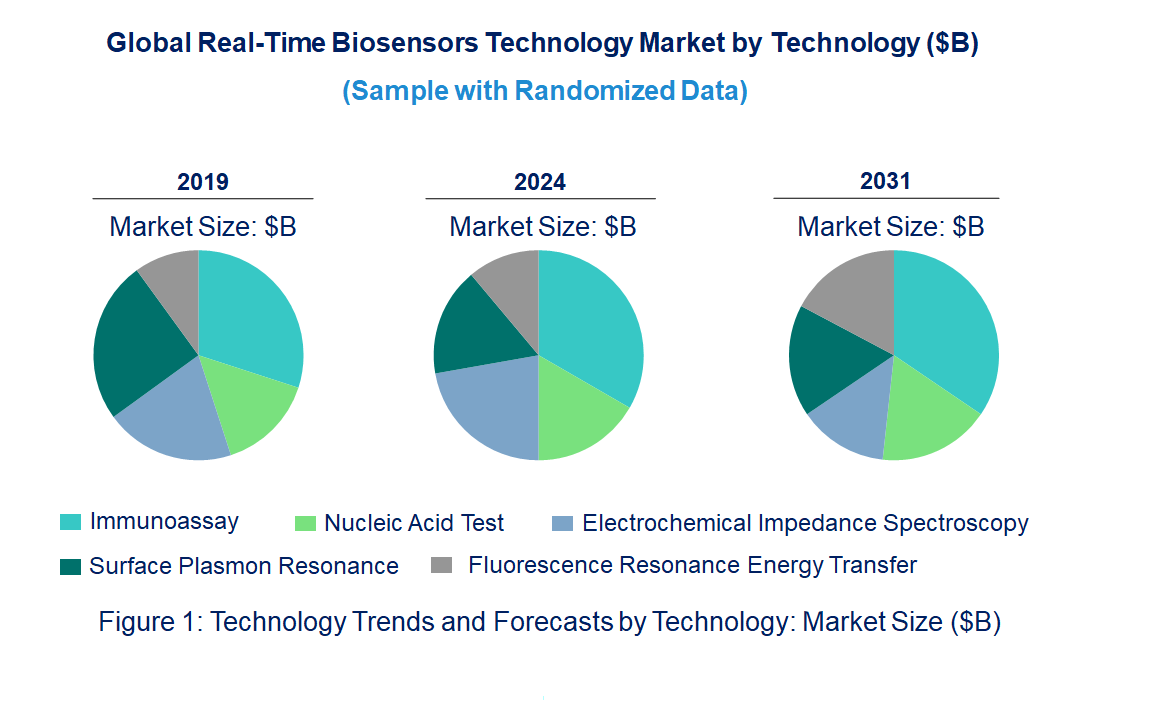
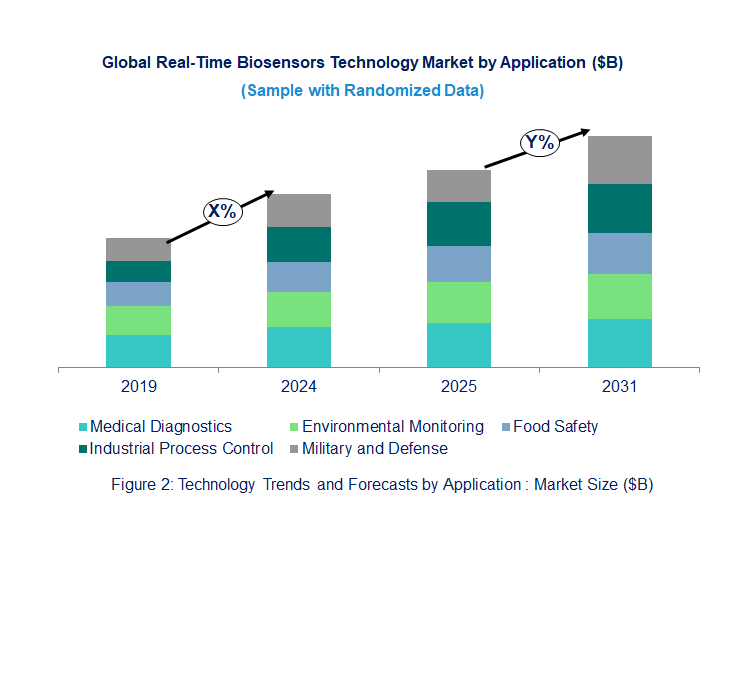
Emerging Trends in the Real-Time Biosensors Market
Real-time biosensors are rapidly developing as breakthrough technologies with fast applications in fields such as healthcare, food safety, and environmental monitoring. Most of these developments are influenced by innovations in sensor technologies, miniaturization, and the growing need for real-time, non-invasive diagnostics.• Miniaturization and Portability of Biosensors: Miniaturization is a key trend that has led to the development of portable, easy-to-use devices for real-time applications. Over recent years, compact sensors have revolutionized point-of-care diagnostics, allowing healthcare providers to retrieve quick results outside the clinical setting.
• Integration of Biosensors with Mobile and Wearable Devices: With the advent of real-time biosensors, mobile applications and wearable devices are increasingly integrated. This feature allows patients to monitor health conditions in real-time, with greater involvement in their health management and even fitness.
• Advancement in Electrochemical Impedance Spectroscopy: An application area that has gained much momentum because EIS technology can provide highly sensitive and real-time detection of biomarkers. This application area is particularly important in medical diagnostics and environmental monitoring, where rapid and accurate analysis is necessary for the prompt diagnosis of diseases or pollutants.
• Increasing Adoption of Surface Plasmon Resonance (SPR) for Biomolecular Interactions: SPR technology is becoming more popular because it does not require labeling for detecting real-time interactions between biomolecules. This trend transforms the biosensor market, which is highly relevant in medical diagnostics and pharmaceutical research, where precise molecular interaction data is critical.
• Increasing Demand for Real-Time Biosensors in Food Safety Applications: With real-time biosensors, consumers are increasingly demanding safer food production through non-invasive, rapid, and reliable detection of contaminants like pathogens or toxins. The rise in consumer demands for more transparent food production practices and regulatory pressures on food quality control systems are driving this demand. These technology trends are transforming the real-time biosensors market by driving innovations in biosensor miniaturization, mobility, and sensitivity. The integration of the latest technologies such as EIS and SPR, combined with increasing applications in healthcare, food safety, and environmental monitoring, is moving the market toward more efficient and accessible diagnostic solutions.
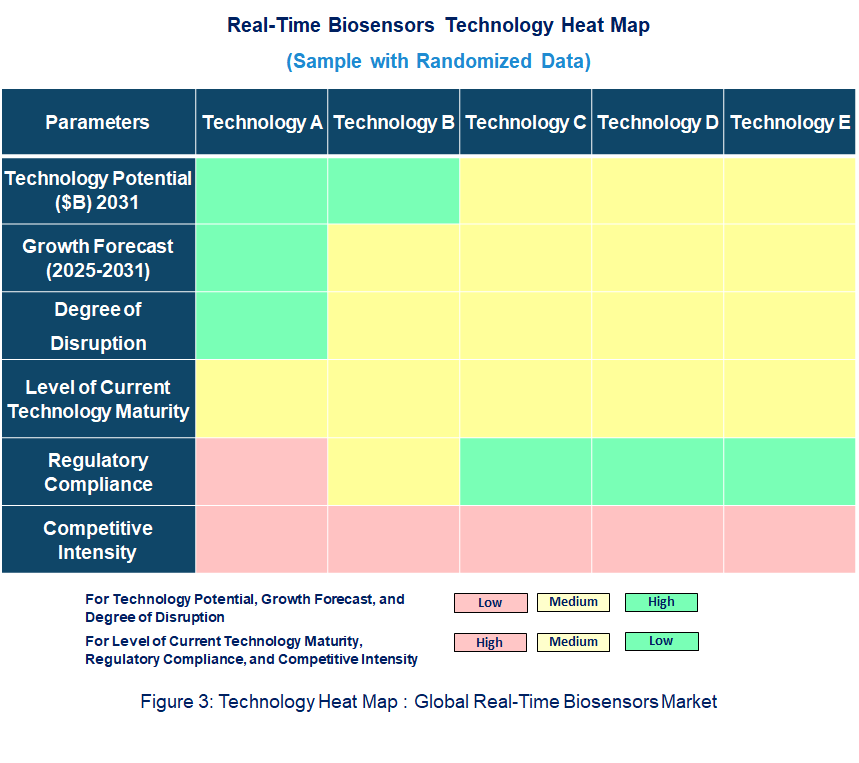
Real-Time Biosensors Market : Industry Potential, Technological Development, and Compliance Considerations
Real-time biosensors are highly sensitive devices that measure biological signals or processes continuously, providing immediate feedback. Their applications include, but are not limited to, healthcare for vital signs, environmental monitoring of pollutants or pathogens, food safety for contamination assessment, and biotechnology for tracking cellular processes. The availability of real-time biosensors enables early detection of issues, data-driven decision-making processes, and greater control in various industrial applications.• Technology Potential: With the potential of real-time biosensors, personal and continuous monitoring of health, environmental conditions, and industrial processes can be achieved without disruption. Real-time biosensors can revolutionize healthcare by providing continuous monitoring of biomarkers, glucose levels, or vital signs, ensuring early detection of diseases and tailored treatments. In other sectors, these sensors can improve environmental safety, enhance production techniques, and improve quality control through direct feedback on biological or chemical changes.
• Degree of Disruption: Real-time biosensors can transform industries by enabling more proactive and data-driven approaches. In healthcare, they shift from conventional periodic testing to continuous monitoring, improving outcomes. In environmental and industrial applications, they deliver faster and more accurate insights, reducing risks and inefficiencies.
• Level of Current Technology Maturity: Current technology maturity ranges from moderate to high. Many real-time biosensors are already deployed in healthcare and environmental monitoring, though improvements in sensitivity, miniaturization, and integration are ongoing.
• Regulatory Compliance: Real-time biosensors require regulatory compliance, especially in healthcare. Their design must strictly follow medical device regulations, such as FDA and CE, as well as environmental safety standards, such as ISO. They must also adhere to data privacy regulations, including HIPAA, when applied in healthcare.
Recent Technological development in Real-Time Biosensors Market by Key Players
Manufacturers involved in the production of real-time biosensors are continually innovating to keep up with changing trends related to the sensitivity and efficiency of biosensor solutions. Companies are focusing on improving sensor sensitivity, developing portable devices, and expanding the range of applications from healthcare to environmental monitoring.• Thermo Fisher Scientific has developed its real-time biosensor offerings by adding electrochemical sensors to its portfolio, as these sensors offer speedy and sensitive biomarker detection. This drives growth in clinical diagnostics at all points of care and enables discoveries in infectious diseases.
• Sysmex Corporation has launched an integrated biosensor system for fast diagnostics in hematology and oncology. The system uses high-resolution nucleic acid testing with real-time monitoring to help enhance the accuracy of diagnosis, enabling faster decision-making for healthcare providers in medical treatment.
• Promega Corporation innovates FRET biosensors for molecular biology and drug discovery. The company’s real-time detection of biomolecular interactions using FRET monitoring is improving research capabilities across multiple industries, with a significant impact on biopharmaceutical development.
• Becton, Dickinson, and Company has expanded its real-time biosensor technology focused on immunoassay platforms. This allows fast diagnostic results for infectious diseases and chronic conditions. Its real-time monitoring systems are also integrated into healthcare applications such as blood glucose monitoring and critical care.
• Merck KGaA has been a strong partner in the development of biosensors for drug discovery and diagnostics. They have designed sensors that employ SPR technology to provide illuminating analysis of protein-protein interactions, advancing drug discovery and diagnostics. With current advancements by leading companies like Thermo Fisher Scientific and Sysmex Corporation, the integration of electrochemical, FRET, and SPR technologies into real-time biosensors is rapidly progressing. The accuracy, speed, and applicability of biosensors in healthcare and pharmaceutical industries have greatly improved due to these innovations.
Real-Time Biosensors Market Driver and Challenges
Advances in sensor technologies, expanding demand for point-of-care diagnostics, and increasing needs for real-time monitoring in healthcare, food safety, and environmental applications are driving the market for real-time biosensors. However, challenges such as high development costs and regulatory hurdles persist. The factors responsible for driving the real-time biosensors market include:• Technological Advances in Sensor Sensitivity and Accuracy: Ongoing research and development in biosensor technologies, such as EIS and SPR, enhance the sensitivity and accuracy of real-time biosensors. This opens new opportunities in early disease detection, environmental monitoring, and food safety testing.
• Increasing Demand for Point-of-Care Diagnostics: Real-time biosensors enable faster and more accessible diagnostics in hospitals, clinics, and home settings. This is driven by the growing demand for fast-acting tests yielding prompt results for infectious diseases and chronic conditions.
• Integration with Mobile and Wearable Technologies: Integrating biosensors with mobile apps and wearable devices opens new avenues for continuous health monitoring. This technology is valuable in chronic disease management and wellness promotion by providing real-time data tracking.
• Environmental and Food Safety: Demand for real-time biosensors in environmental monitoring and food safety is on the rise. These sensors can detect pathogens, toxins, and pollutants in real-time, ensuring food quality and environmental health, driving the market forward. Challenges in the real-time biosensors market include:
• High Development and Manufacturing Costs: The high development and manufacturing costs of real-time biosensors, such as advanced SPR and EIS technologies, pose challenges. This reduces the affordability and scalability of the devices, particularly in developing markets.
• Regulation and Standardization Barriers: The regulations surrounding biosensors remain complicated. Demand varies across regions, and some industries face regulatory barriers that delay the development and commercialization of new biosensor technologies in medical diagnostics and environmental applications.
• Complexity in Interpretation of Data: Real-time biosensors produce large amounts of data that require sophisticated analysis and interpretation. Advanced data processing capabilities and highly skilled professionals are needed for result interpretation, posing challenges, particularly in resource-limited settings. The growth opportunities in the real-time biosensors market are driven by technological advancements, increasing demand for point-of-care diagnostics, and the need for real-time environmental and food safety monitoring. However, challenges such as high development costs, regulatory hurdles, and complex data interpretation must be addressed for the market to reach its full potential.
List of Real-Time Biosensors Companies
Companies in the market compete based on product quality offered. Major players in this market focus on expanding their manufacturing facilities, R&D investments, infrastructural development, and leverage integration opportunities across the value chain. With these strategies, real-time biosensors companies cater to increasing demand, ensure competitive effectiveness, develop innovative products & technologies, reduce production costs, and expand their customer base. Some of the real-time biosensors companies profiled in this report include.• Thermo Fisher Scientific
• Sysmex Corporation
• Promega Corporation
• Becton, Dickinson and Company
• Beckman Coulter
• Nova Biomedical
Real-Time Biosensors Market by Technology
• Technology Readiness by Technology Type for Real-Time Biosensors Market: Immunoassay technologies are highly ready for market deployment, with established platforms like ELISA widely used in diagnostics, offering rapid and cost-effective solutions for detecting various diseases. Nucleic acid tests are also highly mature, especially in areas like infectious disease diagnostics or genetic testing, but they remain expensive and complex for broad application in point-of-care settings. Electrochemical impedance spectroscopy is moderately ready, with growing interest in its label-free real-time capabilities for biomarker detection. However, it still faces challenges in achieving the same sensitivity and ease of use as other methods. The level of maturity is lower, however, due to complexity and high costs, with applications largely restricted to research environments and niche applications. Immunoassays and nucleic acid testing face intense competition because they are already established in the market, while SPR and FRET technologies are applied to more specialized, high-performance applications. Regulatory compliance for all technologies is stringent, particularly in medical applications, where safety, accuracy, and reliability are critical. Immunoassays and NAT are subject to clinical regulatory standards, while SPR and FRET technologies face more rigorous oversight due to their precision and application in high-risk diagnostics.
• Competitive Intensity and Regulatory Compliance of Different Technologies for Real-Time Biosensors Market: The competitive intensity is highest for immunoassay technologies because of their established role in diagnostic devices, especially in the clinical and point-of-care markets. Nucleic acid testing is also highly competitive due to the trend in personalized medicine and the high demand for precise, genetic-based diagnostics. Electrochemical impedance spectroscopy has a moderate level of competitive intensity due to the increasing number of companies exploring its use for label-free biosensing. However, it still faces significant challenges in wide-scale adoption. Surface plasmon resonance and fluorescence resonance energy transfer technologies face low competitive intensity but are gaining momentum in niche, high-precision markets like drug discovery and environmental sensing. All these technologies face regulatory compliance issues, which are stringent for medical diagnostics, including FDA approval, CE marking, and other health-related regulations. NAT and immunoassays must comply with clinical testing standards, while SPR and FRET technologies require rigorous quality control and safety testing, particularly for high-risk applications.
• Market Disruption Potential of Various Technologies for the Real-Time Biosensors Market: Immunoassay technology holds disruption potential in the real-time biosensor market due to its wide application in clinical diagnostics, offering rapid and cost-effective detection of biomarkers for diseases. Nucleic acid testing provides higher specificity and sensitivity, showing strong disruption potential in genetic and infectious disease detection. Its applications are growing in personalized medicine and point-of-care testing. Electrochemical impedance spectroscopy (EIS) has moderate disruption potential for the label-free, real-time monitoring of biosensing applications of biomolecular interactions. SPR and FRET have high disruption potential for the development of real-time, high-precision biosensors in drug development, environmental monitoring, and advanced diagnostics. However, the cost and complexity of SPR and FRET technologies limit their adoption, whereas NAT and immunoassays are gaining market momentum due to the growing demand for rapid diagnostics.
Real-Time Biosensors Market Trend and Forecast by Technology [Value from 2019 to 2031]:
• Immunoassay
• Nucleic Acid Test
• Electrochemical Impedance Spectroscopy
• Surface Plasmon Resonance
• Fluorescence Resonance Energy Transfer
Real-Time Biosensors Market Trend and Forecast by Application [Value from 2019 to 2031]:
• Medical Diagnostics
• Environmental Monitoring
• Food Safety
• Industrial Process Control
• Military and Defense
Real-Time Biosensors Market by Region [Value from 2019 to 2031]:
• North America
• Europe
• Asia Pacific
• The Rest of the World
• Latest Developments and Innovations in the Real-Time Biosensors Technologies
• Companies / Ecosystems
• Strategic Opportunities by Technology Type
Features of the Global Real-Time Biosensors Market
Market Size Estimates: Real-time biosensors market size estimation in terms of ($B). Trend and Forecast Analysis: Market trends (2019 to 2024) and forecast (2025 to 2031) by various segments and regions. Segmentation Analysis: Technology trends in the global real-time biosensors market size by various segments, such as application and technology in terms of value and volume shipments. Regional Analysis: Technology trends in the global real-time biosensors market breakdown by North America, Europe, Asia Pacific, and the Rest of the World. Growth Opportunities: Analysis of growth opportunities in different applications, technologies, and regions for technology trends in the global real-time biosensors market. Strategic Analysis: This includes M&A, new product development, and competitive landscape for technology trends in the global real-time biosensors market. Analysis of competitive intensity of the industry based on Porter’s Five Forces model.Table of Contents
Methodology
- In-depth interviews of the major players in this market
- Detailed secondary research from competitors’ financial statements and published data
- Extensive searches of published works, market, and database information pertaining to industry news, company press releases, and customer intentions
- A compilation of the experiences, judgments, and insights of Lucintel’s professionals, who have analyzed and tracked this market over the years.


Buy Now
Choose a license that fits your team. Instant PDF delivery.
Prices exclude taxes. Instant delivery. Custom licensing available on request.
Key Questions
- • What are some of the most promising potential, high-growth opportunities for the technology trends in the global real-time biosensors market by technology (immunoassay, nucleic acid test, electrochemical impedance spectroscopy, surface plasmon resonance, and fluorescence resonance energy transfer), application (medical diagnostics, environmental monitoring, food safety, industrial process control, and military and defense), and region (North America, Europe, Asia Pacific, and the Rest of the World)?
- • Which technology segments will grow at a faster pace and why?
- • Which regions will grow at a faster pace and why?
- • What are the key factors affecting dynamics of different technology? What are the drivers and challenges of these technologies in the global real-time biosensors market?
- • What are the business risks and threats to the technology trends in the global real-time biosensors market?
- • What are the emerging trends in these technologies in the global real-time biosensors market and the reasons behind them?
- • Which technologies have potential of disruption in this market?
- • What are the new developments in the technology trends in the global real-time biosensors market? Which companies are leading these developments?
- • Who are the major players in technology trends in the global real-time biosensors market? What strategic initiatives are being implemented by key players for business growth?
- • What are strategic growth opportunities in this real-time biosensors technology space?
- • What M & A activities did take place in the last five years in technology trends in the global real-time biosensors market?


