
Report Feature
Radio Transmitter Market Trends and Forecast
The technologies in the radio transmitter market have experienced many changes over the past few years, especially from analog transmitters to digital transmitters and from hardware-based systems to software-defined radios. This technological change has improved signal quality, transmission efficiency, and operational flexibility. The introduction of SDRs has made more dynamic and adaptable transmission solutions possible, while the shift to digital transmitters has brought about more precise and reliable broadcast capabilities.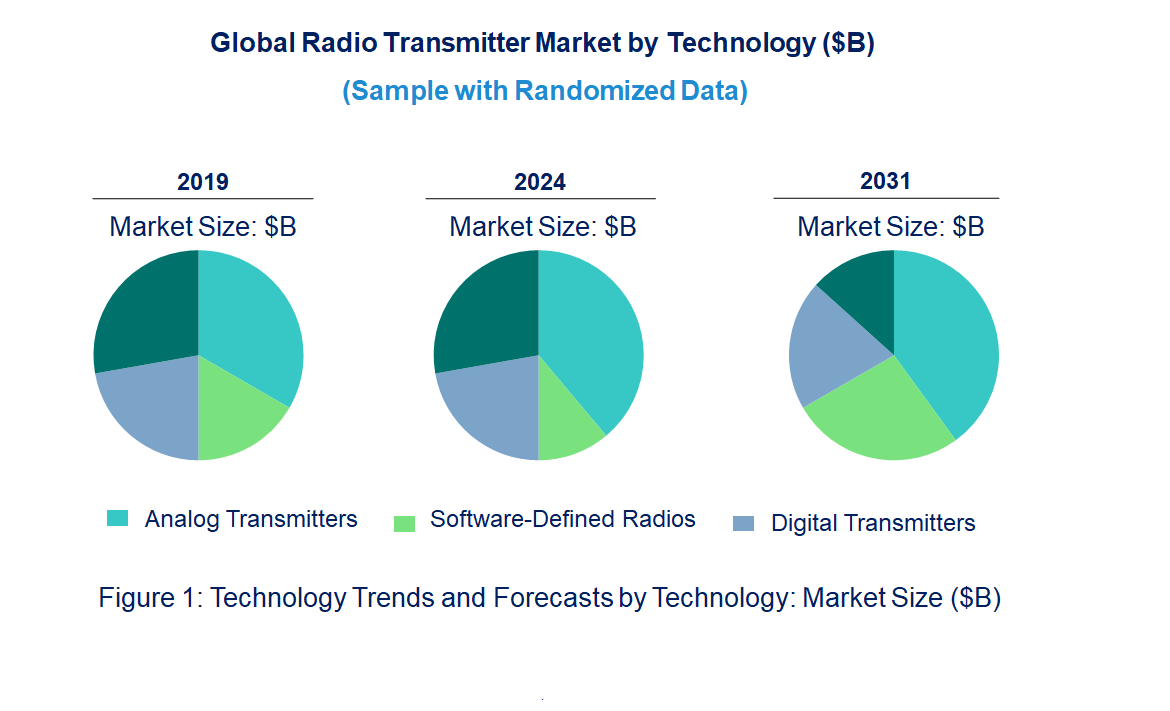
Emerging Trends in the Radio Transmitter Market
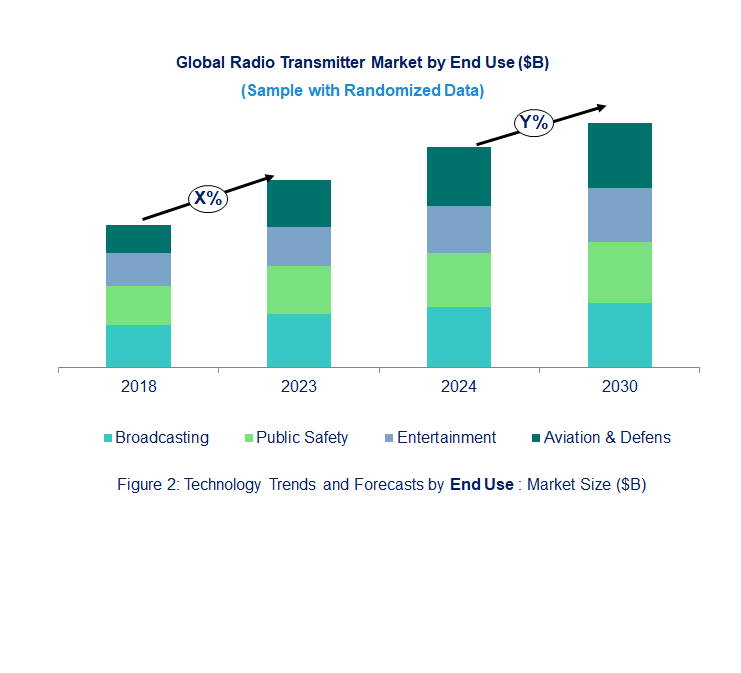
The radio transmitter market is undergoing transformational change through technological innovation. The modernization of operations among broadcasters and other sectors is generating new trends that are transforming the sector. These trends are key to enhancing the quality of transmission, efficiency of operation, and adaptability. Some of the emerging trends currently in the market are as follows:• Transition from Analog to Digital Transmitters: The shift from analog transmitters to digital transmitters is driving improved broadcast quality and greater energy efficiency. Digital transmitters produce clearer signals, reduce interference, and offer reliable long-distance transmission.
• Software-Defined Radio Adoption: Software-defined radios are revolutionizing the market by offering much more flexibility in radio transmission. SDRs can be reprogrammed to handle different frequencies and modulation schemes, enabling cost-effective adaptability for broadcasters.
• IoT with Cloud Technologies Integration: The integration of the Internet of Things (IoT) and cloud computing technologies has enabled real-time monitoring and control of transmitters. This trend allows broadcasters to optimize performance, track transmission quality, and conduct remote maintenance.
• Energy-Saving Solutions: The market will witness greater demand for sustainability. Energy-efficient radio transmitters are becoming increasingly popular. New developments focus on minimizing power usage while maintaining high transmission quality, allowing broadcasters to easily meet energy regulations and reduce costs.
• Compact and Modular Designs: There is work on compact and modular designs of transmitters that require less space and are highly scalable. These transmitters will easily upgrade or adapt to future broadcasting needs without altering infrastructure significantly. These emerging trends, including the shift from analog to digital transmitters, the rise of software-defined radios, and the integration of energy-efficient and modular solutions, are significantly transforming the radio transmitter market. These technological advancements are improving performance, reducing costs, and providing greater operational flexibility for businesses in broadcasting and other industries.
Radio Transmitter Market : Industry Potential, Technological Development, and Compliance Considerations
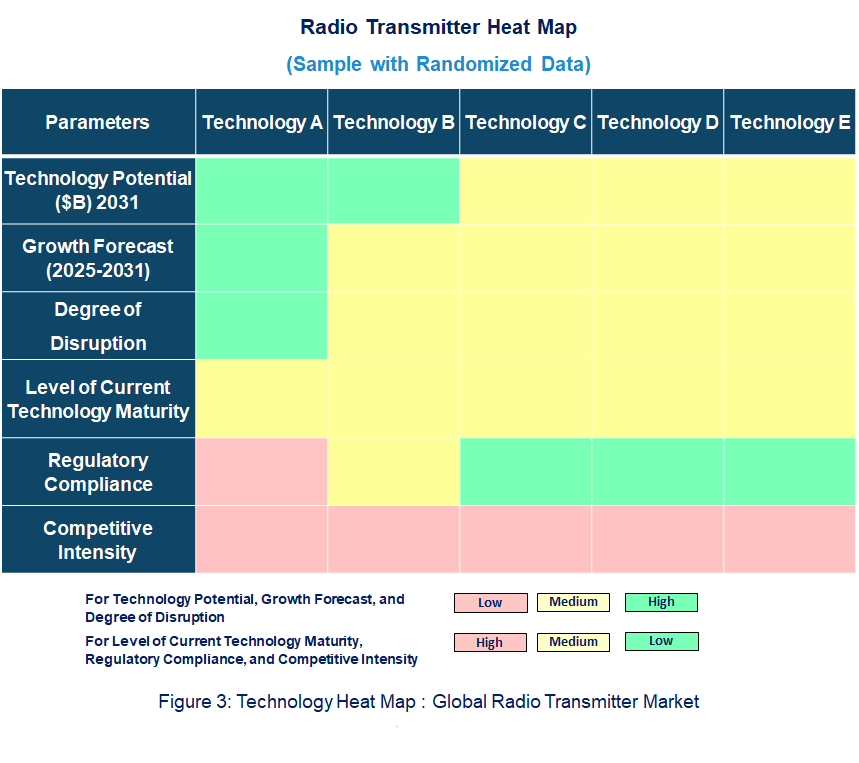
Advances in technology have made the radio transmitter market evolve into more efficient, flexible, and higher-quality broadcasting. Such market forces are determined by several factors, such as the potential of technology, degree of disruption, current maturity, and regulatory compliance.• Technology Potential: The technology has great potential, primarily driven by recent innovations, including the new software-defined radio and advanced forms of modulation. All these innovations can result in better signal quality, less use of spectrum, and greater adaptability to new broadcasting formats.
• Degree of Disruption: Disruptive radio transmission technologies, such as cloud-based broadcasting platforms and digital modulation, have altered conventional broadcasting. The IP-based shift in transmission and AI-led network management could redefine the future landscape of radio transmission
• Current Level of Technology Maturity: Radio transmitter technologies are relatively mature, with analog and digital FM transmitters widely adopted. However, 5G radio transmitters and software-defined radio are still under development and have promising prospects for significant growth in the future.
• Regulatory Compliance: The radio transmitter market is highly regulated, with stringent compliance requirements regarding frequency allocation, power limits, and interference prevention. Regulatory bodies such as the FCC (in the U.S.) and ITU (internationally) ensure that radio spectrum usage remains orderly and efficient.
Recent Technological development in Radio Transmitter Market by Key Players
Several major players in the radio transmitter market have made key developments in their offerings to maintain their competitive edge. These players include Harris, Egatel (COMSA), GatesAir, and others, who are helping shape the future of radio transmission.• Harris: Harris advances the frontiers of broadcasting technology with its digital transmitters and high-efficiency systems. Harris has focused on imbuing its transmitters with SDR capabilities, offering flexible and scalable solutions for broadcasters.
• Egatel (COMSA): Egatel offers digital transmitters with features that emphasize energy efficiency as well as high-quality signal delivery. They have also improved their work in the integration of IoT to monitor and control their transmitters better.
• GatesAir: GatesAir leads the way through its innovative use of software-defined radio (SDR) technologies and energy-efficient solutions for transmission. Their solution saves broadcasters operational costs while enhancing signal delivery quality.
• RIZ Transmitters: RIZ Transmitters specializes in compact, high-performance transmitters for various broadcast applications. The company's latest innovations include high energy efficiency and support for emerging broadcasting technologies.
• Broadcast Electronics: Broadcast Electronics continues to develop state-of-the-art digital transmitters that focus on reducing energy consumption while enhancing signal quality. They have incorporated cloud-based monitoring systems into their transmitters for more efficient management.
• Hitachi Kokusai Electric: Hitachi Kokusai Electric has been expanding its product line with next-generation digital transmitters. They have emphasized quality transmission and flexible systems compatible with different broadcasting standards.
• Thomson Broadcast: The new transmitter systems of Thomson Broadcast embrace software-defined radio technologies, allowing broadcasters to realize higher adaptability and cost efficiency.
• Tongfang Gigamega: Tongfang Gigamega is at the leading edge with modular transmitter designs that make it easy for broadcasters to extend their capabilities. The company's products are also known for their high level of reliability and high standards of performance.
• RandS: RandS has concentrated on energy-efficient, software-driven transmitters that can be easily integrated with the latest broadcast technologies. Their transmitters also have enhanced monitoring capabilities for broadcasters.
• Beijing BBEF: Beijing BBEF has introduced advanced, energy-efficient transmitters that are designed to meet the emerging needs of the radio transmission industry. They also offer modular systems that can be adapted to specific broadcasting needs. The latest advancements by key players in the radio transmitter market demonstrate a strong thrust toward energy efficiency, flexibility, and high-performance transmission solutions. Companies such as Harris, Egatel, and GatesAir are leading in incorporating SDR technologies, while others focus on modular designs and sustainability. These trends will shape the future of radio broadcasting toward better performance and operational efficiency.
Radio Transmitter Market Driver and Challenges
The radio transmitter market offers significant growth opportunities as well as challenges. Stakeholders should understand these factors to better navigate the market. The factors responsible for driving the radio transmitter market include:• Technological Advancement of Digital Transmitters: There has been continuous improvement of digital transmitters in terms of efficiency and quality. Digital transmission offers clear signals, which are more reliable compared to older analog systems and are also cost-effective.
• Demand for Energy-Efficient Solutions: The growing tightening of energy regulations calls for transmitters that consume low energy while maintaining high performance. Thus, demand is driving the innovation of low-energy, high-efficiency transmission systems.
• Cloud-Based and Remote Monitoring Technologies: The inclusion of cloud-based and remote monitoring technologies offers immediate access to performance metrics for broadcasters and remote monitoring of transmitters. This facilitates smooth operations and minimizes shutdown times.
• Growth in the Broadcasting Industry and Investment in Public Safety Communications: Ongoing growth in the broadcasting industry and increased investments into public safety communications increase the demand for more reliable and sophisticated radio transmitter systems. Challenges in the radio transmitter market are:
• High Initial Investment Costs: While digital transmitters and software-defined radios have numerous benefits, their initial costs may be too high for smaller broadcasters or emerging markets, thus reducing the adoption rate.
• Complexity of Integration: It can be complex and expensive to integrate new radio transmitter technologies with existing systems, acting as a barrier for companies to upgrade their infrastructure.
• Regulatory Challenges: Adhering to ever-evolving broadcasting and safety regulations can be difficult for companies, particularly when introducing new technologies that need to meet stringent standards. Major drivers in the radio transmitter market include technological advancement and the push for energy efficiency, which is a growth-positive factor for this market. However, challenges such as high initial costs and complex integration processes need to be overcome to fully exploit the potential opportunities. The industry is well-placed for continued growth and innovation despite these challenges.
List of Radio Transmitter Companies
Companies in the market compete based on product quality offered. Major players in this market focus on expanding their manufacturing facilities, R&D investments, infrastructural development, and leverage integration opportunities across the value chain. With these strategies, radio transmitter companies cater to increasing demand, ensure competitive effectiveness, develop innovative products & technologies, reduce production costs, and expand their customer base. Some of the radio transmitter companies profiled in this report include.• Harris
• Egatel (COMSA)
• GatesAir
• RIZ Transmitters
• Broadcast Electronics
• Hitachi Kokusai Electric
Radio Transmitter Market by Technology
• Disruption Potential of Different Technologies: The radio transmitter market is shifting as technologies like Analog Transmitters, Software-Defined Radios (SDR), and Digital Transmitters disrupt the industry. Analog transmitters are being replaced by SDRs and digital systems, which offer greater flexibility, efficiency, and multi-band capabilities. SDRs, which can be reprogrammed for different frequencies, challenge the static nature of analog transmitters, while digital transmitters offer improved signal quality and energy efficiency. These technologies are increasingly preferred in telecom, broadcasting, and defense sectors, with SDRs providing a versatile, cost-effective solution. Digital transmitters are gaining popularity due to their better efficiency and lower power consumption, gradually replacing analog systems.
• Competition Intensity and Norm Compliance: The competitive intensity is high because analog transmitters are progressively being replaced by SDRs and digital transmitters, which provide more high-tech features. SDRs are known for their flexibility, whereas digital transmitters are known to provide better signal quality and efficiency. However, both technologies are accompanied by regulatory issues related to spectrum allocation and interference control. SDRs and digital systems need to meet tough requirements in bandwidth, power, and EMI. This makes regulatory compliance an essential aspect. The market is gradually becoming technology-driven based on the capabilities of offering better performance, lower cost, and compliance with new regulatory changes.
• Technology Readiness by Technology Type: Analog transmitters are mature but old. SDRs are relatively new but well-known for providing flexibility and programmability in software for applications such as military and telecom. Digital transmitters are also mature, widely adopted for precision and efficiency in broadcasting as well as telecom applications. Competitive intensity is relatively high, especially with digital transmitters, compared to SDRs and analog transmitters. SDR and digital transmitters have more rigid requirements for regulatory compliance. SDRs are primarily used in military, broadcasting, and emergency services, while digital transmitters dominate the commercial sector.
Radio Transmitter Market Trend and Forecast by Technology [Value from 2019 to 2031]:
• Analog Transmitters
• Software-Defined Radios
• Digital Transmitters
Radio Transmitter Market Trend and Forecast by End Use [Value from 2019 to 2031]:
• Broadcasting
• Public Safety
• Entertainment
• Aviation & Defense
Radio Transmitter Market by Region [Value from 2019 to 2031]:
• North America
• Europe
• Asia Pacific
• The Rest of the World
• Latest Developments and Innovations in the Radio Transmitter Technologies
• Companies / Ecosystems
• Strategic Opportunities by Technology Type
Features of the Global Radio Transmitter Market
Market Size Estimates: Radio transmitter market size estimation in terms of ($B). Trend and Forecast Analysis: Market trends (2019 to 2024) and forecast (2025 to 2031) by various segments and regions. Segmentation Analysis: Technology trends in the global radio transmitter market size by various segments, such as end use and technology in terms of value and volume shipments. Regional Analysis: Technology trends in the global radio transmitter market breakdown by North America, Europe, Asia Pacific, and the Rest of the World. Growth Opportunities: Analysis of growth opportunities in different end use industries, technologies, and regions for technology trends in the global radio transmitter market. Strategic Analysis: This includes M&A, new product development, and competitive landscape for technology trends in the global radio transmitter market. Analysis of competitive intensity of the industry based on Porter’s Five Forces model.Table of Contents
Methodology
- In-depth interviews of the major players in this market
- Detailed secondary research from competitors’ financial statements and published data
- Extensive searches of published works, market, and database information pertaining to industry news, company press releases, and customer intentions
- A compilation of the experiences, judgments, and insights of Lucintel’s professionals, who have analyzed and tracked this market over the years.


Buy Now
Choose a license that fits your team. Instant PDF delivery.
Prices exclude taxes. Instant delivery. Custom licensing available on request.
Key Questions
- • What are some of the most promising potential, high-growth opportunities for the technology trends in the global radio transmitter market by technology (analog transmitters, software-defined radios, and digital transmitters), end use (broadcasting, public safety, entertainment, and aviation & defense), and region (North America, Europe, Asia Pacific, and the Rest of the World)?
- • Which technology segments will grow at a faster pace and why?
- • Which regions will grow at a faster pace and why?
- • What are the key factors affecting dynamics of different technology? What are the drivers and challenges of these technologies in the global radio transmitter market?
- • What are the business risks and threats to the technology trends in the global radio transmitter market?
- • What are the emerging trends in these technologies in the global radio transmitter market and the reasons behind them?
- • Which technologies have potential of disruption in this market?
- • What are the new developments in the technology trends in the global radio transmitter market? Which companies are leading these developments?
- • Who are the major players in technology trends in the global radio transmitter market? What strategic initiatives are being implemented by key players for business growth?
- • What are strategic growth opportunities in this radio transmitter technology space?
- • What M & A activities did take place in the last five years in technology trends in the global radio transmitter market?


