
Report Feature
Preservative Blend Market Trends and Forecast
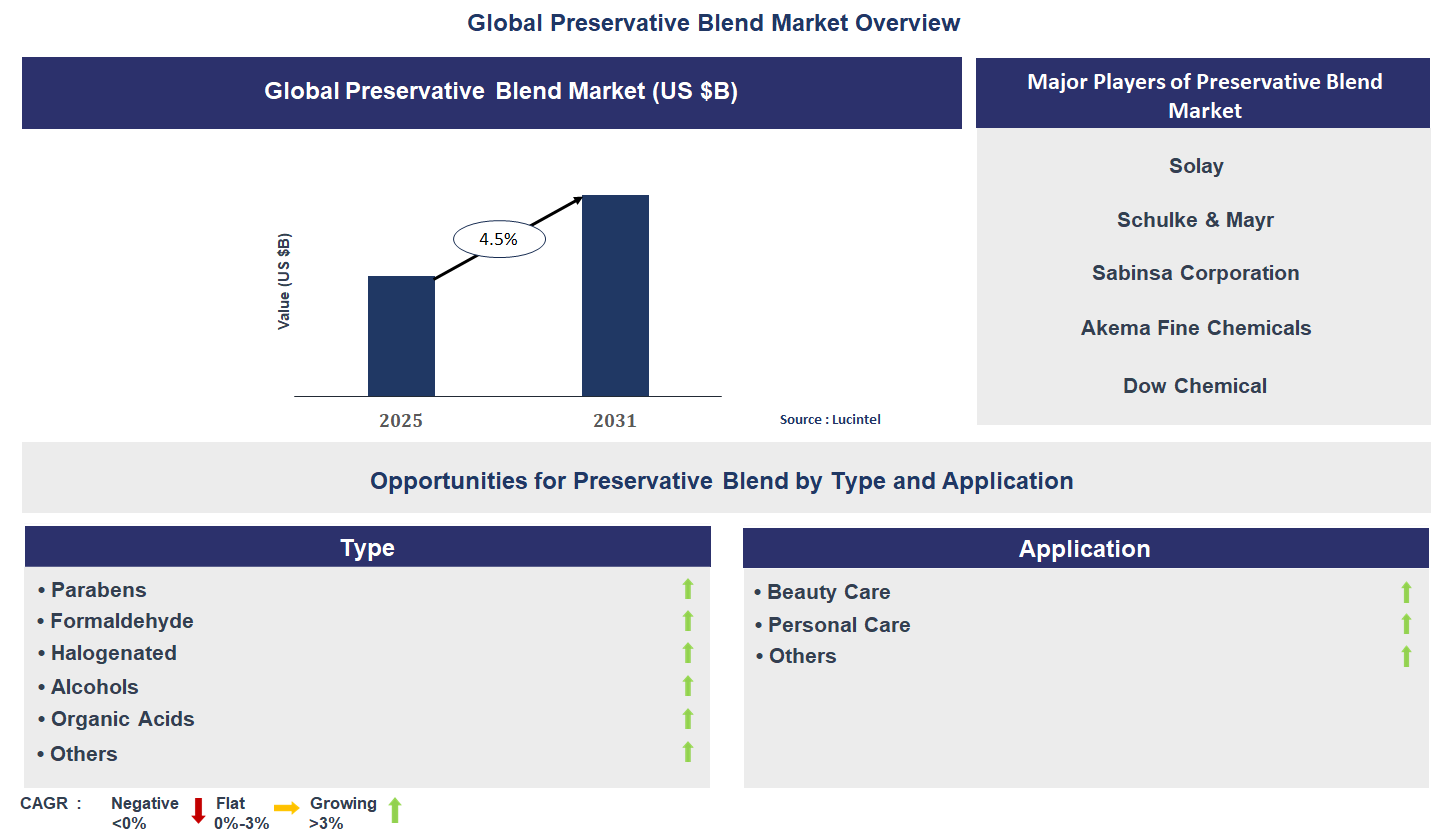
The future of the global preservative blend market looks promising with opportunities in the beauty care and personal care markets. The global preservative blend market is expected to grow with a CAGR of 4.5% from 2025 to 2031. The major drivers for this market are the increasing consumer demand for longer shelf life, the rising demand from food manufacturing industries, and the growing awareness in personal care products.• Lucintel forecasts that, within the type category, paraben is expected to witness the highest growth over the forecast period.
• Within the application category, personal care is expected to witness higher growth.
• In terms of region, APAC is expected to witness the highest growth over the forecast period. Gain valuable insights for your business decisions with our comprehensive 150+ page report. Sample figures with some insights are shown below.
Emerging Trends in the Preservative Blend Market
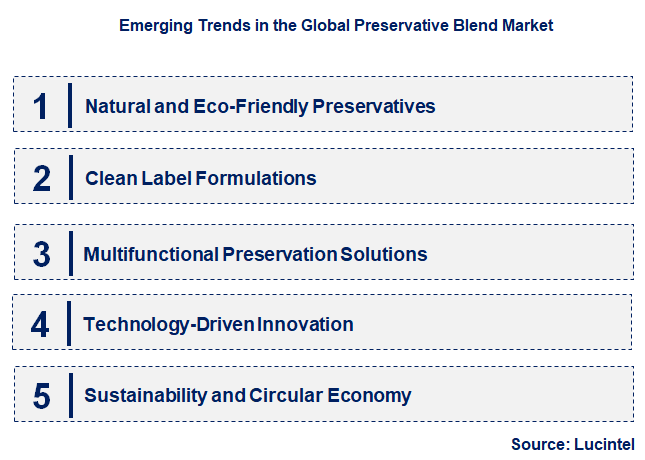
The market for preservative blend is undergoing vibrant change owing to rising consumer interest in clean-label, green, and sustainable products. Trends are centered on natural ingredients, fermentation technology, and biodegradable solutions as a means to address stringent regulation and environmental issues. The union of smart manufacturing and innovations in formulation is driving highly efficient, safe, and innovative preservative systems.• Natural and Eco-Friendly Preservatives: The trend toward plant-derived, fermentation-induced, and biodegradable preservatives addresses consumer and regulatory requirements for safer, cleaner ingredients with lower environmental footprints.
• Clean Label Formulations: Ingredient transparency and label clarity are fueling innovation in natural preservatives, enhancing product safety and consumer confidence.
• Multifunctional Preservation Solutions: Antimicrobial, antioxidant, and stabilizing functions are incorporated in one formula to enhance efficiency and minimize label complexity, attracting diverse food, beverage, and personal care applications.
• Technology-Driven Innovation: Preservative performance is enhanced by advances in biotechnology, encapsulation, and controlled-release systems, enhancing stability and compatibility with clean-label positioning.
• Sustainability and Circular Economy: Sustainable sourcing, minimizing waste, and environmentally friendly manufacturing processes are moving toward the center of preservative formulation development in line with global sustainability trends. These trends are creating safer, more sustainable, and consumer-friendly preservative options, redefining the future landscape of the preservative blend market.
Recent Development in the Preservative Blend Market
Recent developments in the preservative blend market reflect innovations in natural and bio-based ingredients, formulation technology, and regulatory compliance. Industry stakeholders are making R&D investments to create multifunctional, sustainable, and safer preservatives that prolong shelf life without sacrificing health or environmental safety. Biotech collaboration and plant-based ingredient sourcing are among the success strategies. Regulatory shifts are promoting transparency and safety norms, while technological advancements in encapsulation and stabilization intensify preservative performance.• Use of Bio-Based and Plant-Derived Preservatives: Higher adoption of natural extracts and fermentation by-products increases safety, maintains pace with clean-label practices, and minimizes dependence on synthetic chemicals.
• Development of Multifunctional Preservatives: Antimicrobial, antioxidant, and stabilizing properties together in a formulation enhance efficacy and reduce ingredient counts for enhanced consumer acceptance.
• Encapsulation and Controlled Release Technologies: Encapsulation extends the effectiveness of preservatives, enhances stability, and reduces sensory effect, rendering them compatible with varied uses.
• Prioritization of Sustainable Sourcing and Production: Prioritizing green cultivation, less wastage, and biodegradable packaging in preservative manufacturing is consistent with worldwide sustainability targets.
• Regulatory Compliance and Transparency: Strengthened regulations promote ingredient clarity, safety evaluations, and certification requirements, allowing consumers to build trust and markets confidence. These advances are significantly enhancing preservative performance, safety, and sustainability, thereby broadening industry usage.
Strategic Growth Opportunities in the Preservative Blend Market
The market for the preservative blend is expected to grow based on innovation and diversification of applications. Opportunities exist in formulating natural, multifunctional, and sustainable preservative solutions specially formulated for food, beverage, personal care, and pharmaceutical applications. Geographic expansion into emerging markets of increased adoption of clean-label products is also promising. Partnerships between biotech, agricultural, and manufacturing industries can drive technological innovation and supply chain effectiveness.• Food and Beverage Industry: Creating natural, multifunctional preservatives for snacks, drinks, dairy products, and frozen foods to improve safety and shelf life using consumer-preferred ingredients.
• Personal Care and Cosmetics: Employing bio-based and biodegradable preservatives to satisfy safety regulations and appeal to consumers with a green perspective.
• Pharmaceutical Products: Designing preservatives that prolong shelf life for pharmaceuticals and vaccines, particularly for remote or resource-restricted locations. Follows.
• Meat and Seafood Processing: Creating natural preservatives to minimize synthetic additives and address clean-label requirements, while maintaining food safety and quality.
• Pet Food and Animal Nutrition: Creating efficient, natural preservatives for pet foods and supplements that support consumer interests in health and sustainability. Emphasis on these segments will broaden market coverage and enable innovation in sustainable preservatives for various industries.
Preservative Blend Market Driver and Challenges
The preservative blend market is challenged by growth driven by technological innovation, evolving customer needs, and increasing regulations. Drivers are demand for natural, safe, and environmentally friendly preservatives, as well as bio-based ingredients innovation. Some challenges include high R&D expenditure, rigorous regulatory approval procedures, and supply chain complexity of raw materials. Adhering to varied global requirements demands continuous research and adjusting to demands. The factors responsible for driving the preservative blend market include: 1. Rising Demand for Organic and Natural Products: Consumers penchant for clean-label and green products fuels innovation in bio-based preservatives. 2. Regulatory and Food Safety Stringent Standards: Governments impose safety, labeling, and environmental standards, forcing businesses to switch to compliant preservative systems. 3. Biotechnology and Fermentation Innovation: Developments in these fields yield healthier, more effective natural preservatives with wider application potential. 4. Emerging Global Food and Beverage Market: Increasing processed foods and beverages across the globe rise to meet the demands of safety and preservation technologies. 5. Increasing Concern for Food Spoilage and Microbial Hazards: Consumers and producers value freshness and safety, driving the adoption of natural preservatives. Challenges in the preservative blend market are: 1. High R&D and Production Costs: The development of environmentally friendly and efficient preservatives may be expensive, impacting pricing and competitiveness in the market. 2. Delays in Regulatory Approvals: Extended approval procedures for new ingredients hinder market entry and drive up compliance costs. 3. Raw Material Supply Chain Disruptions: Relying on agricultural inputs for bio-based preservatives can be subject to seasonality, climatic, or geopolitical volatility. The growth of the preservative blend market is propelled by technological advancements, green issues, and consumer safety needs, but it is confronted with challenges from high costs, regulatory complexity, and supply chain complications. Those firms that succeed in innovating effectively, simplifying compliance, and establishing sustainable supply chains will be in a position to take advantage of developing opportunities. Overcoming the mentioned challenges while tapping into growing demand for natural, safe products will define a resilient, sustainable sector set for massive growth.List of Preservative Blend Companies
Companies in the market compete on the basis of product quality offered. Major players in this market focus on expanding their manufacturing facilities, R&D investments, infrastructural development, and leverage integration opportunities across the value chain. With these strategies preservative blend companies cater increasing demand, ensure competitive effectiveness, develop innovative products & technologies, reduce production costs, and expand their customer base. Some of the preservative blend companies profiled in this report include-• Solay
• Schulke & Mayr
• Sabinsa Corporation
• Akema Fine Chemicals
• Dow Chemical
• Lonza
• Lanxess
• Clariant
• BASF
• Galaxy Surfactants
Preservative Blend Market by Segment
The study includes a forecast for the global preservative blend market by type, application, and region.Preservative Blend Market by Type [Value from 2019 to 2031]:
• Parabens
• Formaldehyde
• Halogenated
• Alcohols
• Organic Acids
• Others
Preservative Blend Market by Application [Value from 2019 to 2031]:
• Beauty Care
• Personal Care
• Others
Preservative Blend Market by Region [Value from 2019 to 2031]:
• North America
• Europe
• Asia Pacific
• The Rest of the World
Country Wise Outlook for the Preservative Blend Market
The market for preservative blend has seen rapid development with rising demand globally for safe, durable, and quality food, beverage, personal care, and pharmaceutical products. The market is expected to grow enormously over the next few years owing to growing food safety awareness, advances in natural and green preservatives, and pressure from regulations to use safer ingredients. Major regional markets are North America, Europe, Asia-Pacific, Middle East, and Latin America, each with specific growth drivers being consumer choice, regulatory environments, and industry needs. Formulation innovation and sustainability are driving the future of this rapidly growing industry.• United States: The US preservative blend market is growing owing to the increasing consumer desire for clean-label and natural products that create demand for green preservative formulations. The food and beverage business, particularly processed food, snacks, and dairy, uses sophisticated preservative technologies to improve shelf life while meeting stringent regulatory requirements by bodies such as the FDA. Expansion in the pharmaceutical and personal care industries also drives innovations in preservative solutions. Companies invest heavily in R&D to create safe, potent, and sustainable preservative combinations.
• China: The market for Chinas preservative blend is developing at a fast pace fueled by rising consumption of processed foods, growing retail infrastructure, and a flourishing cosmetics market. The food industry demands innovative products that contain natural and clean-label ingredients to address growing concerns of consumer safety. The regulatory environment is tightening to fuel the uptake of safer preservatives. Further, growing export operations require high-quality preservative blends that have regulatory clearance. Local producers are coming up with nature-based and fermentation-based preservatives to serve domestic and global markets.
• Germany: Germany, being an industrial and innovation center in Europe, has a well-developed preservative blend market focused on safety, sustainability, and compliance with regulations. It is on biodegradable and sustainable preservatives compliant with strict EU regulations. The food and beverage industry requires blends of preservatives that protect products and comply with natural and organic product demand. Innovation is also pushed by the cosmetic and pharma industries towards safer, more plant-derived, and eco-friendly preservatives.
• India: Indias preservative mix market is influenced by the increasing growth of processed food, beverages, and personal care sectors, coupled with urbanization. Economical, natural, and preservative options are urgently required to address the varied needs of consumers in urban and rural economies. The industry is favored by the increasing growth of organized retail and e-commerce channels selling branded, safe products with longer shelf lives. Increasing knowledge about food safety, hygiene, and regulation compels manufacturers to use innovative preservative blends, natural and plant-based as well.
• Japan: Japans preservative blend industry is dominated by safety, quality, and innovation caused by an aging population demanding safe and long-lasting foodstuffs and healthcare products. There is a high priority on natural, organic, and biodegradable preservatives as a way to meet regulators and health-conscious consumers demands. The cosmetic and pharmaceutical industries dictate the formulation of preservative blends that comply with stringent safety requirements. Japan also invests in cutting-edge formulations that deliver shelf-life extension without sacrificing product integrity.

Features of the Global Preservative Blend Market
Market Size Estimates: Preservative blend market size estimation in terms of value ($B). Trend and Forecast Analysis: Market trends (2019 to 2024) and forecast (2025 to 2031) by various segments and regions. Segmentation Analysis: Preservative blend market size by type, application, and region in terms of value ($B). Regional Analysis: Preservative blend market breakdown by North America, Europe, Asia Pacific, and Rest of the World. Growth Opportunities: Analysis of growth opportunities in different types, applications, and regions for the preservative blend market. Strategic Analysis: This includes M&A, new product development, and competitive landscape of the preservative blend market. Analysis of competitive intensity of the industry based on Porter’s Five Forces model.
FAQ
Q1. What is the growth forecast for preservative blend market? Answer: The global preservative blend market is expected to grow with a CAGR of 4.5% from 2025 to 2031. Q2. What are the major drivers influencing the growth of the preservative blend market? Answer: The major drivers for this market are the increasing consumer demand for longer shelf life, the rising demand from food manufacturing industries, and the growing awareness in personal care products. Q3. What are the major segments for preservative blend market? Answer: The future of the preservative blend market looks promising with opportunities in the beauty care and personal care markets. Q4. Who are the key preservative blend market companies? Answer: Some of the key preservative blend companies are as follows:• Solay
• Schulke & Mayr
• Sabinsa Corporation
• Akema Fine Chemicals
• Dow Chemical
• Lonza
• Lanxess
• Clariant
• BASF
• Galaxy Surfactants Q5. Which preservative blend market segment will be the largest in future? Answer: Lucintel forecasts that, within the type category, paraben is expected to witness the highest growth over the forecast period. Q6. In preservative blend market, which region is expected to be the largest in next 5 years? Answer: In terms of region, APAC is expected to witness the highest growth over the forecast period. Q7. Do we receive customization in this report? Answer: Yes, Lucintel provides 10% customization without any additional cost.
Table of Contents
List of Figures
List of Tables
Methodology
- In-depth interviews of the major players in this market
- Detailed secondary research from competitors’ financial statements and published data
- Extensive searches of published works, market, and database information pertaining to industry news, company press releases, and customer intentions
- A compilation of the experiences, judgments, and insights of Lucintel’s professionals, who have analyzed and tracked this market over the years.


Buy Now
Choose a license that fits your team. Instant PDF delivery.
Prices exclude taxes. Instant delivery. Custom licensing available on request.
Key Questions
- • What are some of the most promising, high-growth opportunities for the preservative blend market by type (parabens, formaldehyde, halogenated, alcohols, organic acids, and others), application (beauty care, personal care, and others), and region (North America, Europe, Asia Pacific, and the Rest of the World)?
- • Which segments will grow at a faster pace and why?
- • Which region will grow at a faster pace and why?
- • What are the key factors affecting market dynamics? What are the key challenges and business risks in this market?
- • What are the business risks and competitive threats in this market?
- • What are the emerging trends in this market and the reasons behind them?
- • What are some of the changing demands of customers in the market?
- • What are the new developments in the market? Which companies are leading these developments?
- • Who are the major players in this market? What strategic initiatives are key players pursuing for business growth?
- • What are some of the competing products in this market and how big of a threat do they pose for loss of market share by material or product substitution?
- • What M&A activity has occurred in the last 5 years and what has its impact been on the industry? For any questions related to Preservative Blend Market, Preservative Blend Market Size, Preservative Blend Market Growth, Preservative Blend Market Analysis, Preservative Blend Market Report, Preservative Blend Market Share, Preservative Blend Market Trends, Preservative Blend Market Forecast, Preservative Blend Companies, write Lucintel analyst at email: helpdesk@lucintel.com. We will be glad to get back to you soon.


